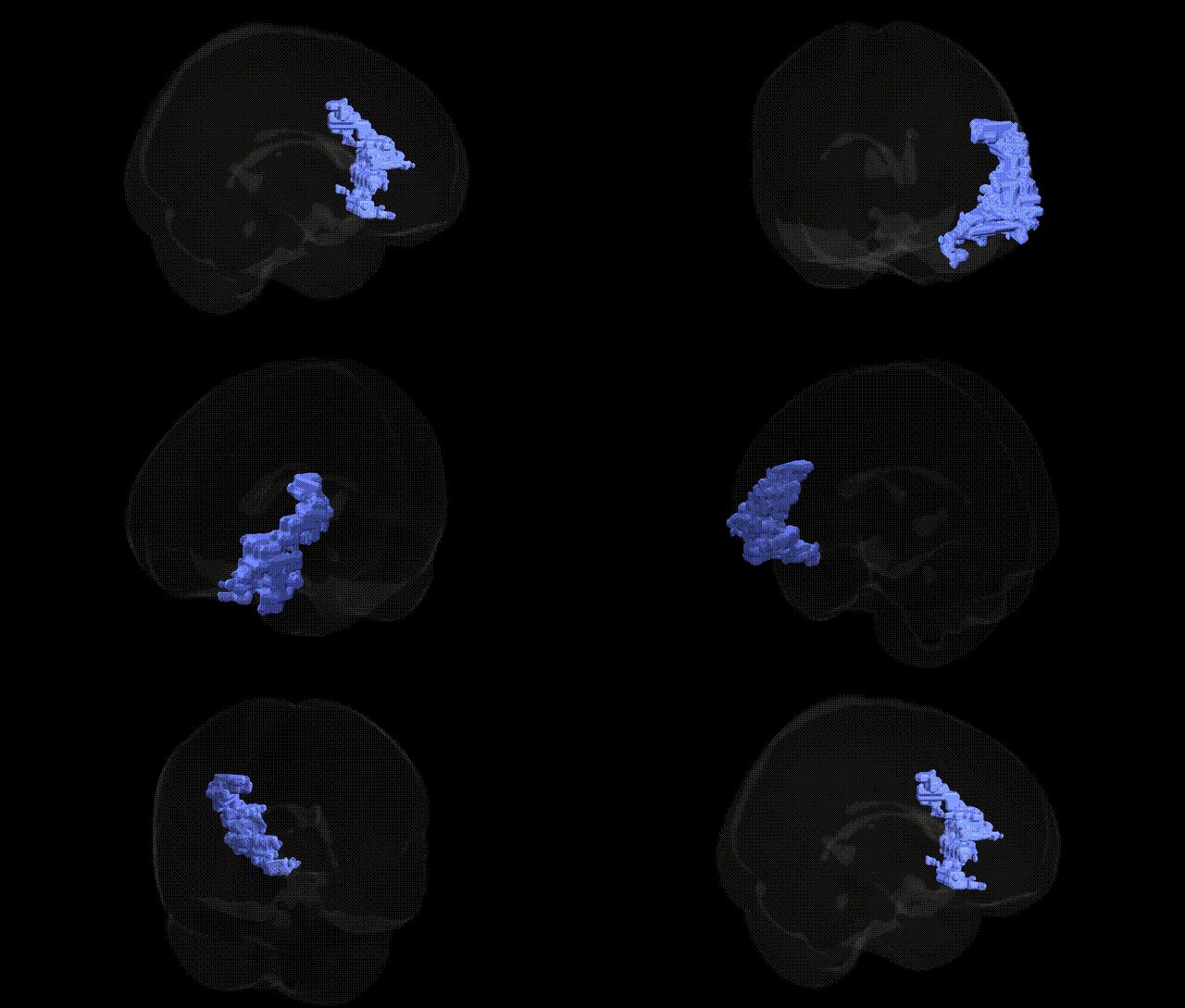
The bilateral Right Cerebrum.Frontal Lobe.Inferior Frontal Gyrus.White Matter corresponds to the subcortical fiber pathways underlying the inferior frontal gyrus of the right frontal lobe, including association fibers that interconnect frontal regions with temporal and parietal cortices, as well as short U-fibers linking adjacent frontal gyri. This white matter region supports functions attributed to the overlying inferior frontal cortex, such as aspects of language (particularly prosody and pragmatic processing in the right hemisphere), response inhibition, and higher-order social and emotional processing, by enabling rapid communication within distributed fronto-temporo-parietal networks. Its microstructure (e.g., myelination, fiber density, and orientation) influences conduction velocity and network efficiency, and is commonly investigated with diffusion MRI to assess connectivity and integrity in clinical and cognitive neuroscience. There is no direct Wikipedia article for this specific white matter region; a closely related cortical structure is the Inferior frontal gyrus.
The bilateral inferior frontal gyrus white matter in the right frontal lobe, as defined in the Talairach 2 mm atlas, is part of fronto-temporal and fronto-parietal language, inhibition, and executive-control networks, and genetic associations typically derive from studies of related cortical thickness, white-matter microstructure (e.g., fractional anisotropy), and functional activation rather than this exact label. GWAS of regional cortical structure have implicated loci in genes involved in neurodevelopment and synaptic function (such as variants near FOXP2, CNTNAP2, and other language- and connectivity-related genes) that show effects on inferior frontal regions, while large-scale imaging genetics consortia (e.g., ENIGMA, UK Biobank) have identified polygenic influences on frontal white matter integrity, with risk alleles for disorders like schizophrenia, bipolar disorder, major depressive disorder, ADHD, and autism spectrum disorder associated with altered microstructure or connectivity within right inferior frontal networks. In addition, candidate-gene and GWAS studies of traits such as impulsivity, cognitive control, stuttering, and language ability have repeatedly highlighted right inferior frontal cortex and its underlying white matter as intermediate phenotypes (endophenotypes), with shared common-variant architecture overlapping that of general intelligence, educational attainment, and neuroticism. However, current genetic findings remain relatively coarse in spatial resolution, so most associations apply to broader right inferior frontal and frontal white matter systems rather than specifically and exclusively to the bilateral “Right Cerebrum.Frontal Lobe.Inferior Frontal Gyrus.White Matter” region as delineated in the Talairach 2 mm atlas.
Overview generated by GPT-4o (2026).
Region ID: 190
Hemisphere: bilateral
Atlas: Talairach labels 2mm
Full Quality Version: Download MP4
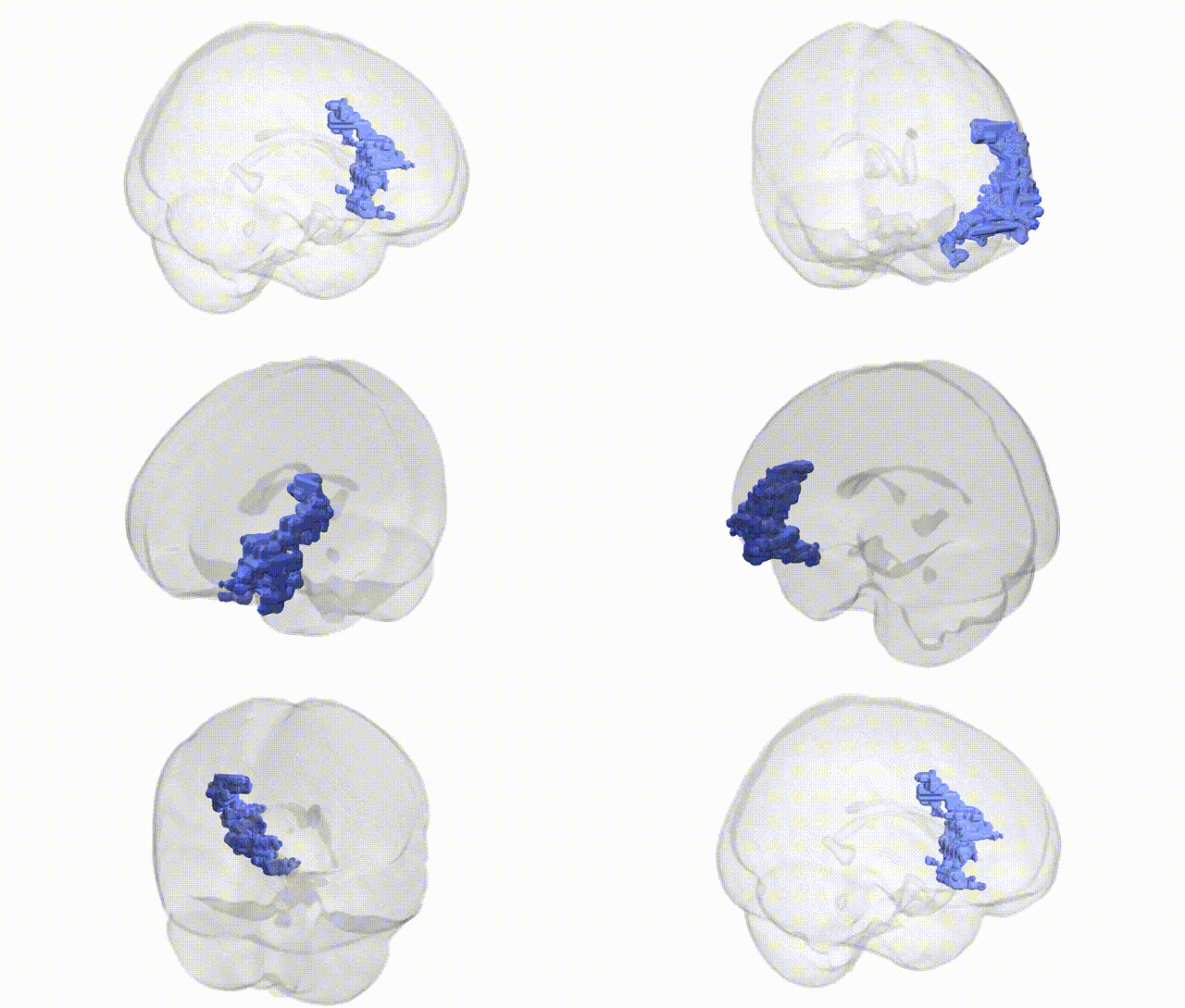
Full Quality Version: Download MP4
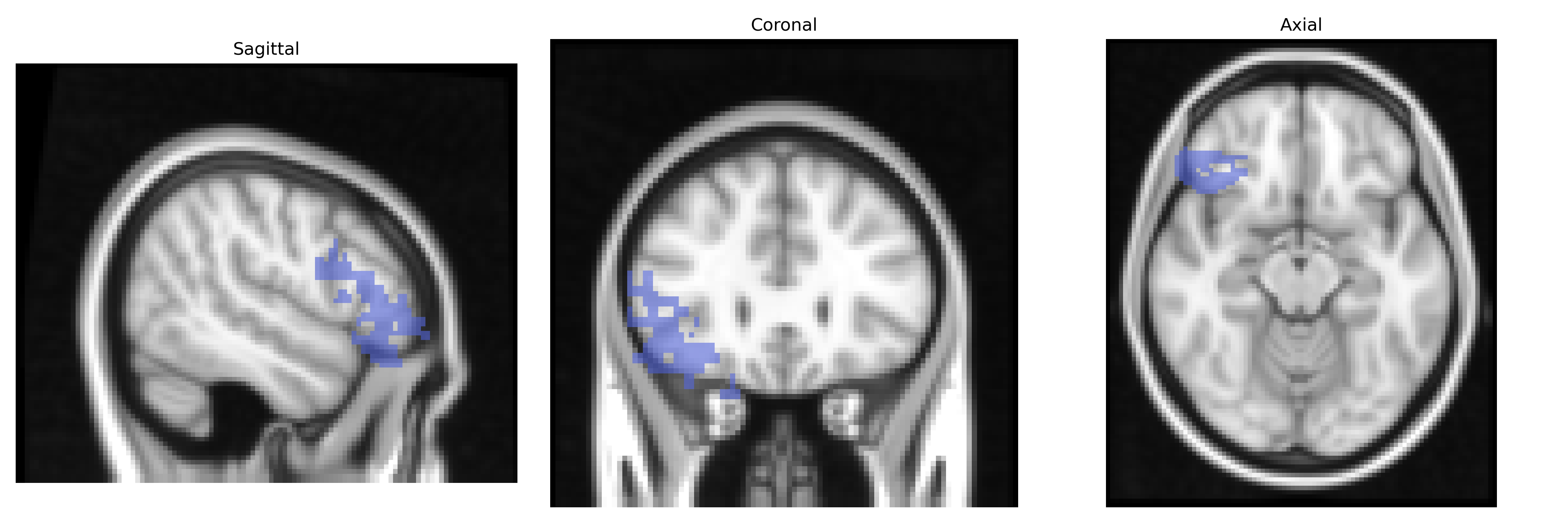
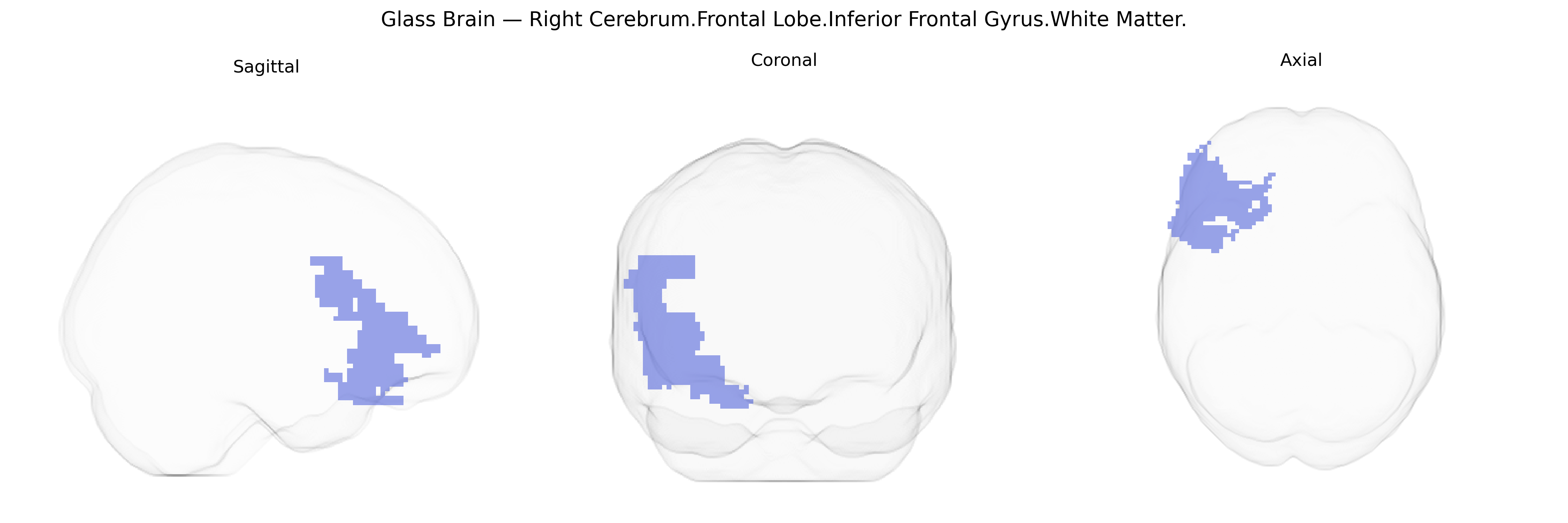
Wali Sidiqyar*, Gaurav Rudravaram*, Elyssa M. McMaster, Trent M. Schwartz, Adam M. Saunders, Kurt G. Schilling, Bennett A. Landman "Introducing SPINS: A Shared Public Visualization Library of Neuroanatomical Structures." Medical Imaging with Deep Learning- short paper
This resource is licensed under CC0 1.0 Universal (Public Domain).