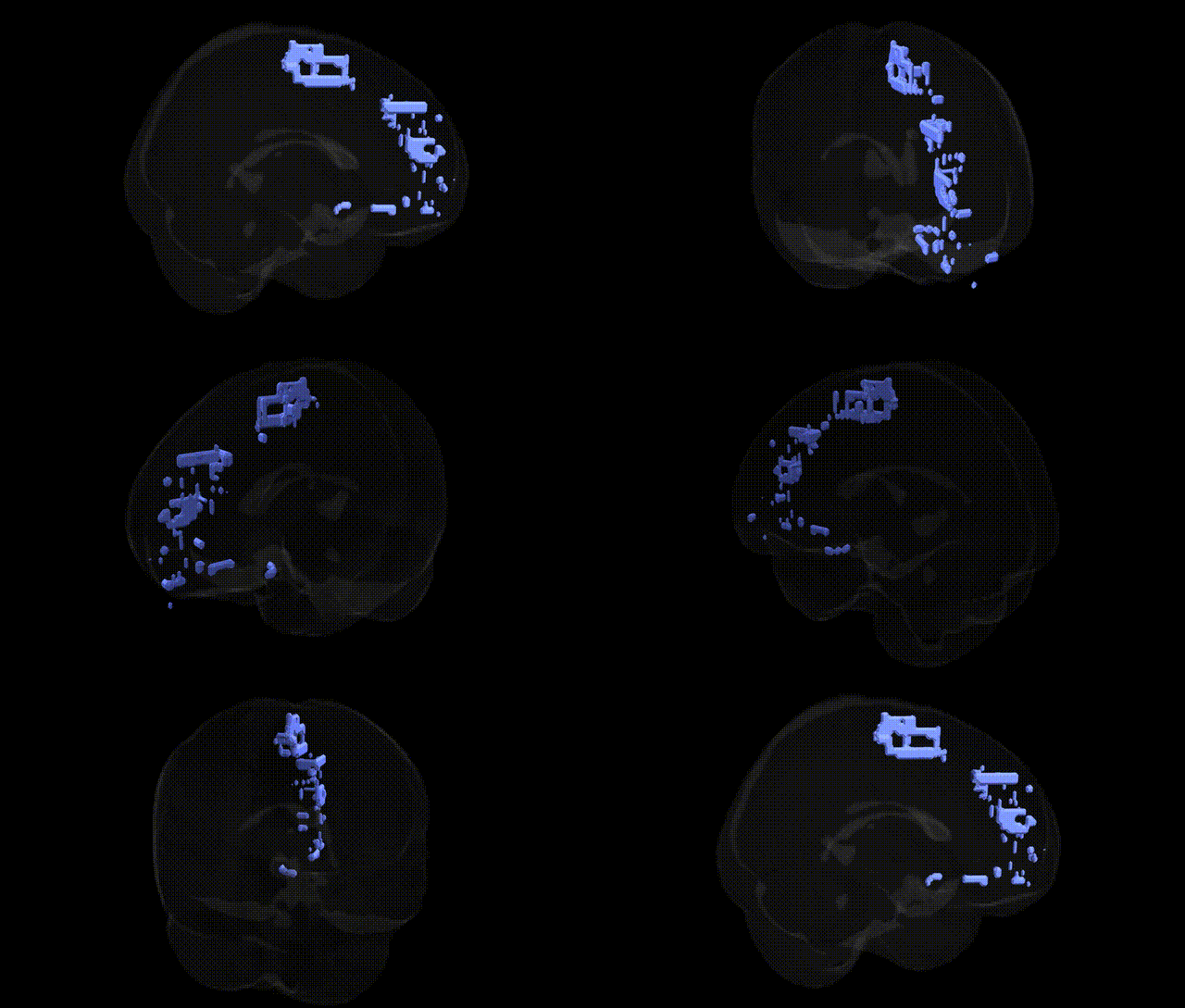
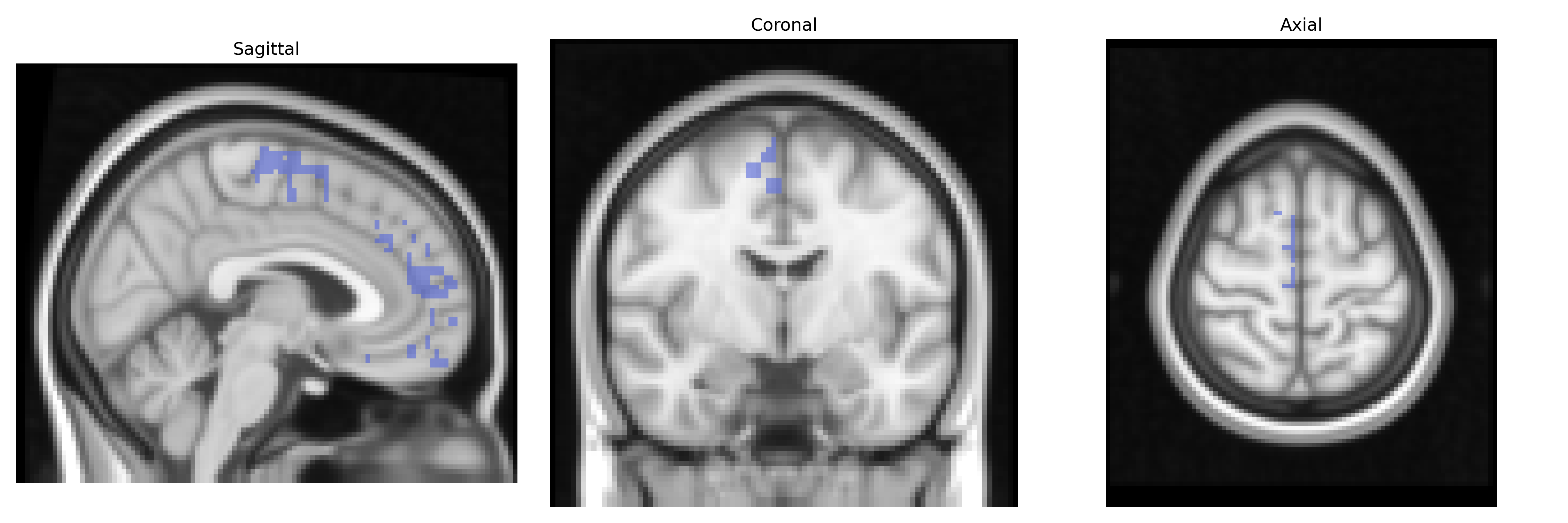
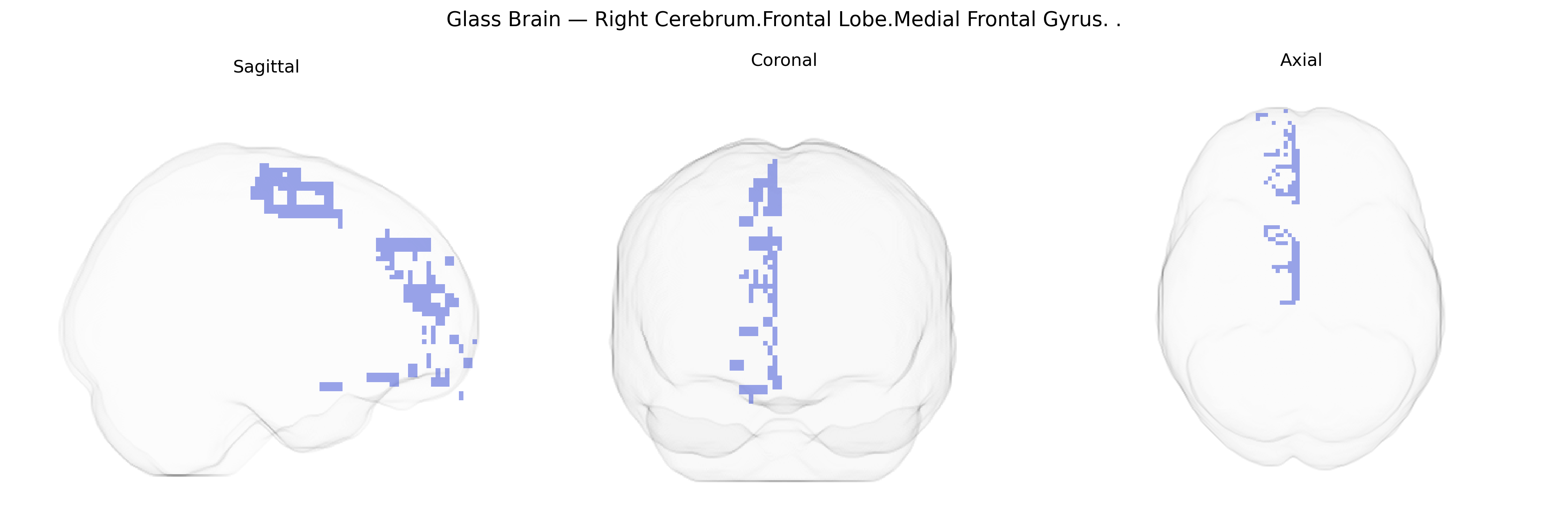
The bilateral Right Cerebrum.Frontal Lobe.Medial Frontal Gyrus, as defined in the Talairach 2 mm Atlas, corresponds largely to cortex along the medial aspect of the frontal lobe, encompassing portions of the medial prefrontal cortex and regions implicated in executive control, decision-making, motivation, and aspects of social and self-referential processing. This area participates in higher-order cognitive functions, including the regulation of behavior through internal goals, evaluation of actions and outcomes, and integration of emotional and cognitive information. It also contributes to motor-related processes such as planning and initiating voluntary actions, and overlaps with functional territories involved in the default mode network and cognitive control networks. There is no direct link for “Medial Frontal Gyrus,” but a closely related region is the Medial prefrontal cortex.
The medial frontal gyrus (bilateral right cerebrum frontal lobe, Talairach labels 2 mm atlas) is a key hub for cognitive control, decision-making, and social cognition, and genetic associations involving this region emerge both from brain-structure GWAS and imaging–genetics studies. Large-scale GWAS of cortical thickness and surface area (e.g., ENIGMA, UK Biobank) have identified multiple loci—such as variants in or near genes like CENPW, KIAA0586, HMGA2, and others—associated with medial prefrontal cortical morphology, including right medial frontal measures, suggesting polygenic influences on its development and anatomy. Imaging–genetics work links schizophrenia, major depression, bipolar disorder, ADHD, and autism spectrum disorder risk loci with altered medial frontal activation or structure, particularly for genes modulating glutamatergic and dopaminergic signaling (e.g., COMT, DRD2, GRM3), synaptic plasticity (BDNF), and neurodevelopment (DISC1, NRG1), although regional specificity is often modest. Polygenic risk scores for psychiatric disorders frequently correlate with structural and functional alterations in medial prefrontal regions, including the medial frontal gyrus, in tasks involving error monitoring, reward processing, and self-referential thinking. GWAS of cognitive traits (general intelligence, educational attainment) and personality dimensions (neuroticism, conscientiousness) have also been associated with medial prefrontal structural variation, further indicating that heritable variation in this region contributes to a wide spectrum of cognitive and affective phenotypes, though individual genetic effects are small and highly distributed across the genome.
Overview generated by GPT-4o (2026).
Region ID: 224
Hemisphere: bilateral
Atlas: Talairach labels 2mm
Full Quality Version: Download MP4
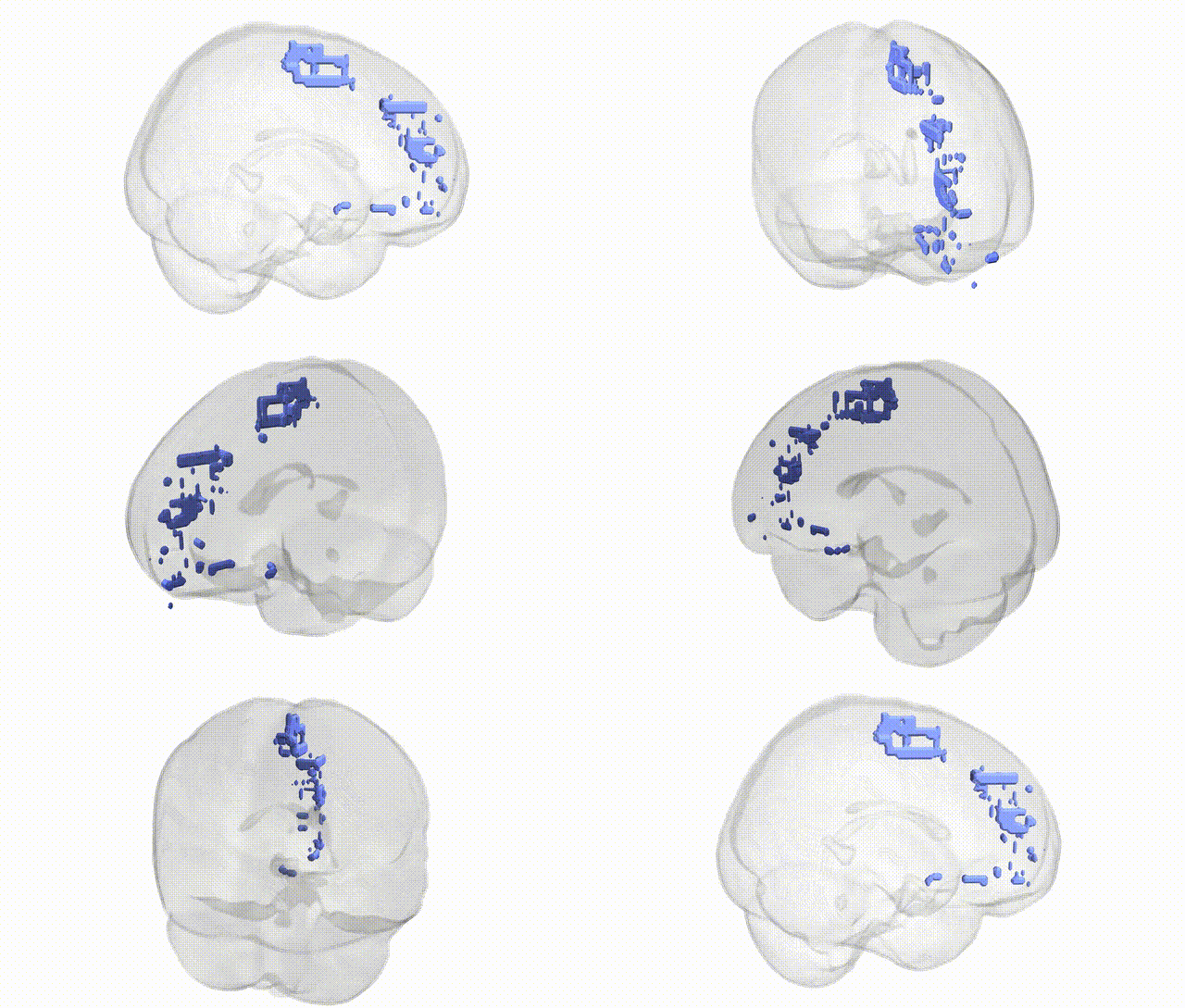
Full Quality Version: Download MP4
Wali Sidiqyar*, Gaurav Rudravaram*, Elyssa M. McMaster, Trent M. Schwartz, Adam M. Saunders, Kurt G. Schilling, Bennett A. Landman "Introducing SPINS: A Shared Public Visualization Library of Neuroanatomical Structures." Medical Imaging with Deep Learning- short paper
This resource is licensed under CC0 1.0 Universal (Public Domain).