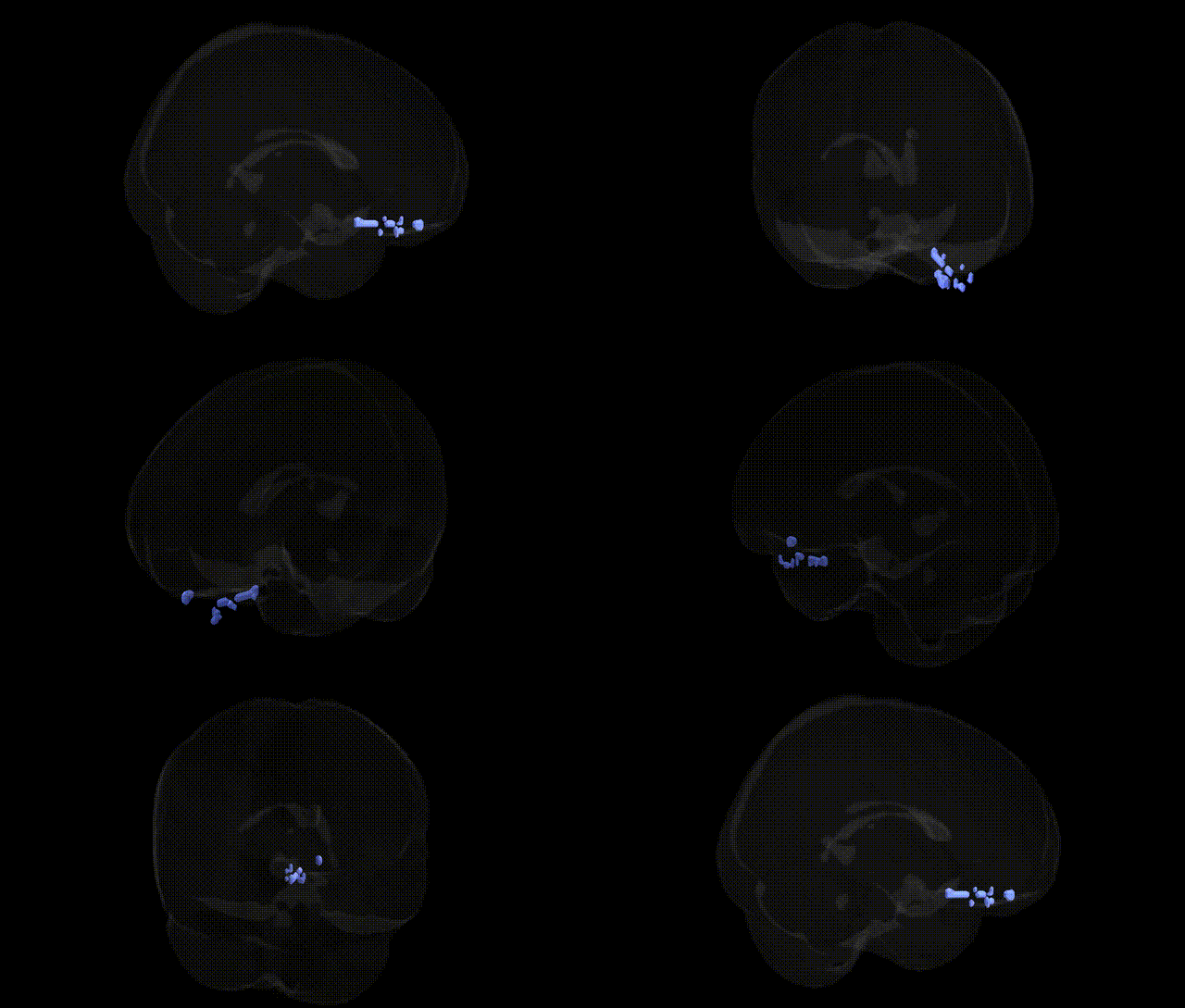
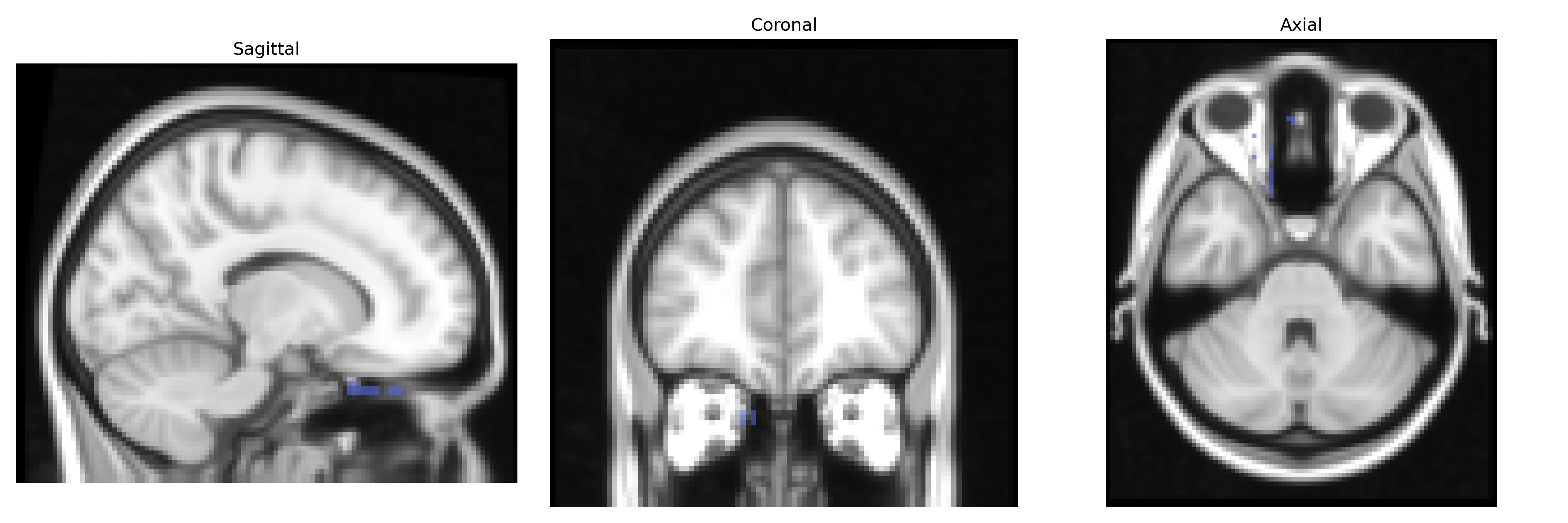
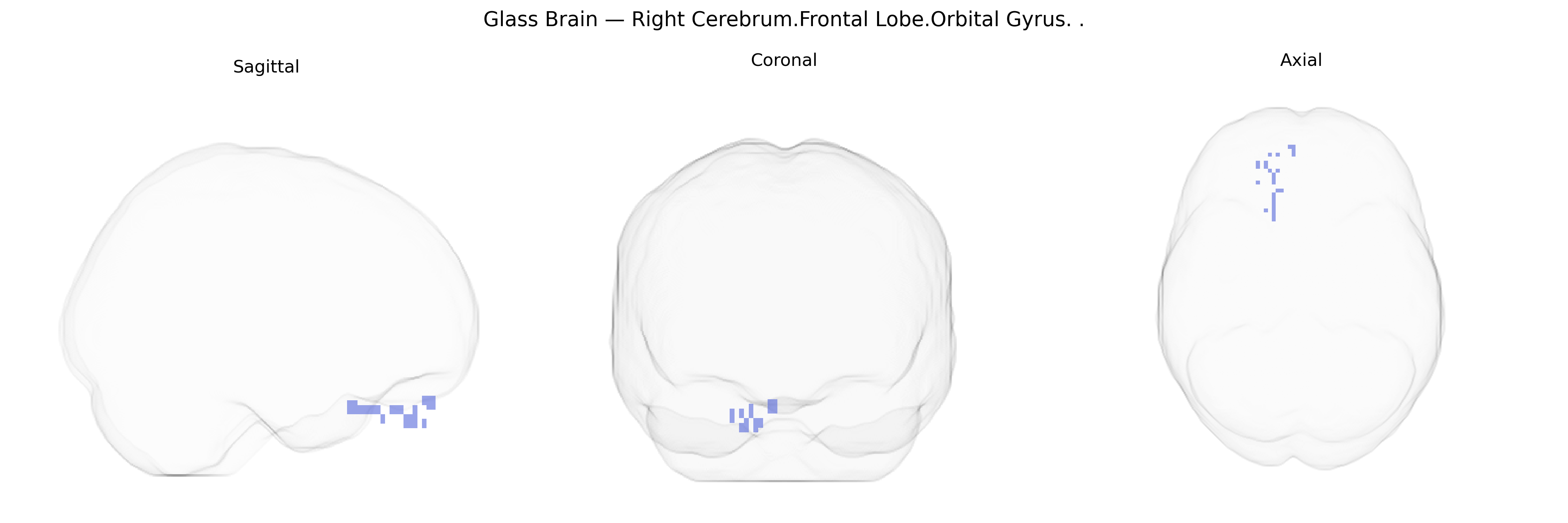
The bilateral Right Cerebrum.Frontal Lobe.Orbital Gyrus corresponds to cortex on the ventral surface of the frontal lobe, overlying the bony orbit, and forms part of the orbitofrontal cortex. This region is heavily interconnected with limbic and paralimbic structures (including the amygdala, ventral striatum, and hypothalamus) and is implicated in valuation, reward-based decision making, emotion regulation, and social behavior. Cytoarchitectonically, it comprises several Brodmann areas (notably BA 11, 12, and portions of 47) with granular prefrontal cortex characteristics, receiving multimodal sensory inputs and projecting widely to other prefrontal territories and subcortical nuclei. Damage or dysfunction in the orbital gyrus region is associated with deficits in impulse control, altered reward sensitivity, and changes in personality and affect. There is no direct link for “Orbital Gyrus”; for the encompassing functional-anatomical territory, see: Orbitofrontal cortex.
The bilateral right orbitofrontal gyrus (Right Cerebrum.Frontal Lobe.Orbital Gyrus in the Talairach 2 mm atlas) has been implicated in multiple genetic and GWAS findings through its role in reward valuation, decision-making, and affect regulation, although most studies reference orbitofrontal cortex more broadly rather than this exact label. Polygenic risk for major depressive disorder, bipolar disorder, and schizophrenia has been associated with structural and functional variation in orbitofrontal regions, with genes involved in synaptic plasticity and neurodevelopment (e.g., CACNA1C, GRIN2A, DRD2, and complement pathway genes such as C4) repeatedly implicated in large psychiatric GWAS that show downstream effects on orbitofrontal volume, cortical thickness, and connectivity. Substance use and addiction GWAS highlight dopaminergic and glutamatergic genes (including those near OPRM1 and dopamine receptor loci) that relate to altered orbitofrontal activation and morphology, consistent with this region’s role in reward and cue reactivity. Neuroimaging–genetics studies link common variants in genes such as BDNF (e.g., Val66Met), 5-HTTLPR/serotonin transporter loci, and COMT to orbitofrontal cortical structure and reactivity during emotional and decision-making tasks, providing intermediate phenotypes for anxiety, impulsivity, and mood traits. Large-scale imaging GWAS (e.g., ENIGMA, UK Biobank) report heritable variation in orbitofrontal cortical thickness and surface area, with associated loci enriched for neurodevelopmental and synapse-related pathways, and these structural measures mediate genetic associations with personality traits such as neuroticism and risk-taking, as well as obesity and metabolic measures. Overall, genetic findings converge on the orbitofrontal gyrus as a key site where polygenic influences on psychiatric risk, personality, and reward-related behaviors manifest in measurable differences in brain structure and function, though fine-grained, region-specific genetic associations for the exact Talairach-defined orbital gyrus remain limited.
Overview generated by GPT-4o (2026).
Region ID: 110
Hemisphere: bilateral
Atlas: Talairach labels 2mm
Full Quality Version: Download MP4
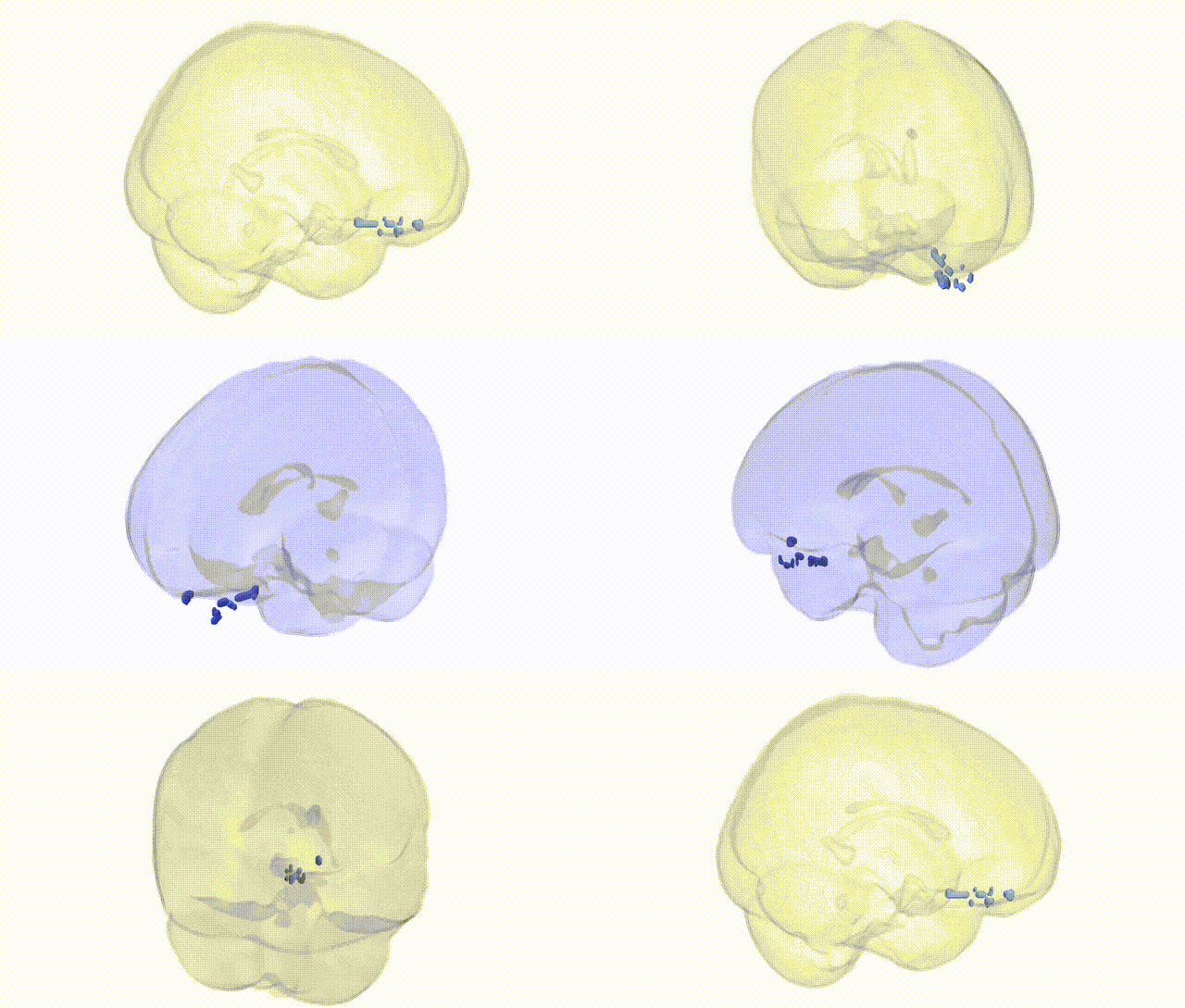
Full Quality Version: Download MP4
Wali Sidiqyar*, Gaurav Rudravaram*, Elyssa M. McMaster, Trent M. Schwartz, Adam M. Saunders, Kurt G. Schilling, Bennett A. Landman "Introducing SPINS: A Shared Public Visualization Library of Neuroanatomical Structures." Medical Imaging with Deep Learning- short paper
This resource is licensed under CC0 1.0 Universal (Public Domain).