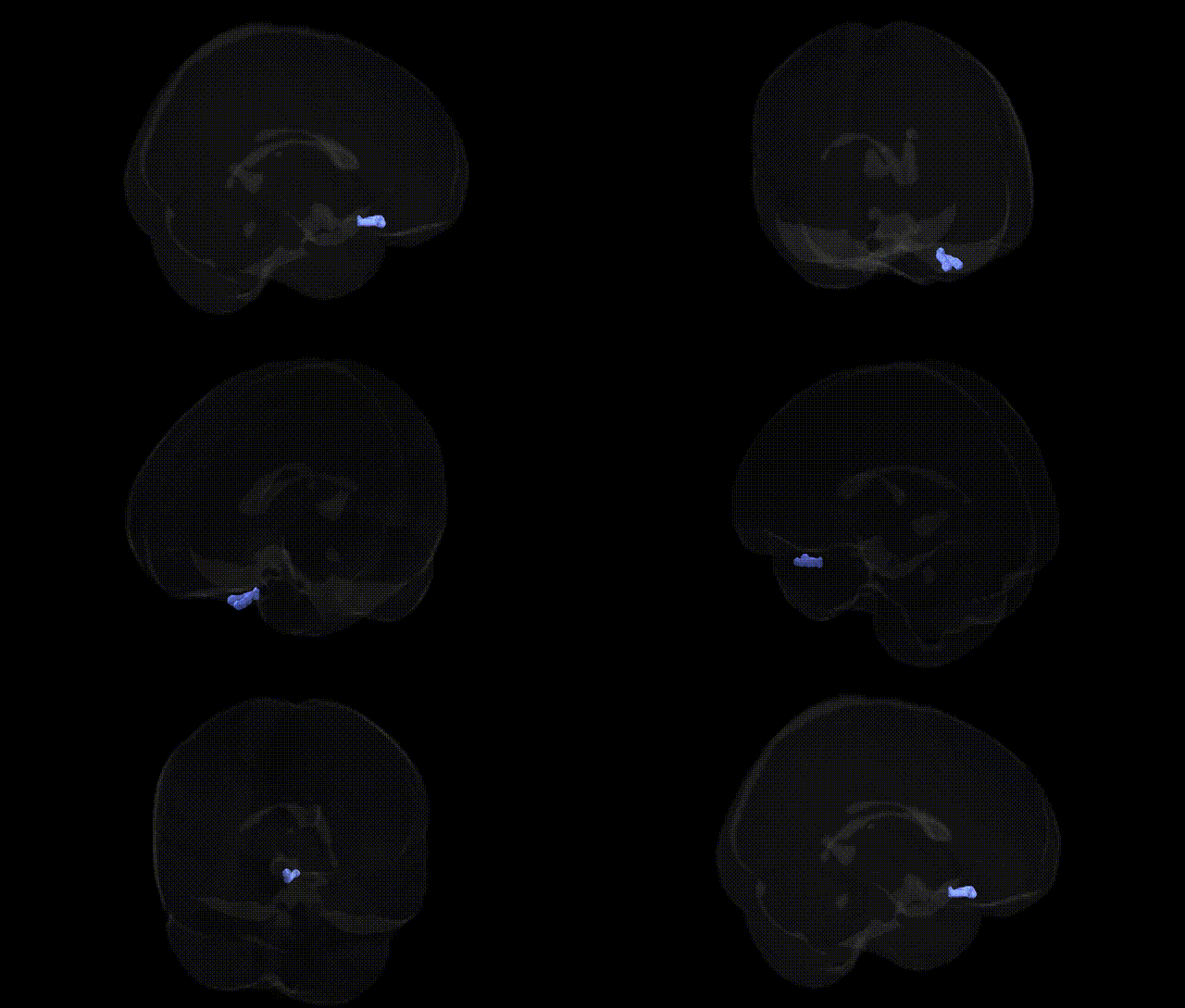
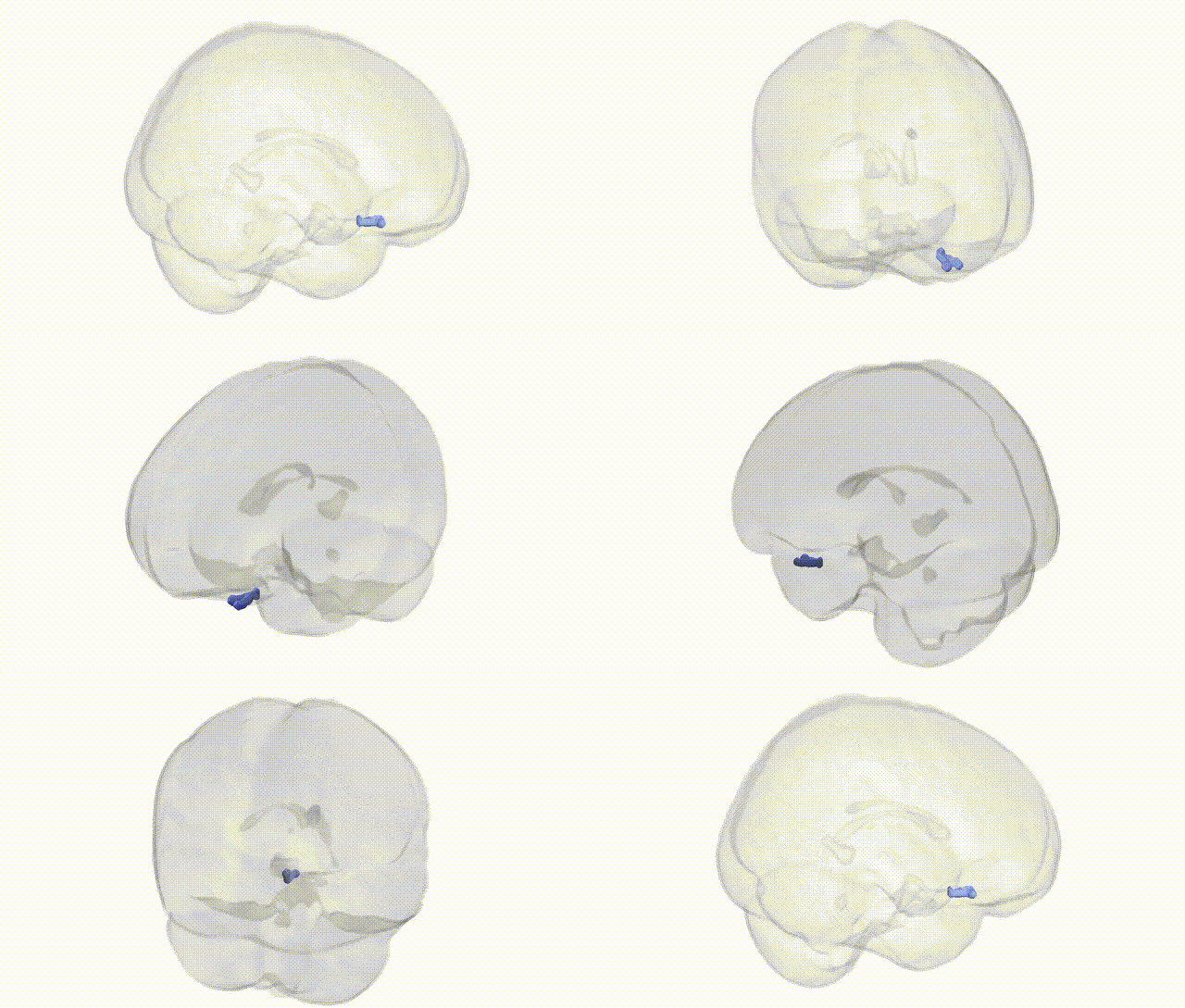
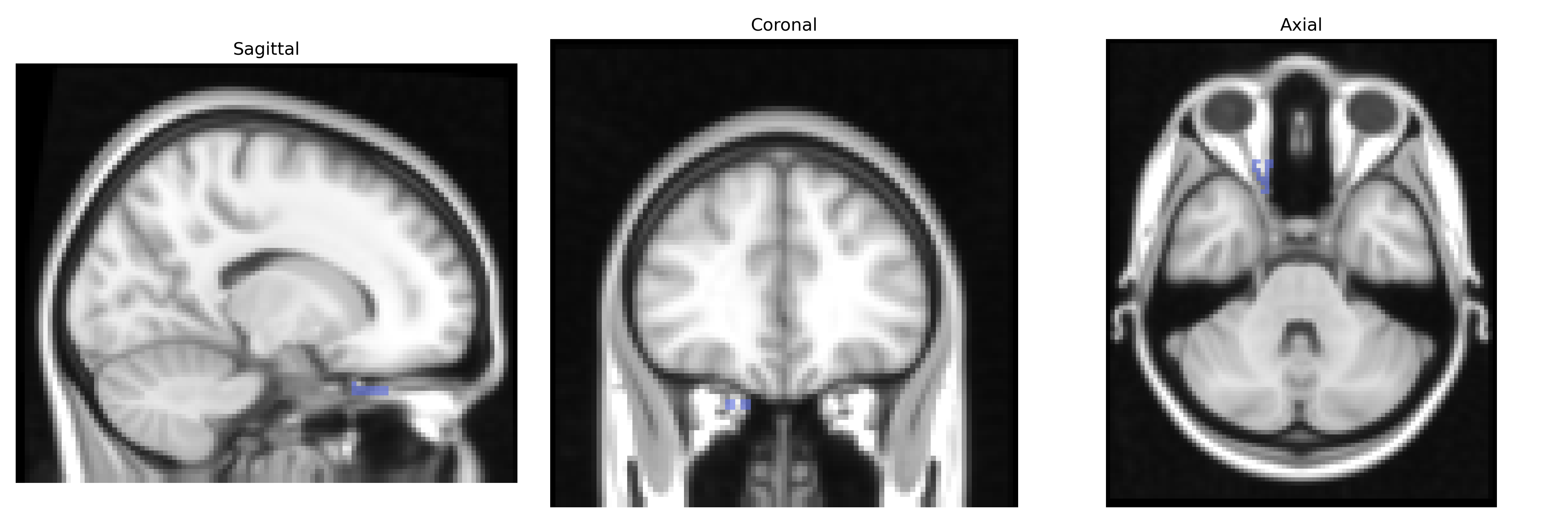
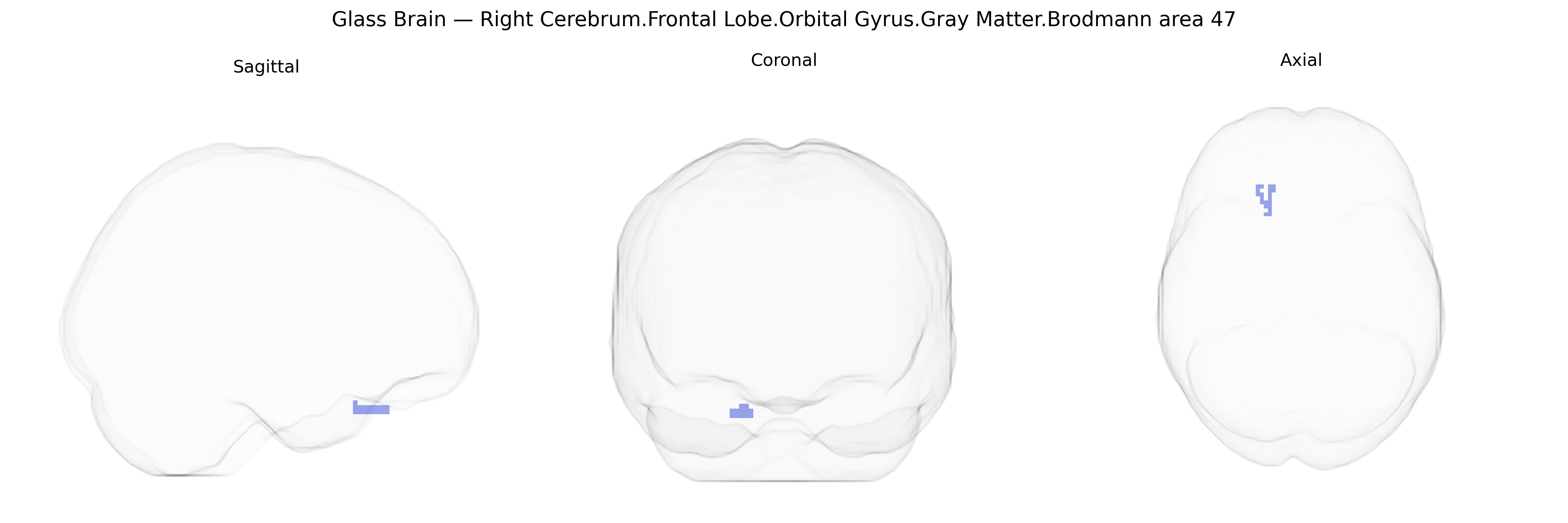
The bilateral Right Cerebrum.Frontal Lobe.Orbital Gyrus.Gray Matter.Brodmann area 47 corresponds to a ventrolateral prefrontal cortical region located on the orbital surface of the frontal lobe, adjacent to the temporal lobe and parts of the insula. Cytoarchitectonically defined as Brodmann area 47, it forms part of the inferior frontal gyrus/orbitofrontal complex and is strongly implicated in language-related processing (including semantic retrieval), emotional evaluation, and aspects of reward-based decision making and behavioral inhibition. This region participates in fronto-temporal networks supporting higher-order cognition, affect regulation, and social behavior, integrating multimodal sensory and mnemonic information. There is no direct Wikipedia article for this specific Talairach label; a closely related structure is Brodmann area 47.
The bilateral right orbitofrontal cortex (OFC), including Brodmann area 47 in the frontal lobe orbital gyrus as defined in the Talairach 2 mm atlas, has been implicated in multiple genetic and GWAS-based associations largely through imaging genetics studies that use OFC or ventromedial prefrontal measures rather than this exact microlabel. Common variants in genes related to synaptic function, neurotransmission, and neurodevelopment (e.g., BDNF, SLC6A4/serotonin transporter, COMT, DRD2/DRD4, and glutamatergic genes) have repeatedly been linked to structural and functional differences in orbitofrontal and adjacent BA47 regions, particularly in the context of reward processing, emotion regulation, and decision-making. Large-scale GWAS of cortical thickness and surface area have identified heritable patterns in frontal and orbitofrontal cortex, with associated loci enriched in neurodevelopmental and cell-adhesion pathways, and some of these frontal/orbitofrontal measures have been genetically correlated with cognitive performance, educational attainment, and risk for psychiatric disorders. Imaging-genetics studies in major depressive disorder, bipolar disorder, schizophrenia, obsessive–compulsive disorder, and substance use disorders frequently report OFC/BA47 as a key site where polygenic risk scores or specific risk alleles (including those mapped by psychiatric GWAS to loci such as CACNA1C, GRM3, and other synaptic genes) modulate gray matter volume, cortical thickness, or task-related activation. Additional GWAS and candidate gene studies highlight orbitofrontal and BA47 involvement in traits such as impulsivity, risk-taking, anxiety, and neuroticism, with structural and functional differences in this region mediating part of the genetic influence on these behavioral phenotypes, although precise associations at the resolution of the “Right Cerebrum.Frontal Lobe.Orbital Gyrus.Gray Matter.Brodmann area 47” Talairach 2 mm label remain inferred from broader OFC and inferior frontal analyses rather than directly reported.
Overview generated by GPT-4o (2026).
Region ID: 147
Hemisphere: bilateral
Atlas: Talairach labels 2mm
Full Quality Version: Download MP4
Full Quality Version: Download MP4
Wali Sidiqyar*, Gaurav Rudravaram*, Elyssa M. McMaster, Trent M. Schwartz, Adam M. Saunders, Kurt G. Schilling, Bennett A. Landman "Introducing SPINS: A Shared Public Visualization Library of Neuroanatomical Structures." Medical Imaging with Deep Learning- short paper
This resource is licensed under CC0 1.0 Universal (Public Domain).