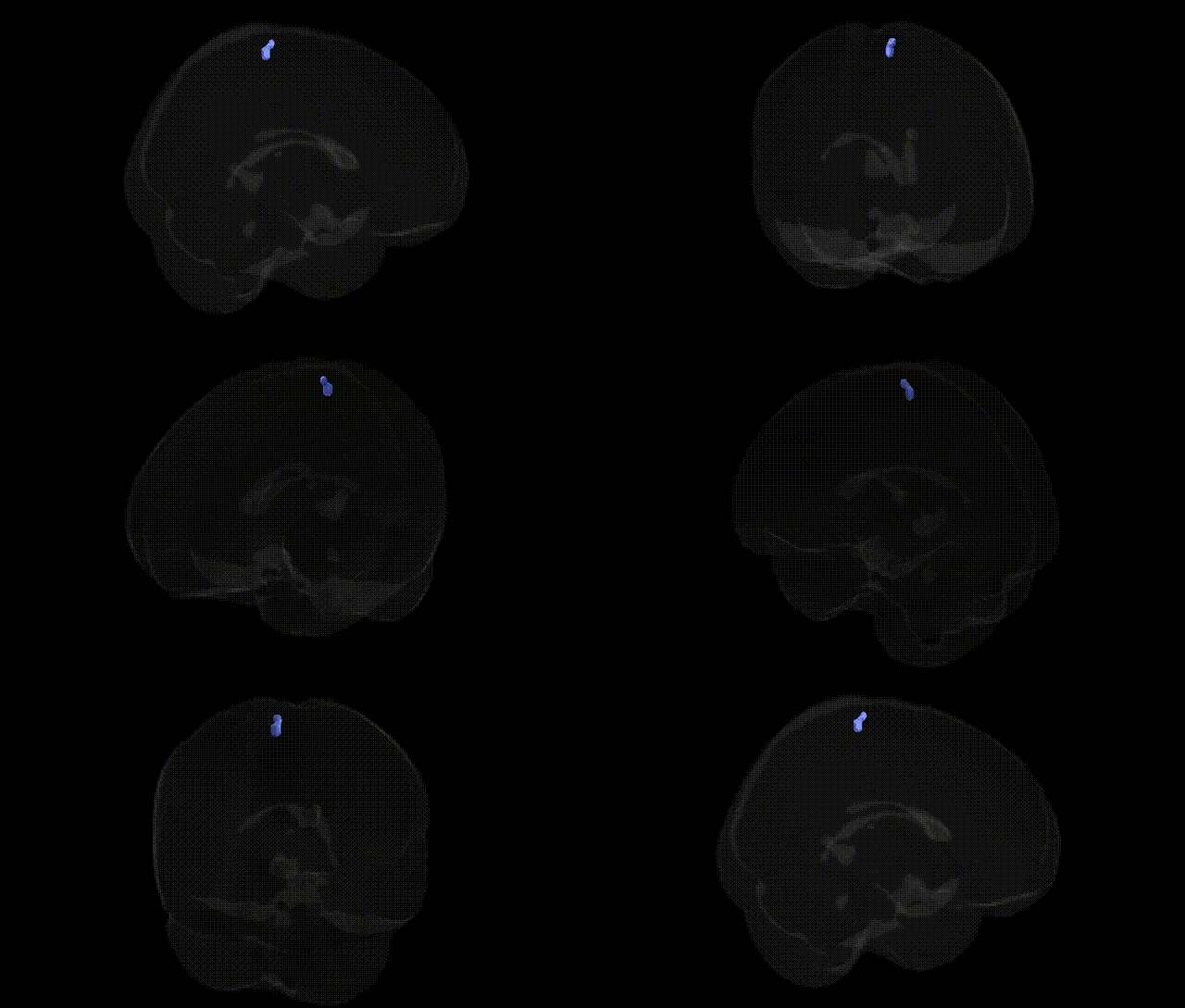
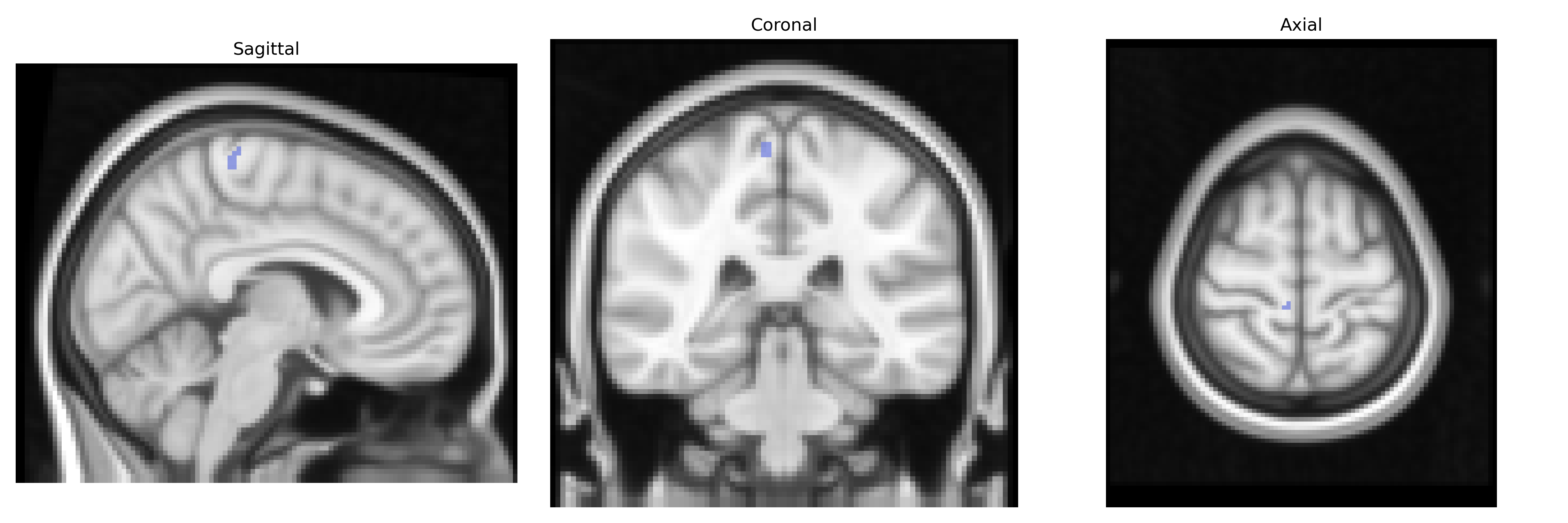
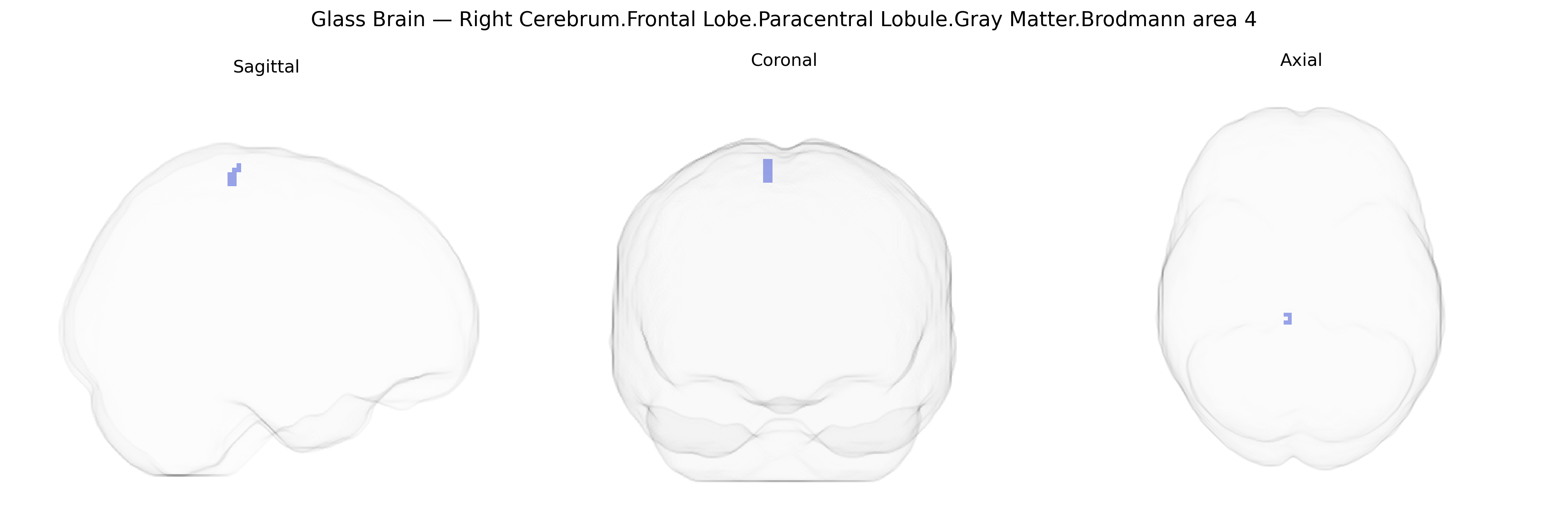
The bilateral Right Cerebrum.Frontal Lobe.Paracentral Lobule.Gray Matter.Brodmann area 4 region in the Talairach 2 mm Atlas corresponds to primary motor cortex located in the paracentral lobule of the frontal lobe, specifically involving the medial portion of Brodmann area 4 that represents mainly lower limb and pelvic musculature. This cortical territory contains large pyramidal neurons (Betz cells) in layer V, which give rise to corticospinal and corticobulbar projections critical for voluntary motor control, muscle strength, and fine movement execution. Functionally, it participates in somatotopically organized motor output, contributing to the initiation and modulation of contralateral movements, postural adjustments, and reflex modulation. No direct link exists for this exact composite region; a closely related structure is Brodmann area 4.
The bilateral right paracentral lobule (frontal lobe, BA4 primary motor cortex) has been implicated in genetic studies primarily through imaging genetics and motor-related GWAS. Variants in genes influencing cortical development and motor circuitry—such as those in glutamatergic signaling (e.g., GRIN family), axonal guidance (e.g., ROBO/SLIT pathways), and neurodevelopmental regulators (e.g., BDNF, CNTNAP2)—have been associated with structural measures (cortical thickness, surface area) and functional activation in primary motor areas that include BA4. Large-scale brain MRI GWAS (e.g., UK Biobank–based studies) have identified multiple loci associated with motor cortex morphology, though these are typically reported at the level of frontal or precentral regions rather than BA4 specifically, and link to pathways for synaptic plasticity, neuronal migration, and myelination. Genetic risk for movement disorders such as Parkinson’s disease and dystonia, as well as motor symptom burden in amyotrophic lateral sclerosis and multiple sclerosis, has been related to altered structure or function of the paracentral lobule, with these effects mediated by polygenic architectures involving genes like LRRK2, MAPT, and HLA-region variants rather than single region-specific loci. In psychiatric and neurodevelopmental GWAS (e.g., schizophrenia, ADHD, autism), polygenic risk scores have been associated with motor cortex activation and connectivity changes during tasks or resting-state fMRI, suggesting that genetic liability for these disorders influences BA4-related motor and sensorimotor integration networks. Overall, current evidence supports a distributed, polygenic influence on the right paracentral lobule’s gray matter structure and motor function, with associations emerging from broad neurodevelopmental, synaptic, and immune-related pathways rather than genes uniquely tied to this Talairach-defined region.
Overview generated by GPT-4o (2026).
Region ID: 1090
Hemisphere: bilateral
Atlas: Talairach labels 2mm
Full Quality Version: Download MP4
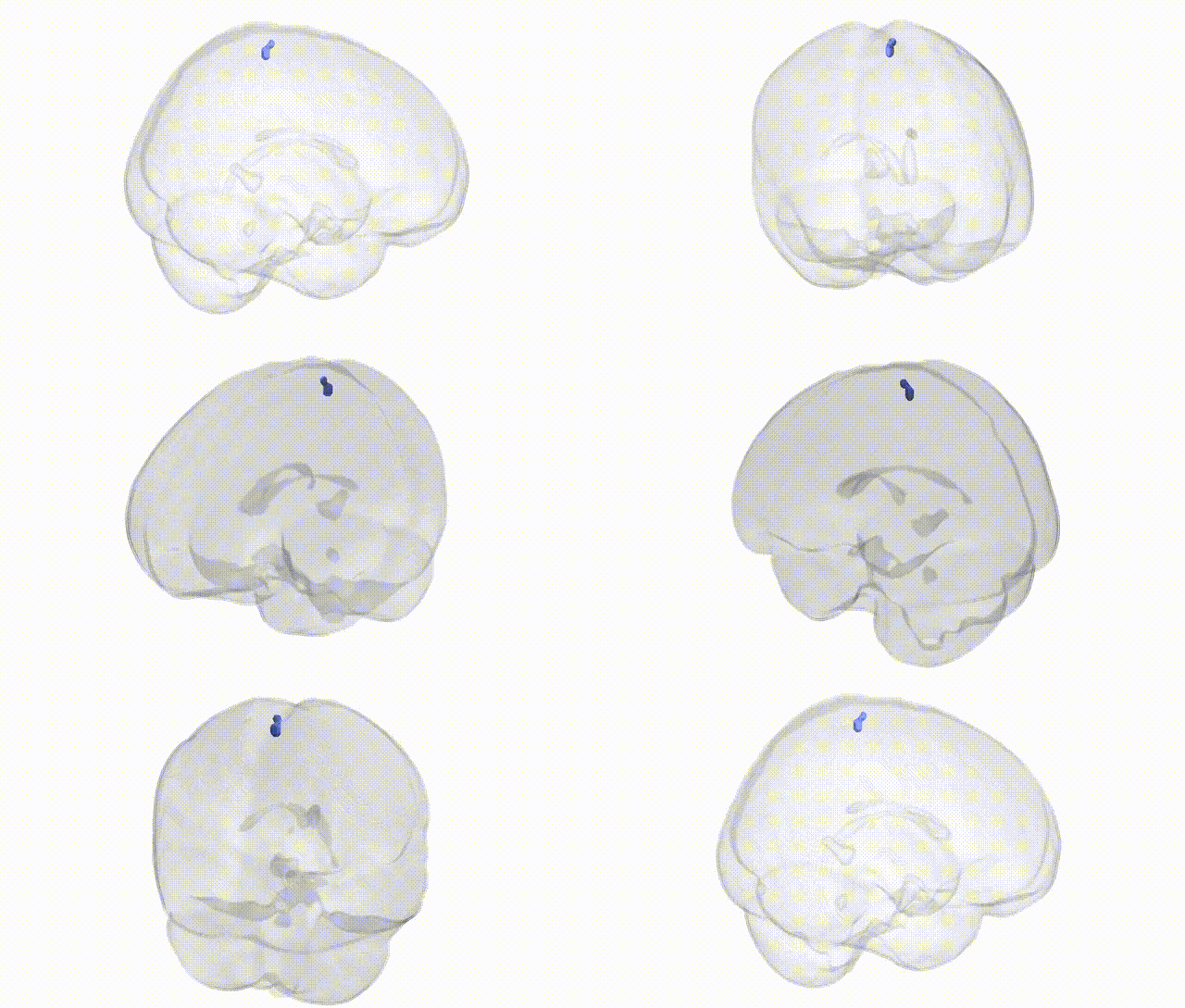
Full Quality Version: Download MP4
Wali Sidiqyar*, Gaurav Rudravaram*, Elyssa M. McMaster, Trent M. Schwartz, Adam M. Saunders, Kurt G. Schilling, Bennett A. Landman "Introducing SPINS: A Shared Public Visualization Library of Neuroanatomical Structures." Medical Imaging with Deep Learning- short paper
This resource is licensed under CC0 1.0 Universal (Public Domain).