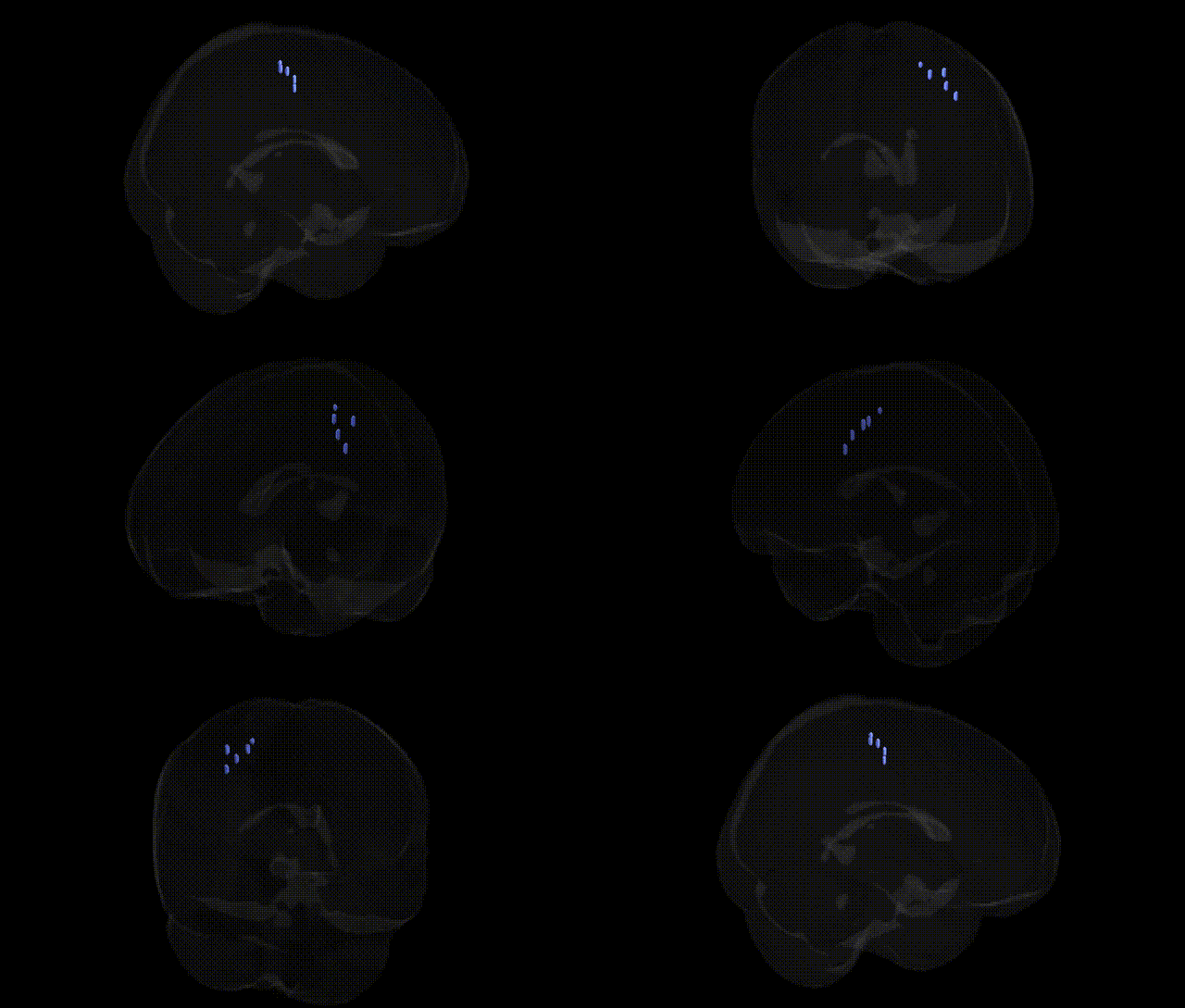
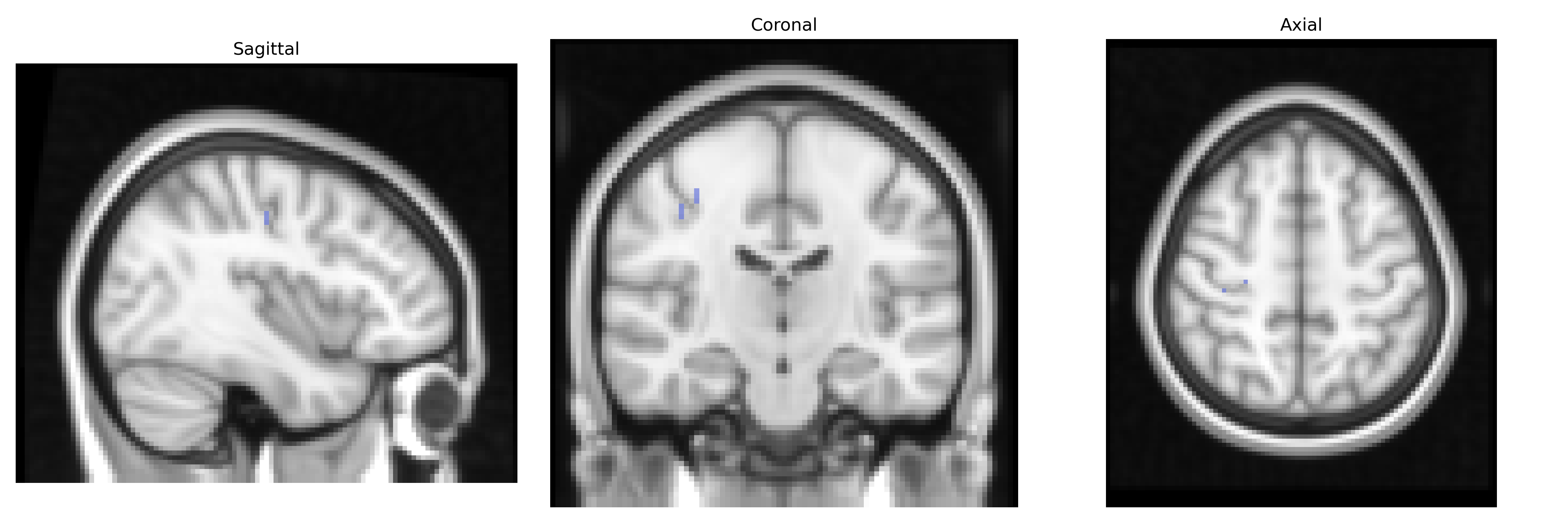
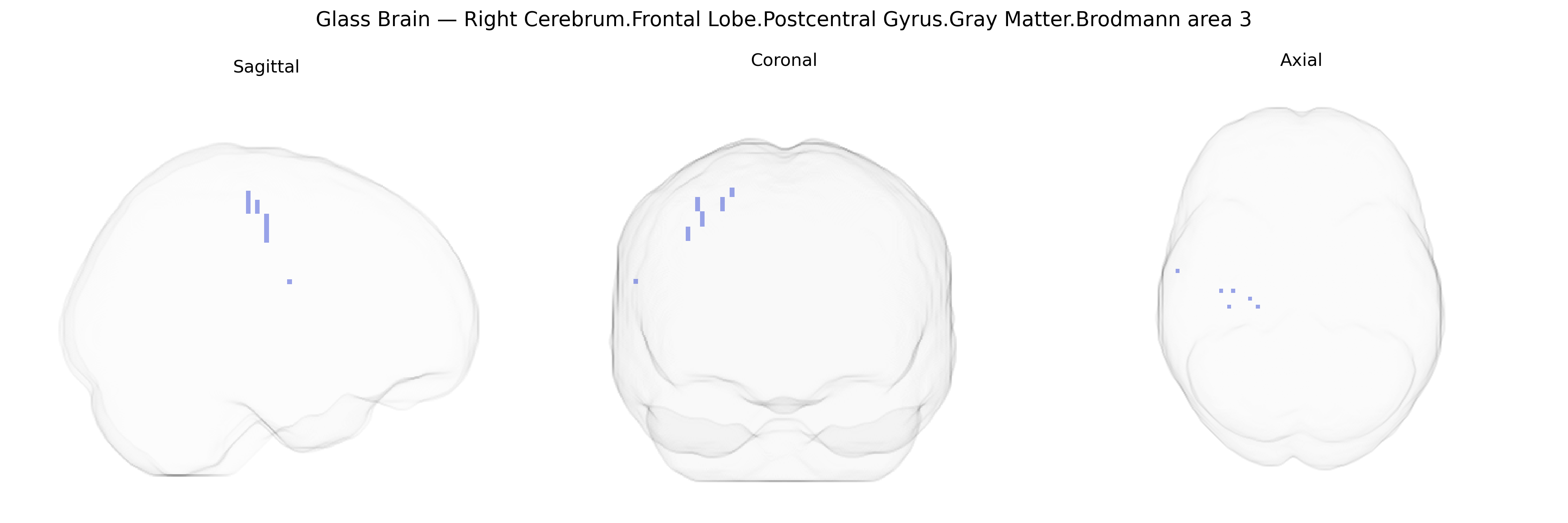
Bilateral Right Cerebrum.Frontal Lobe.Postcentral Gyrus.Gray Matter.Brodmann area 3 refers to primary somatosensory cortex territory located in the postcentral gyrus, specifically Brodmann area 3, which is involved in the initial cortical processing of tactile, proprioceptive, and nociceptive input from the contralateral side of the body. Despite the Talairach label’s “frontal lobe” designation, the postcentral gyrus (and BA3) is classically considered part of the parietal lobe. Neurons in BA3 receive dense thalamocortical afferents from the ventral posterior complex of the thalamus, are highly somatotopically organized, and are critical for fine-grained discrimination of touch, pressure, and body position. Functionally, BA3 acts as the primary entry point for somatosensory information into cortical networks that project to other somatosensory areas (BA1, BA2) and multimodal association cortices, supporting perception and sensorimotor integration. There is no direct link for “Brodmann area 3” alone; a closely related, encompassing structure is the Primary somatosensory cortex.
The bilateral right frontal lobe postcentral gyrus Brodmann area 3 (primary somatosensory cortex) has been implicated in several genetic and GWAS-based associations, largely through imaging genetics and neuropsychiatric studies rather than region-specific single-gene findings. Variants in genes influencing cortical structure and sensorimotor processing—such as those involved in neurodevelopment (e.g., BDNF, DISC1, NRG1, CNTNAP2, and multiple synaptic scaffolding and glutamatergic signaling genes)—have been associated with gray matter volume and cortical thickness in primary somatosensory regions, including BA3, in large-scale brain MRI GWAS (e.g., ENIGMA and UK Biobank analyses). Somatosensory cortex, including BA3, shows altered structure and function in genetic neurodevelopmental and psychiatric disorders such as autism spectrum disorder, schizophrenia, ADHD, and obsessive–compulsive disorder, with polygenic risk scores for these conditions correlating with sensorimotor cortex measures in some cohorts. GWAS of traits involving sensorimotor integration and pain perception (e.g., chronic pain, migraine, and tactile sensitivity) frequently implicate genes regulating neuronal excitability, ion channels, and synaptic transmission, and functional imaging often localizes these effects to primary somatosensory regions, though not usually to BA3 specifically in the Talairach 2 mm atlas. Overall, genetic influences on BA3 gray matter appear to be highly polygenic, overlapping with common variants affecting global cortical morphology, neurodevelopmental risk, and somatosensory-related traits, rather than being driven by a small set of region-specific loci.
Overview generated by GPT-4o (2026).
Region ID: 898
Hemisphere: bilateral
Atlas: Talairach labels 2mm
Full Quality Version: Download MP4
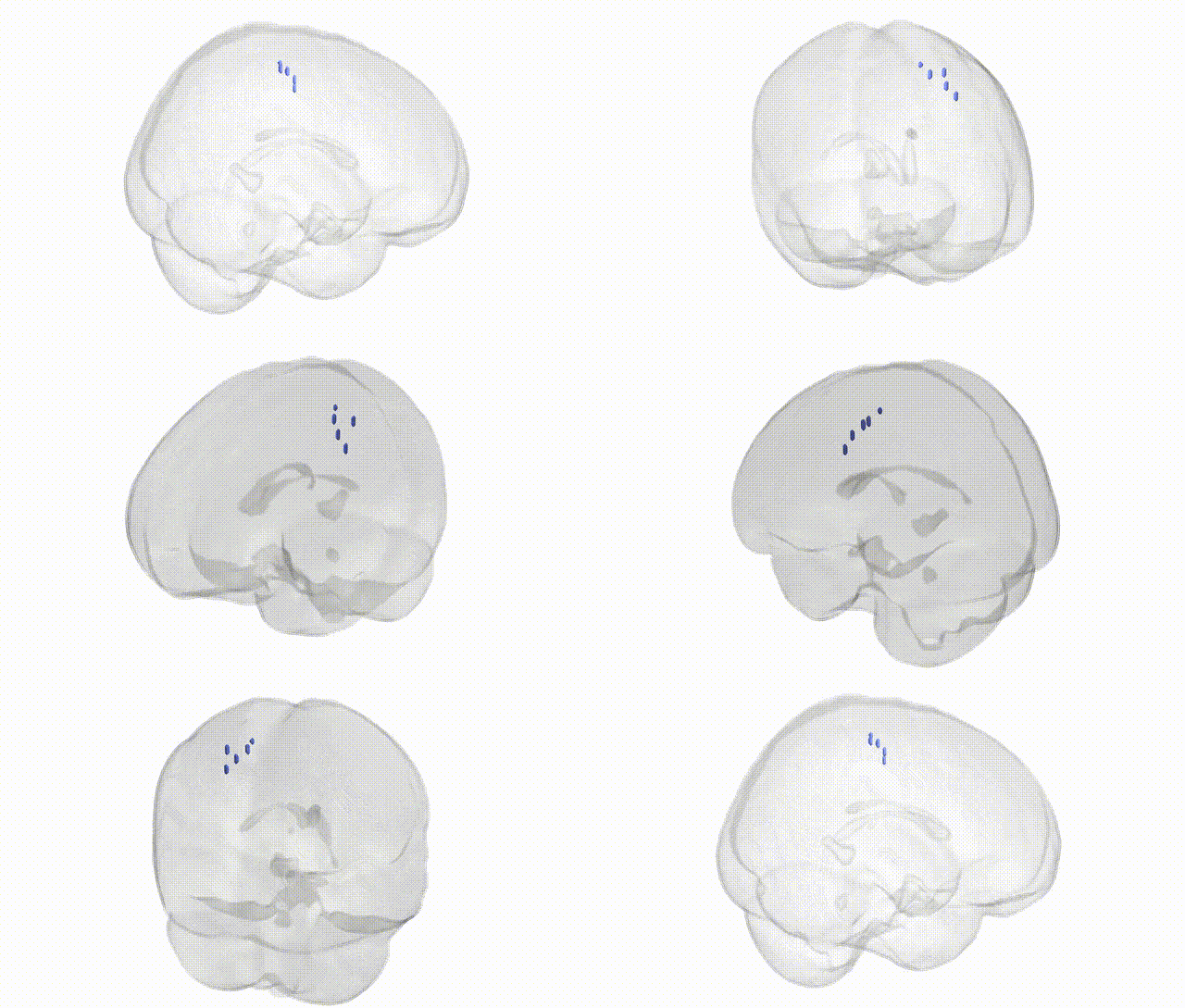
Full Quality Version: Download MP4
Wali Sidiqyar*, Gaurav Rudravaram*, Elyssa M. McMaster, Trent M. Schwartz, Adam M. Saunders, Kurt G. Schilling, Bennett A. Landman "Introducing SPINS: A Shared Public Visualization Library of Neuroanatomical Structures." Medical Imaging with Deep Learning- short paper
This resource is licensed under CC0 1.0 Universal (Public Domain).