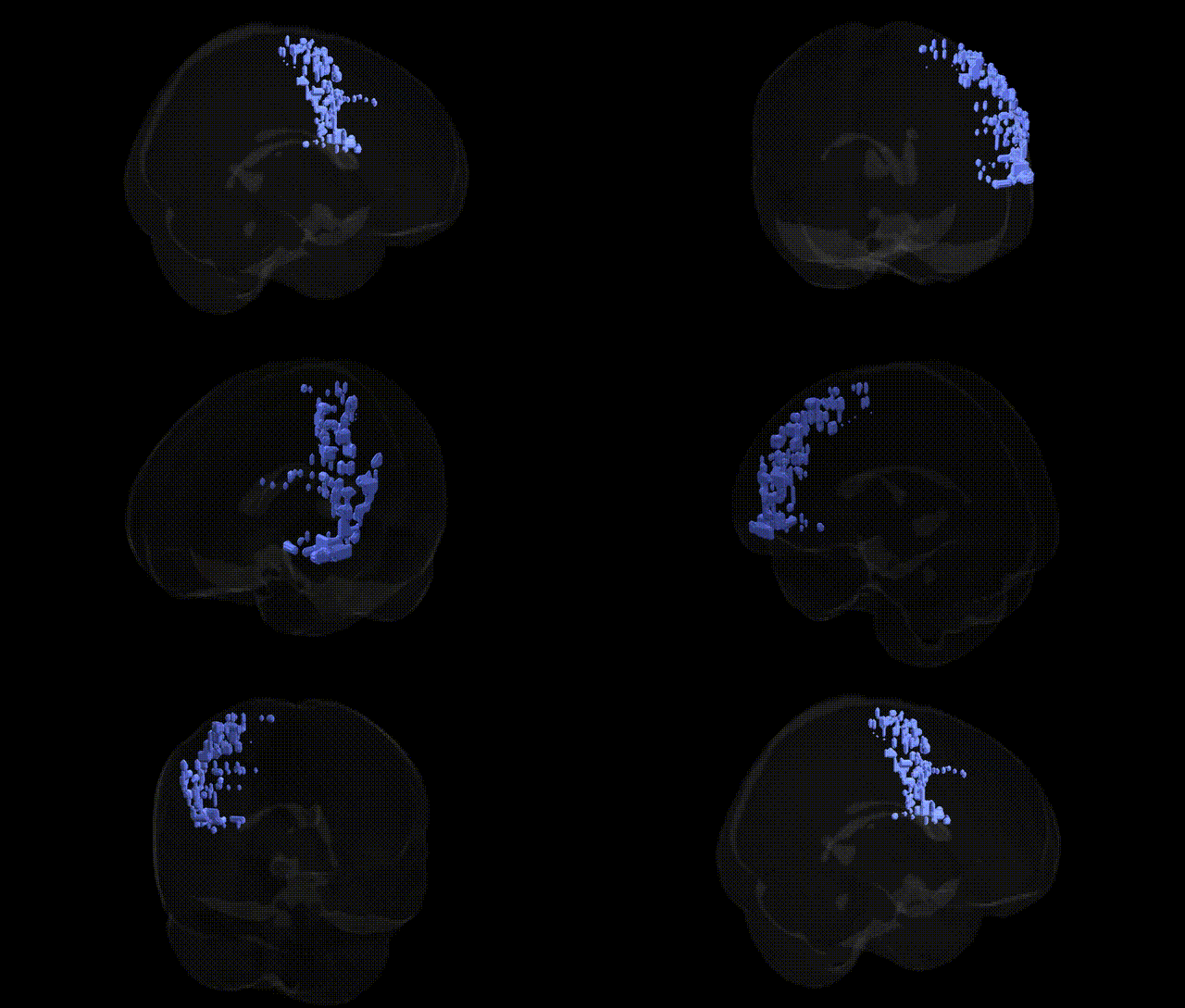
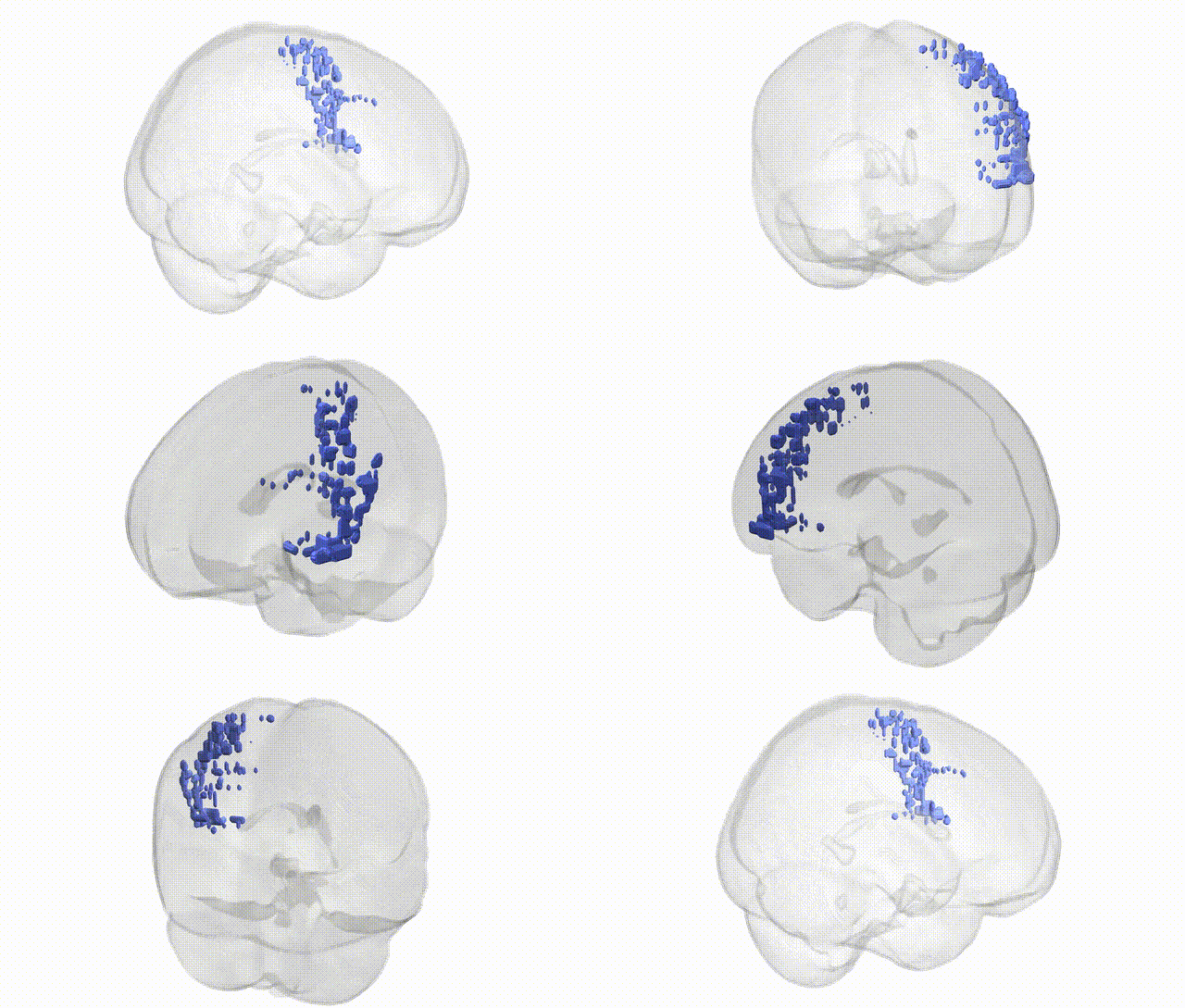
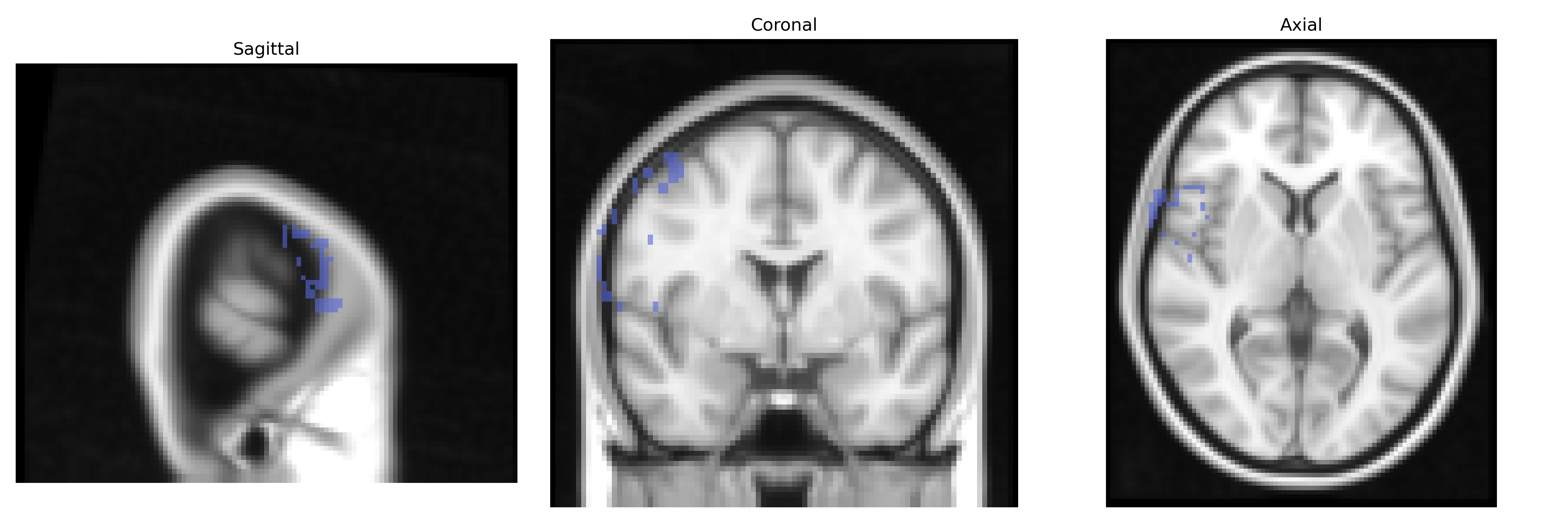
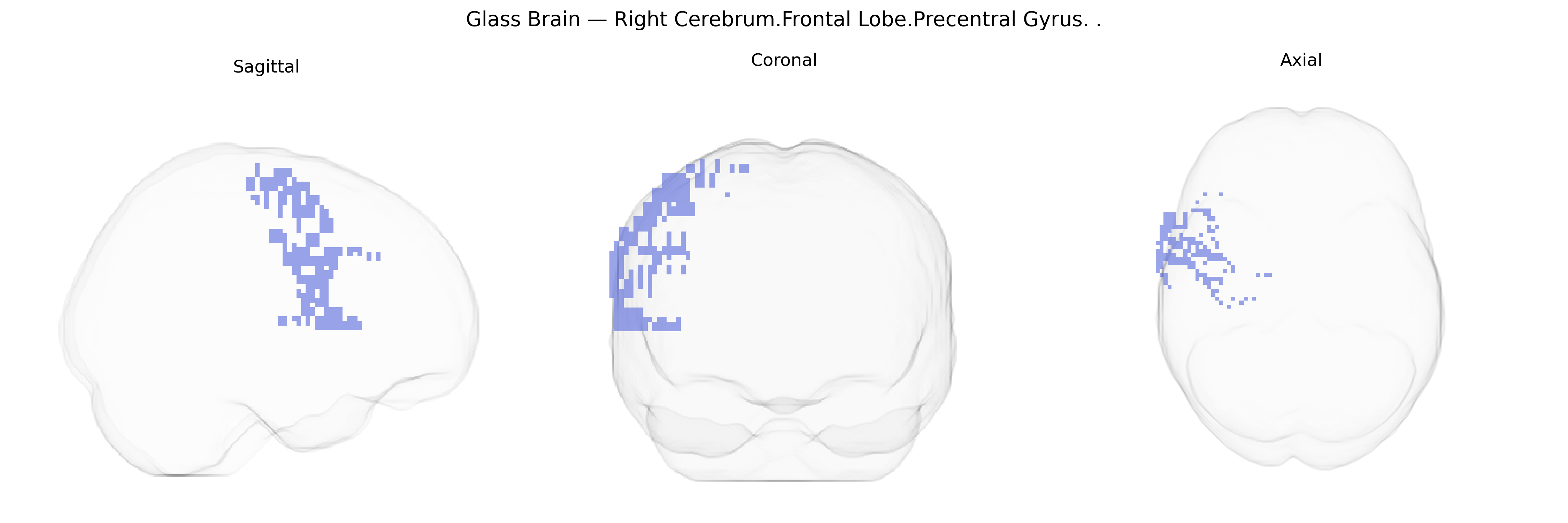
The bilateral Right Cerebrum.Frontal Lobe.Precentral Gyrus corresponds to the primary motor cortex (M1) located in the frontal lobe immediately anterior to the central sulcus, extending along the precentral gyrus on both hemispheres with a focus on the right side in the Talairach 2 mm Atlas. This region contains a somatotopic representation of the contralateral body, with neurons crucial for voluntary movement initiation, force and direction control, and fine motor coordination, particularly of the left side of the body. It receives inputs from premotor and supplementary motor areas and sends major corticospinal projections to spinal motor neurons, thereby constituting a key node in the motor execution pathway. Functionally, the precentral gyrus is essential for precise, skilled movements and is commonly implicated in motor deficits when damaged, such as contralateral weakness or paralysis.
The bilateral right precentral gyrus (primary motor cortex) has been implicated in genetic studies primarily through its role in motor function, neurodevelopmental and neurodegenerative disorders, and cortical morphology. GWAS of cortical thickness and surface area consistently identify heritable variation in precentral regions, with loci near genes involved in neurodevelopment, synaptic function, and axon guidance (e.g., variants near microtubule-associated and cell-adhesion genes), though individual gene effects are small and highly polygenic. Motor-related GWAS, including those focused on handedness and fine motor skills, report associations implicating motor cortex structural and functional variation, often overlapping with genes affecting corticospinal tract development and neuronal connectivity. In neurodegenerative disorders such as amyotrophic lateral sclerosis and certain forms of hereditary spastic paraplegia, risk variants in genes like C9orf72, SOD1, TARDBP, and others are linked to degeneration and altered activation patterns in the precentral gyrus. Schizophrenia and autism spectrum disorder GWAS, while not specific to this region, show polygenic effects on global cortical organization, and imaging–genetics work has associated risk polygenic scores with motor cortex thickness and activation differences. Additionally, stroke and cerebrovascular GWAS (e.g., in large consortia) indirectly link loci influencing vascular risk to lesion distributions that frequently involve the precentral gyrus, affecting motor outcomes. Overall, genetic influences on this region are diffuse, with most findings emerging from large polygenic studies of brain structure and motor-related traits rather than single, region-specific risk genes.
Overview generated by GPT-4o (2026).
Region ID: 680
Hemisphere: bilateral
Atlas: Talairach labels 2mm
Full Quality Version: Download MP4
Full Quality Version: Download MP4
Wali Sidiqyar*, Gaurav Rudravaram*, Elyssa M. McMaster, Trent M. Schwartz, Adam M. Saunders, Kurt G. Schilling, Bennett A. Landman "Introducing SPINS: A Shared Public Visualization Library of Neuroanatomical Structures." Medical Imaging with Deep Learning- short paper
This resource is licensed under CC0 1.0 Universal (Public Domain).