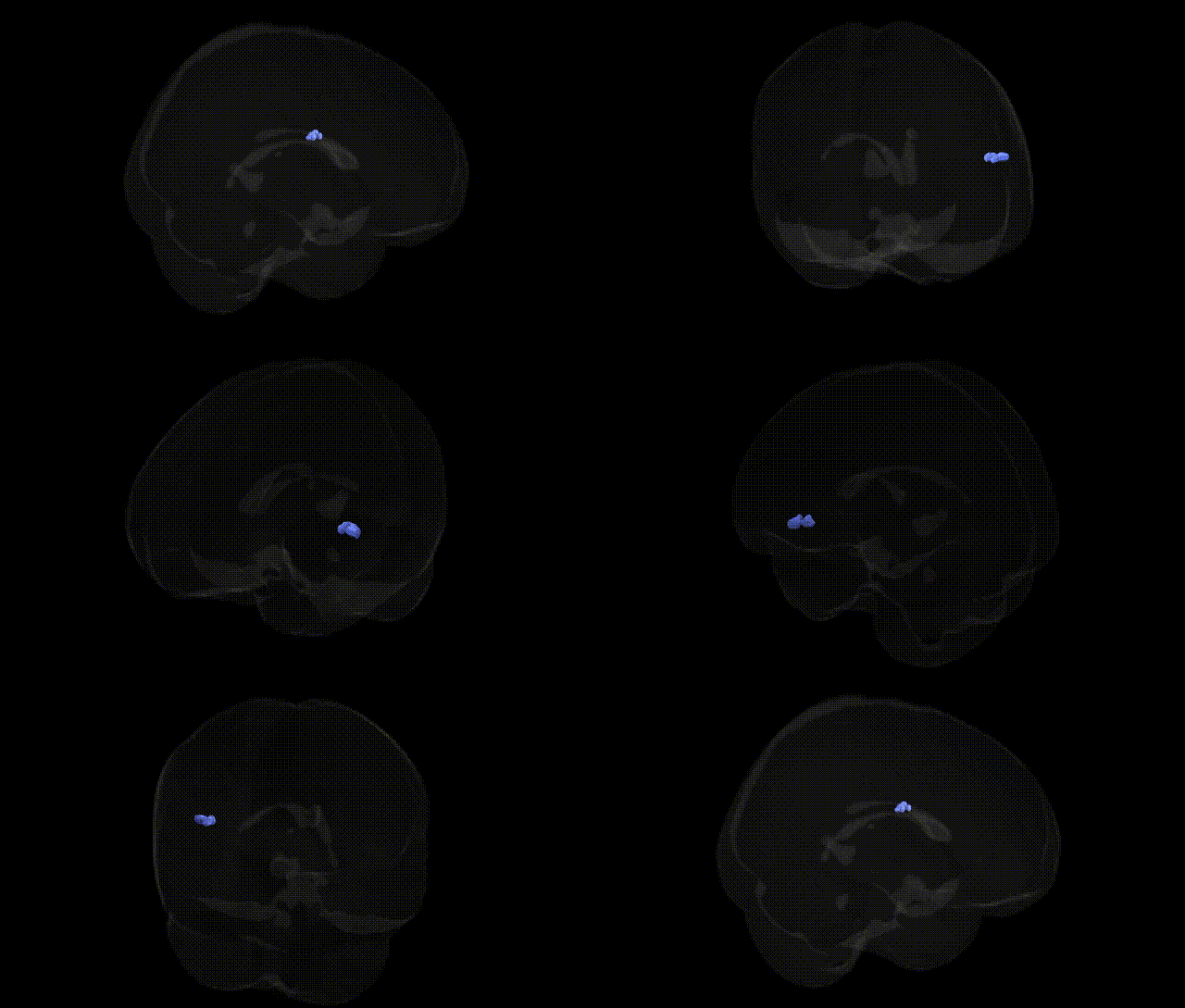
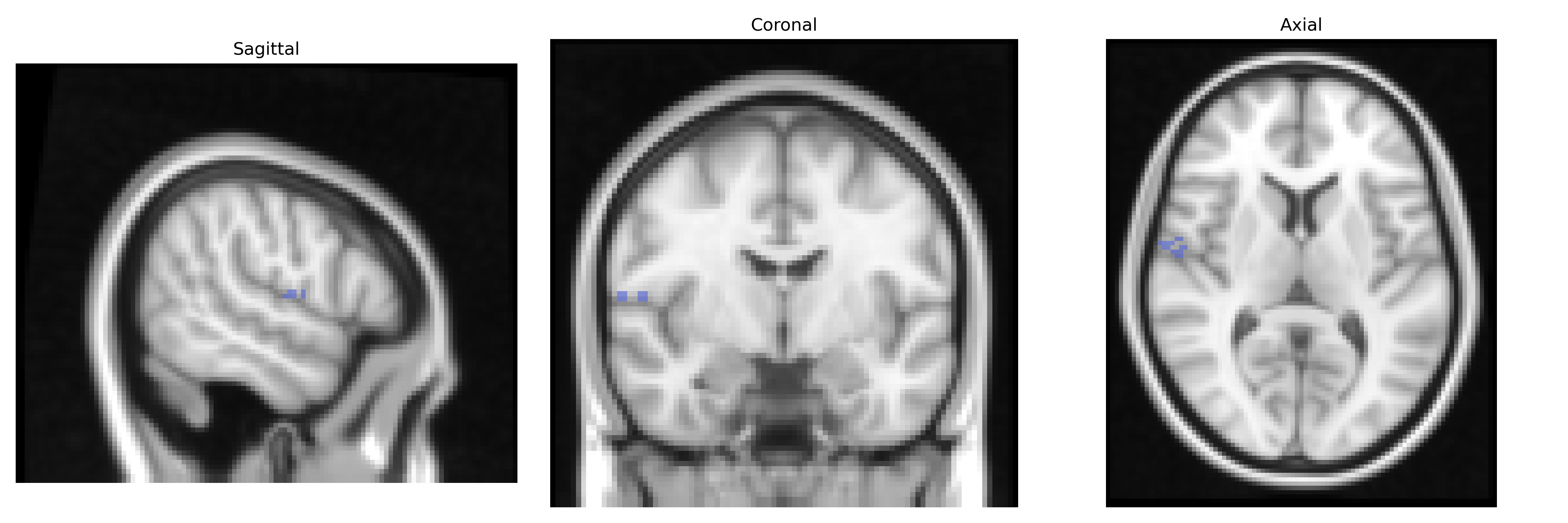
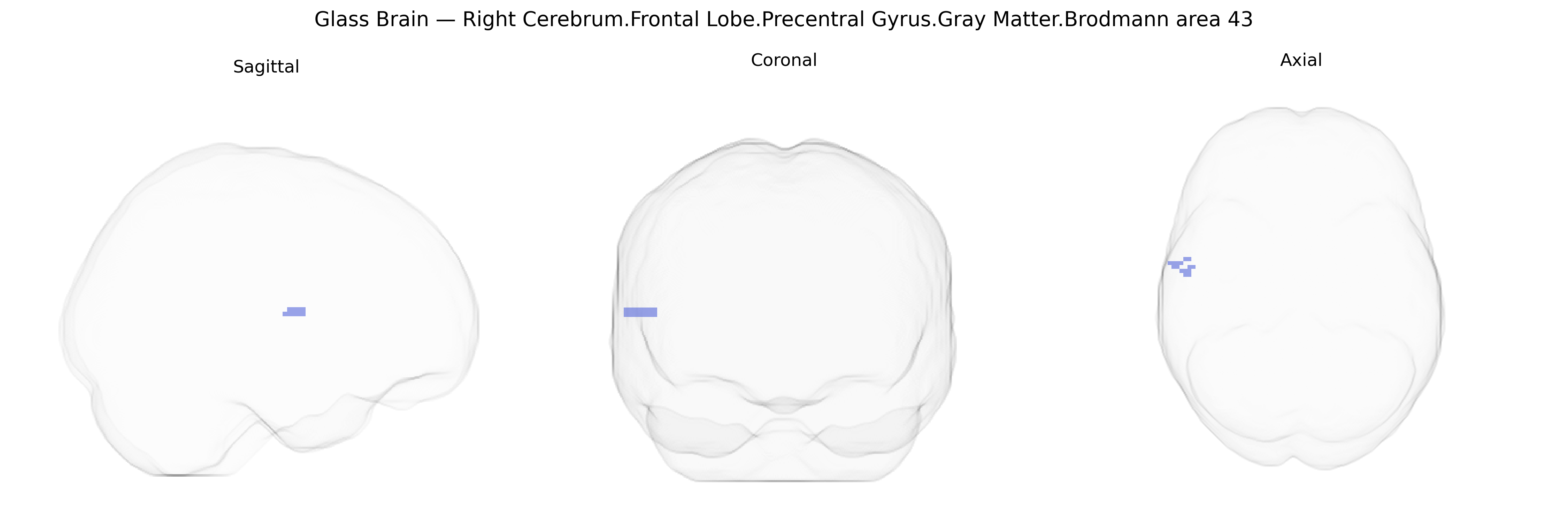
Bilateral Right Cerebrum.Frontal Lobe.Precentral Gyrus.Gray Matter.Brodmann area 43 corresponds to a small cortical region located at the ventral margin of the precentral/postcentral opercular area near the lateral sulcus, typically associated with the primary gustatory cortex and somatosensory processing of oral and pharyngeal structures. In the Talairach 2 mm atlas, this region lies in the frontal operculum adjacent to the insula and is implicated in taste perception, oral tactile sensation, and sensorimotor integration relevant to mastication and swallowing. Functionally, Brodmann area 43 participates in the multimodal integration of gustatory and somatic inputs from the mouth and tongue, interacting with neighboring somatosensory and insular cortices to contribute to flavor perception and oral sensorimotor control. There is no direct link for Brodmann area 43; see the related Insular cortex.
The bilateral right cerebrum frontal lobe precentral gyrus gray matter corresponding to Brodmann area 43 (a region at the junction of frontal and parietal operculum, often classified functionally as primary gustatory/somatosensory cortex rather than classic frontal motor cortex) has not been a primary focus of region-specific genetic association work, but several GWAS and imaging-genetics studies implicate nearby precentral/opercular areas in traits and disorders relevant to this region. Large-scale neuroimaging GWAS (e.g., ENIGMA, UK Biobank) have identified common variants in genes affecting cortical thickness and surface area in precentral and adjacent opercular regions—such as variants near HMGA2, IGF1, and WNT pathway genes—though these findings are typically reported at lobar or gyral resolution and do not isolate Brodmann area 43 specifically. Genetic studies linking sensorimotor and orofacial functions (e.g., FOXP2 and other language-related genes, DCDC2 and dyslexia-associated loci, CNTNAP2 and autism risk) have shown functional and structural associations with perisylvian opercular cortex, including regions overlapping BA 43, in tasks involving speech articulation, oral somatosensation, and gustatory processing. GWAS of taste perception and food preference (e.g., variants in TAS2R bitter taste receptors, ORs for odor, and genes influencing BMI and eating behavior such as FTO and MC4R) have been connected to functional activation and cortical morphology in insular-opercular gustatory networks, which encompass BA 43. Additionally, polygenic risk for neurodevelopmental and psychiatric disorders (schizophrenia, ADHD, autism) shows distributed effects on cortical structure and connectivity in sensorimotor and perisylvian regions, with some imaging-genetic studies reporting associations between risk scores and gray matter volume/thickness in precentral/opercular areas that include Brodmann area 43, though these effects are diffuse and not specific to this single Talairach-defined region. Overall, genetic influences on this area appear to be mediated through broader networks for sensorimotor integration, speech, and taste, rather than through region-exclusive loci.
Overview generated by GPT-4o (2026).
Region ID: 740
Hemisphere: bilateral
Atlas: Talairach labels 2mm
Full Quality Version: Download MP4
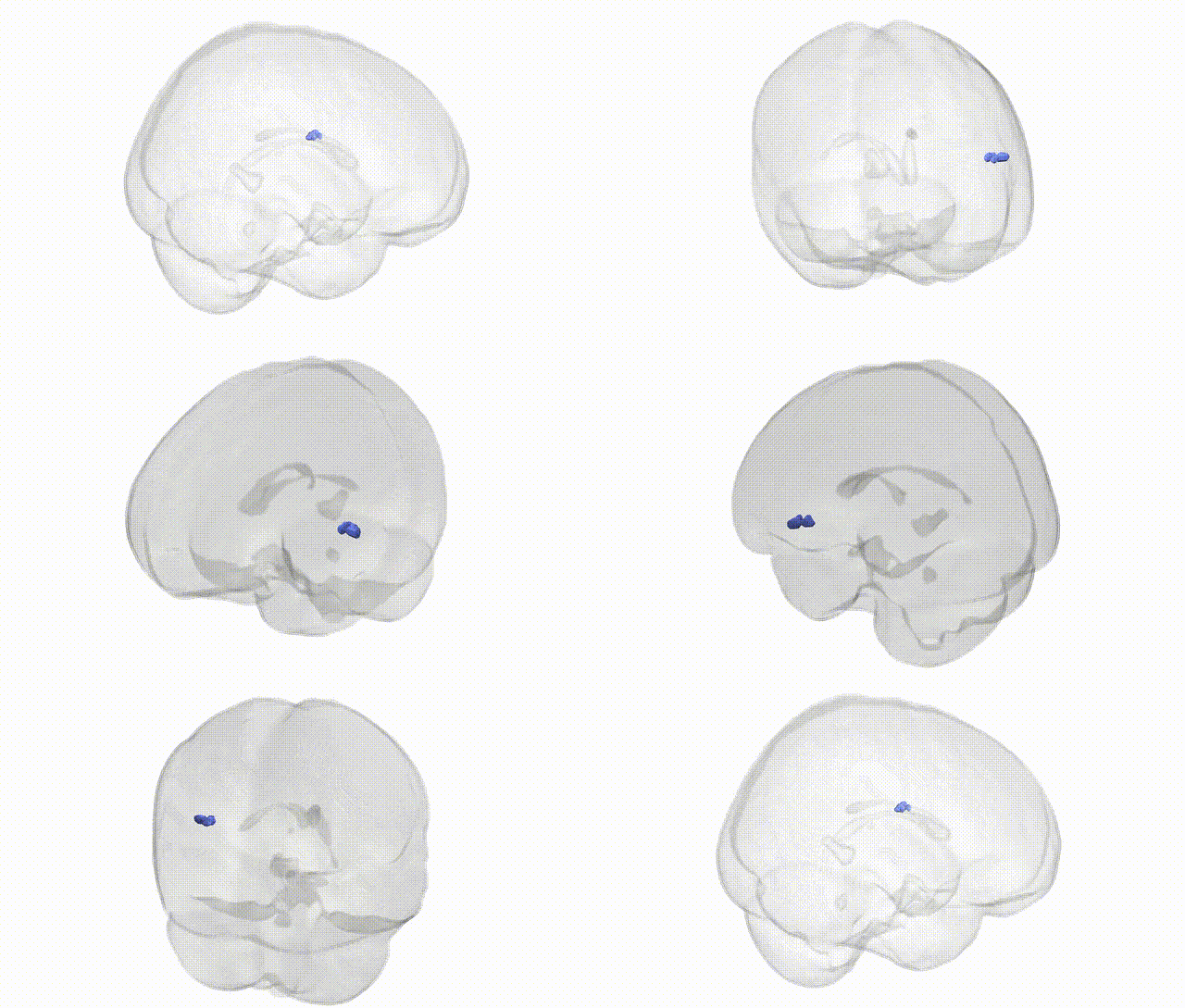
Full Quality Version: Download MP4
Wali Sidiqyar*, Gaurav Rudravaram*, Elyssa M. McMaster, Trent M. Schwartz, Adam M. Saunders, Kurt G. Schilling, Bennett A. Landman "Introducing SPINS: A Shared Public Visualization Library of Neuroanatomical Structures." Medical Imaging with Deep Learning- short paper
This resource is licensed under CC0 1.0 Universal (Public Domain).