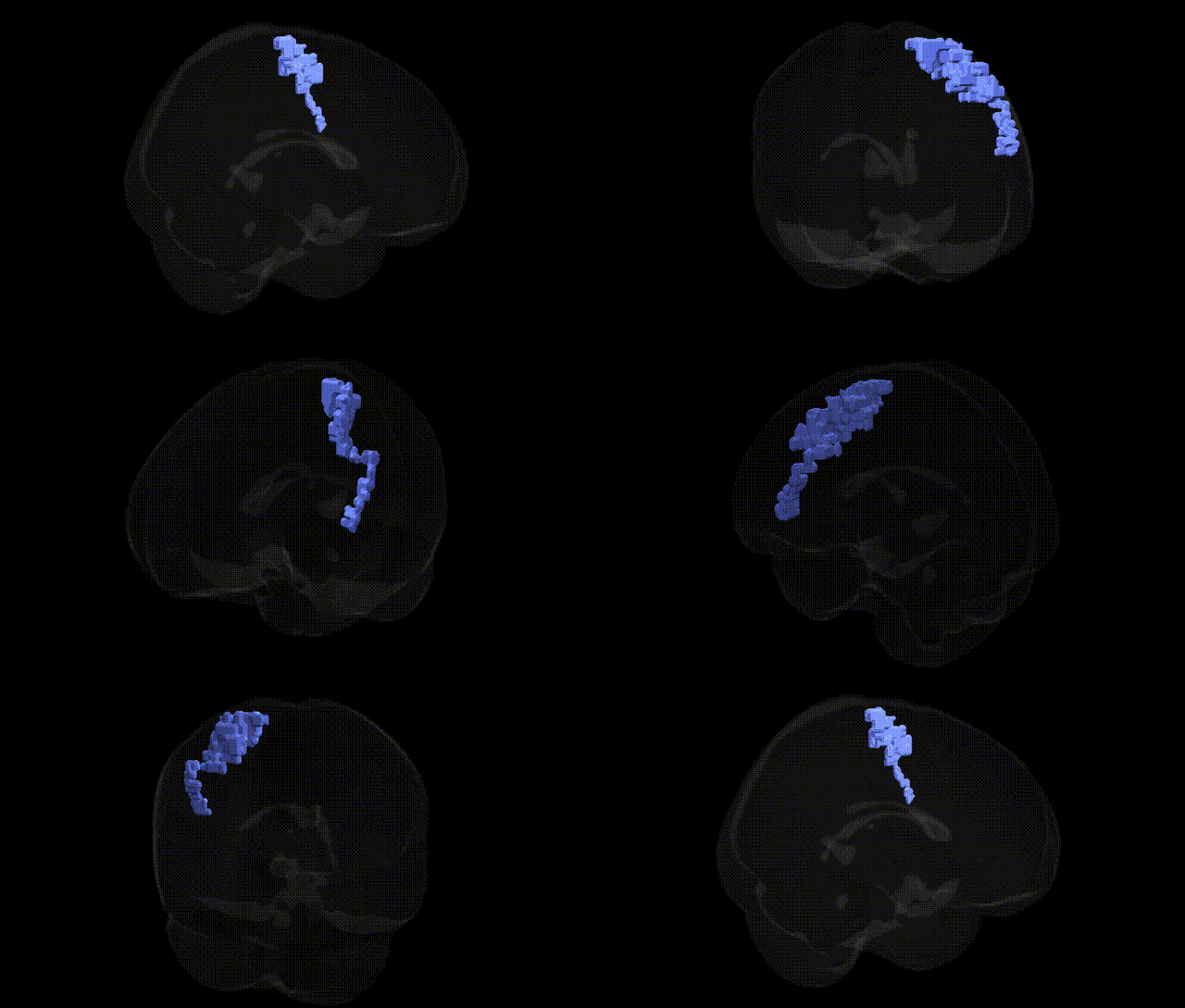
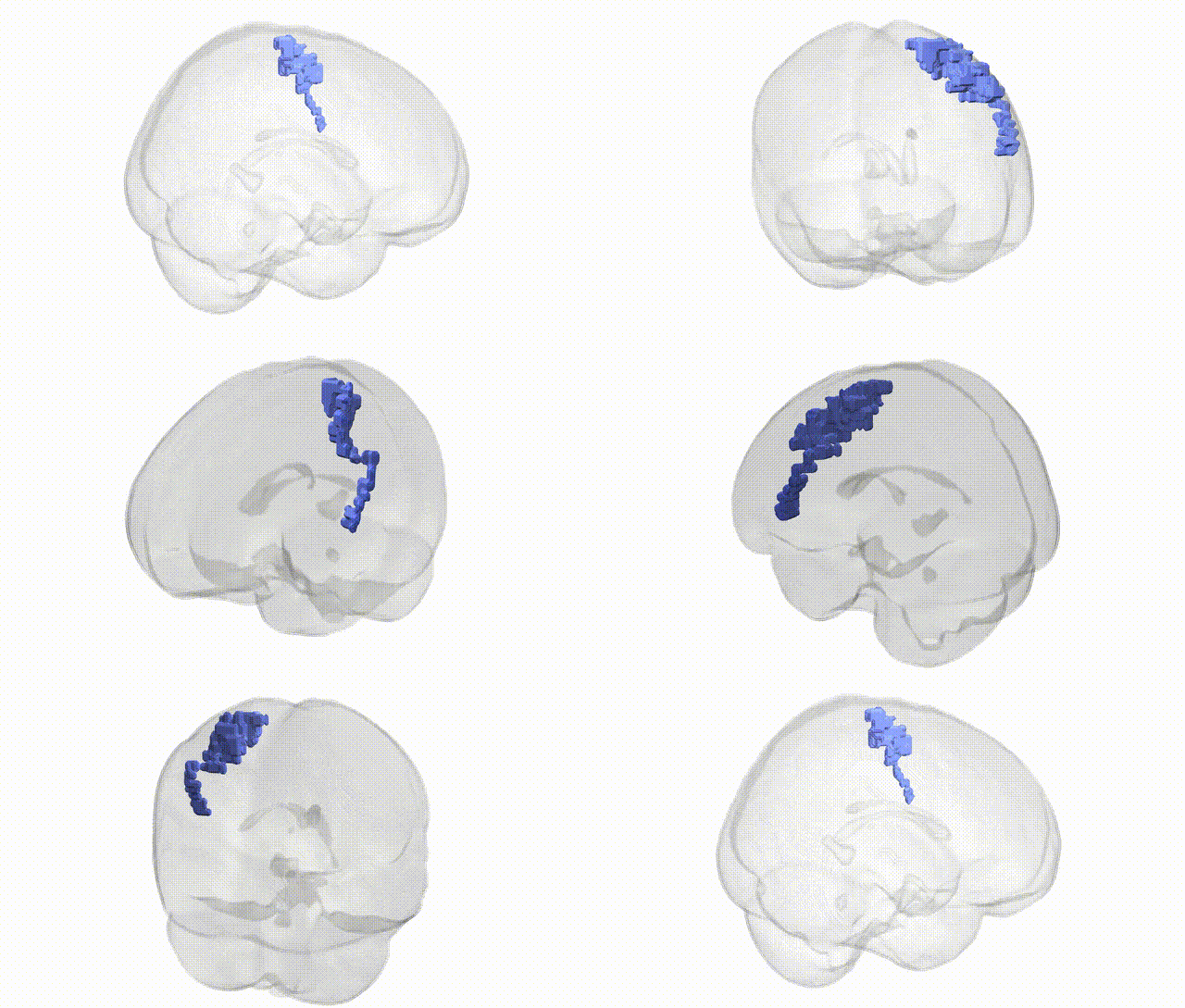
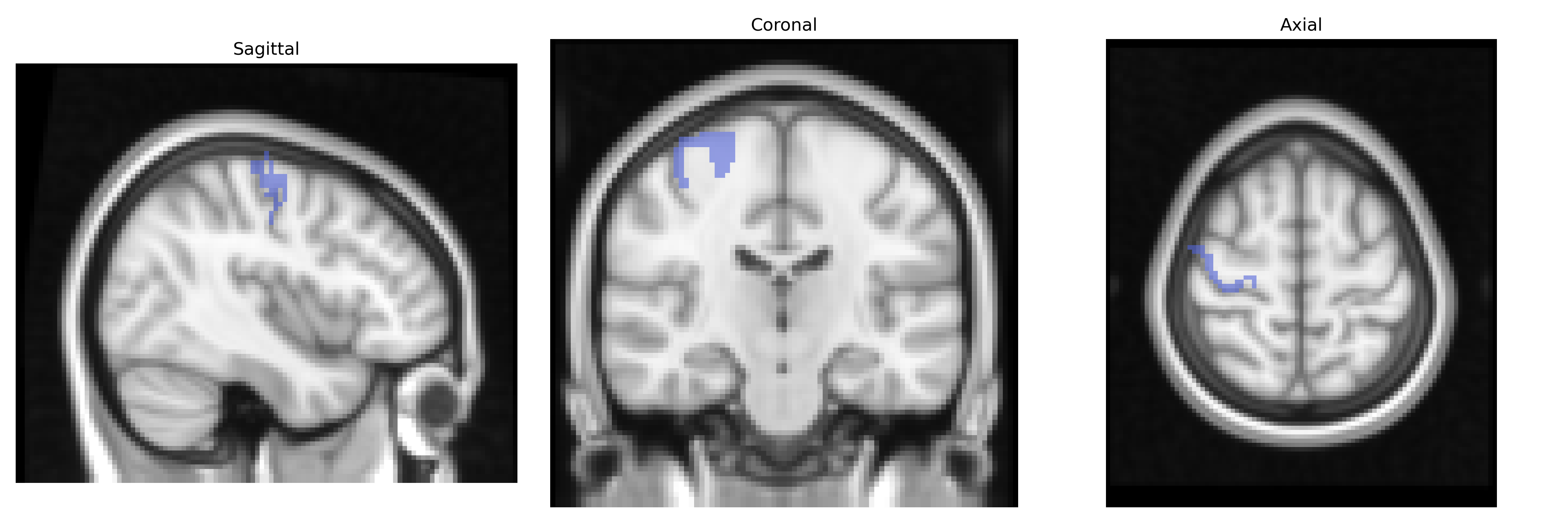
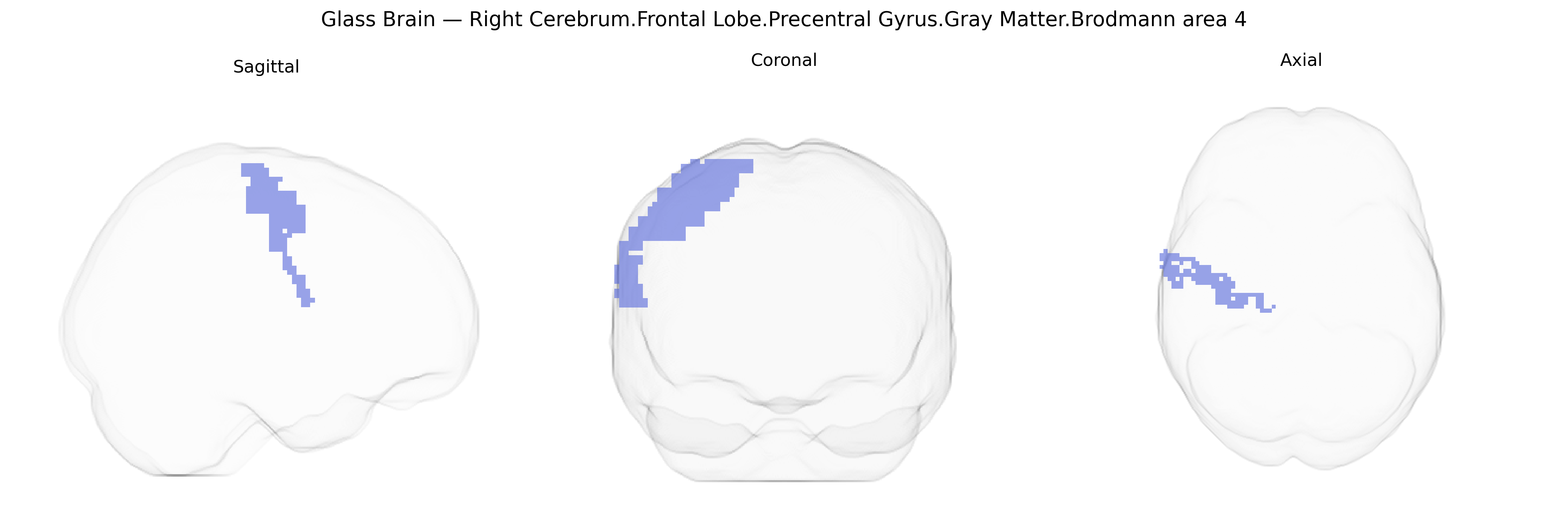
The bilateral Right Cerebrum.Frontal Lobe.Precentral Gyrus.Gray Matter.Brodmann area 4 corresponds to the primary motor cortex located in the anterior wall of the central sulcus within the frontal lobe. This agranular cortical field (BA4) contains large pyramidal neurons, including Betz cells, that give rise predominantly to the corticospinal and corticobulbar tracts, mediating voluntary execution of fine and gross motor movements, especially of the contralateral body. Somatotopically organized into the motor homunculus, it exhibits distinct representation of body parts along the precentral gyrus and integrates descending motor commands from premotor and supplementary motor areas. Functionally, Brodmann area 4 is crucial for precise movement initiation, muscle force control, and modulation of reflex pathways, and is a principal site affected in motor deficits such as hemiparesis following focal lesions. Primary motor cortex
The bilateral right precentral gyrus gray matter (Brodmann area 4), corresponding to primary motor cortex in the Talairach 2 mm atlas, has been implicated in multiple genetic studies that relate structural and functional variation in this region to motor, neurodevelopmental, and neuropsychiatric traits. Large-scale imaging genetics consortia (e.g., ENIGMA) have identified common variants in genes involved in neurodevelopment, synaptic signaling, and cytoskeletal dynamics (such as BDNF, MAPT, and multiple loci near regulatory regions for neuronal growth) that associate with cortical thickness, surface area, or gray matter volume in precentral gyrus and adjacent frontal motor areas. GWAS of motor-related phenotypes, including fine motor skill, handedness, and Parkinson’s disease risk, have reported overlap between loci that affect motor circuit integrity and structural metrics in primary motor cortex, with some evidence that variants in dopaminergic and axonal guidance genes modulate precentral gyrus morphology or activation. Neurodevelopmental disorder studies, particularly in autism spectrum disorder, ADHD, and specific motor coordination disorders (developmental coordination disorder, cerebral palsy), have linked risk loci and rare variants (e.g., in genes such as CNTNAP2, FOXP1/FOXP2, and others involved in corticospinal tract development) to atypical structure or connectivity of Brodmann area 4, though findings are often distributed across broader motor and premotor networks rather than confined to this region. In schizophrenia and bipolar disorder, imaging–genetics work has demonstrated associations between polygenic risk scores and reduced gray matter volume or altered activation in precentral gyrus during motor and cognitive tasks, suggesting that shared genetic liability for severe psychiatric illness can influence motor cortex structure. Additionally, GWAS of general brain morphology and total cortical surface have repeatedly identified widespread loci (e.g., in genes related to Wnt signaling and neuronal proliferation) that show regional effects including BA4, underscoring that genetic influences on this motor area are part of a diffuse polygenic architecture rather than region-specific single-gene effects.
Overview generated by GPT-4o (2026).
Region ID: 805
Hemisphere: bilateral
Atlas: Talairach labels 2mm
Full Quality Version: Download MP4
Full Quality Version: Download MP4
Wali Sidiqyar*, Gaurav Rudravaram*, Elyssa M. McMaster, Trent M. Schwartz, Adam M. Saunders, Kurt G. Schilling, Bennett A. Landman "Introducing SPINS: A Shared Public Visualization Library of Neuroanatomical Structures." Medical Imaging with Deep Learning- short paper
This resource is licensed under CC0 1.0 Universal (Public Domain).