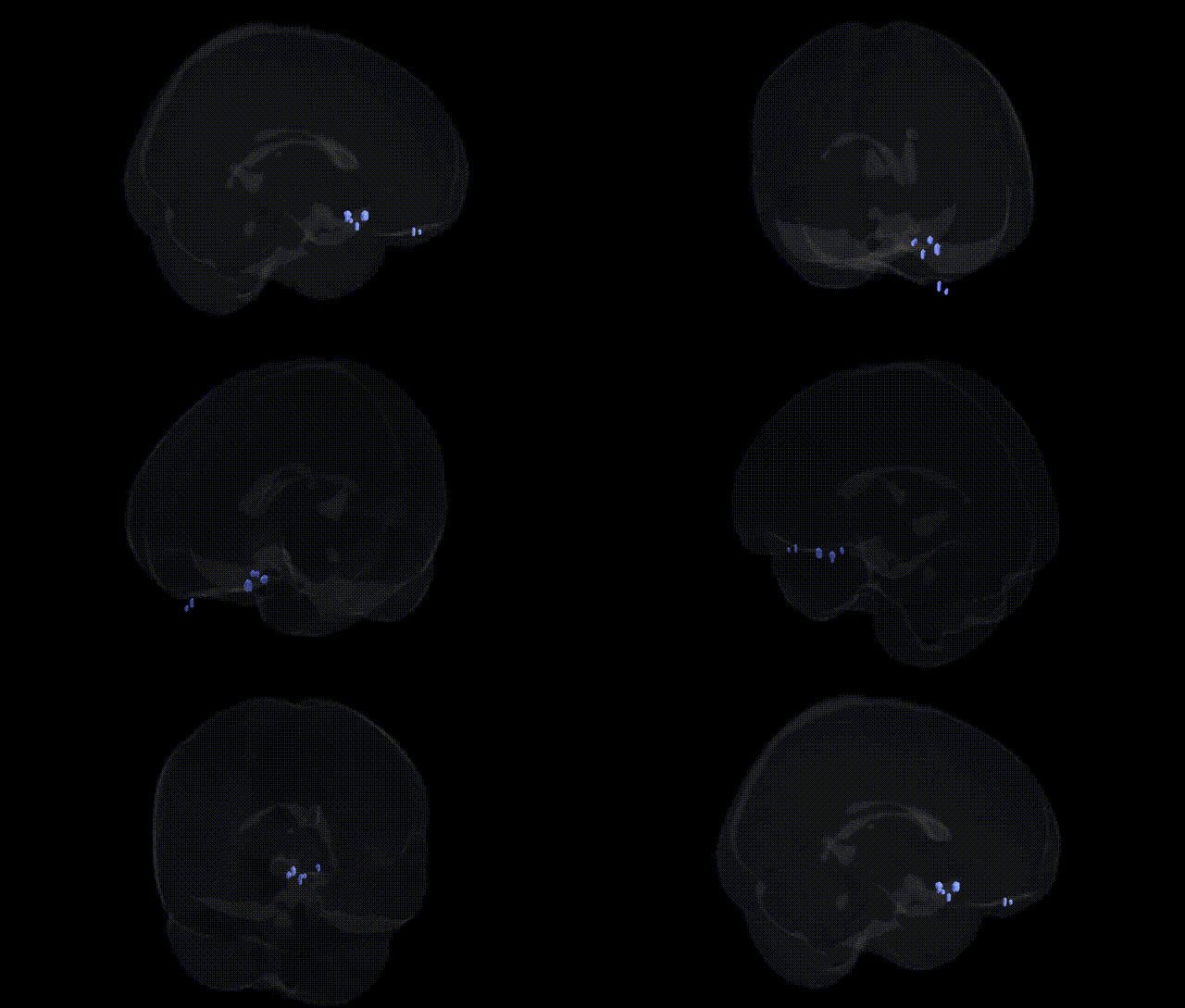
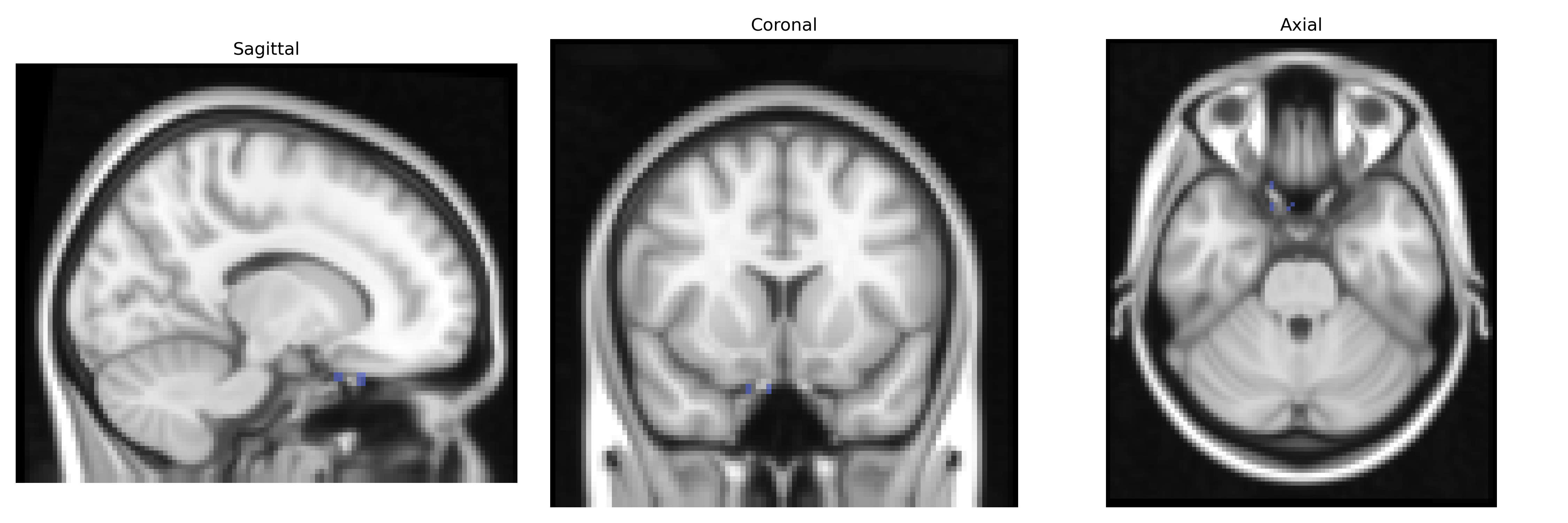
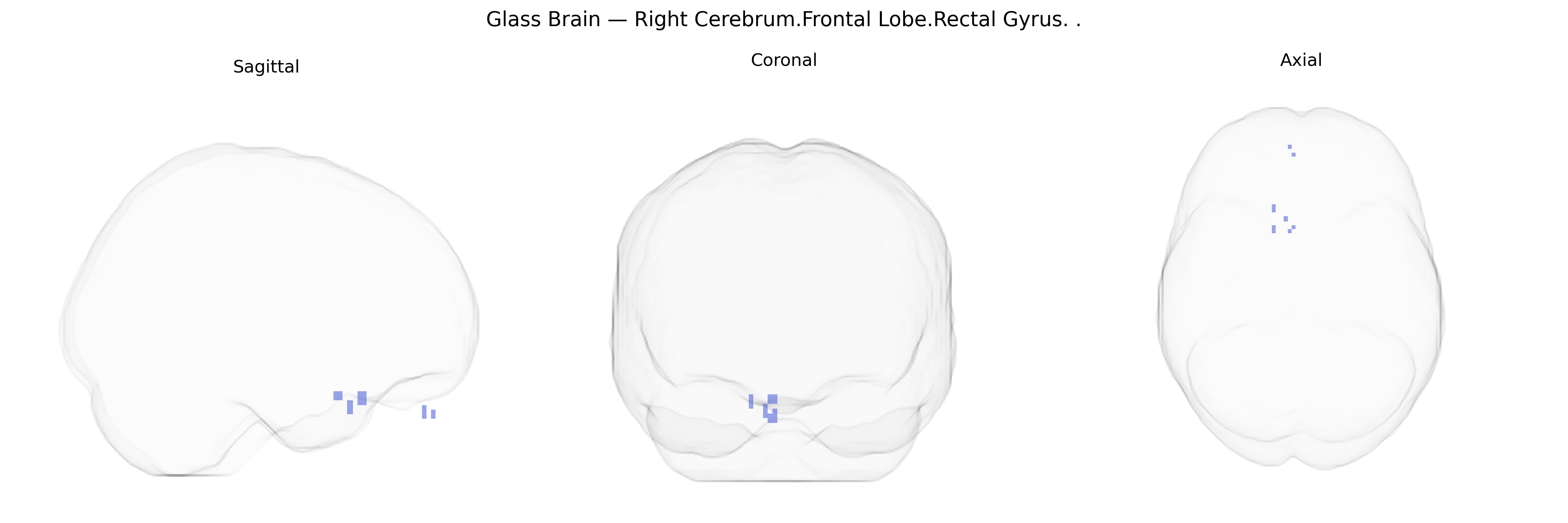
The bilateral Right Cerebrum.Frontal Lobe.Rectal Gyrus corresponds to the gyrus rectus (straight gyrus), a medial orbital frontal structure located on the inferior surface of the frontal lobe, adjacent to the olfactory sulcus and lying above the cribriform plate. It is part of the orbitofrontal cortex and is implicated in higher-order cognitive and affective processes, including reward evaluation, decision-making, social and emotional behavior, and aspects of personality. The gyrus rectus has strong connections with limbic and paralimbic regions, such as the amygdala and anterior cingulate cortex, and is often involved in frontal lobe and orbitofrontal syndromes when damaged, which can lead to disinhibition, altered judgment, and changes in emotional regulation. There is no direct link for “Rectal Gyrus”; the closest related structure is the Orbitofrontal cortex.
Genetic associations specific to the bilateral Right Cerebrum.Frontal Lobe.Rectal (rectus) gyrus, as defined in the Talairach labels 2 mm atlas, are rarely reported in isolation, but this ventromedial/orbitofrontal frontal territory is frequently implicated in imaging genetics and GWAS-based neuroimaging studies of cortical thickness, surface area, and functional activation. Large-scale consortia such as ENIGMA and UK Biobank have identified multiple SNPs and loci (e.g., variants near genes involved in neurodevelopment, synaptic function, and cell adhesion such as CADM2, DCC, and others) that influence orbitofrontal/ventromedial frontal morphology and connectivity, which typically encompass or overlap the rectus gyrus region. GWAS of brain-based endophenotypes for major depressive disorder, bipolar disorder, schizophrenia, and anxiety frequently report associations between risk polygenic scores and structural or functional alterations in ventromedial/orbitofrontal cortex, including the gyrus rectus, consistent with its role in reward, valuation, and affect regulation. In addition, genetic risk for substance use disorders, impulsivity, and personality traits such as neuroticism and risk-taking has been linked to variation in orbitofrontal/ventromedial frontal activation and structure in fMRI and MRI-based polygenic score studies, again implicating the general region containing the rectus gyrus rather than that Talairach parcel alone. Overall, evidence points to polygenic influences on development and function of this frontal region that modulate vulnerability to mood, psychotic, and addiction-related phenotypes, but highly specific GWAS findings targeting exactly the “Right Cerebrum.Frontal Lobe.Rectal Gyrus” label are limited, with most results derived from broader orbitofrontal/ventromedial frontal ROIs.
Overview generated by GPT-4o (2026).
Region ID: 144
Hemisphere: bilateral
Atlas: Talairach labels 2mm
Full Quality Version: Download MP4
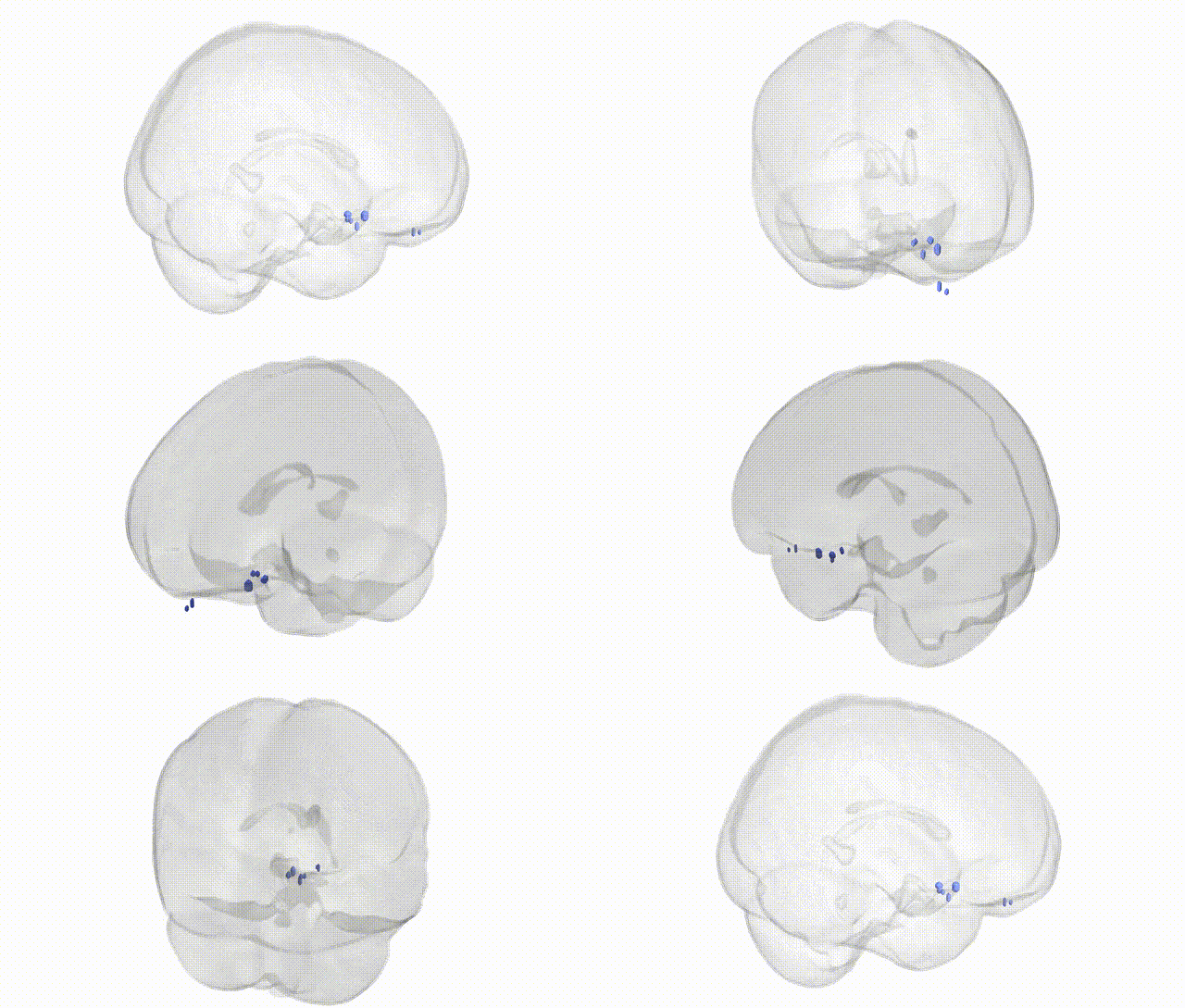
Full Quality Version: Download MP4
Wali Sidiqyar*, Gaurav Rudravaram*, Elyssa M. McMaster, Trent M. Schwartz, Adam M. Saunders, Kurt G. Schilling, Bennett A. Landman "Introducing SPINS: A Shared Public Visualization Library of Neuroanatomical Structures." Medical Imaging with Deep Learning- short paper
This resource is licensed under CC0 1.0 Universal (Public Domain).