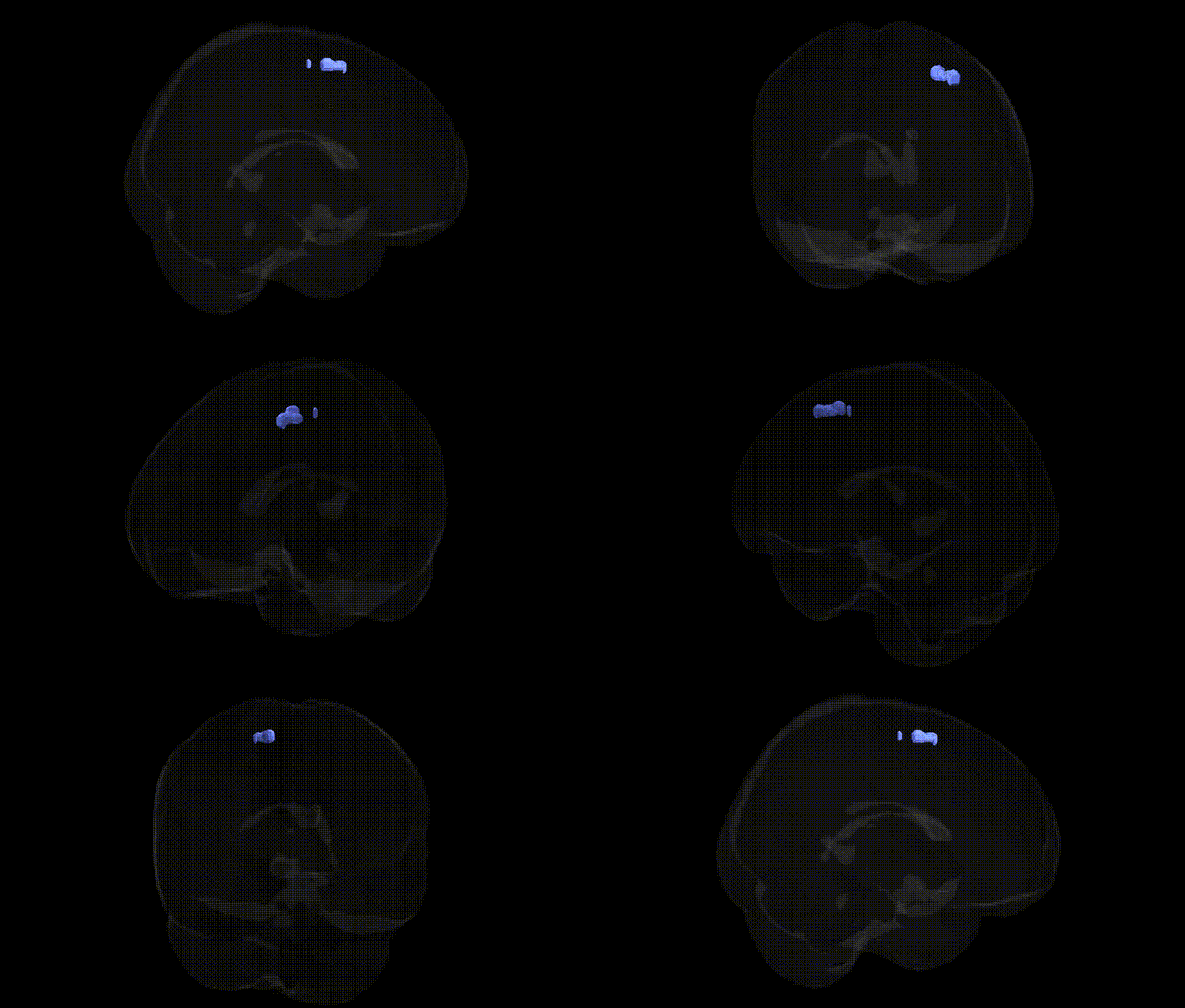
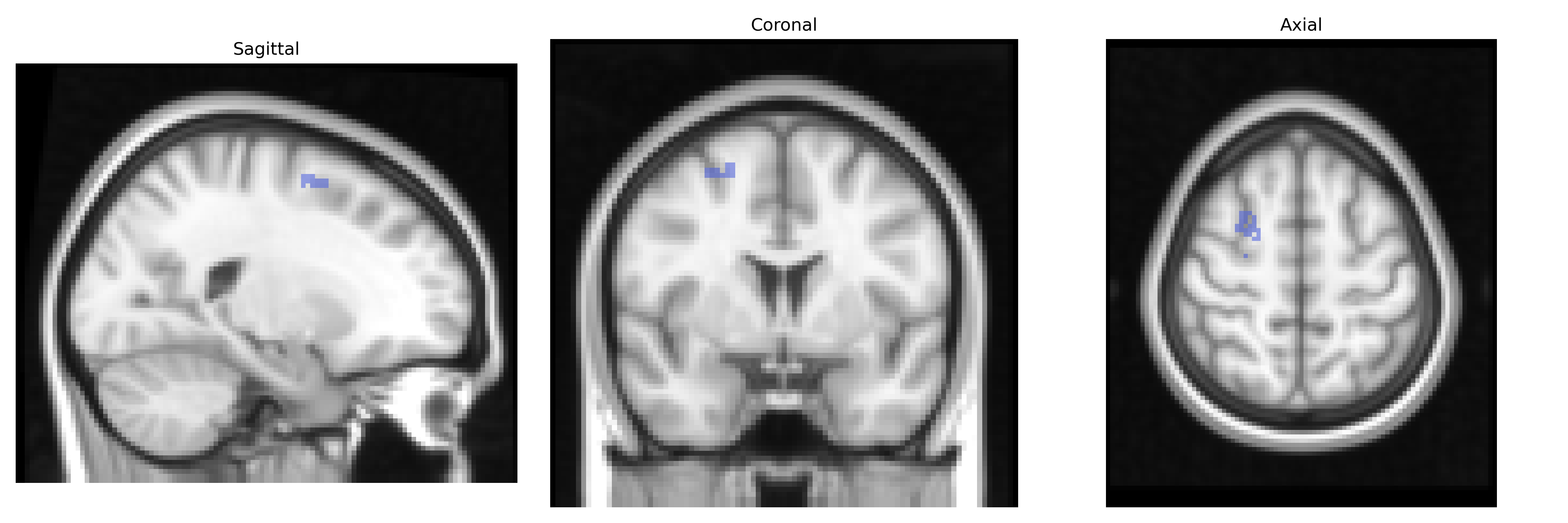
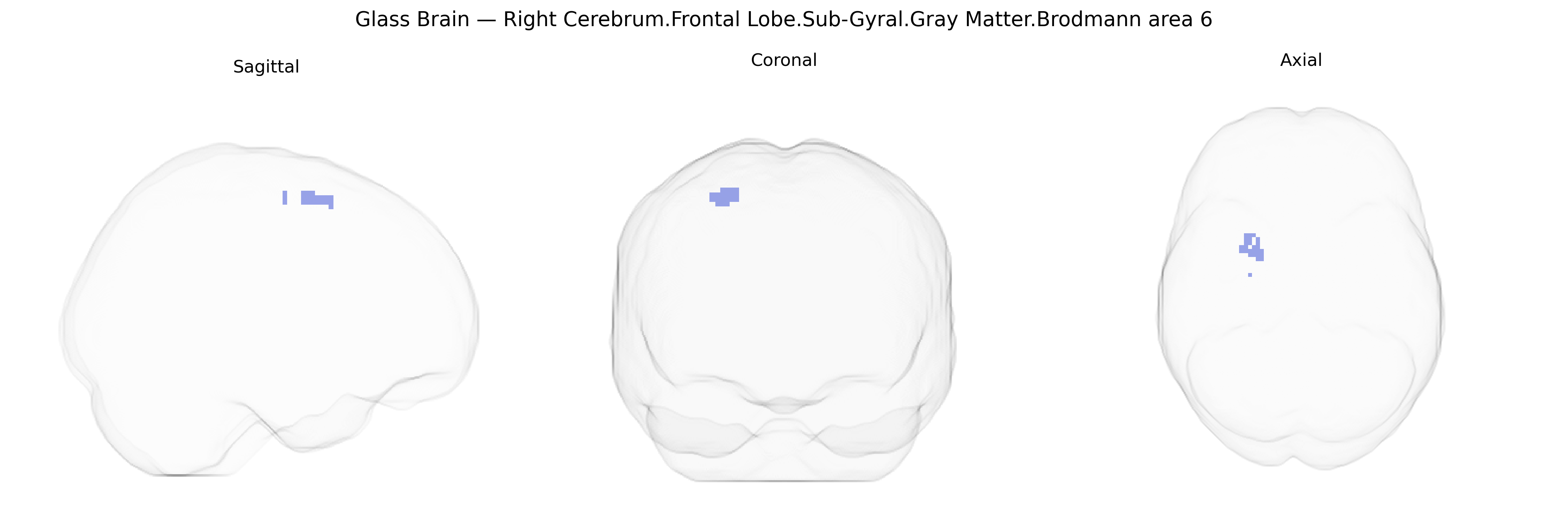
The bilateral Right Cerebrum.Frontal Lobe.Sub-Gyral.Gray Matter.Brodmann area 6 corresponds primarily to premotor and supplementary motor cortical territories located anterior to the primary motor cortex within the frontal lobe. This agranular cortical region is involved in the higher-order planning, sequencing, and preparation of voluntary movements, integrating sensory information and internal motor programs to organize complex motor behaviors. Neuronal populations in Brodmann area 6 contribute to the selection and initiation of motor actions, postural adjustments, and coordination of bilateral and axial movements, with strong connectivity to primary motor cortex, basal ganglia, and cerebellar circuits. Functional imaging and lesion studies implicate this region in motor imagery, learned motor skills, and aspects of motor attention, making it critical for the smooth execution of goal-directed behavior. Brodmann area 6
The bilateral Right Cerebrum.Frontal Lobe.Sub-Gyral.Gray Matter.Brodmann area 6 region, encompassing dorsal premotor and supplementary motor territories, has been implicated in a range of genetic and GWAS findings, largely through imaging-genetics studies that treat cortical thickness, surface area, and gray-matter volume as heritable endophenotypes. Large consortia such as ENIGMA and UK Biobank have shown that variants in genes involved in neurodevelopment, synaptic signaling, and cytoskeletal dynamics (for example, in pathways including MAPT, BDNF, and multiple glutamatergic and GABAergic genes) are associated with structural variation in medial and lateral frontal premotor cortices, often including Brodmann area 6. GWAS of motor function, handedness, and general cognitive ability have reported associations with frontal premotor regions that overlap BA6, linking polygenic scores for these traits to differences in local gray-matter metrics. In clinical genetics, this region is frequently found to be structurally or functionally altered in disorders with strong heritable components—such as schizophrenia, ADHD, obsessive–compulsive disorder, autism spectrum disorder, and Tourette’s syndrome—with risk variants in genes like CACNA1C, DRD2, and synaptic scaffolding proteins showing downstream associations with abnormal activation or morphology in premotor/supplementary motor areas. Additionally, Parkinson’s disease and other movement disorders, which have robust genetic architectures (e.g., LRRK2, SNCA, PARK genes), often exhibit compensatory or pathological changes in BA6, further tying inherited variation in motor-system genes to this region’s structure and function, although most associations are at the level of broader frontal and motor networks rather than BA6-specific loci.
Overview generated by GPT-4o (2026).
Region ID: 1094
Hemisphere: bilateral
Atlas: Talairach labels 2mm
Full Quality Version: Download MP4
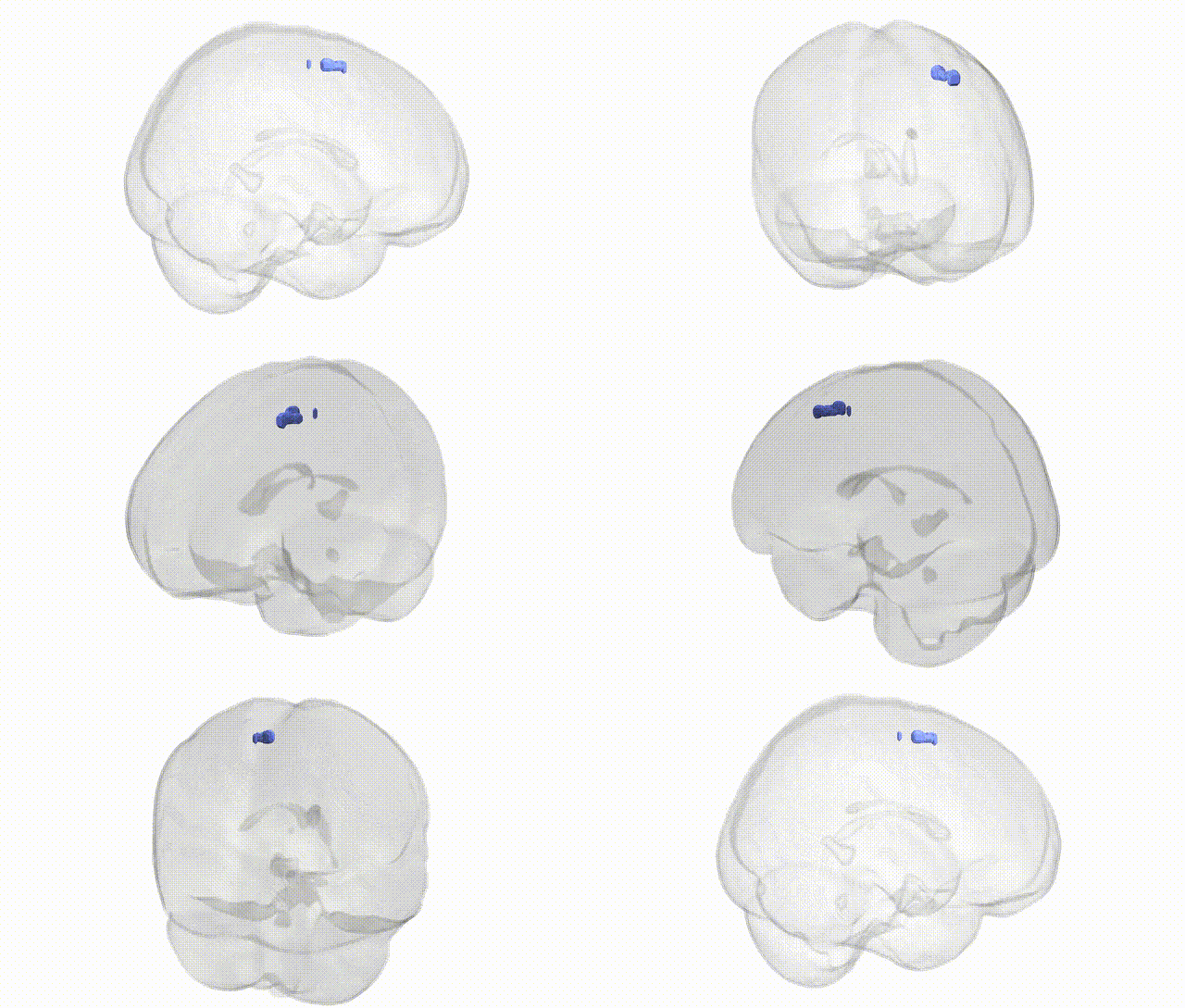
Full Quality Version: Download MP4
Wali Sidiqyar*, Gaurav Rudravaram*, Elyssa M. McMaster, Trent M. Schwartz, Adam M. Saunders, Kurt G. Schilling, Bennett A. Landman "Introducing SPINS: A Shared Public Visualization Library of Neuroanatomical Structures." Medical Imaging with Deep Learning- short paper
This resource is licensed under CC0 1.0 Universal (Public Domain).