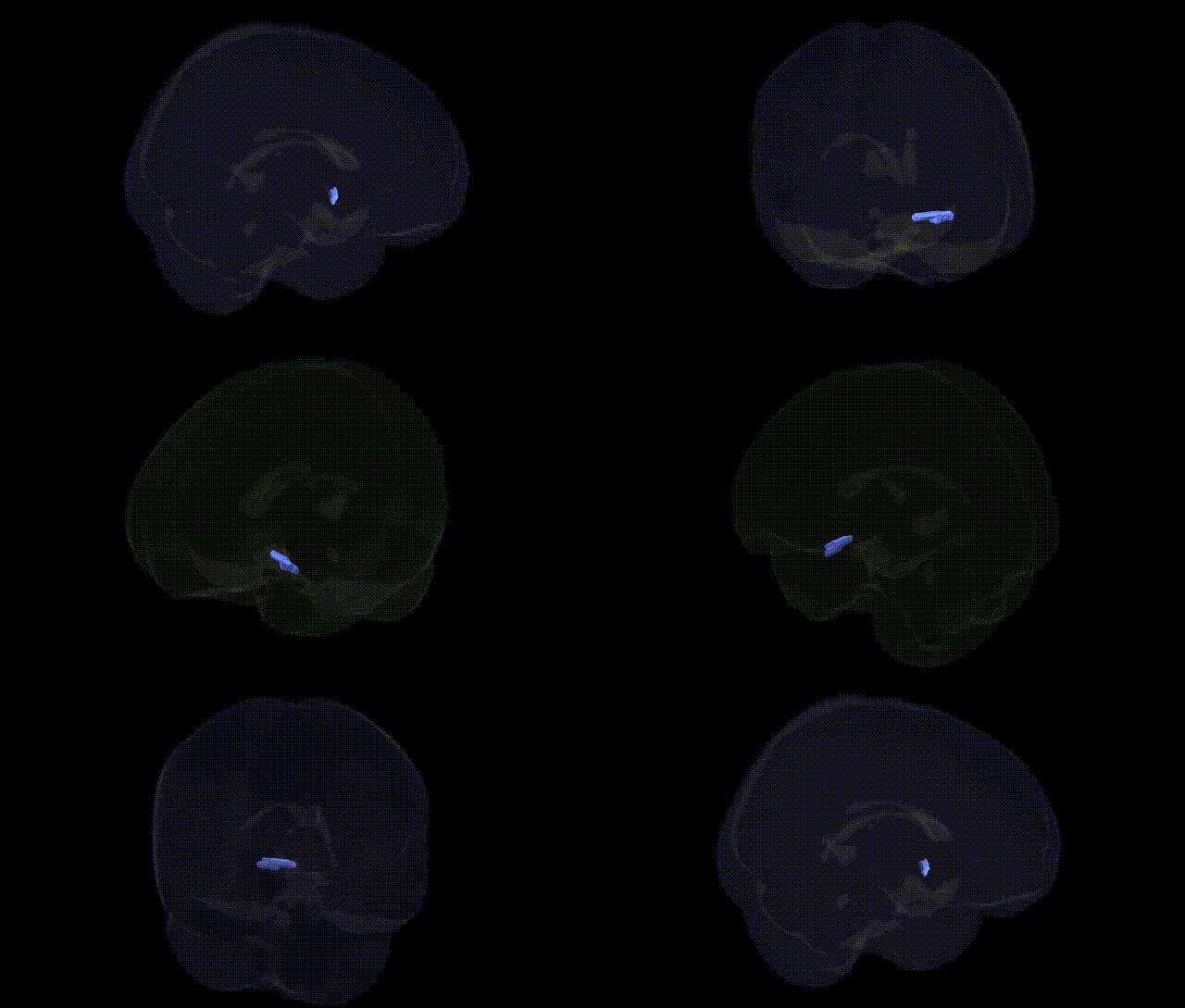
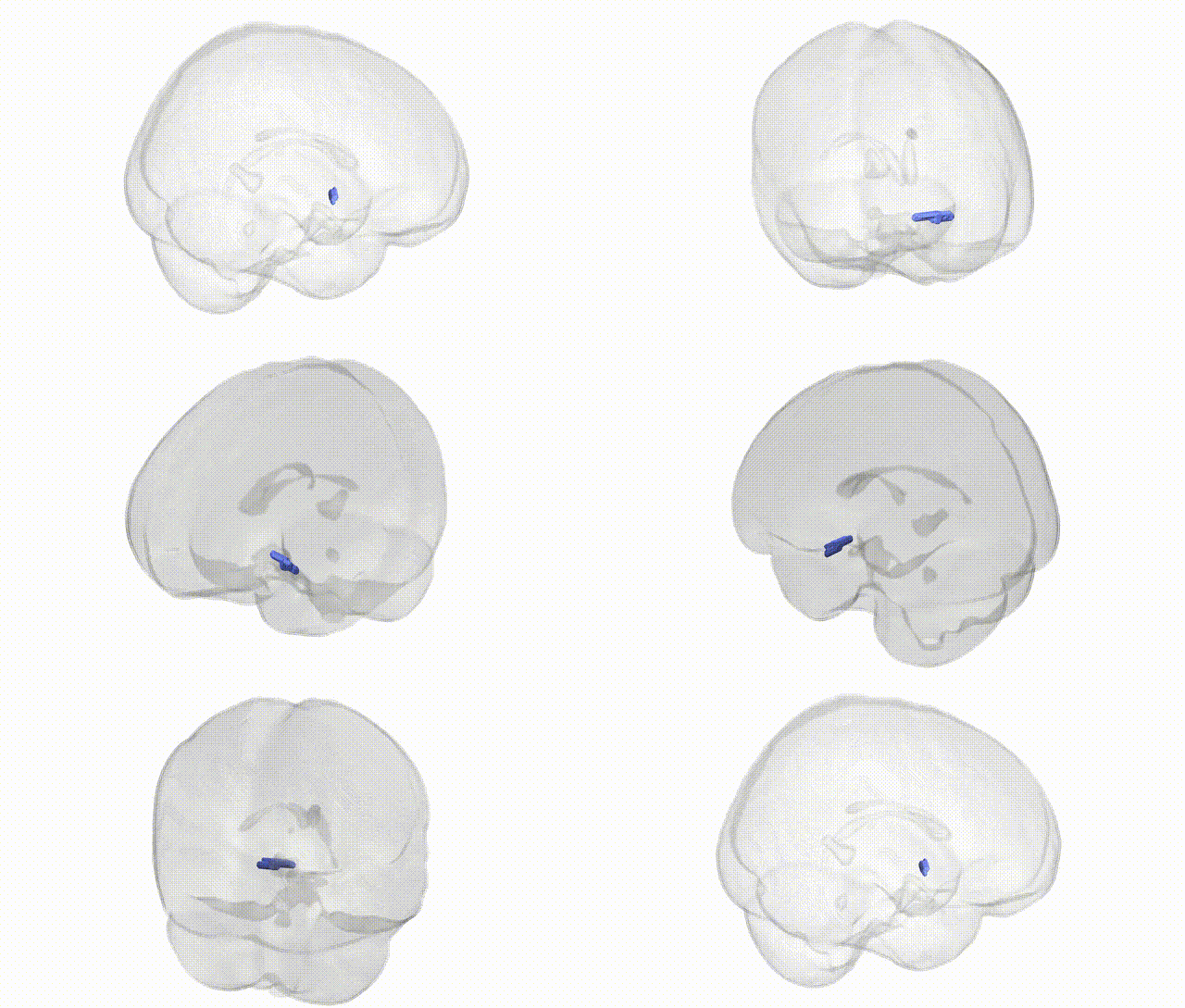
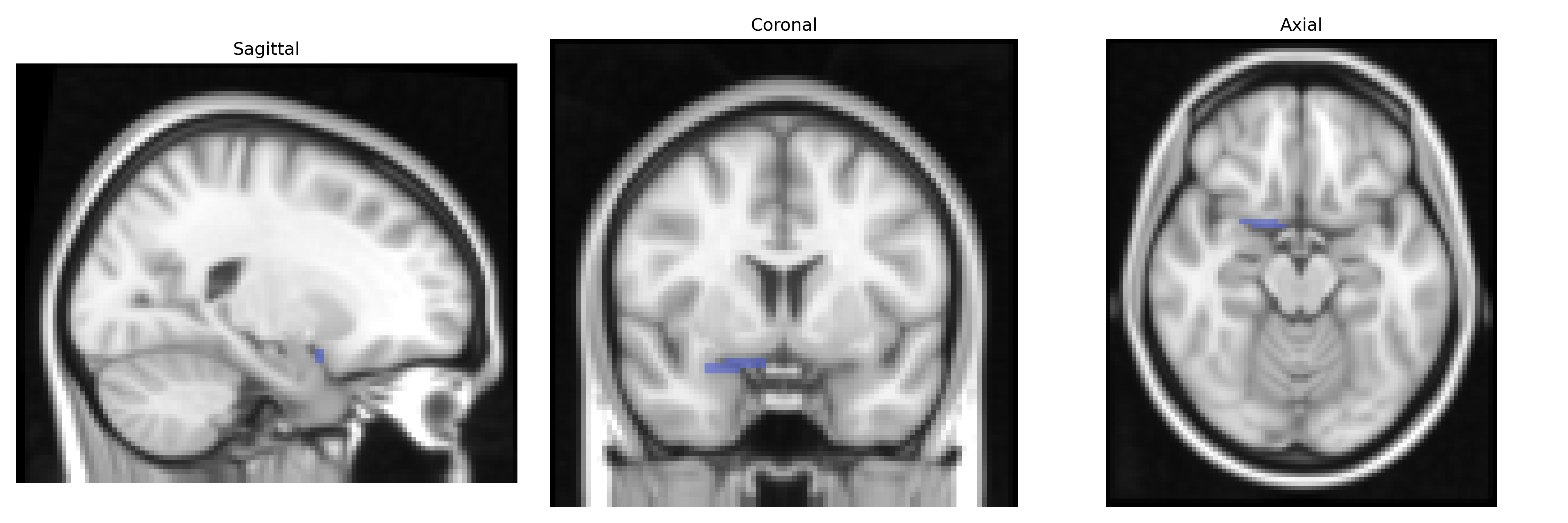
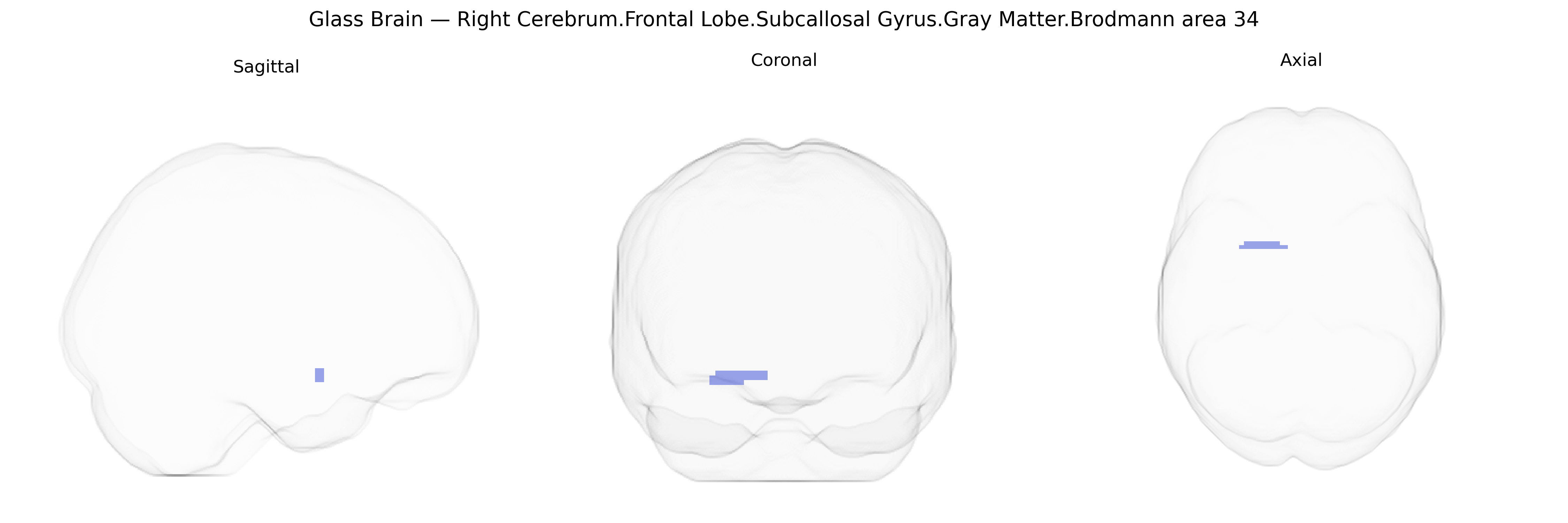
The bilateral Right Cerebrum.Frontal Lobe.Subcallosal Gyrus.Gray Matter.Brodmann area 34 region, as defined in the Talairach 2 mm atlas, corresponds primarily to the entorhinal cortex located in the medial temporal lobe, though the atlas label reflects its stereotactic projection near subcallosal/frontal structures. Brodmann area 34 is cytoarchitectonically characterized by dense layer II neurons and serves as a major gateway between the neocortex and the hippocampal formation, playing a critical role in declarative memory, spatial navigation, and olfactory processing. Functionally, it participates in encoding and retrieval of episodic memories and integrating multimodal sensory information into memory representations, and is often implicated in early pathological changes in neurodegenerative conditions such as Alzheimer’s disease due to its strong connectivity with hippocampal and parahippocampal regions. There is no direct Wikipedia article specifically for this Talairach-defined “subcallosal gyrus BA34” region; a closely related structure is the entorhinal cortex: Entorhinal cortex.
The bilateral right subcallosal gyrus (Talairach “Right Cerebrum.Frontal Lobe.Subcallosal Gyrus.Gray Matter.Brodmann area 34”) sits within the ventromedial prefrontal/limbic network, and although few GWAS directly target this precise atlas label, convergent genetic and imaging-genetic evidence implicates this region in affective and stress-related phenotypes. Large MRI-based GWAS of subcallosal cingulate volume and cortical thickness have identified associations with variants in genes related to synaptic function and neurodevelopment (for example in or near BDNF, NEUROD6, and glutamatergic pathway genes), and polygenic scores for major depressive disorder, bipolar disorder, and neuroticism predict structural and functional variation in this area. The subcallosal region is a key hub in treatment-resistant depression and is the target of deep brain stimulation; genetic risk for depression (e.g., variants in SLC6A4, FKBP5, and other stress-response loci) has been linked to altered activity and connectivity in this network, including BA34/subcallosal territories. Additionally, GWAS of worry, anxiety, and emotional regulation, as well as structural endophenotypes such as limbic and cingulate volumes, have implicated overlapping loci in serotoninergic, HPA-axis, and neuroplasticity pathways that modulate function of the subcallosal gyrus and adjacent Brodmann areas, supporting a genetically mediated role of this region in mood, anxiety, and stress-related disorders rather than in primary sensory or cognitive traits.
Overview generated by GPT-4o (2026).
Region ID: 283
Hemisphere: bilateral
Atlas: Talairach labels 2mm
Full Quality Version: Download MP4
Full Quality Version: Download MP4
Wali Sidiqyar*, Gaurav Rudravaram*, Elyssa M. McMaster, Trent M. Schwartz, Adam M. Saunders, Kurt G. Schilling, Bennett A. Landman "Introducing SPINS: A Shared Public Visualization Library of Neuroanatomical Structures." Medical Imaging with Deep Learning- short paper
This resource is licensed under CC0 1.0 Universal (Public Domain).