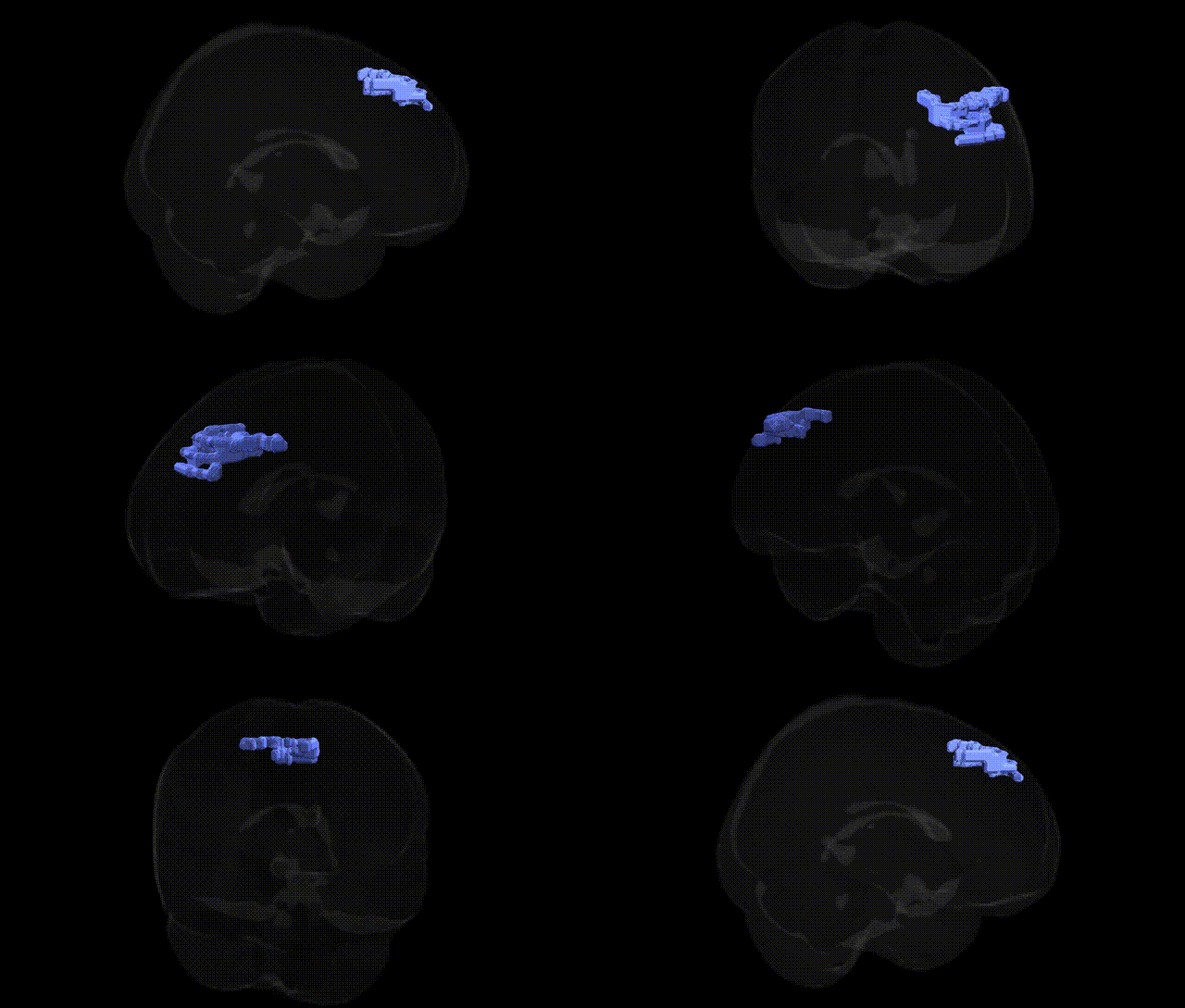
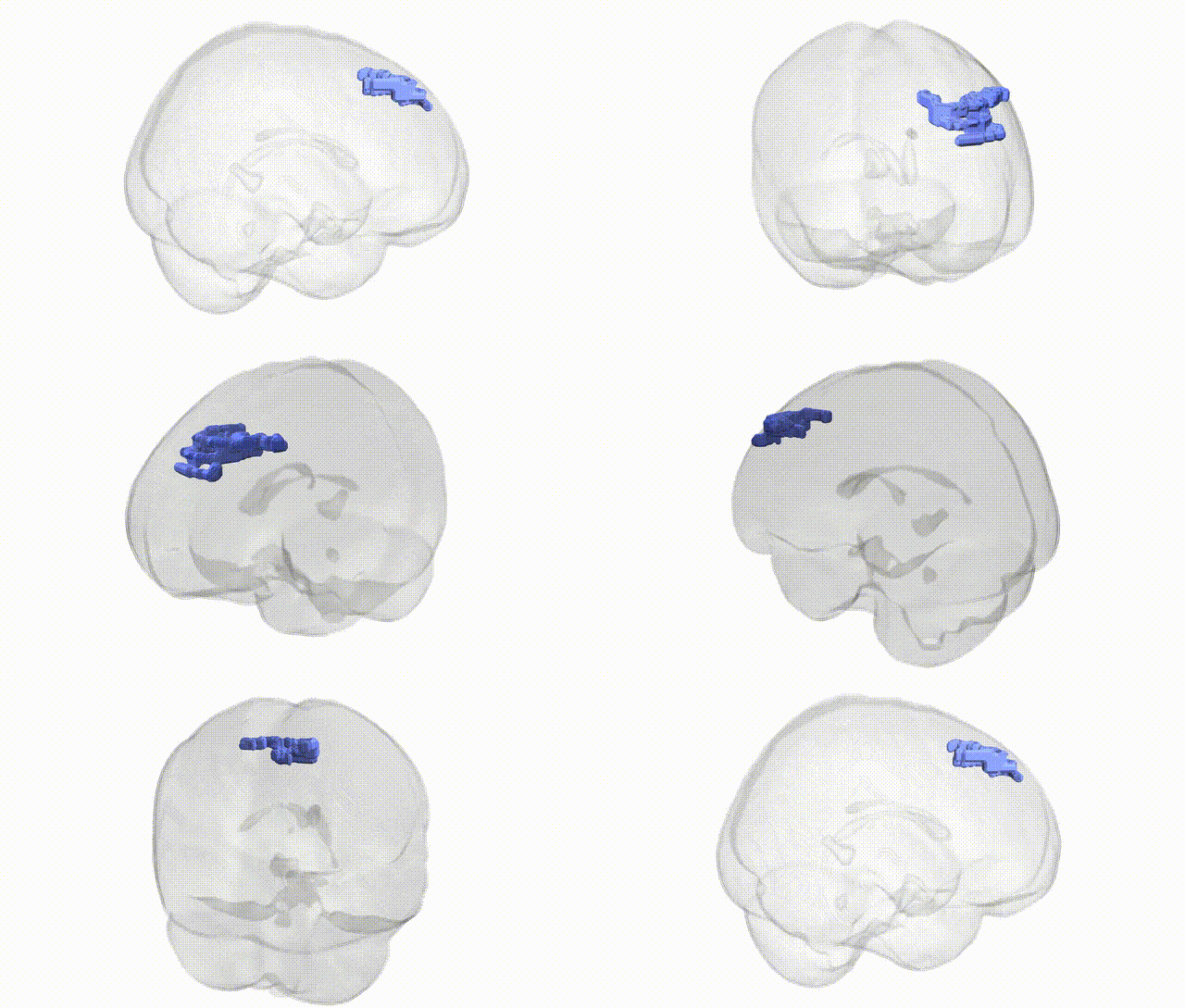
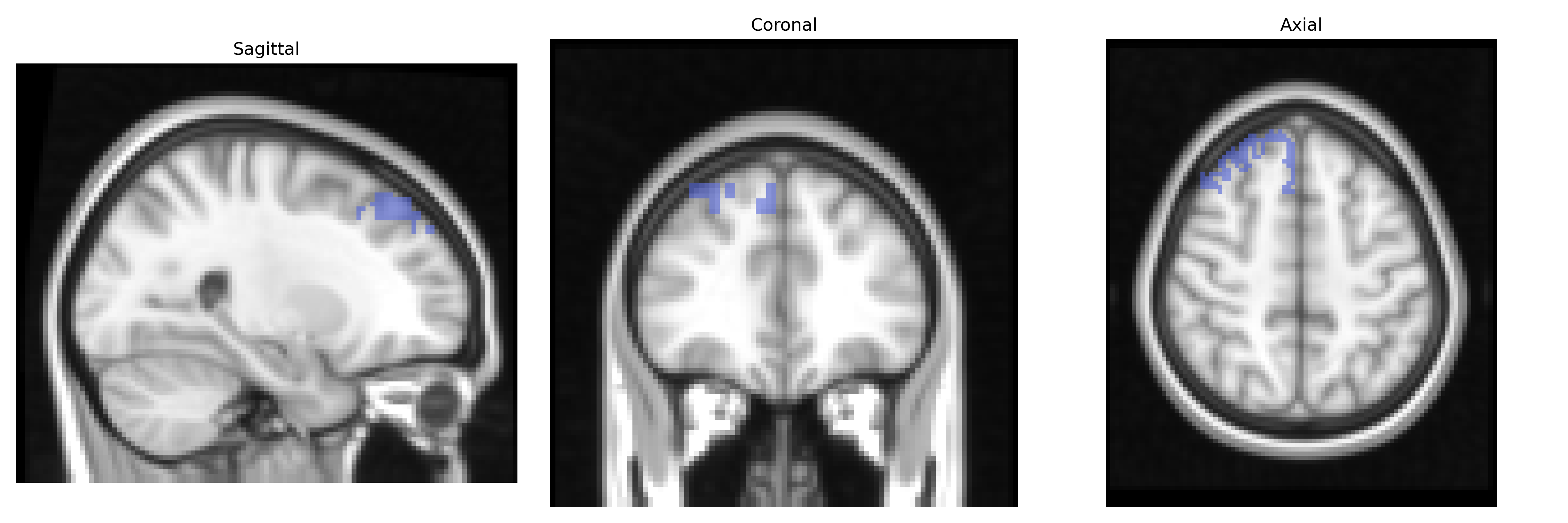
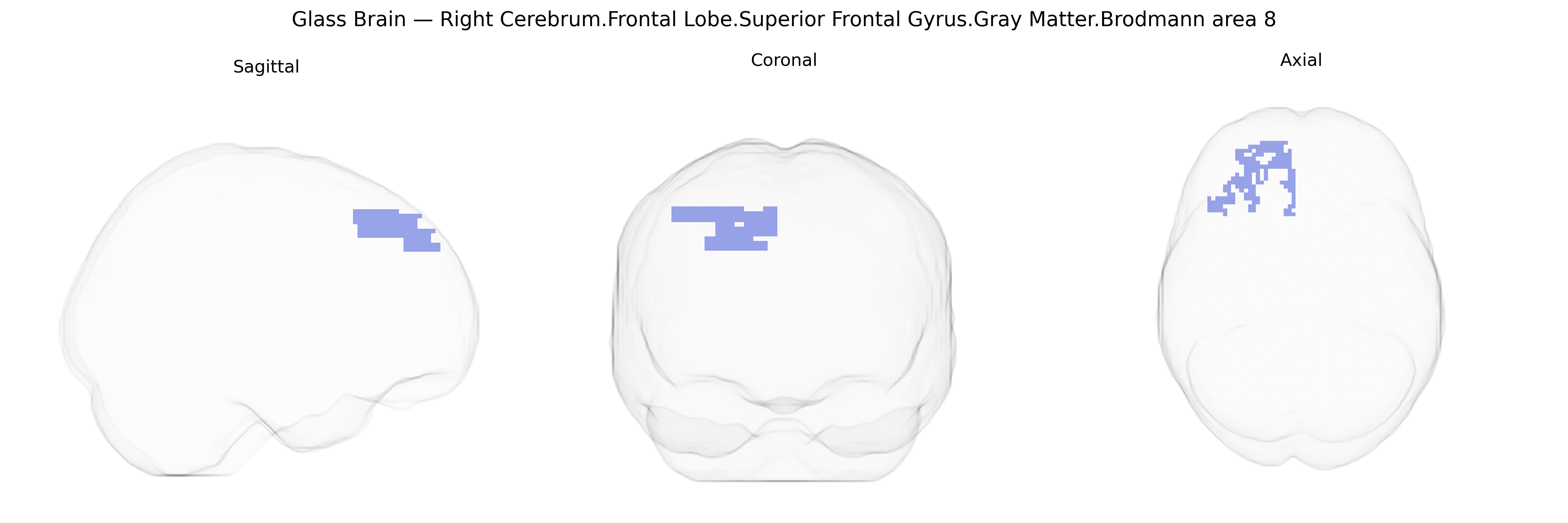
Bilateral Right Cerebrum.Frontal Lobe.Superior Frontal Gyrus.Gray Matter.Brodmann area 8 corresponds to a cortical territory in the dorsolateral frontal lobe implicated in higher-order oculomotor control, attention, and executive functions. Situated anterior to the premotor cortex and superior to the middle frontal gyrus, this region is classically associated with frontal eye field activity, contributing to the voluntary control of saccadic eye movements and the coordination of gaze with cognitive goals. Its gray matter comprises pyramidal neurons that form part of fronto-parietal and fronto-striatal networks involved in working memory, decision-making, and the integration of visual and motor information. Although Brodmann area 8 is defined cytoarchitectonically, functional imaging and lesion studies highlight its role in top-down control of behavior, particularly in tasks requiring planned shifts of attention and complex visuomotor coordination. There is no direct link for “Brodmann area 8”; a closely related structure is the frontal eye fields: Frontal eye field.
The bilateral right superior frontal gyrus (Brodmann area 8), encompassing premotor and oculomotor control as well as higher-order cognitive functions, has been implicated in multiple genetic and GWAS-based associations through imaging genetics and neuropsychiatric studies, although few findings are specific to the exact Talairach 2 mm label. Variants in genes influencing cortical morphology, such as those identified in large ENIGMA and UK Biobank GWAS (e.g., loci near KIAA0586, HMGA2, and other neurodevelopmental genes), have been associated with superior frontal cortical thickness and surface area, which include BA8 territory. Polygenic risk scores for schizophrenia, bipolar disorder, and major depressive disorder show correlations with structural and functional alterations in right superior frontal and adjacent dorsolateral prefrontal regions, indicating that common risk alleles for these disorders partly exert effects via this circuitry. GWAS of cognitive traits and educational attainment (involving loci near genes such as CHD8, CNTNAP2, and others related to synaptic development) have been linked to frontal lobe measures and task-related activation overlapping BA8, particularly in working memory and cognitive control paradigms. Additionally, imaging-genetic studies of attention-deficit/hyperactivity disorder, obsessive–compulsive disorder, and generalized anxiety have reported that variants in dopaminergic (e.g., DRD2, COMT) and glutamatergic (e.g., GRIN2B) genes modulate activity or connectivity in superior frontal / BA8 circuits, while GWAS of risk-taking, impulsivity, and neuroticism show enrichment for genes whose expression patterns include this region. Overall, genetic influences on neurodevelopment, synaptic function, and cortical plasticity converge on right BA8 as part of broader prefrontal networks underlying executive function, eye-movement control, and psychiatric vulnerability, even though most associations are at the level of regional or network-level measures rather than this specific atlas-defined parcel.
Overview generated by GPT-4o (2026).
Region ID: 1036
Hemisphere: bilateral
Atlas: Talairach labels 2mm
Full Quality Version: Download MP4
Full Quality Version: Download MP4
Wali Sidiqyar*, Gaurav Rudravaram*, Elyssa M. McMaster, Trent M. Schwartz, Adam M. Saunders, Kurt G. Schilling, Bennett A. Landman "Introducing SPINS: A Shared Public Visualization Library of Neuroanatomical Structures." Medical Imaging with Deep Learning- short paper
This resource is licensed under CC0 1.0 Universal (Public Domain).