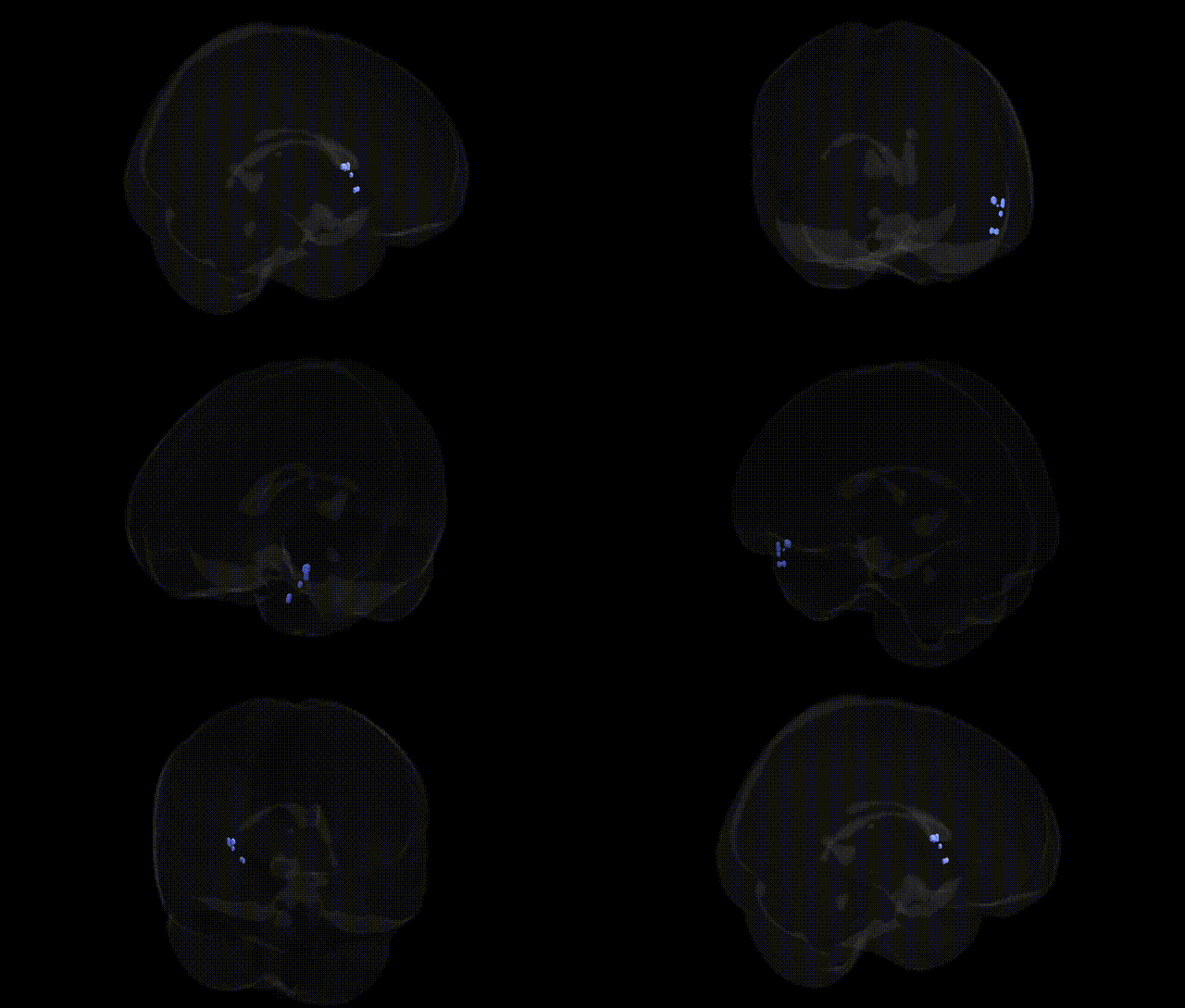
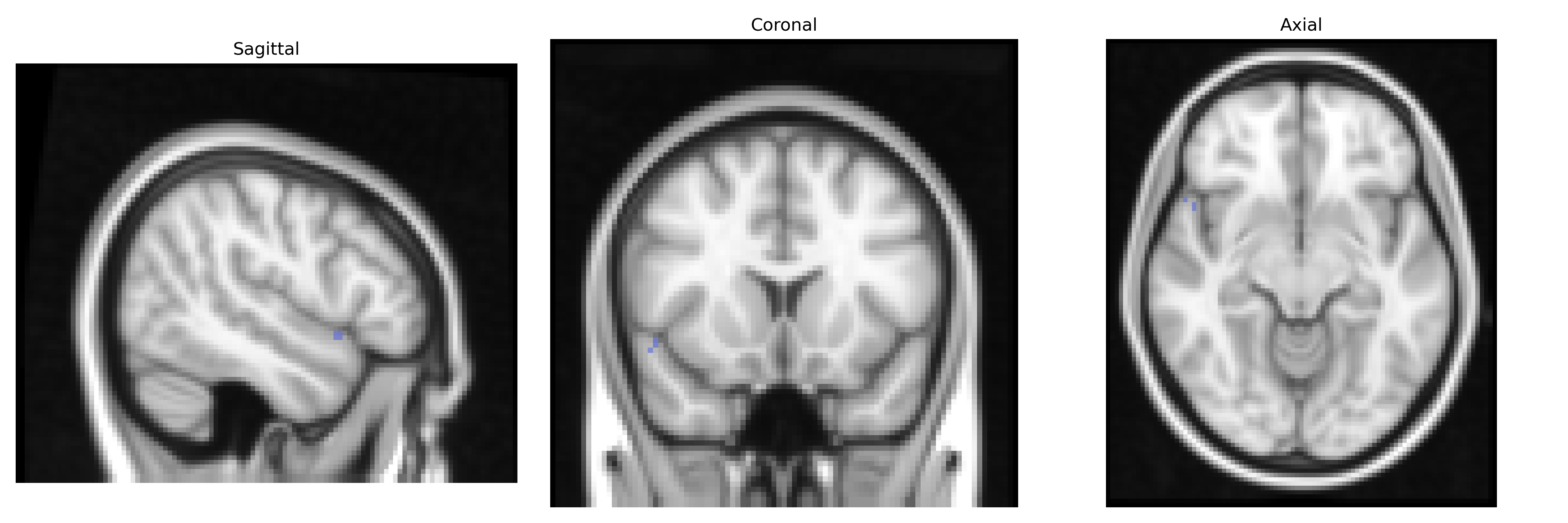
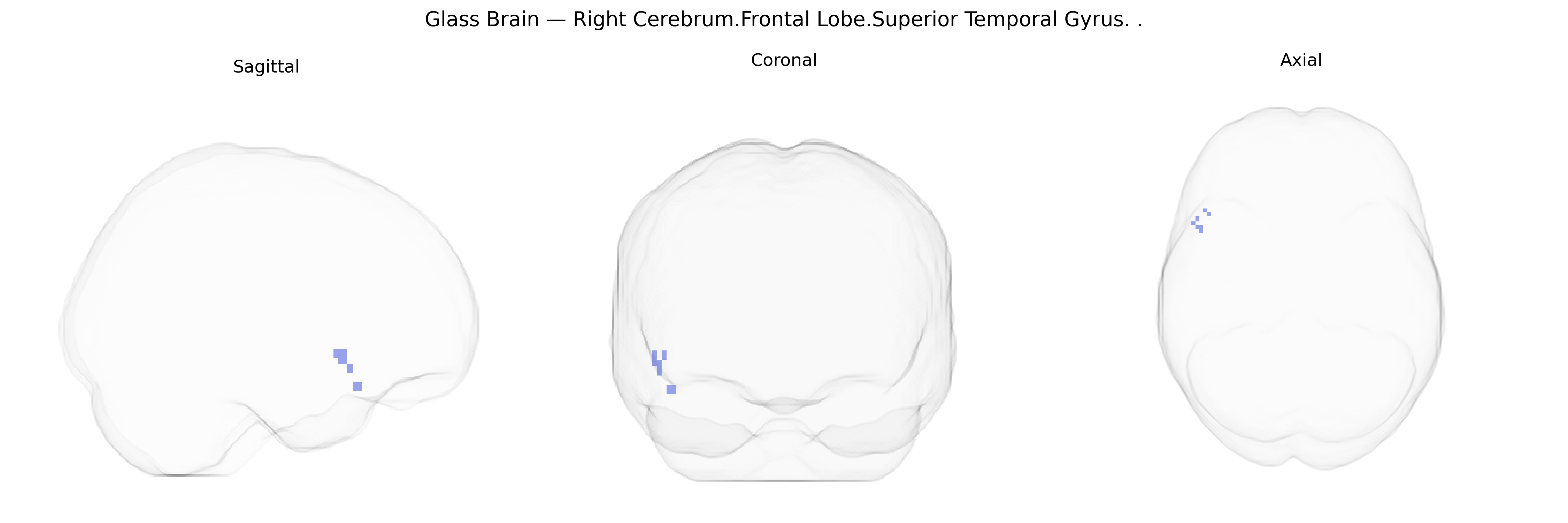
The bilateral Right Cerebrum.Frontal Lobe.Superior Temporal Gyrus, as designated in the Talairach labels 2mm Atlas, reflects a composite labeling that spans frontal and temporal territories but functionally corresponds most closely to the Superior temporal gyrus, a key cortical region in the lateral temporal lobe. The superior temporal gyrus is involved in auditory perception, speech and language processing (including phonological and lexical aspects), and integration of multimodal social and emotional cues. It contains primary and secondary auditory cortices and contributes to the analysis of complex sounds such as speech and music, as well as to higher-order functions such as semantic processing and aspects of social cognition.
Genetic associations involving the bilateral Right Cerebrum.Frontal Lobe.Superior Temporal Gyrus (noting that in standard neuroanatomy the superior temporal gyrus is classically temporal rather than frontal) largely emerge from imaging genetics and GWAS of brain structure, language, social cognition, and psychiatric disorders. Variants in genes related to synaptic development and plasticity—such as CNTNAP2, FOXP2, and DCDC2—have been linked to cortical thickness, surface area, or activation patterns in superior temporal regions, often in the context of speech and language processing, reading ability, and developmental language disorders. Large-scale GWAS of cortical measures (e.g., ENIGMA consortium studies) have identified multiple loci influencing temporal lobe morphology, including regions overlapping the superior temporal gyrus, implicating genes involved in neurodevelopment (e.g., PACRG, KIAA0586) and axonal growth. Functional imaging-genetics studies have shown that risk alleles for schizophrenia (e.g., in CACNA1C, ZNF804A, and major histocompatibility complex loci) and autism spectrum conditions (e.g., in neuroligin and neurexin family genes such as NRXN1) can modulate activation and connectivity of superior temporal areas during social perception, language, and auditory tasks. GWAS of psychiatric traits and neurocognitive performance have repeatedly highlighted superior temporal regions as mediators of genetic risk for hallucinations, auditory processing deficits, social communication problems, and emotion recognition, although associations are polygenic and distributed, with no single gene uniquely specific to this atlas-defined region.
Overview generated by GPT-4o (2026).
Region ID: 228
Hemisphere: bilateral
Atlas: Talairach labels 2mm
Full Quality Version: Download MP4
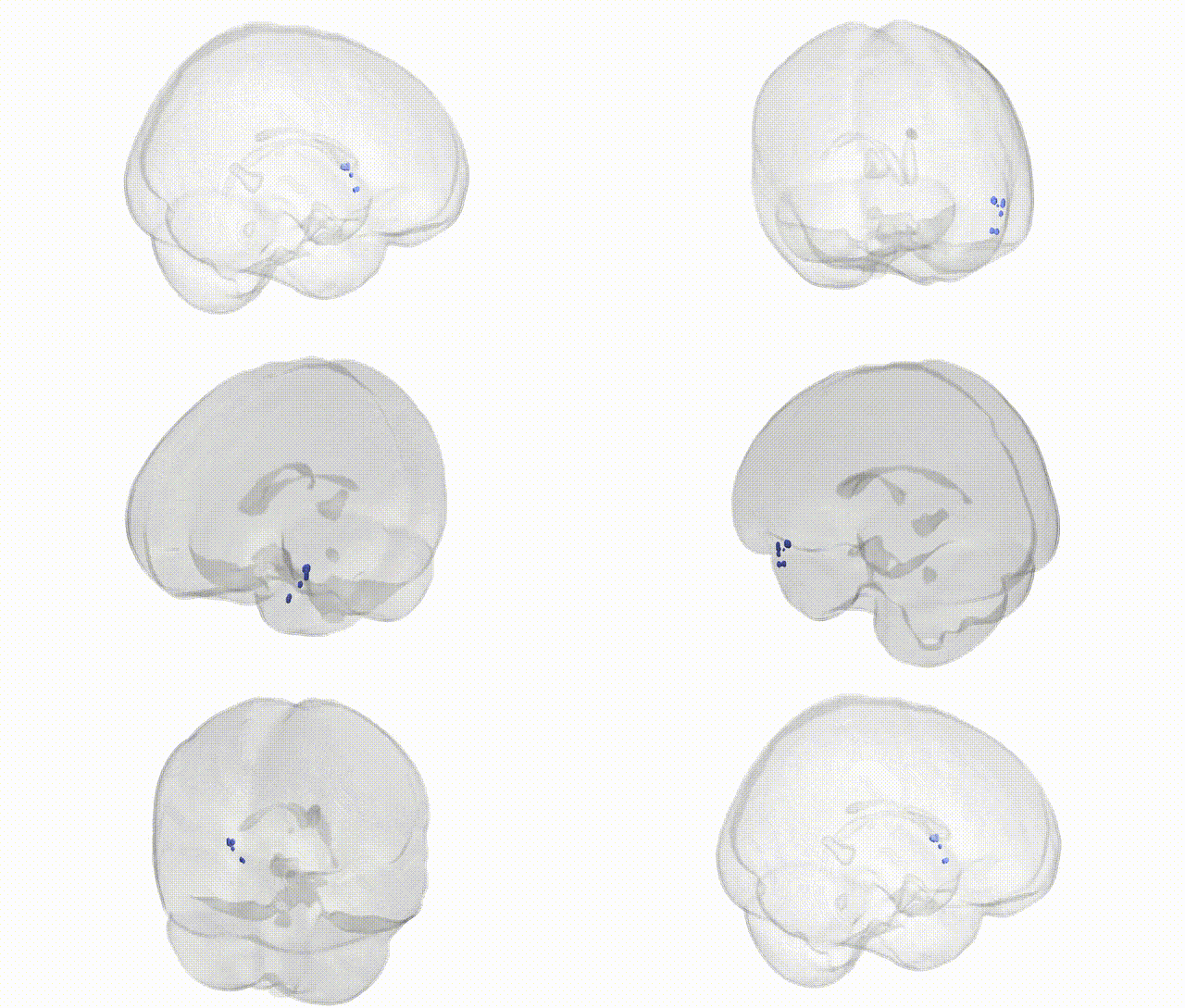
Full Quality Version: Download MP4
Wali Sidiqyar*, Gaurav Rudravaram*, Elyssa M. McMaster, Trent M. Schwartz, Adam M. Saunders, Kurt G. Schilling, Bennett A. Landman "Introducing SPINS: A Shared Public Visualization Library of Neuroanatomical Structures." Medical Imaging with Deep Learning- short paper
This resource is licensed under CC0 1.0 Universal (Public Domain).