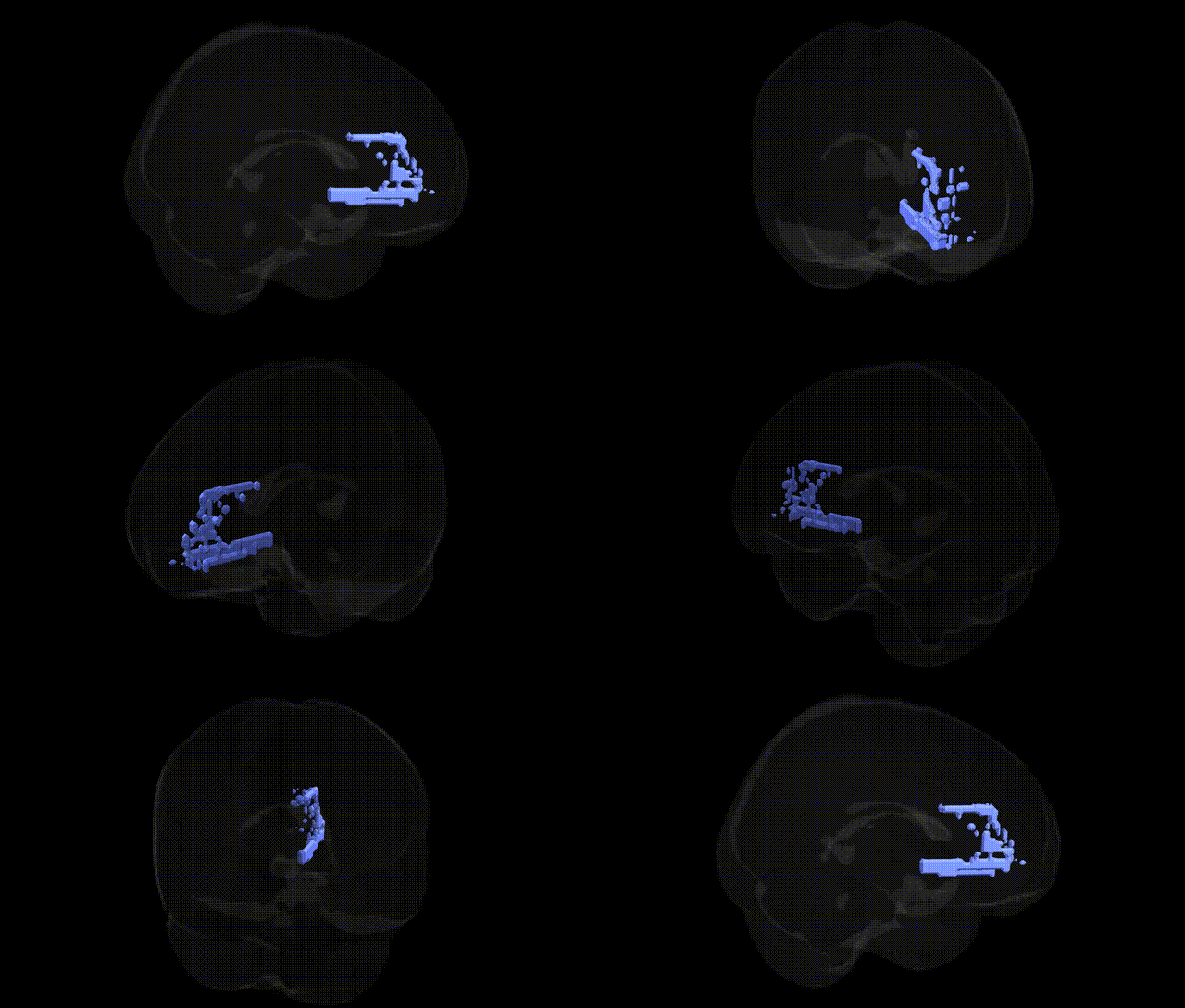
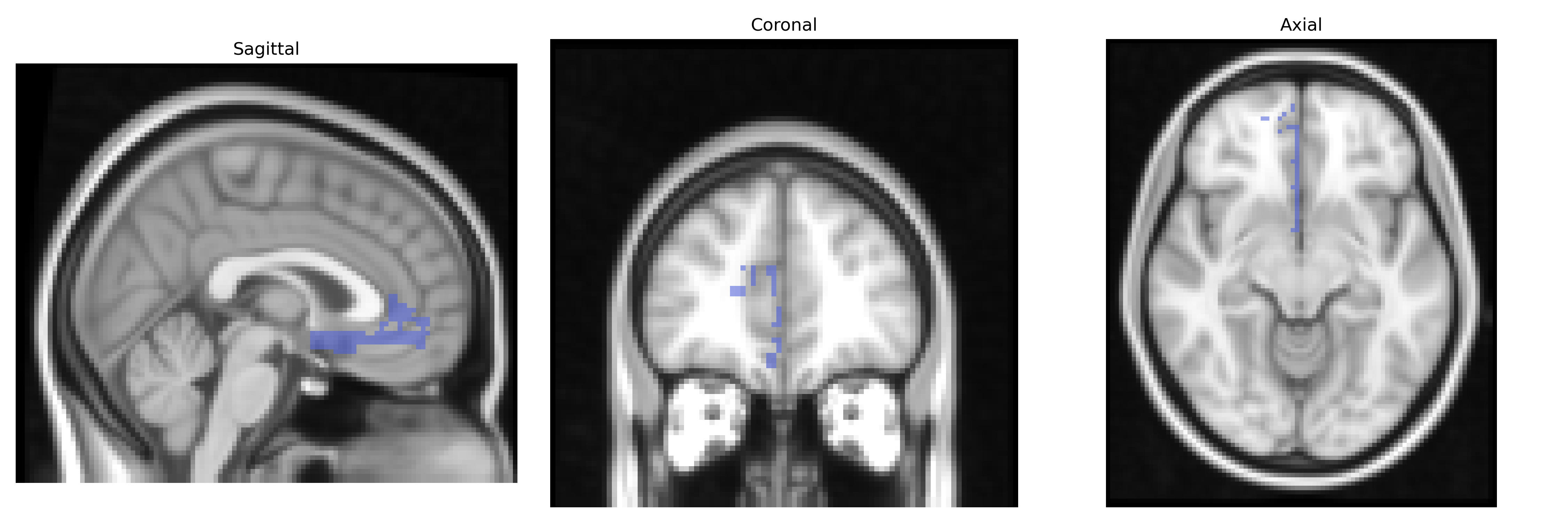
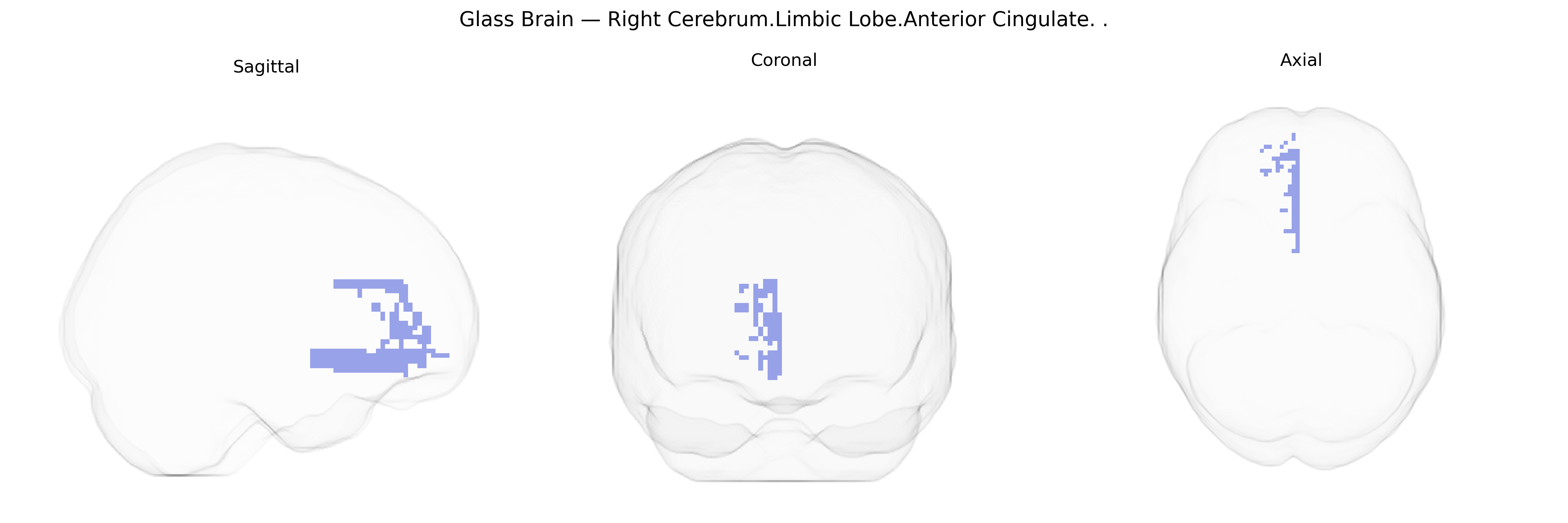
The bilateral Right Cerebrum.Limbic Lobe.Anterior Cingulate, as defined in the Talairach 2 mm atlas, corresponds to the right anterior portion of the cingulate cortex, a key component of the limbic system situated on the medial surface of the cerebral hemisphere, just superior to the corpus callosum. This region participates in a broad range of integrative functions including affect regulation, autonomic control, error monitoring, conflict detection, and modulation of attention and pain perception, often acting as a hub between emotional, cognitive, and motor systems. Cytoarchitectonically, the anterior cingulate encompasses agranular and dysgranular cortical fields that interact extensively with prefrontal, premotor, limbic (e.g., amygdala), and subcortical structures, supporting roles in decision-making under uncertainty, motivation, and goal-directed behavior. Anterior cingulate cortex
The bilateral right anterior cingulate cortex (ACC) in the limbic lobe has been implicated in multiple genetically influenced psychiatric, cognitive, and pain-related phenotypes through GWAS and imaging–genetics studies, although most work references ACC more generally rather than Talairach 2 mm–specific subregions. Variants in genes affecting glutamatergic and GABAergic signaling (e.g., GRM3, GAD1), monoaminergic systems (e.g., SLC6A4, COMT, DRD2/DRD4), and neuroplasticity (e.g., BDNF Val66Met) have been associated with ACC structure and function, including gray matter volume, cortical thickness, and task-related activation in emotion regulation and cognitive control. Large neuroimaging GWAS consortia (such as ENIGMA and UK Biobank) have identified polygenic influences on ACC morphology linked to risk for major depressive disorder, schizophrenia, bipolar disorder, anxiety, ADHD, and substance use disorders, with some loci overlapping known psychiatric risk variants (e.g., in CACNA1C and other calcium channel genes). ACC activation and connectivity show heritable components related to traits such as neuroticism, impulsivity, and executive function, and pain sensitivity GWAS and candidate studies have associated ACC-related phenotypes with genes involved in opioid and inflammatory pathways (e.g., OPRM1, cytokine genes). Additionally, ACC structure and function have been connected to common genetic risk for suicidality, obsessive–compulsive traits, and stress reactivity, often via polygenic risk scores derived from large psychiatric GWAS that correlate with ACC morphology or functional measures, underscoring this region as a key convergence point for genetic risk across mood, psychotic, anxiety, and pain-related disorders.
Overview generated by GPT-4o (2026).
Region ID: 373
Hemisphere: bilateral
Atlas: Talairach labels 2mm
Full Quality Version: Download MP4
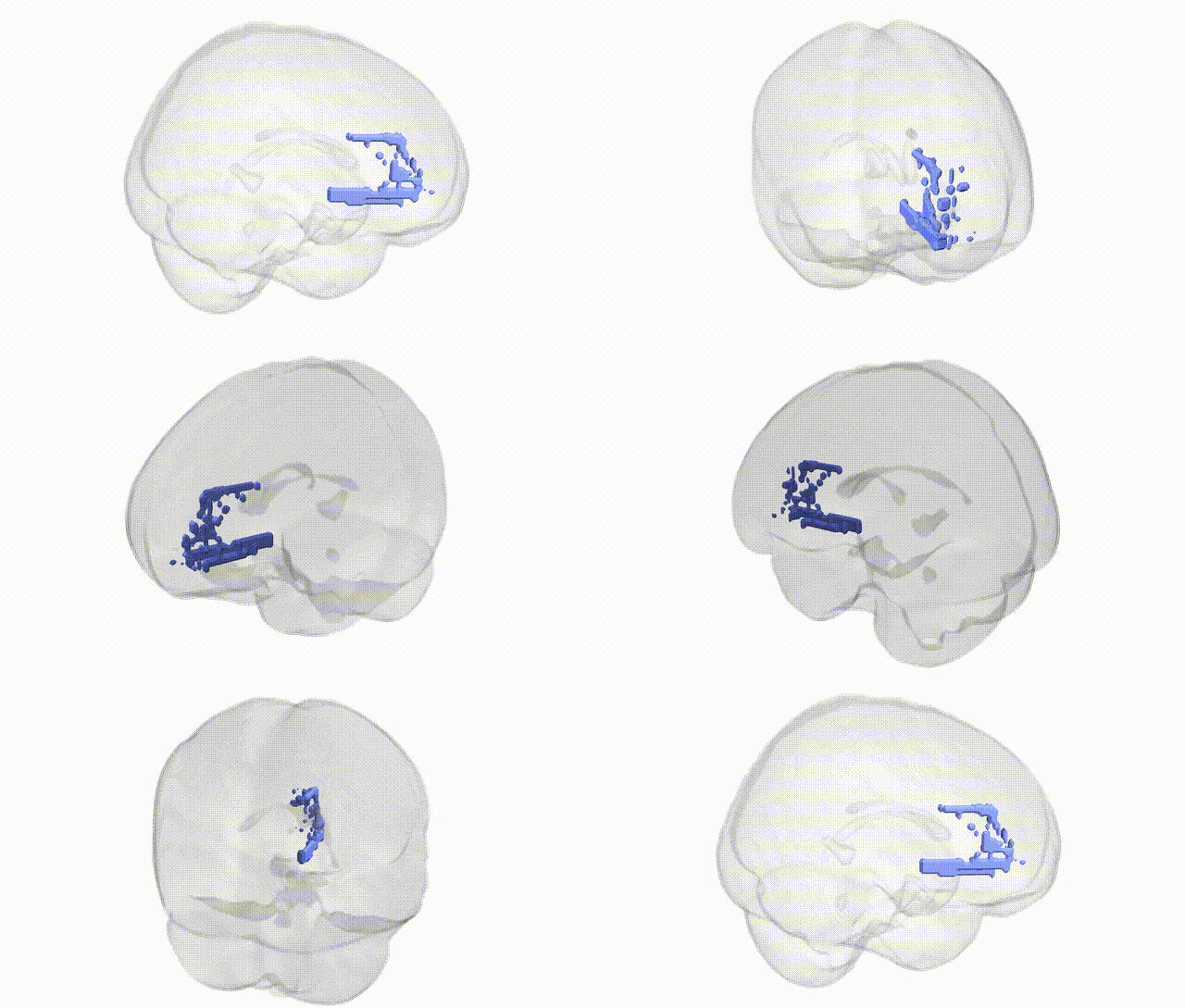
Full Quality Version: Download MP4
Wali Sidiqyar*, Gaurav Rudravaram*, Elyssa M. McMaster, Trent M. Schwartz, Adam M. Saunders, Kurt G. Schilling, Bennett A. Landman "Introducing SPINS: A Shared Public Visualization Library of Neuroanatomical Structures." Medical Imaging with Deep Learning- short paper
This resource is licensed under CC0 1.0 Universal (Public Domain).