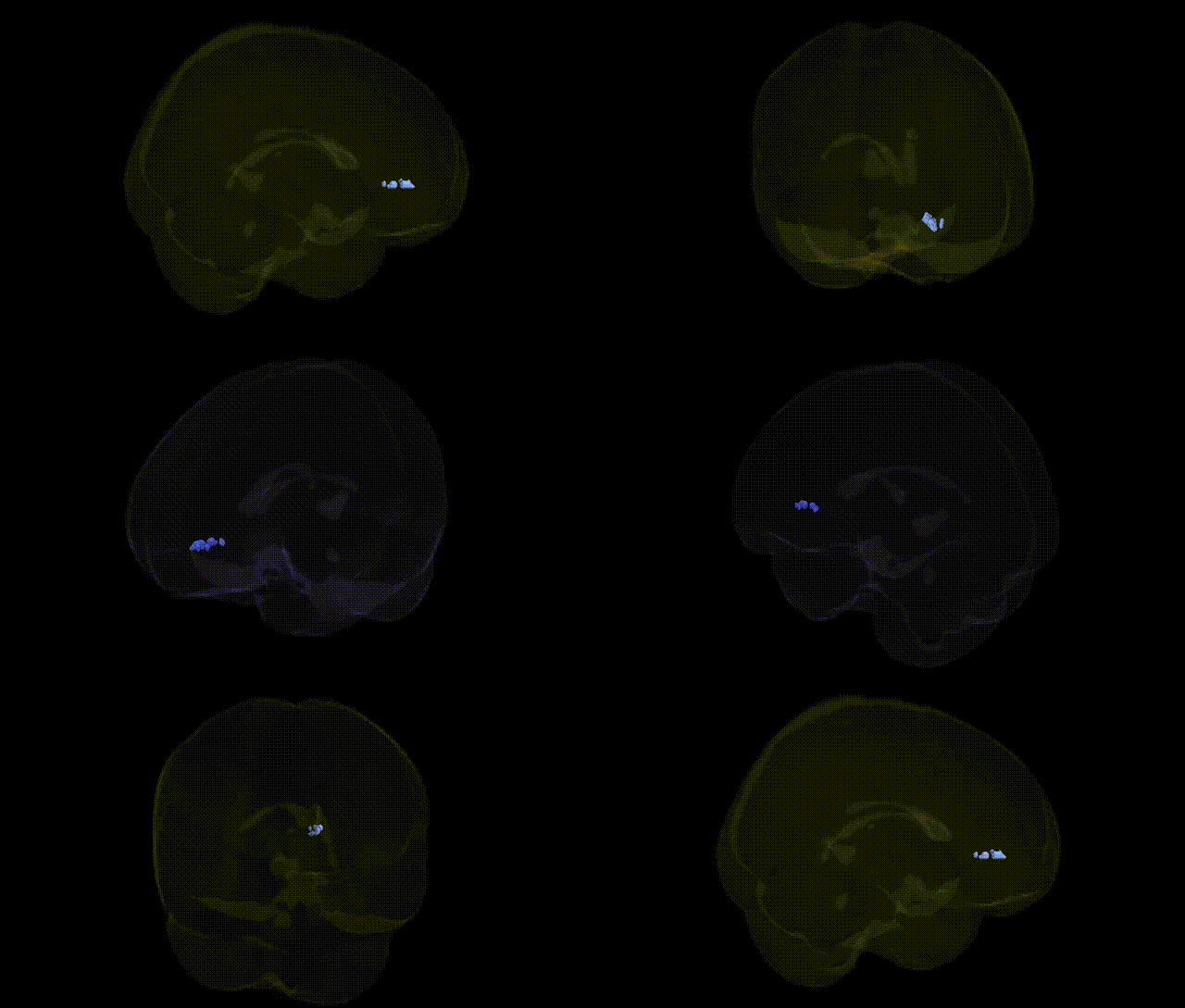
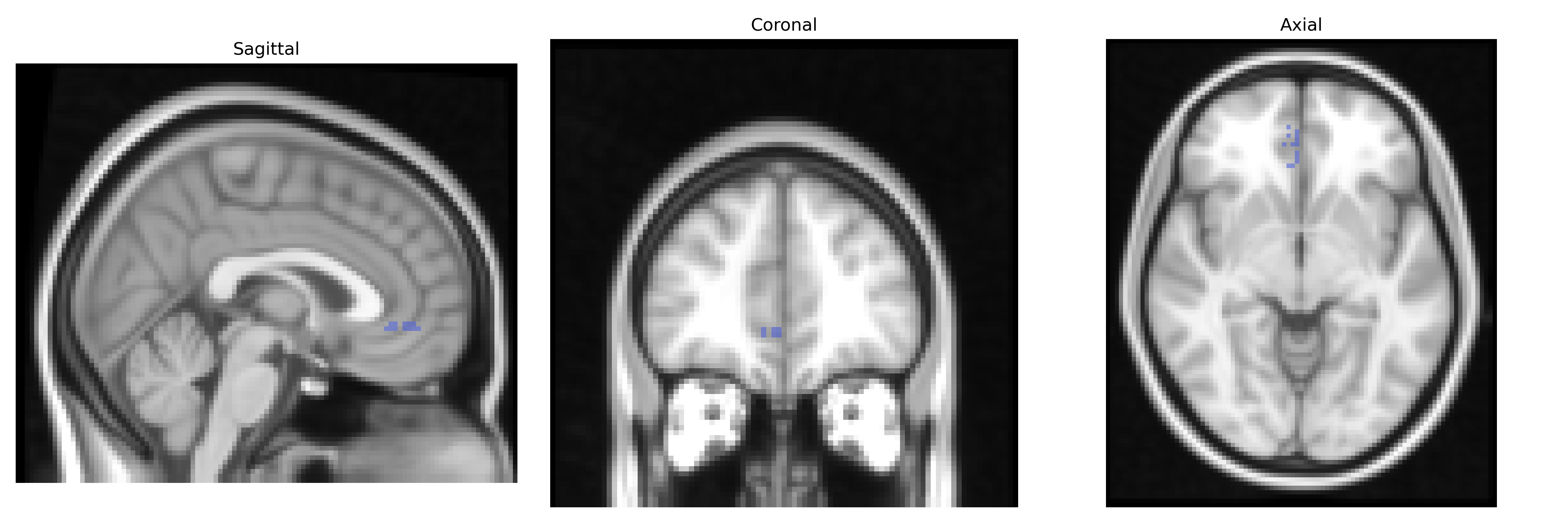
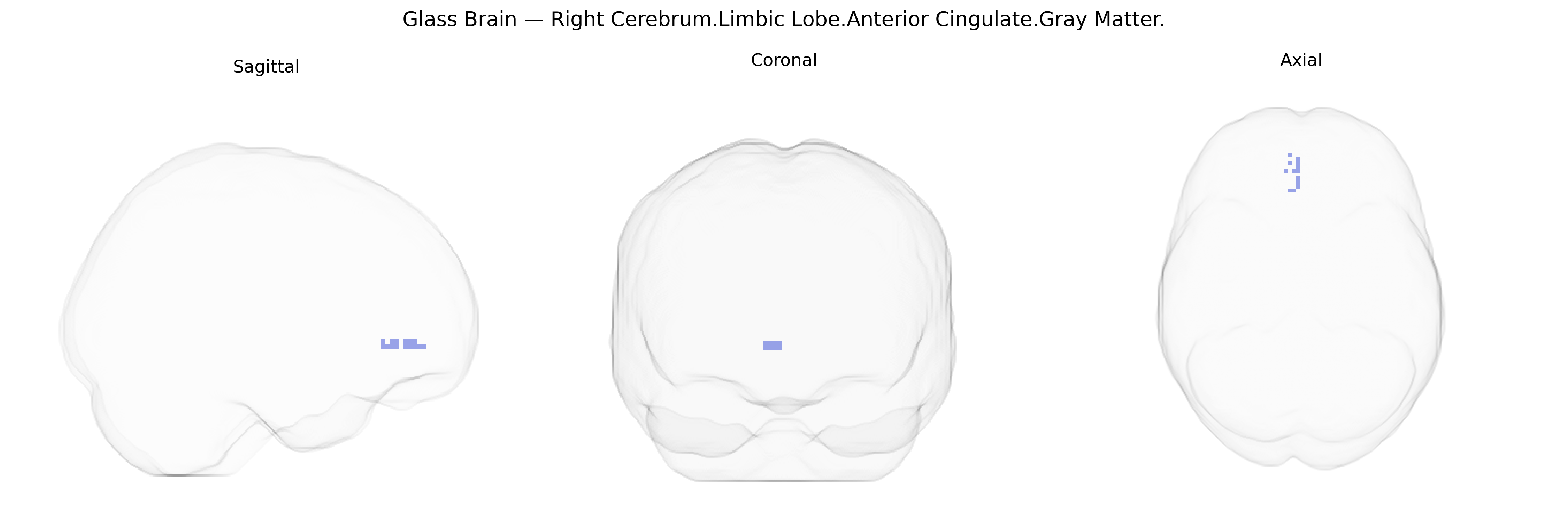
The bilateral Right Cerebrum.Limbic Lobe.Anterior Cingulate.Gray Matter corresponds to gray matter within the anterior portion of the cingulate gyrus on the medial surface of the right cerebral hemisphere, part of the limbic lobe implicated in emotion, motivation, autonomic regulation, and aspects of cognitive control. This region integrates visceral, affective, and cognitive information, contributes to error detection and conflict monitoring, and participates in modulating pain perception and attentional processes. Cytoarchitectonically, it includes portions of Brodmann areas 24, 32, and related fields, with dense connections to prefrontal, premotor, limbic, and subcortical structures, supporting its role in linking emotional and executive functions. Anterior cingulate cortex
The bilateral right anterior cingulate gray matter (Talairach: Right Cerebrum, Limbic Lobe, Anterior Cingulate) has been implicated in numerous genetic and genome-wide association studies through its role in emotion regulation, cognitive control, and conflict monitoring, with structural and functional measures of this region repeatedly associated with common variants affecting neuropsychiatric and cognitive traits. GWAS of brain imaging phenotypes (e.g., ENIGMA, UK Biobank) have identified loci in and near genes such as C4A/C4B in the MHC region, CACNA1C, DRD2, GRM3, and genes involved in synaptic plasticity and glutamatergic signaling that correlate with anterior cingulate cortical thickness, surface area, or activation, often overlapping with risk loci for major depressive disorder, schizophrenia, bipolar disorder, and anxiety disorders. Polygenic risk scores for schizophrenia, depression, ADHD, and autism spectrum disorder show associations with anterior cingulate morphology or connectivity, suggesting that cumulative common variant burden influences this limbic-cortical hub. Specific serotonin-related genes (e.g., SLC6A4/5-HTTLPR) and COMT Val158Met have been linked to anterior cingulate activity during tasks involving error processing, emotional conflict, and pain, while variants in opioid system genes (e.g., OPRM1) and inflammatory genes have been related to cingulate responses to physical and social pain. Structural and functional alterations of the anterior cingulate associated with these genetic variants have been reported across disorders including obsessive–compulsive disorder, post-traumatic stress disorder, substance use disorders, and chronic pain conditions, as well as in personality traits such as neuroticism and impulsivity, indicating that genetic influences on this region contribute broadly to vulnerability for affective dysregulation and cognitive-control impairments.
Overview generated by GPT-4o (2026).
Region ID: 606
Hemisphere: bilateral
Atlas: Talairach labels 2mm
Full Quality Version: Download MP4
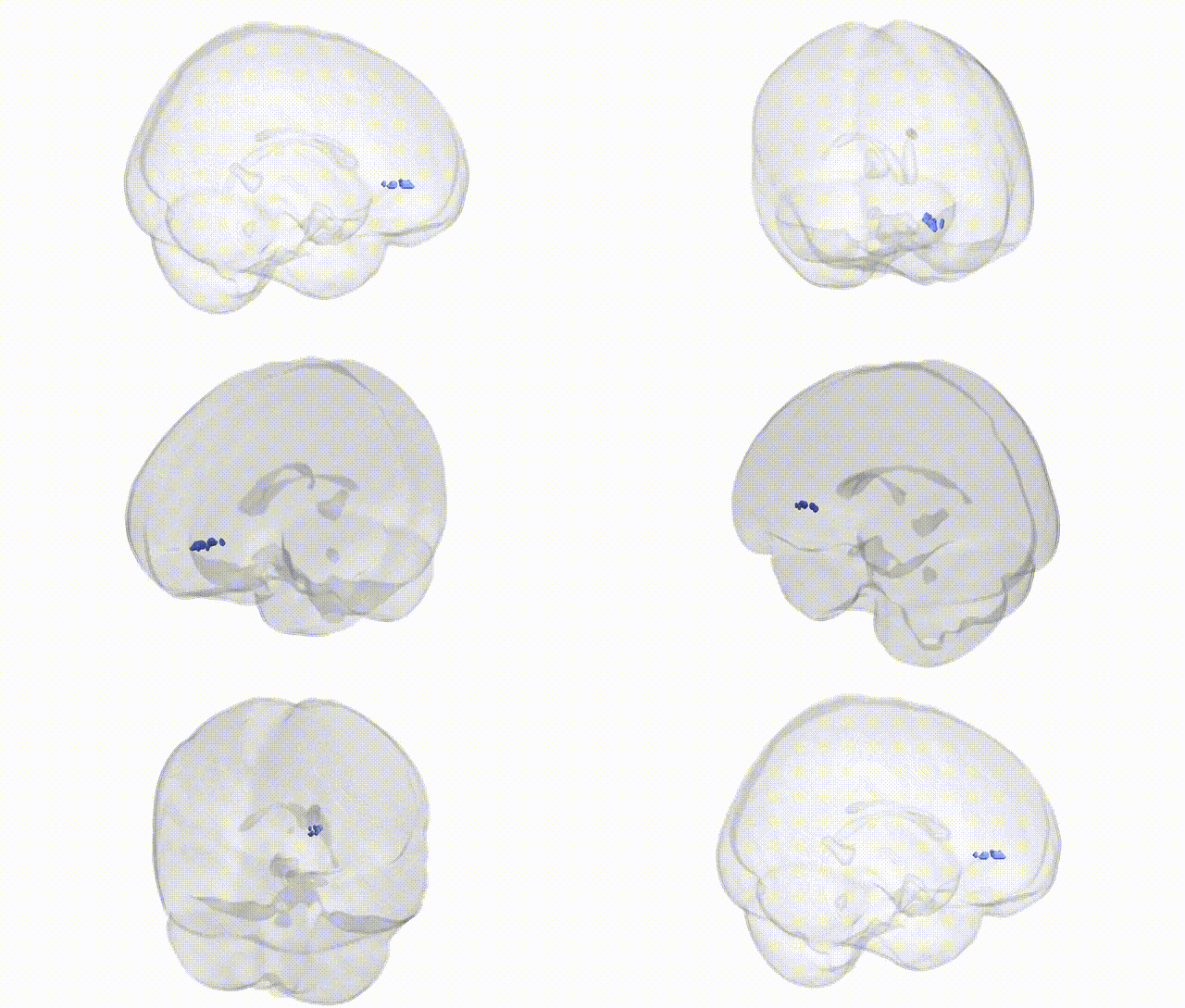
Full Quality Version: Download MP4
Wali Sidiqyar*, Gaurav Rudravaram*, Elyssa M. McMaster, Trent M. Schwartz, Adam M. Saunders, Kurt G. Schilling, Bennett A. Landman "Introducing SPINS: A Shared Public Visualization Library of Neuroanatomical Structures." Medical Imaging with Deep Learning- short paper
This resource is licensed under CC0 1.0 Universal (Public Domain).