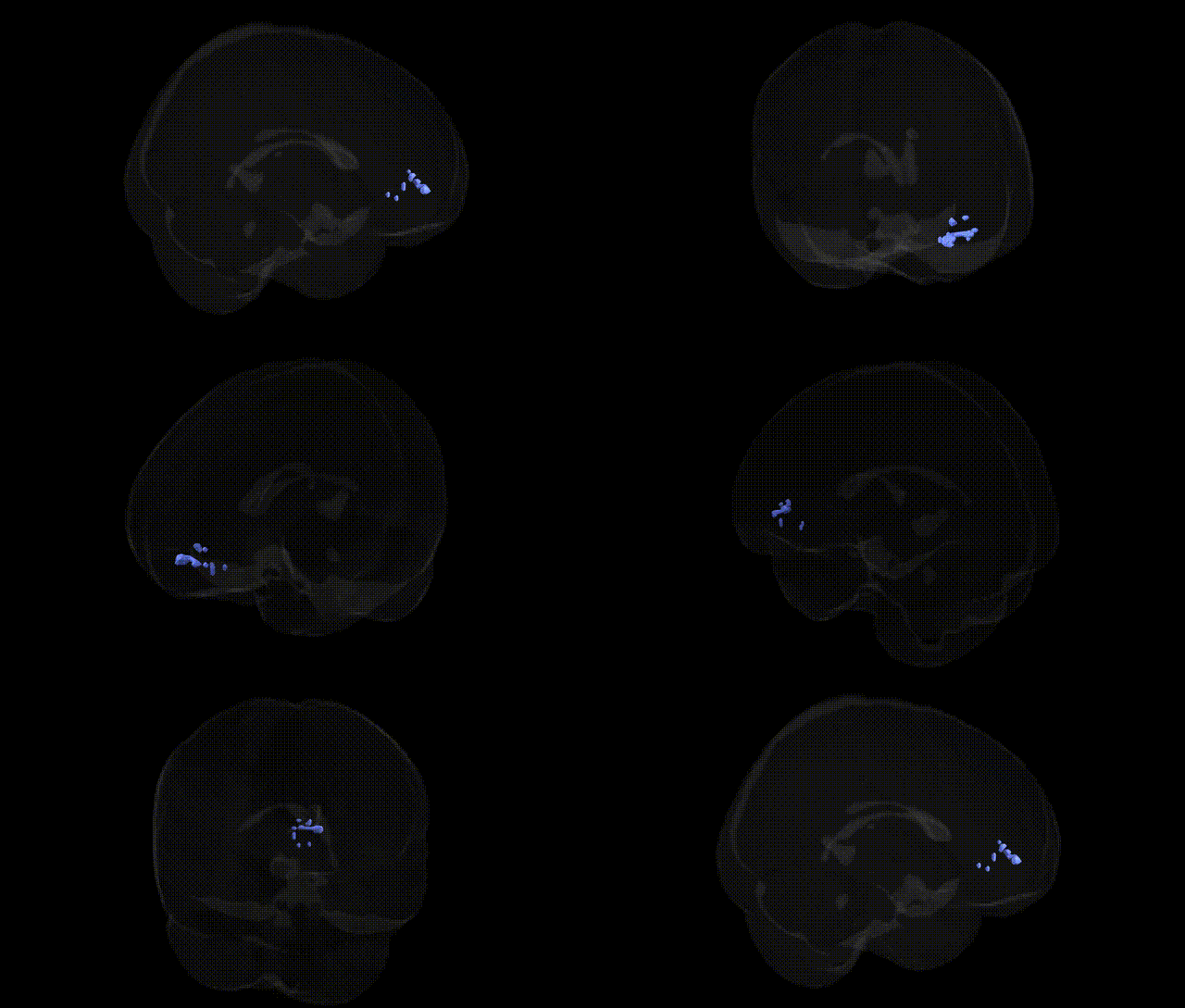
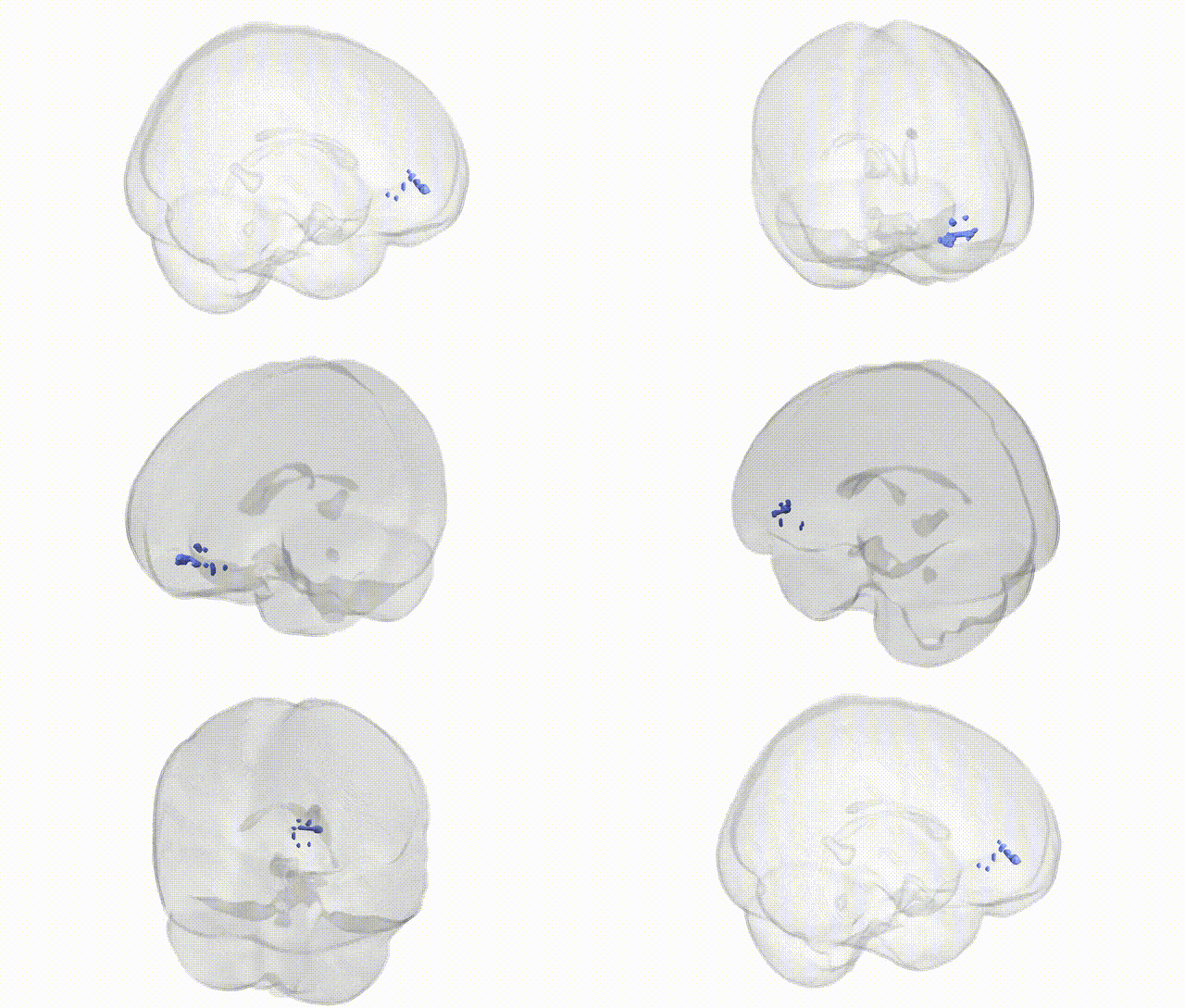
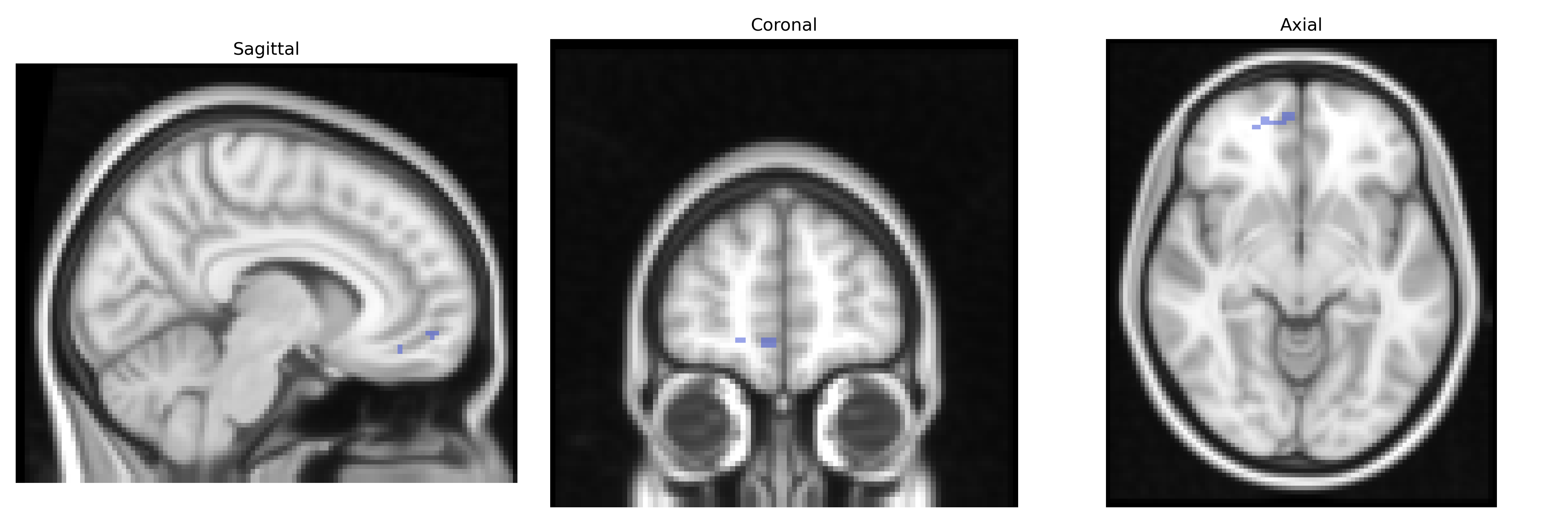
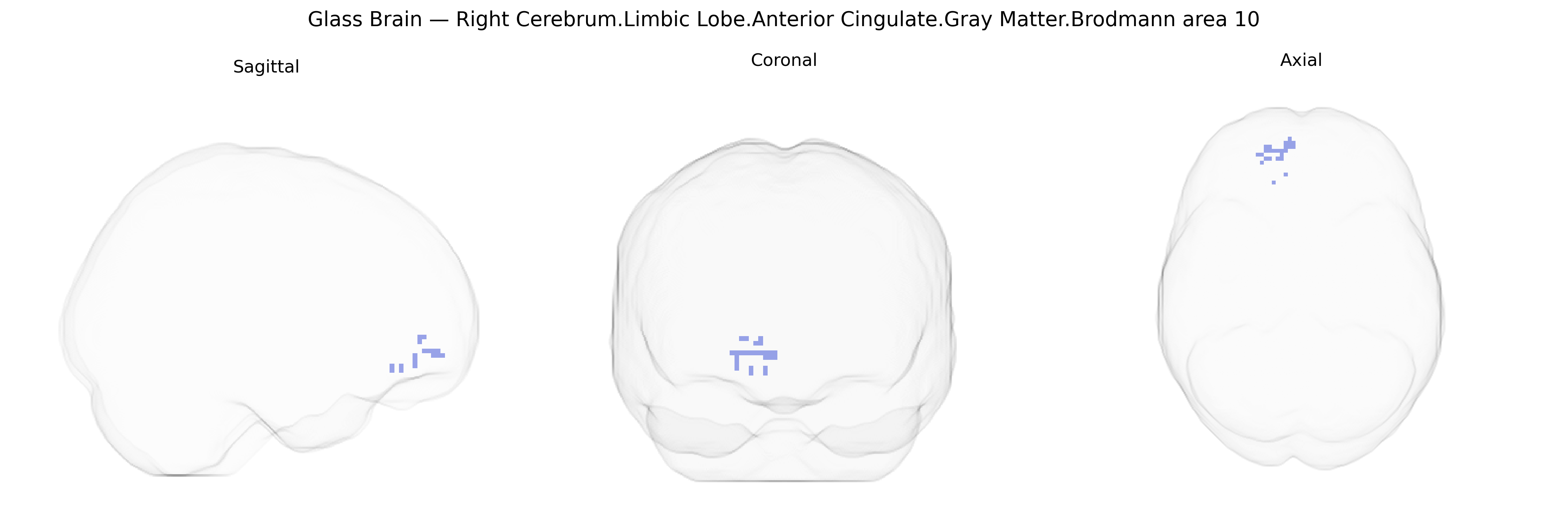
The bilateral Right Cerebrum.Limbic Lobe.Anterior Cingulate.Gray Matter.Brodmann area 10 region, as defined in the Talairach 2 mm atlas, corresponds primarily to portions of the anterior medial prefrontal cortex that border the limbic-associated anterior cingulate cortex. Brodmann area 10 is located in the frontal pole and is implicated in high-level executive functions, including prospective memory, complex decision-making, and integration of emotional and cognitive information; in its anterior cingulate-adjacent aspects, it participates in evaluative processes related to motivation, conflict monitoring, and affect regulation. Gray matter in this region comprises cortical neurons, local interneurons, and associated glial cells organized in six layers typical of neocortex, supporting dense reciprocal connectivity with limbic structures (e.g., anterior cingulate, amygdala) and other prefrontal areas that together contribute to goal-directed behavior and social–emotional processing. There is no direct link for “Brodmann area 10” in the anterior cingulate; a closely related structure is Anterior cingulate cortex.
The bilateral right anterior cingulate cortex (ACC) within Brodmann area 10, though a relatively specific Talairach-defined region, is part of a broader cingulate–frontopolar circuitry with substantial genetic associations from GWAS and imaging-genetics studies. Heritability estimates for ACC and adjacent medial prefrontal gray matter volumes are high (often 40–70%), and large neuroimaging GWAS (e.g., ENIGMA, UK Biobank) have implicated common variants in genes involved in synaptic plasticity, neuronal development, and glutamatergic and GABAergic signaling—such as CACNA1C, GRM3, and multiple loci near genes involved in axon guidance and intracortical myelination—although mapping from specific SNPs to the Talairach “BA10” label is indirect. Functionally related ACC/BA10 regions show genetic associations with major depressive disorder, bipolar disorder, schizophrenia, and anxiety traits, consistent with ACC’s role in emotion regulation and conflict monitoring; for example, risk variants in CACNA1C and other psychiatric GWAS hits have been linked to altered ACC activation and structure in task-based fMRI and structural MRI studies. ACC and frontopolar cortex are also repeatedly implicated in genetic studies of neuroticism, cognitive control, and decision-making, with polygenic scores for psychiatric risk and personality traits predicting ACC morphology and connectivity. In pain and addiction research, variants in opioid receptor genes (such as OPRM1) and dopamine-related genes have been associated with ACC activation during pain and reward tasks, linking genetic differences in neuromodulatory systems to functional variation in this region. While no single gene is uniquely specific to the Talairach-defined right BA10 ACC, convergent evidence from GWAS, endophenotype studies, and imaging genetics indicates that polygenic architecture affecting synaptic function, cortical development, and neuromodulation contributes to structural and functional variation in this anterior cingulate/frontopolar territory and its vulnerability to mood, psychotic, and anxiety disorders.
Overview generated by GPT-4o (2026).
Region ID: 407
Hemisphere: bilateral
Atlas: Talairach labels 2mm
Full Quality Version: Download MP4
Full Quality Version: Download MP4
Wali Sidiqyar*, Gaurav Rudravaram*, Elyssa M. McMaster, Trent M. Schwartz, Adam M. Saunders, Kurt G. Schilling, Bennett A. Landman "Introducing SPINS: A Shared Public Visualization Library of Neuroanatomical Structures." Medical Imaging with Deep Learning- short paper
This resource is licensed under CC0 1.0 Universal (Public Domain).