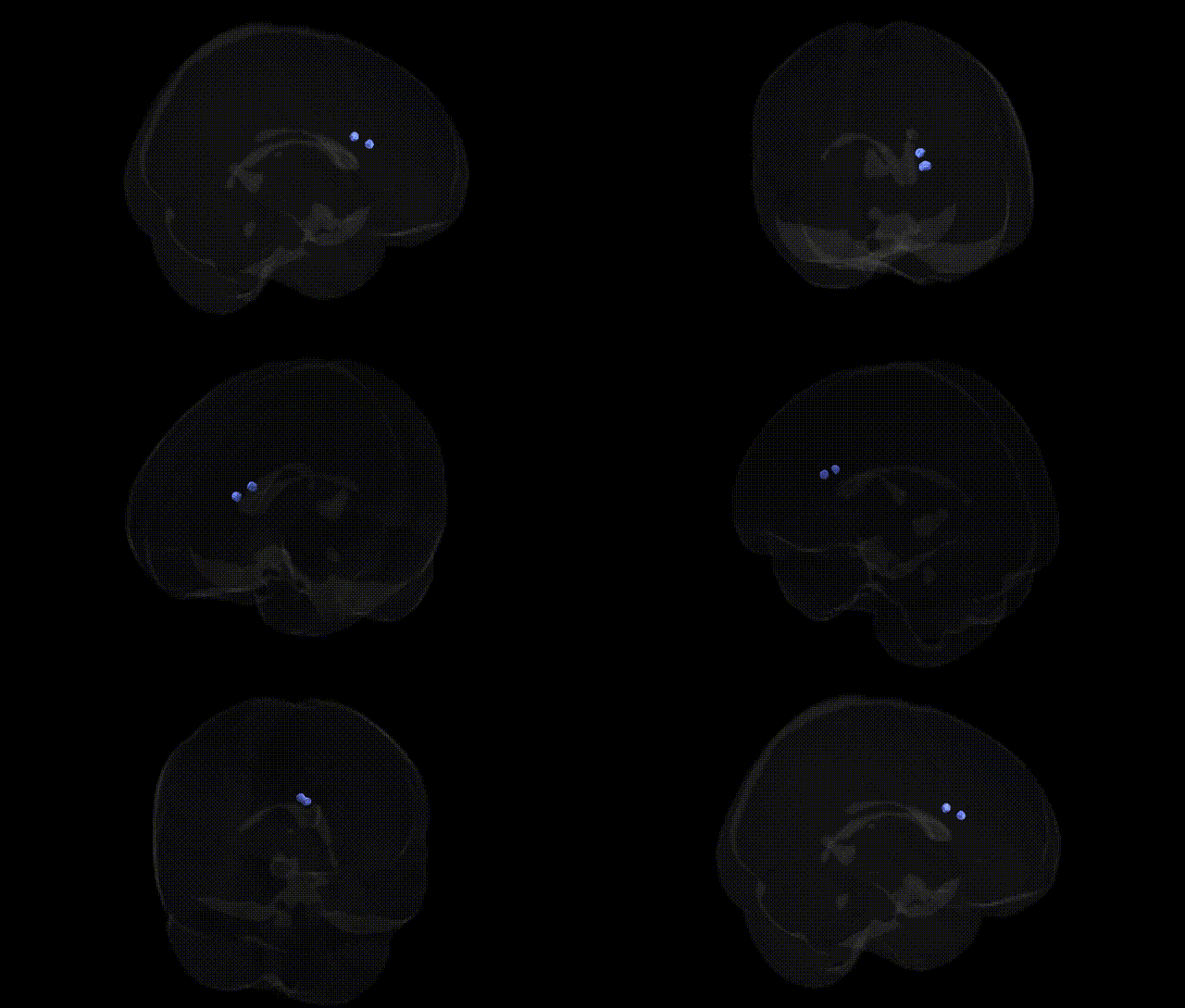
Bilateral Right Cerebrum.Limbic Lobe.Anterior Cingulate.Gray Matter.Brodmann area 33 corresponds to a small agranular cortical field located in the ventral portion of the anterior cingulate gyrus, adjacent to the corpus callosum and within the limbic lobe. Cytoarchitectonically, Brodmann area 33 is characterized by a relatively thin cortical ribbon with poorly differentiated granular layers, consistent with its limbic association cortex status. Functionally, this region is implicated in affective processing, pain modulation, and integration of emotional and autonomic responses, often acting in concert with neighboring anterior cingulate areas (e.g., BA24 and BA32) and other limbic structures such as the amygdala and medial prefrontal cortex. There is no direct link for Brodmann area 33; see the related structure Anterior cingulate cortex.
The bilateral right anterior cingulate cortex (ACC), including Brodmann area 33 within the limbic lobe, is strongly implicated in genetic studies of psychiatric, cognitive, and pain-related traits, though most work targets the ACC more broadly rather than BA33 specifically. Common variants identified in large GWAS of major depressive disorder, schizophrenia, bipolar disorder, anxiety, and ADHD often show downstream effects on ACC structure and function, including genes involved in synaptic plasticity (e.g., BDNF, GRM3), glutamatergic and GABAergic signaling (e.g., CACNA1C, GRIN2B, GAD1), and neurodevelopmental pathways (e.g., DISC1, NRG1). Imaging-genetics studies have associated polygenic risk scores for depression and schizophrenia with reduced ACC gray matter volume and altered resting-state connectivity, while variants in SLC6A4, COMT, and 5-HT1A/5-HT2A receptor genes have been linked to ACC activity during emotion regulation and cognitive control tasks. Pain GWAS and candidate-gene work implicate ACC-related circuitry in chronic pain, fibromyalgia, and migraine, with genetic influences on opioid and dopamine pathways contributing to ACC activation during nociception. Large neuroimaging GWAS (e.g., ENIGMA, UK Biobank) have identified multiple loci (such as variants near CADM2, HMGA2, and genes in neurogenesis or axonal guidance pathways) associated with anterior cingulate cortical thickness and surface area, which in turn mediate genetic effects on traits like neuroticism, impulsivity, and general cognitive ability. Overall, genetic associations converge on the ACC, including BA33, as a key integrative hub where heritable variation in neurotransmission, neuroplasticity, and cortical morphology contributes to vulnerability to mood and psychotic disorders, pain sensitivity, and individual differences in affective and cognitive control.
Overview generated by GPT-4o (2026).
Region ID: 839
Hemisphere: bilateral
Atlas: Talairach labels 2mm
Full Quality Version: Download MP4
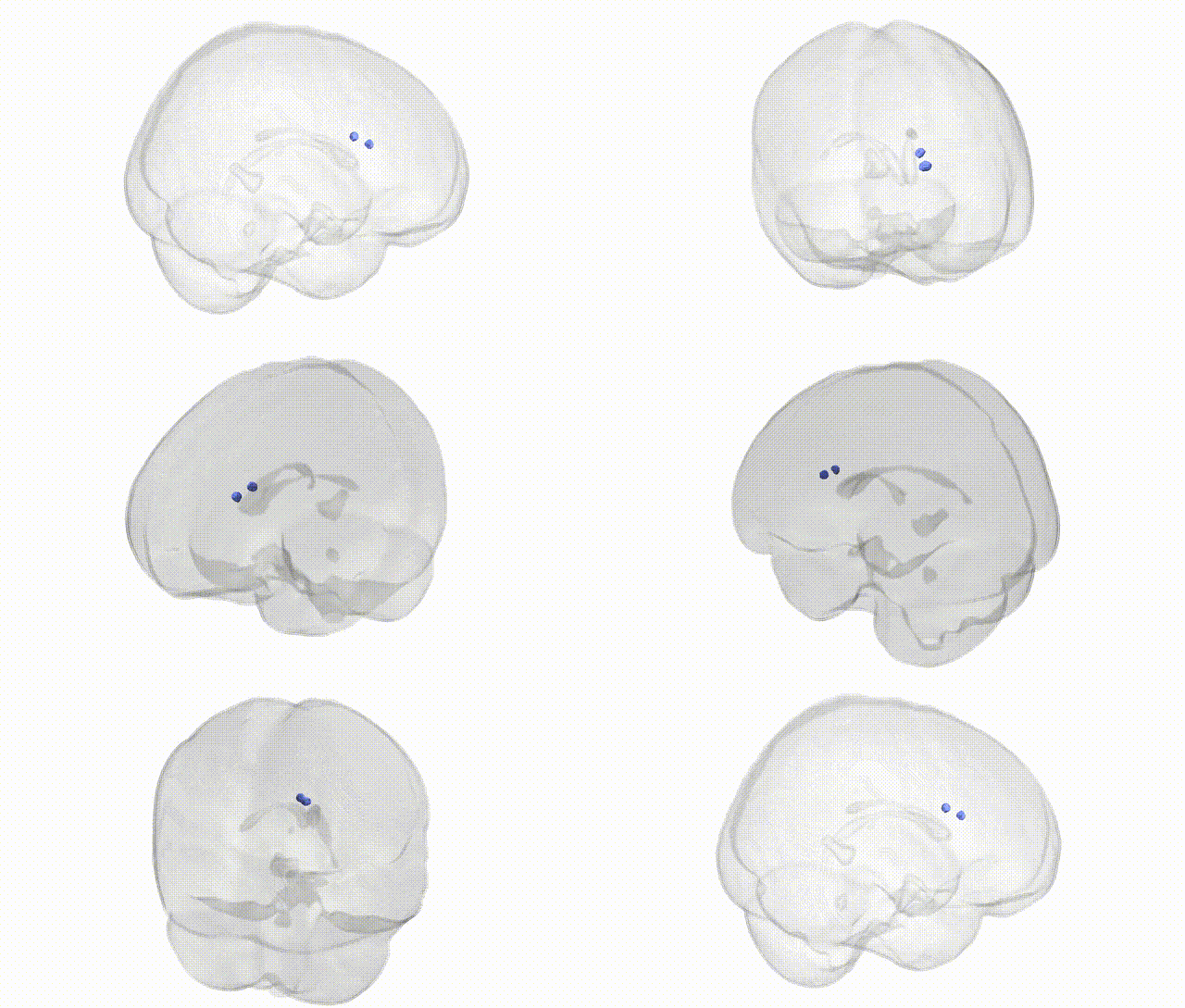
Full Quality Version: Download MP4
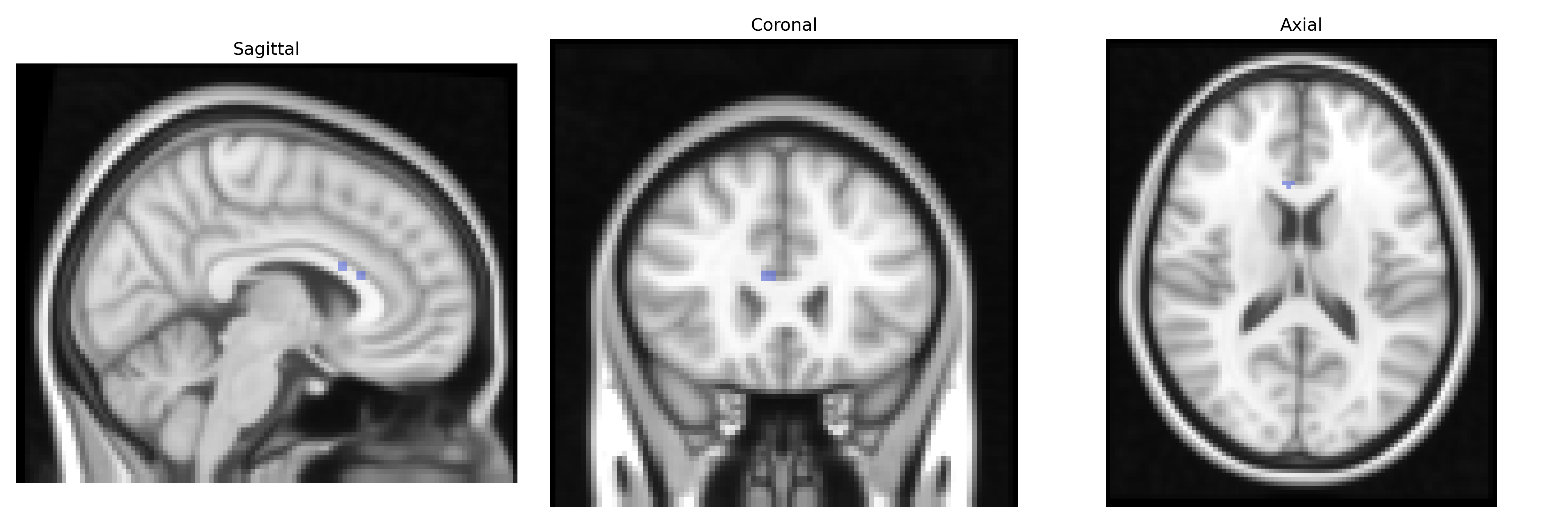
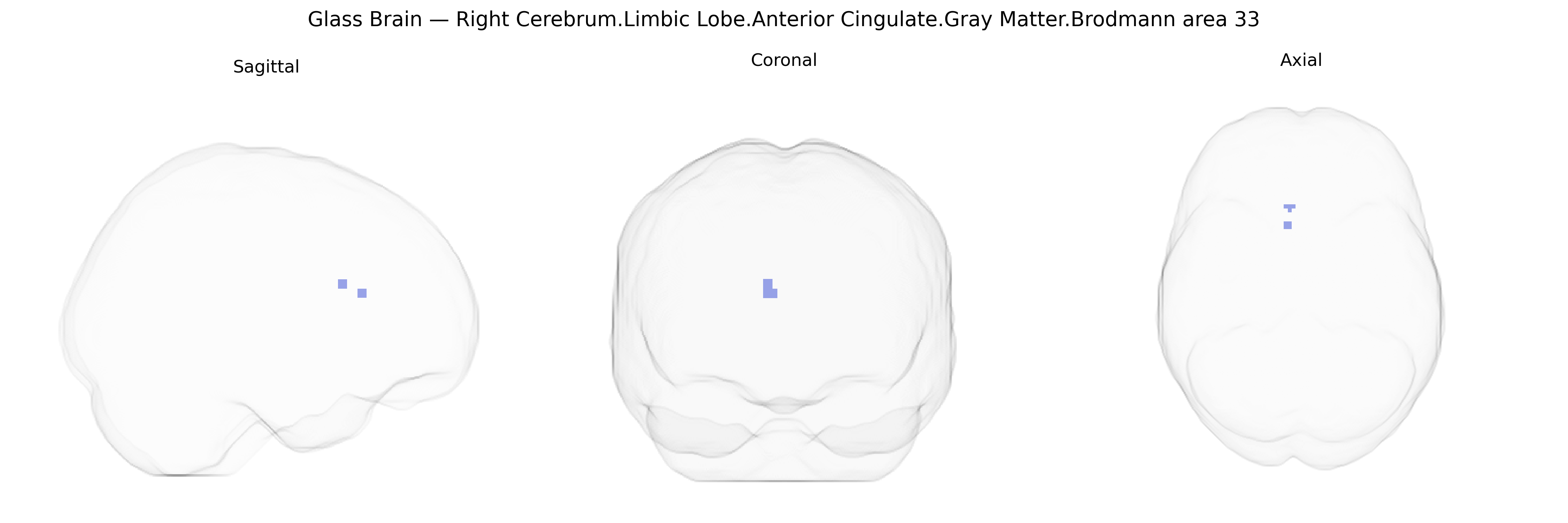
Wali Sidiqyar*, Gaurav Rudravaram*, Elyssa M. McMaster, Trent M. Schwartz, Adam M. Saunders, Kurt G. Schilling, Bennett A. Landman "Introducing SPINS: A Shared Public Visualization Library of Neuroanatomical Structures." Medical Imaging with Deep Learning- short paper
This resource is licensed under CC0 1.0 Universal (Public Domain).