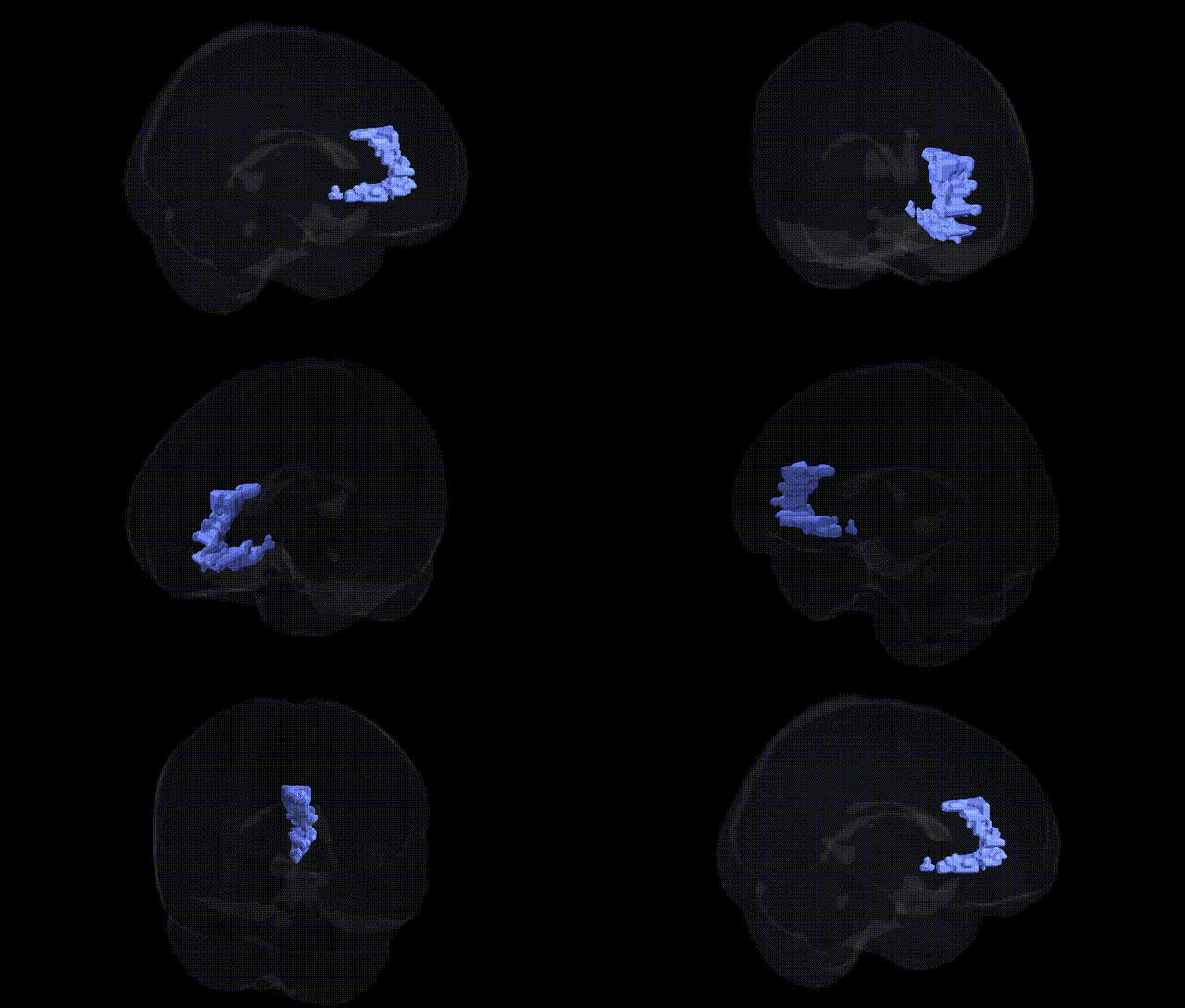
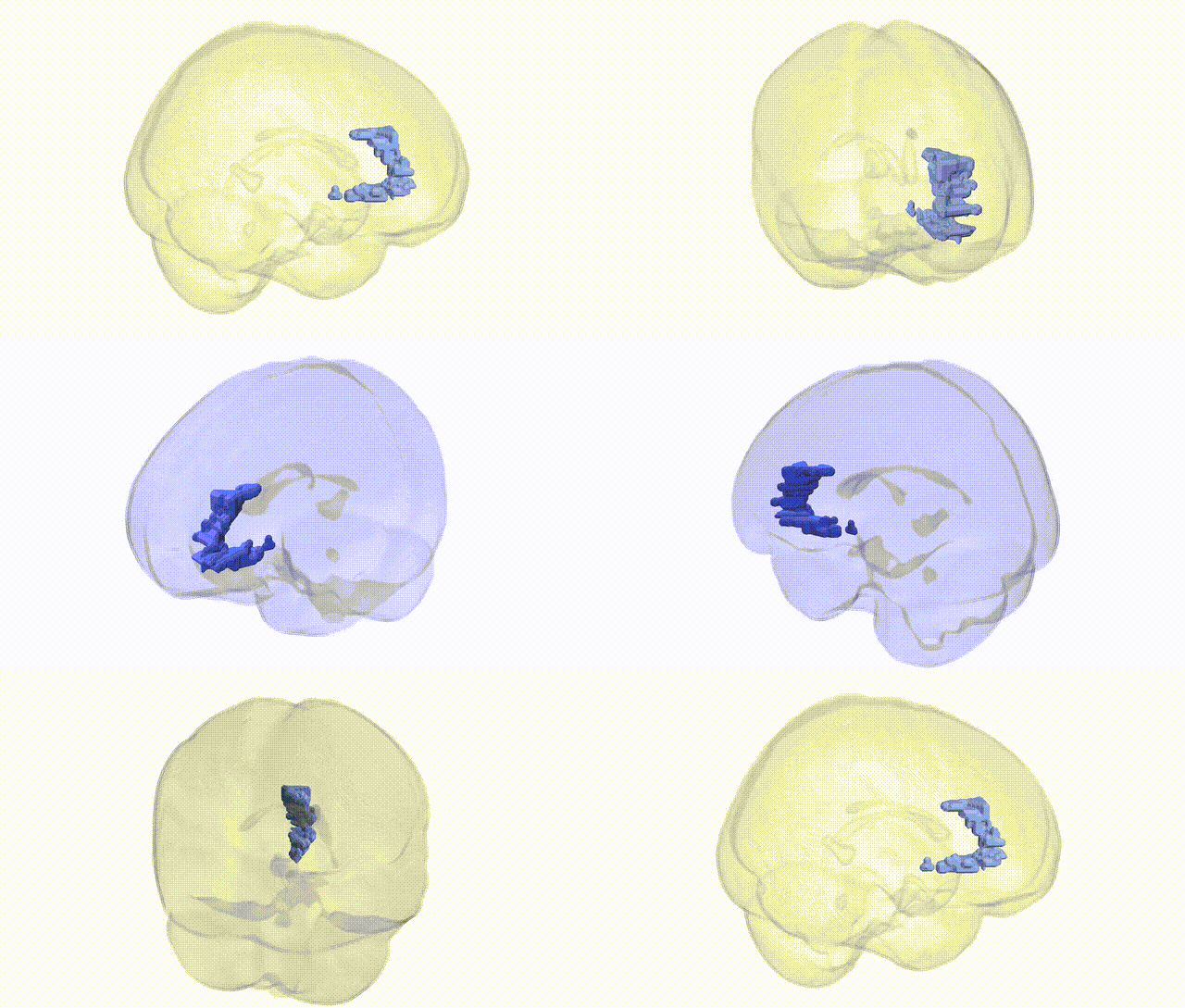
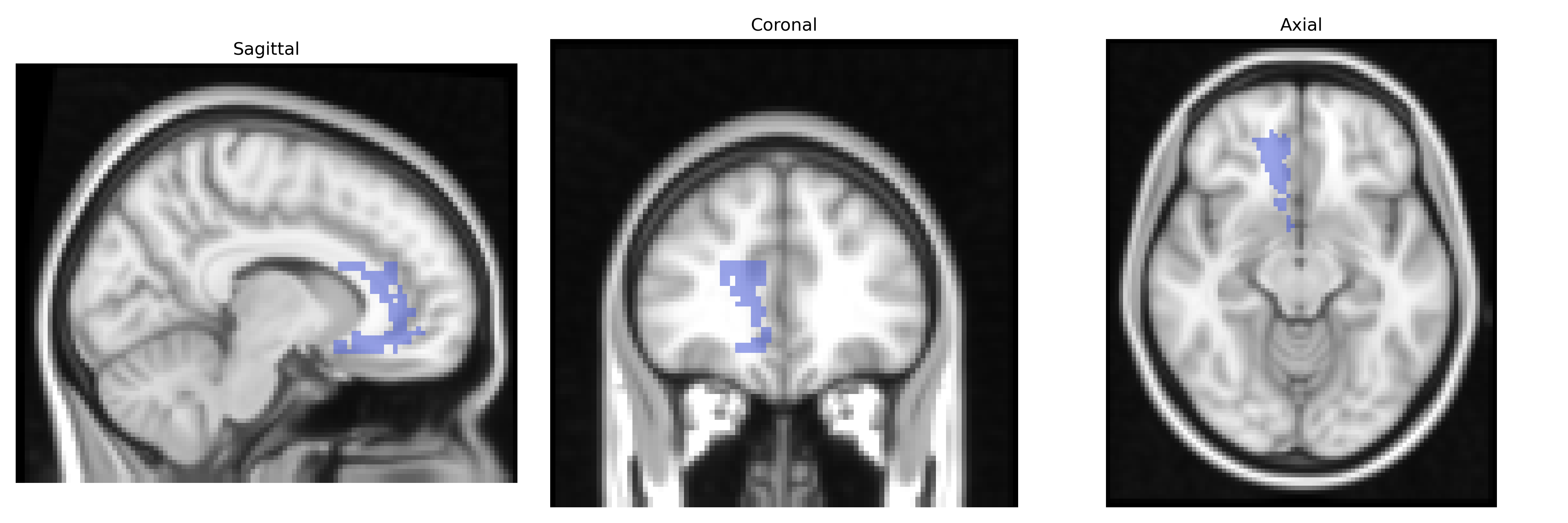
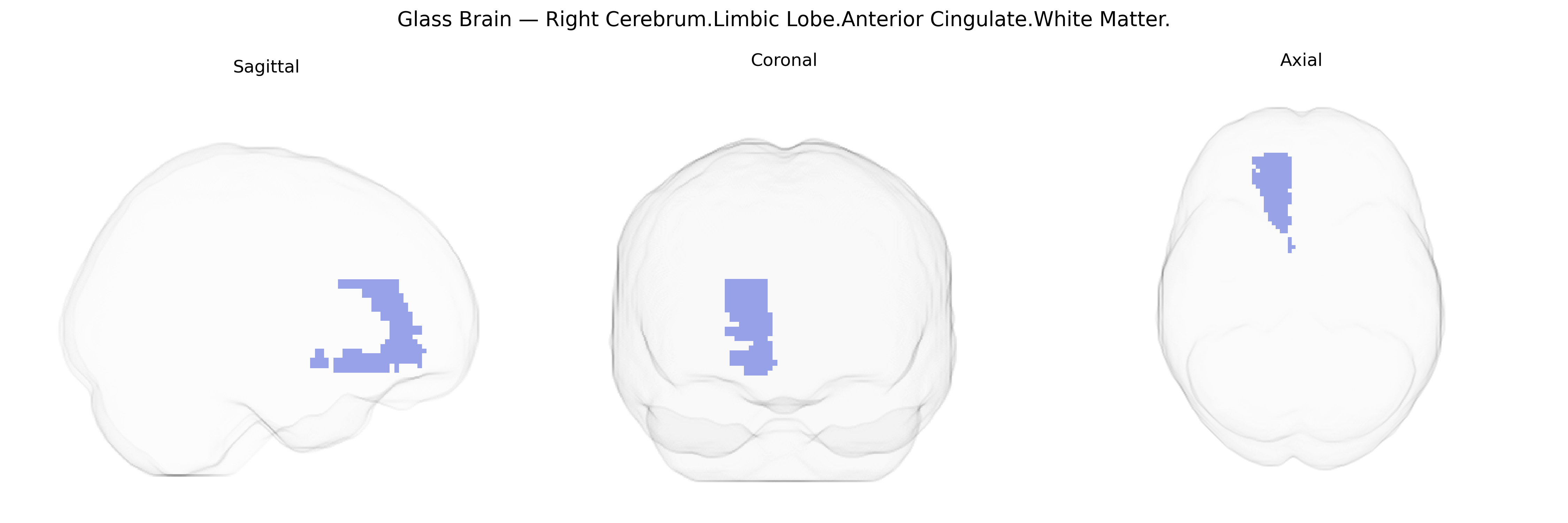
The bilateral Right Cerebrum.Limbic Lobe.Anterior Cingulate.White Matter corresponds to the subcortical fiber pathways underlying the anterior cingulate gyrus within the limbic lobe of the right cerebral hemisphere, as defined in the Talairach 2 mm Atlas. These white matter tracts include association and projection fibers that interconnect the anterior cingulate cortex with prefrontal regions, premotor areas, limbic structures (such as the amygdala and hippocampus), and subcortical nuclei, supporting functions related to emotion regulation, motivation, autonomic control, and cognitive processes like conflict monitoring and decision-making. As a fiber compartment, this region does not have a dedicated Wikipedia page; a closely related structure is the overlying Anterior cingulate cortex.
The bilateral right anterior cingulate white matter, as defined in the Talairach 2mm atlas, is part of the limbic network connecting cortical and subcortical regions involved in emotion regulation, cognitive control, and pain processing, and genetic associations typically implicate broader anterior cingulate cortex (ACC) and cingulum pathways rather than this white matter parcel alone. Large-scale imaging genetics and GWAS studies have shown that ACC and cingulate white matter microstructure (e.g., fractional anisotropy and axial/radial diffusivity in the cingulum bundle) are moderately heritable and associated with variants in genes involved in neurodevelopment, myelination, and synaptic plasticity, including NRG1 and ERBB4 (schizophrenia-related), DISC1 (neurodevelopmental risk), COMT and DRD2 (dopaminergic signaling), and genes regulating oligodendrocyte function such as MAG and MOG. Risk alleles for schizophrenia, bipolar disorder, major depression, ADHD, and autism have repeatedly been linked to structural and functional abnormalities in the ACC and its white matter connections, with polygenic risk scores for these disorders correlating with reduced ACC volume or altered cingulum integrity in several cohorts. Pain-related GWAS and imaging genetics work implicate ACC connectivity and white matter properties in chronic pain and migraine, with variants in HTR1A/HTR2A (serotonin receptors), opioid system genes (OPRM1), and glutamatergic genes (GRIN2A/B) contributing to ACC-mediated pain and affective processing. Personality and cognitive traits, such as neuroticism, impulsivity, and cognitive control, show associations between polygenic scores and ACC structure or connectivity, particularly within fronto-limbic circuits, and ACC white matter alterations have also been tied to genetic risk for substance use disorders and stress-related psychopathology. Overall, genetic influences on this region appear to act through multi-gene, polygenic effects on neurodevelopmental patterning, myelination, and neurotransmitter systems, with ACC white matter serving as a convergent hub in the structural endophenotypes of numerous psychiatric and pain-related disorders.
Overview generated by GPT-4o (2026).
Region ID: 374
Hemisphere: bilateral
Atlas: Talairach labels 2mm
Full Quality Version: Download MP4
Full Quality Version: Download MP4
Wali Sidiqyar*, Gaurav Rudravaram*, Elyssa M. McMaster, Trent M. Schwartz, Adam M. Saunders, Kurt G. Schilling, Bennett A. Landman "Introducing SPINS: A Shared Public Visualization Library of Neuroanatomical Structures." Medical Imaging with Deep Learning- short paper
This resource is licensed under CC0 1.0 Universal (Public Domain).