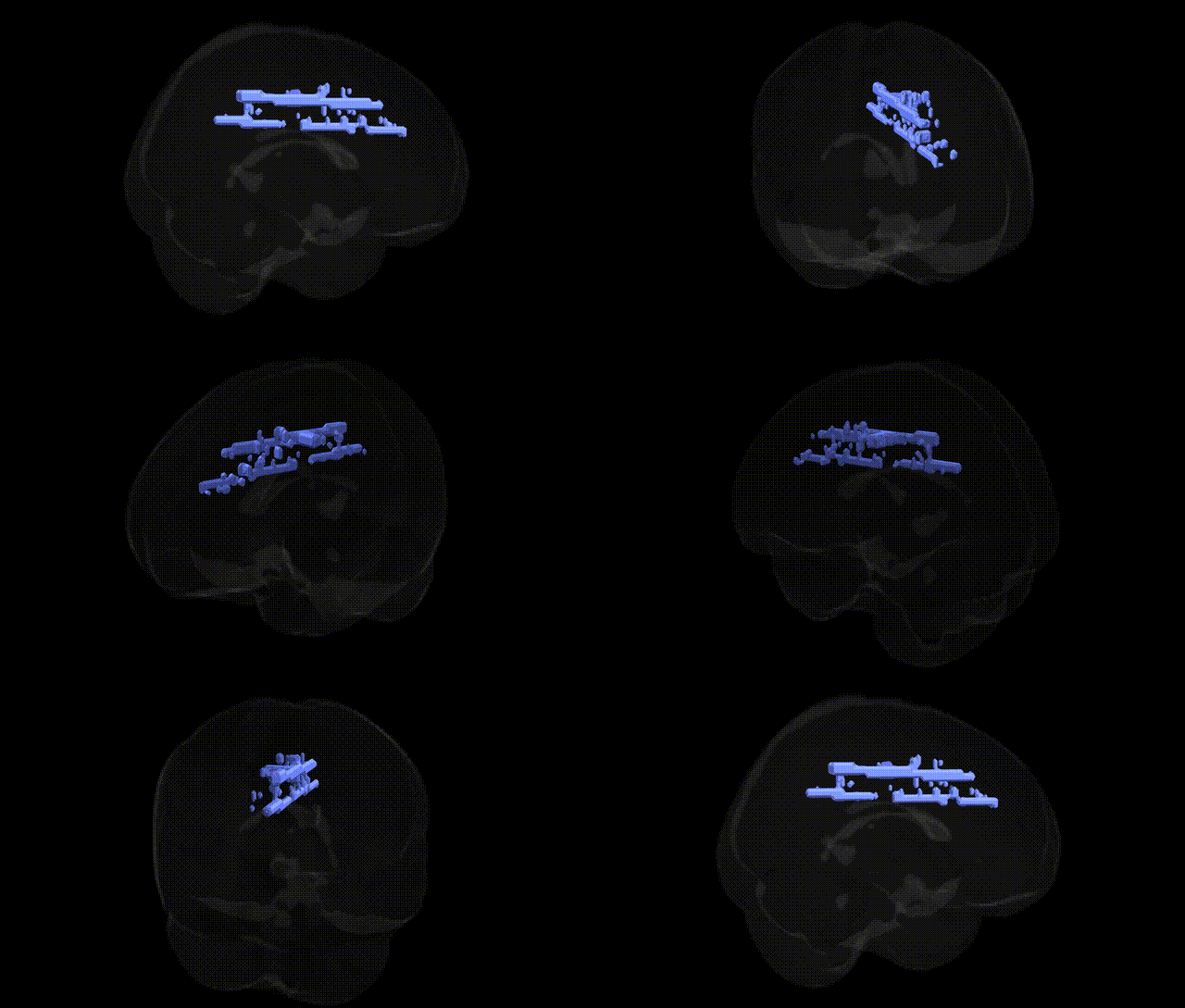
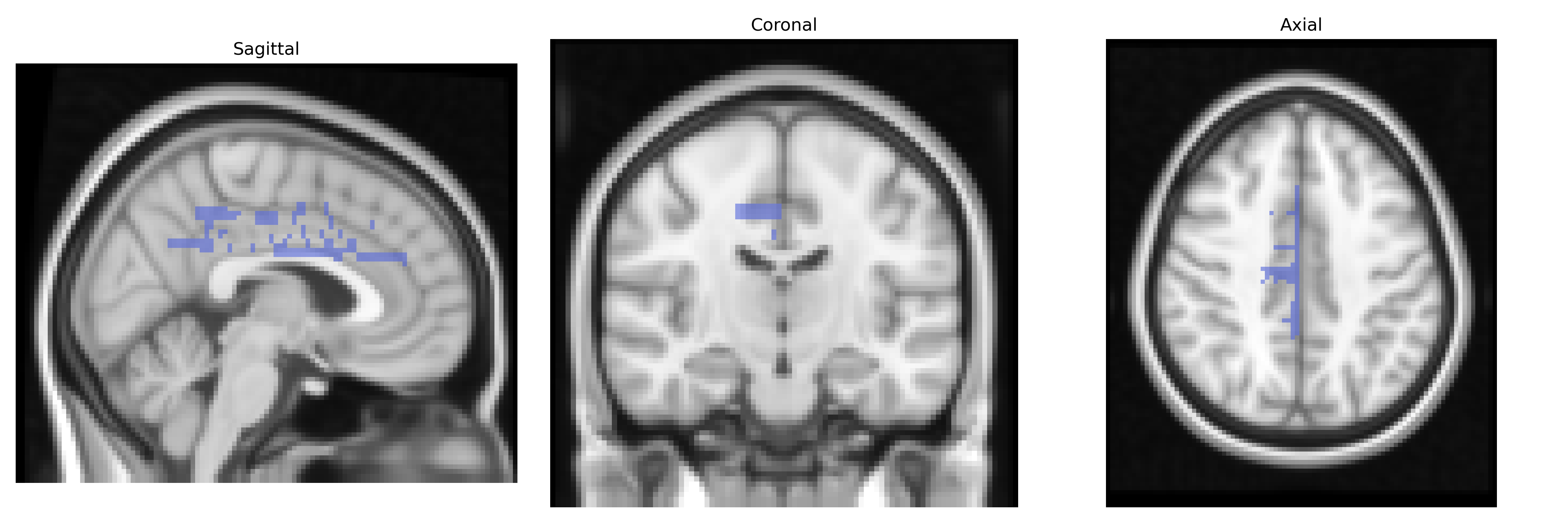
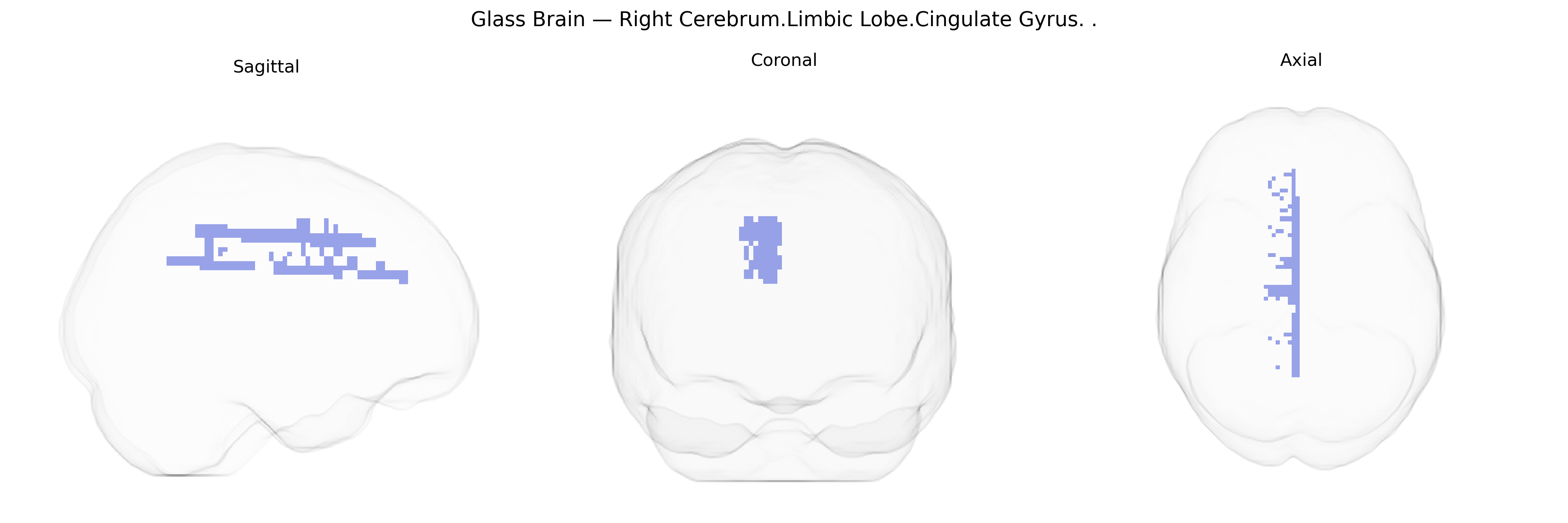
The bilateral Right Cerebrum Limbic Lobe Cingulate Gyrus is a medial cortical structure arching over the corpus callosum, forming a major component of the limbic system and extending from the subgenual area anteriorly to the parietal midline posteriorly. It is involved in integrating emotion, motivation, pain processing, and cognitive control, contributing to functions such as attention allocation, error detection, conflict monitoring, and regulation of autonomic responses. Cytoarchitectonically, it includes anterior and posterior subdivisions with distinct connectivity patterns: the anterior cingulate is heavily interconnected with prefrontal and limbic regions, while the posterior cingulate interfaces with precuneus and medial parietal areas and participates in the default mode network. In the Talairach 2mm Atlas, this label refers specifically to the right-hemispheric portion of the cingulate gyrus within the limbic lobe of the cerebrum. Cingulate gyrus
The bilateral right cingulate gyrus in the limbic lobe has been repeatedly implicated in genetic studies of neuropsychiatric and cognitive traits, although associations typically arise via broader network or cortical measures rather than this Talairach-defined region alone. GWAS and imaging‑genetics studies have linked common variants in genes involved in synaptic plasticity, glutamatergic signaling, and neurodevelopment—such as CACNA1C, ZNF804A, GRM3, and several HLA and complement pathway genes—to structural and functional alterations in cingulate cortex, particularly in schizophrenia, bipolar disorder, and major depressive disorder. Polygenic risk scores for schizophrenia, depression, and anxiety disorders correlate with cingulate thickness, volume, or activity, and cingulate connectivity patterns show heritability in twin and family studies. Variants in genes related to serotonin and dopamine systems (e.g., SLC6A4, DRD2) and stress-response pathways (FKBP5) have been associated with altered anterior and mid‑cingulate activation during emotion and pain processing, linking this region to genetic risk for mood and anxiety disorders, PTSD, and chronic pain phenotypes. GWAS of cognitive traits and personality (e.g., educational attainment, neuroticism) and of disorders such as ADHD and autism spectrum disorder have identified loci whose imaging correlates include cingulate morphology and connectivity. Large-scale brain-structure GWAS (ENIGMA, UK Biobank) indicate that cingulate cortical thickness and surface area are moderately heritable, with associated loci clustering in neurodevelopmental and cell-adhesion pathways, supporting a genetically influenced role of the cingulate gyrus in emotion regulation, cognitive control, and vulnerability to psychiatric illness.
Overview generated by GPT-4o (2026).
Region ID: 913
Hemisphere: bilateral
Atlas: Talairach labels 2mm
Full Quality Version: Download MP4
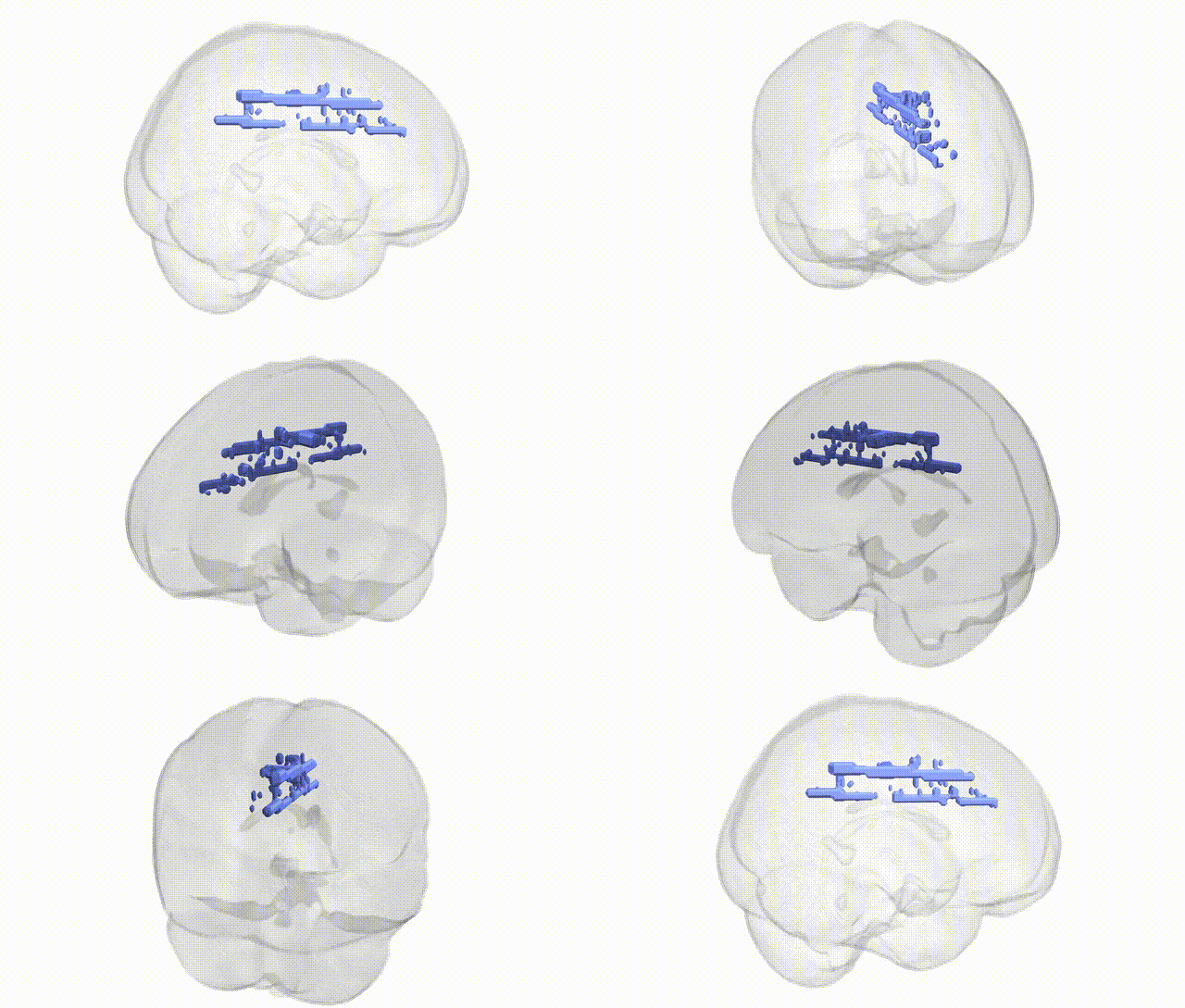
Full Quality Version: Download MP4
Wali Sidiqyar*, Gaurav Rudravaram*, Elyssa M. McMaster, Trent M. Schwartz, Adam M. Saunders, Kurt G. Schilling, Bennett A. Landman "Introducing SPINS: A Shared Public Visualization Library of Neuroanatomical Structures." Medical Imaging with Deep Learning- short paper
This resource is licensed under CC0 1.0 Universal (Public Domain).