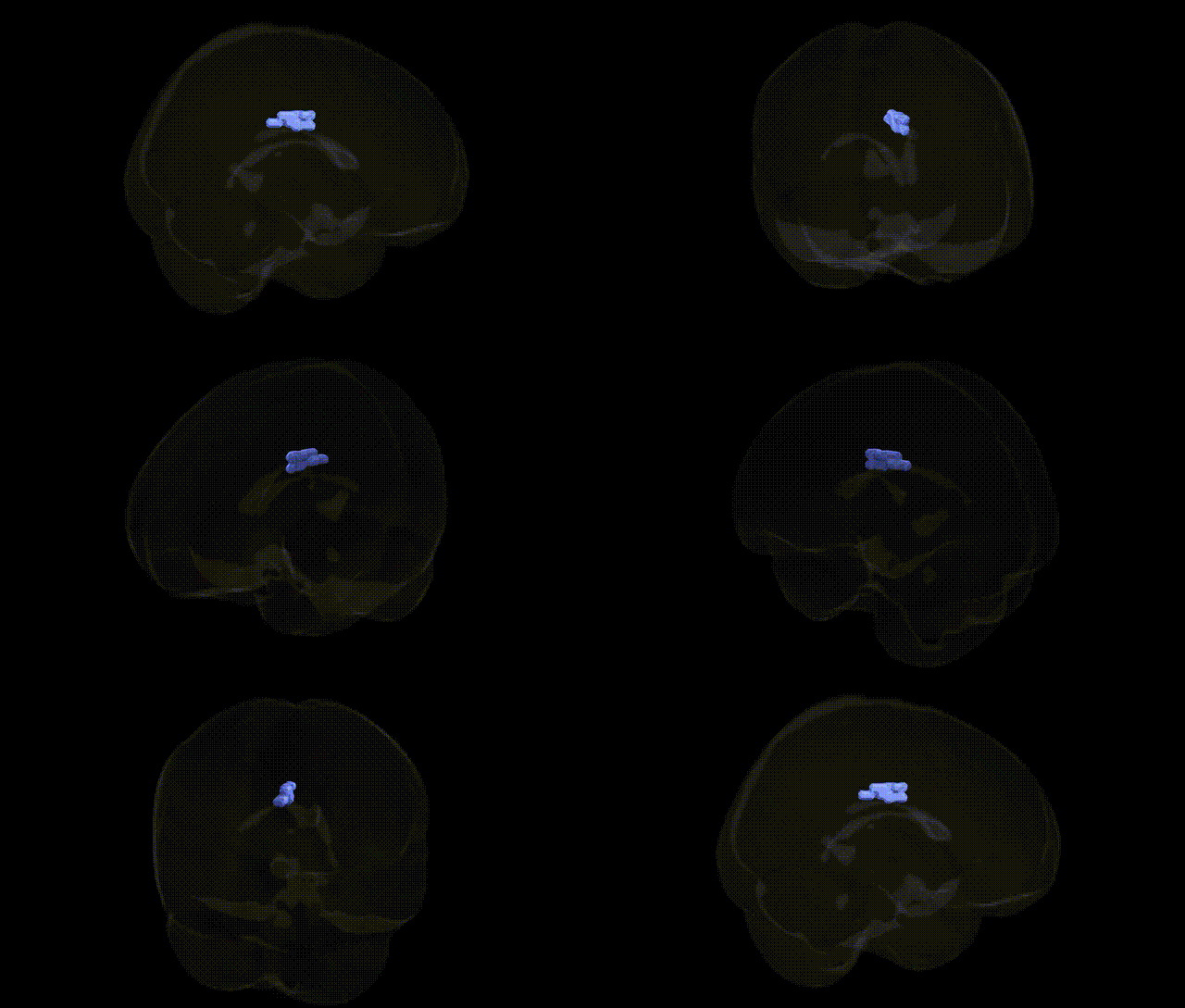
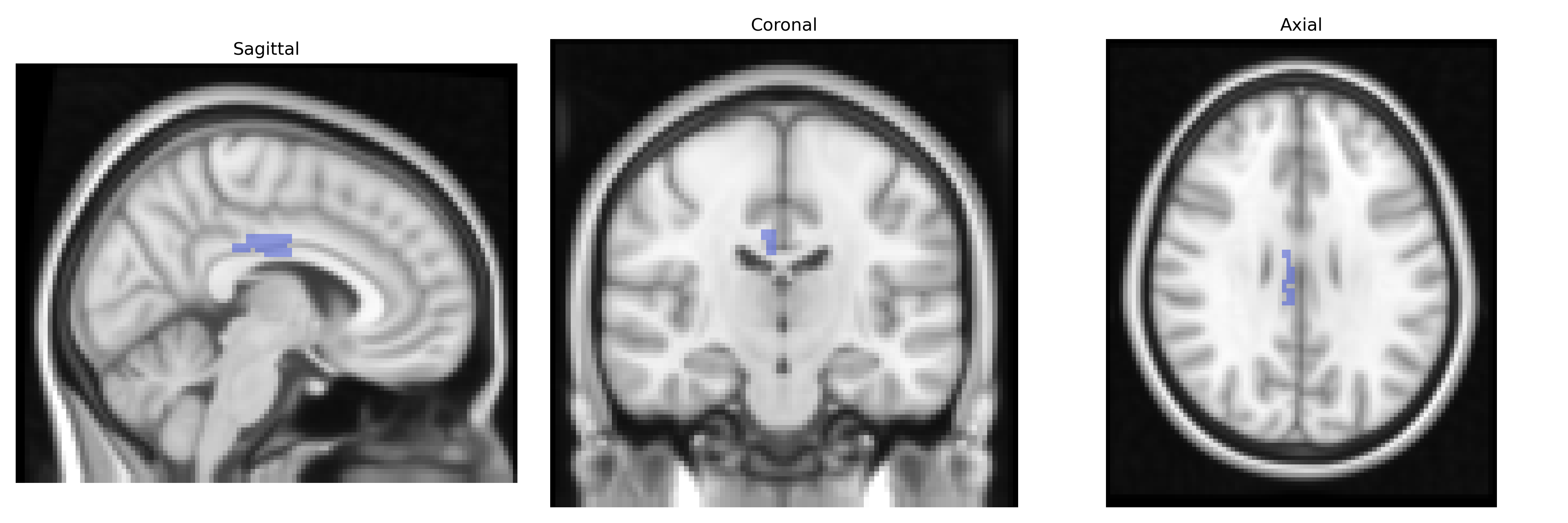
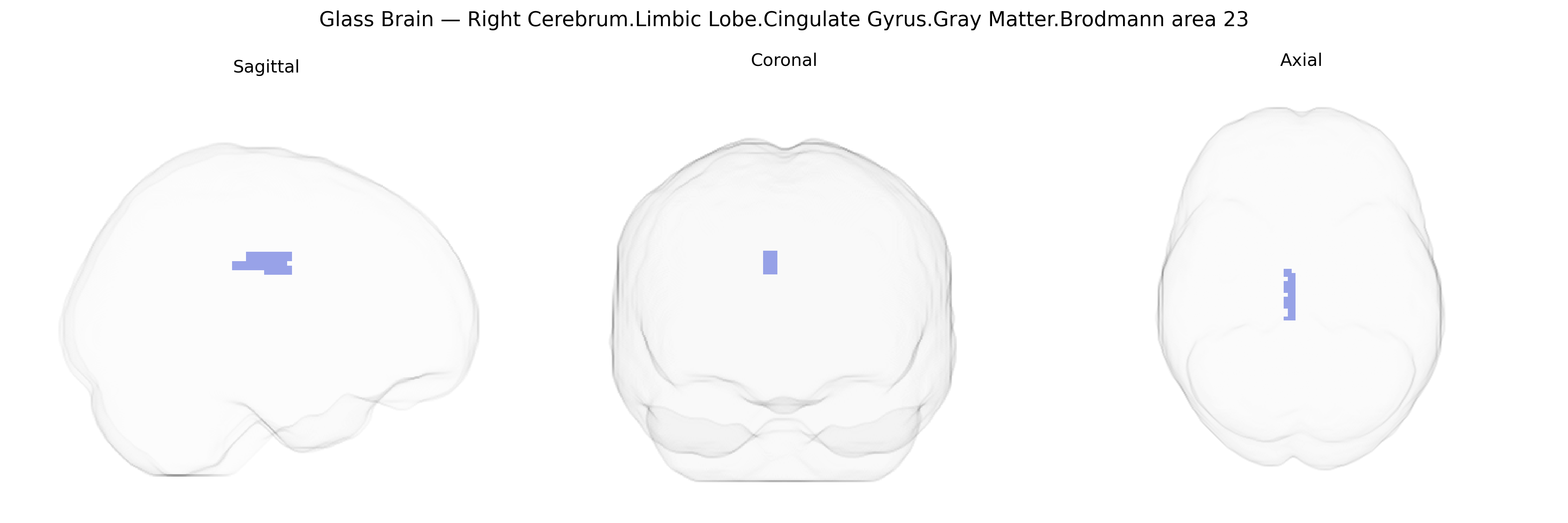
Bilateral Right Cerebrum Limbic Lobe Cingulate Gyrus Gray Matter Brodmann area 23 corresponds to a segment of the posterior cingulate cortex within the limbic lobe, situated on the medial surface of the cerebral hemisphere adjacent to the corpus callosum. Cytoarchitectonically defined by Brodmann as area 23, this region is involved in emotional processing, internally directed attention, and integration of sensory, mnemonic, and autonomic information, and it forms part of the default mode and limbic networks. Functionally, it participates in evaluative aspects of behavior, regulation of arousal, and modulation of pain and visceral responses, while extensive connectivity with the hippocampus, thalamus, and prefrontal cortices supports roles in memory and self-referential processing. There is no direct link for “Brodmann area 23,” but it is closely related to the Posterior cingulate cortex.
The bilateral right cerebrum limbic lobe cingulate gyrus gray matter corresponding to Brodmann area 23 (posterior cingulate) has been implicated in genetic studies of several neuropsychiatric and cognitive traits, though most findings concern the broader posterior cingulate or cingulate cortex rather than this Talairach-defined parcel specifically. GWAS of brain structural measures have identified associations between common variants (including loci near genes such as KIAA0586, PRDM6, and others) and cortical thickness or volume in the cingulate and adjacent medial parietal regions, which encompass BA23, suggesting polygenic influences on its morphology. Functional and structural imaging-genetics work links posterior cingulate integrity and connectivity—particularly with the default mode network—to genetic risk for Alzheimer’s disease (e.g., APOE ε4), schizophrenia, major depressive disorder, and autism spectrum traits, with case–control and polygenic score analyses repeatedly showing altered activation or atrophy in this region in carriers of higher genetic risk. Twin and family studies indicate substantial heritability of posterior cingulate volume, metabolism, and task-related activation, and GWAS of cognitive performance, memory, and self-referential or internal mentation traits have implicated networks that prominently involve BA23. Although no single gene is uniquely specific to Brodmann area 23, convergent genetic evidence from imaging GWAS, disease risk loci, and polygenic architectures underscores the posterior cingulate’s role as a heritable hub in disorders of memory, mood, psychosis, and neurodegeneration.
Overview generated by GPT-4o (2026).
Region ID: 935
Hemisphere: bilateral
Atlas: Talairach labels 2mm
Full Quality Version: Download MP4
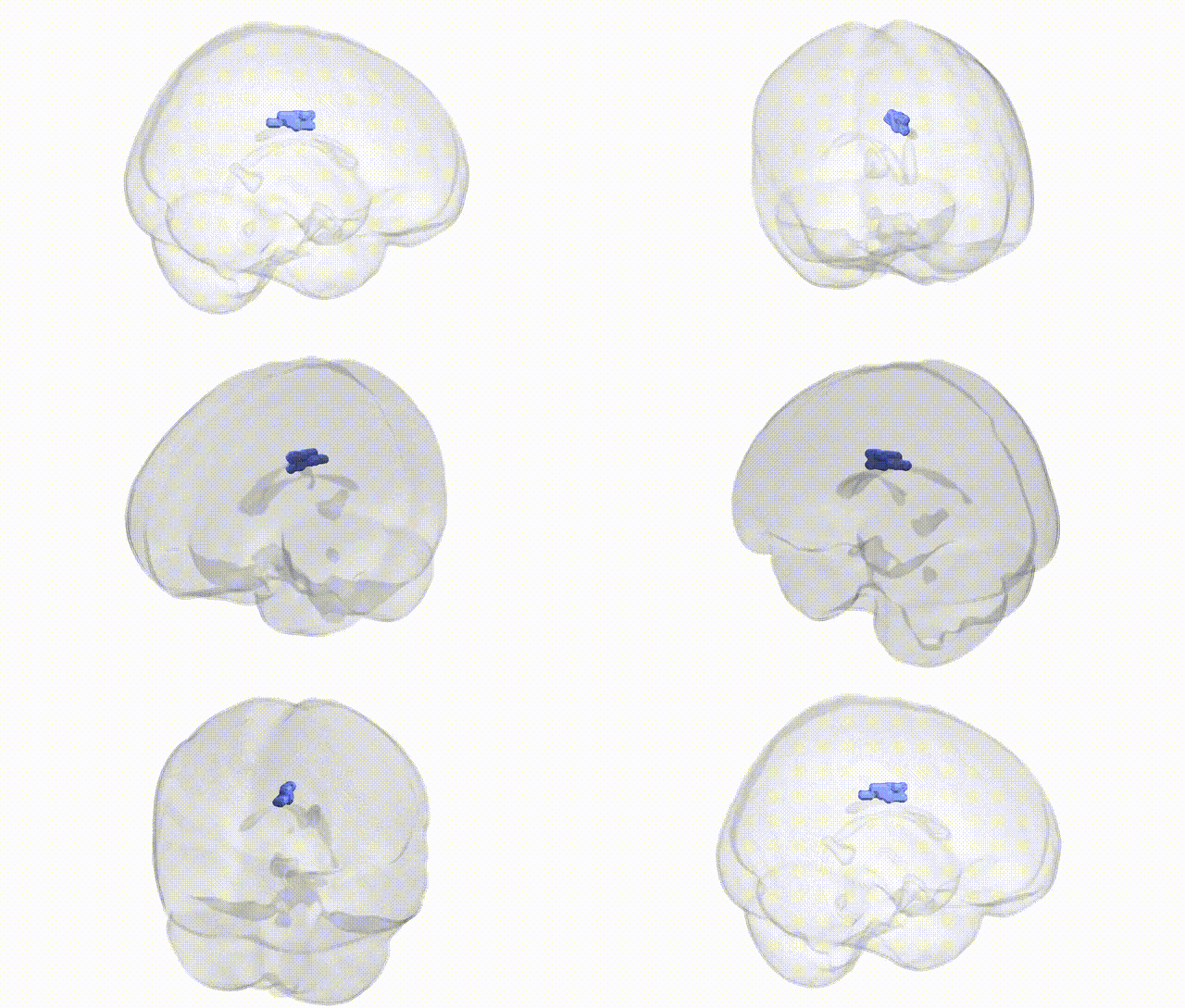
Full Quality Version: Download MP4
Wali Sidiqyar*, Gaurav Rudravaram*, Elyssa M. McMaster, Trent M. Schwartz, Adam M. Saunders, Kurt G. Schilling, Bennett A. Landman "Introducing SPINS: A Shared Public Visualization Library of Neuroanatomical Structures." Medical Imaging with Deep Learning- short paper
This resource is licensed under CC0 1.0 Universal (Public Domain).