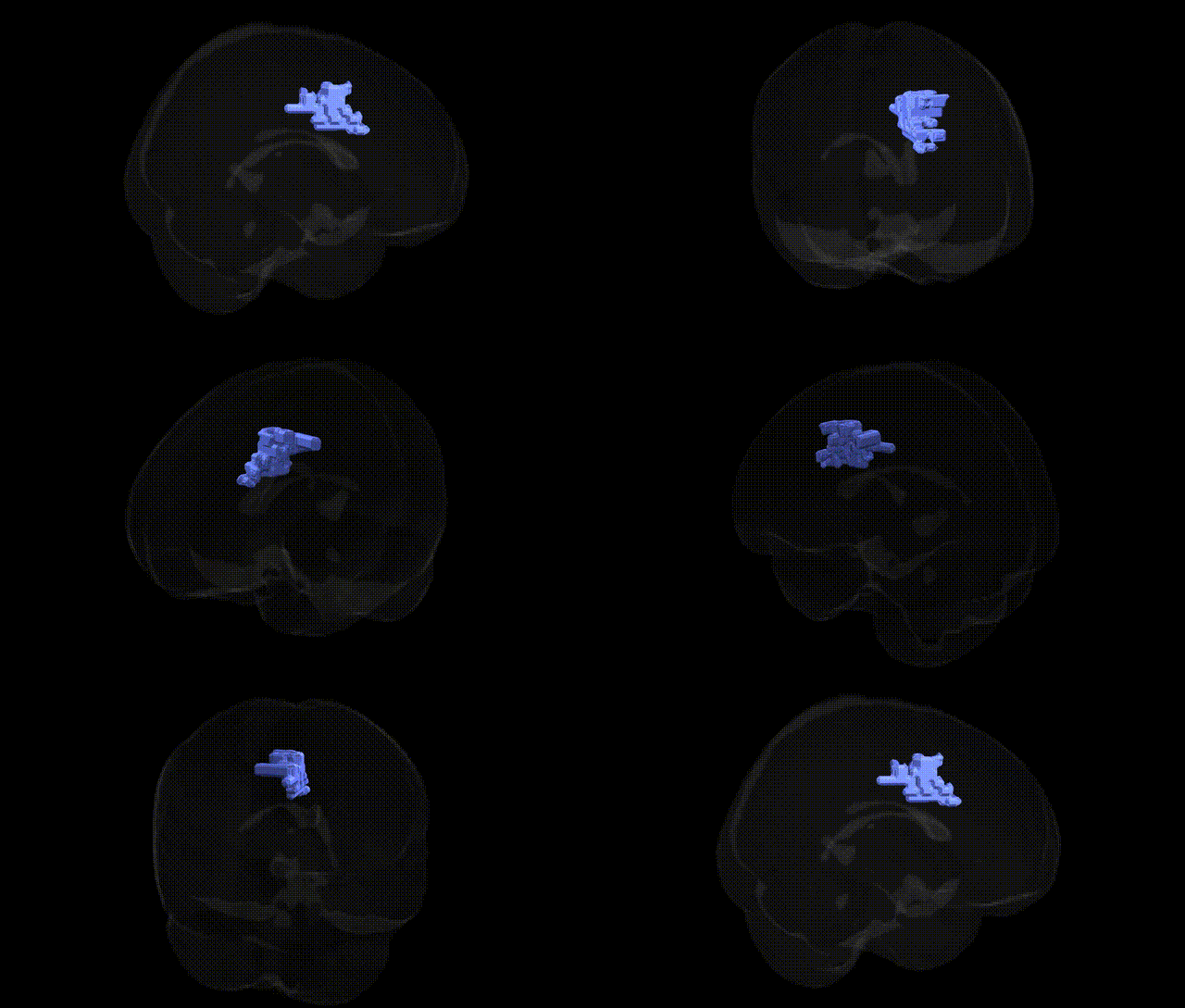
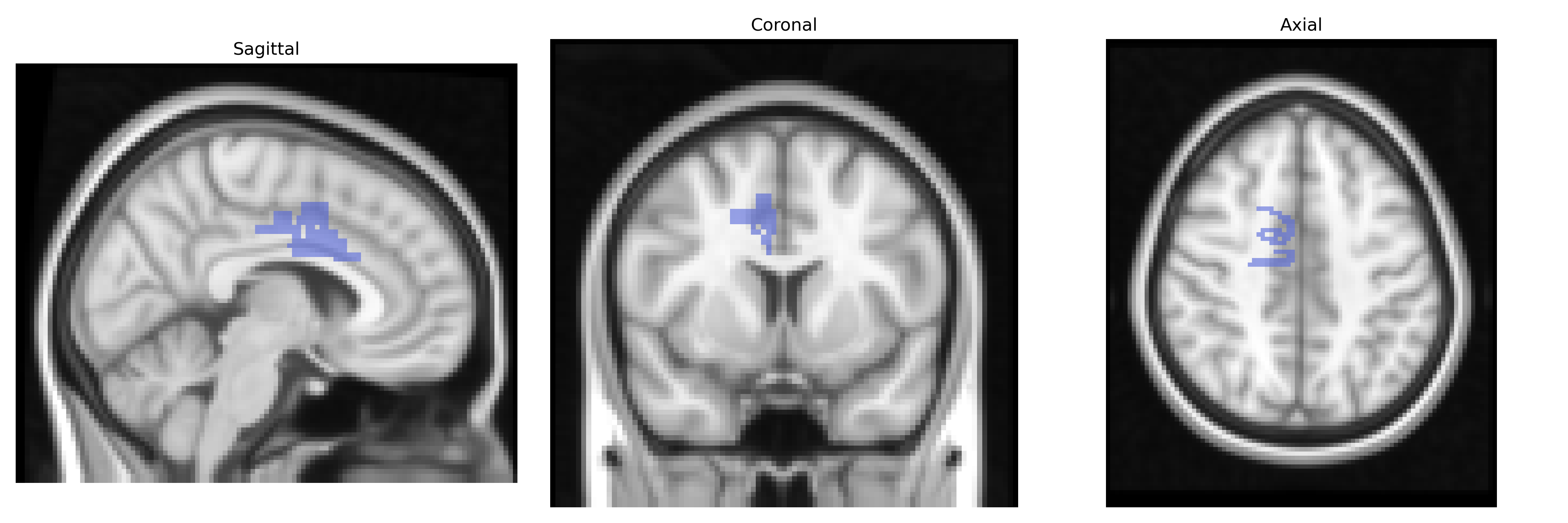
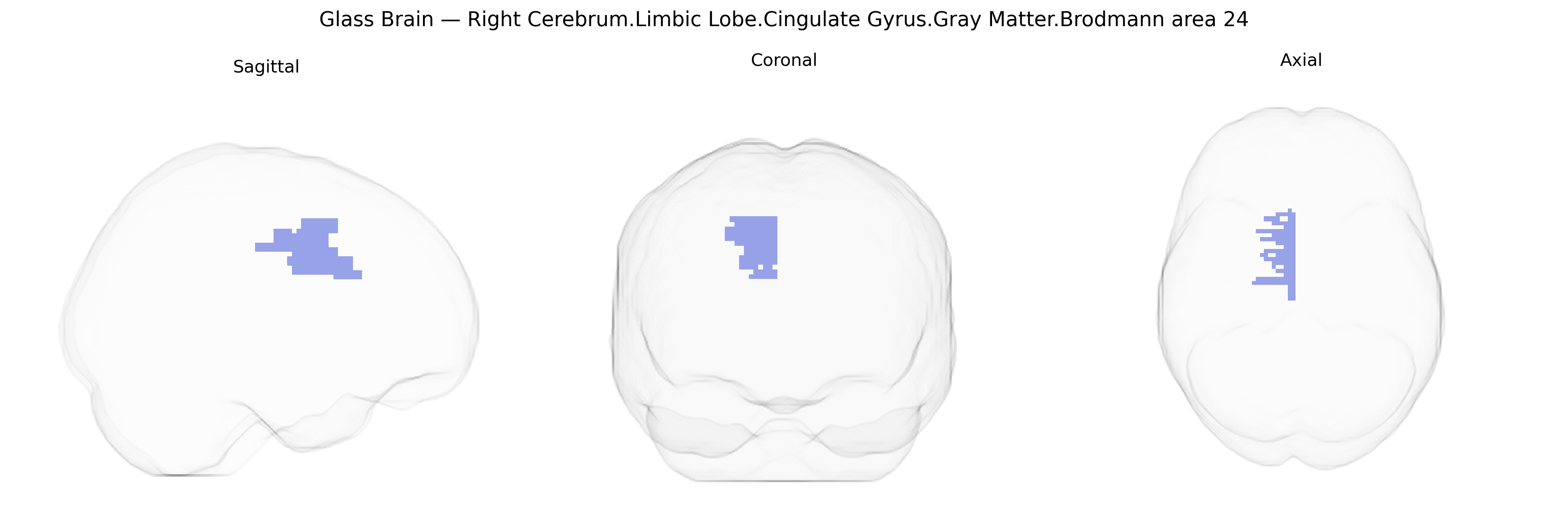
The bilateral Right Cerebrum.Limbic Lobe.Cingulate Gyrus.Gray Matter.Brodmann area 24 corresponds to the ventral portion of the anterior cingulate cortex, a key component of the limbic system situated on the medial surface of the frontal lobe, arching above the corpus callosum. This agranular cortical area is heavily interconnected with prefrontal, premotor, limbic, and autonomic centers, and is critically involved in affective processing, motivation, conflict monitoring, and the integration of emotional and cognitive information for decision-making and behavioral control. Brodmann area 24 participates in autonomic regulation (such as cardiovascular and visceral responses), pain affect and nociceptive processing, and the modulation of attention and executive functions under conditions of uncertainty or error. As part of the anterior cingulate cortex, it contributes to the evaluation of the emotional significance of stimuli and the generation of appropriate adaptive responses.
Anterior cingulate cortex
The bilateral Brodmann area 24 of the cingulate gyrus (anterior cingulate cortex, ACC) has been repeatedly implicated in genetic studies of psychiatric and cognitive traits, with GWAS and imaging genetics pointing to polygenic influences rather than single, region-specific loci. Variants in genes regulating glutamatergic and GABAergic signaling (e.g., GRM3, GAD1), monoaminergic systems (e.g., SLC6A4, COMT, DRD2), and neurotrophic and synaptic plasticity pathways (e.g., BDNF, NRG1, CACNA1C, ZNF804A) have been associated with ACC volume, thickness, or functional activation, often in the context of schizophrenia, major depression, bipolar disorder, anxiety disorders, and PTSD. Large-scale GWAS of brain structure (e.g., ENIGMA consortium) have identified widespread polygenic influences on anterior cingulate morphology, with risk alleles for schizophrenia, depression, and ADHD correlating with reduced ACC gray matter or altered connectivity, although individual SNP effects are generally small and non-specific. ACC/Brodmann area 24 activity and structure have also been genetically linked to pain sensitivity, emotional regulation, cognitive control, and default mode/salience network function, with loci in genes involved in calcium channel function and synaptic signaling frequently emerging in multimodal studies that combine GWAS with fMRI or structural MRI phenotypes. Overall, genetic associations with Brodmann area 24 reflect broad, distributed neurodevelopmental and neurotransmission pathways underlying psychiatric vulnerability and cognitive-emotional traits rather than discrete, region-unique genetic effects.
Overview generated by GPT-4o (2026).
Region ID: 942
Hemisphere: bilateral
Atlas: Talairach labels 2mm
Full Quality Version: Download MP4
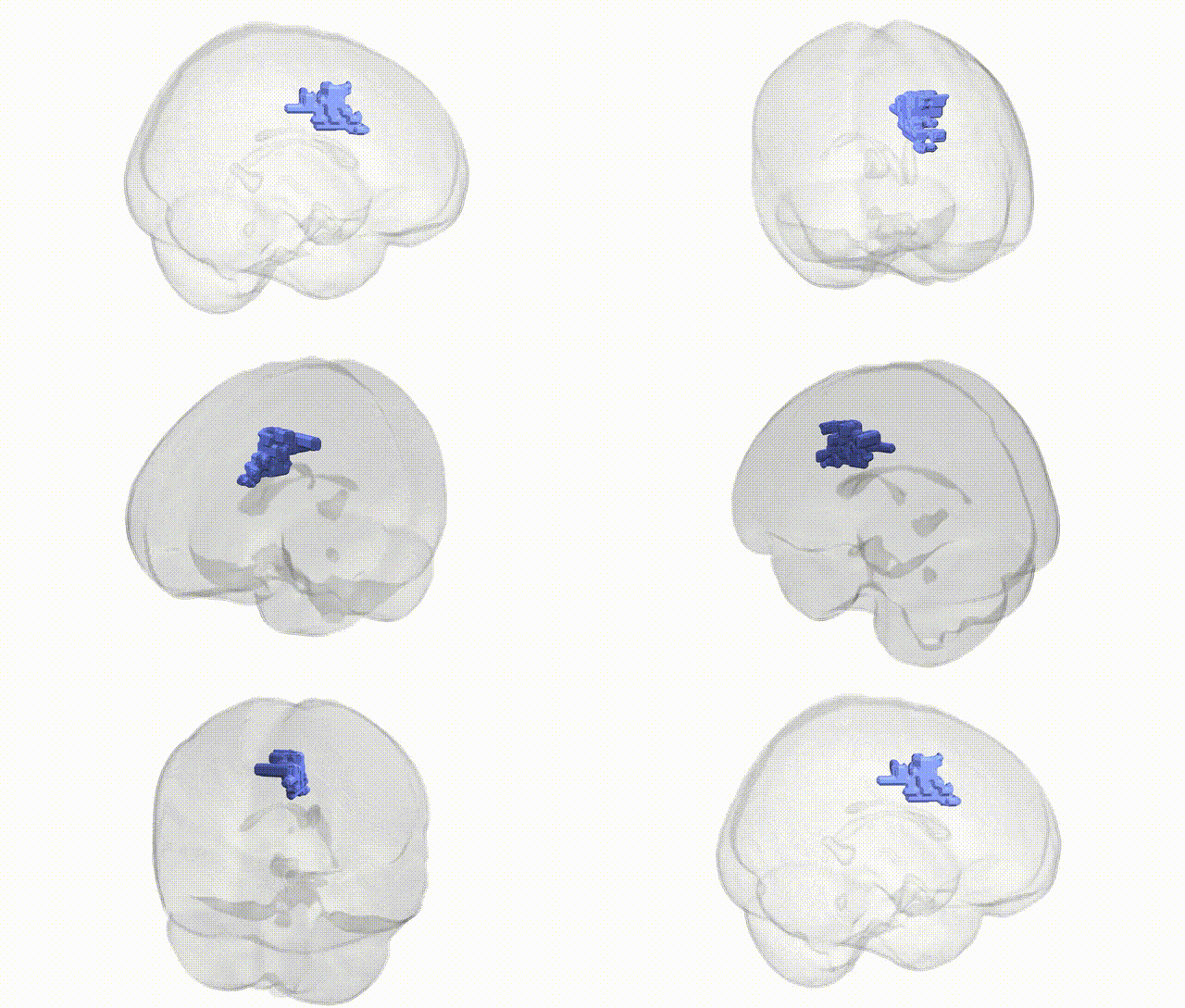
Full Quality Version: Download MP4
Wali Sidiqyar*, Gaurav Rudravaram*, Elyssa M. McMaster, Trent M. Schwartz, Adam M. Saunders, Kurt G. Schilling, Bennett A. Landman "Introducing SPINS: A Shared Public Visualization Library of Neuroanatomical Structures." Medical Imaging with Deep Learning- short paper
This resource is licensed under CC0 1.0 Universal (Public Domain).