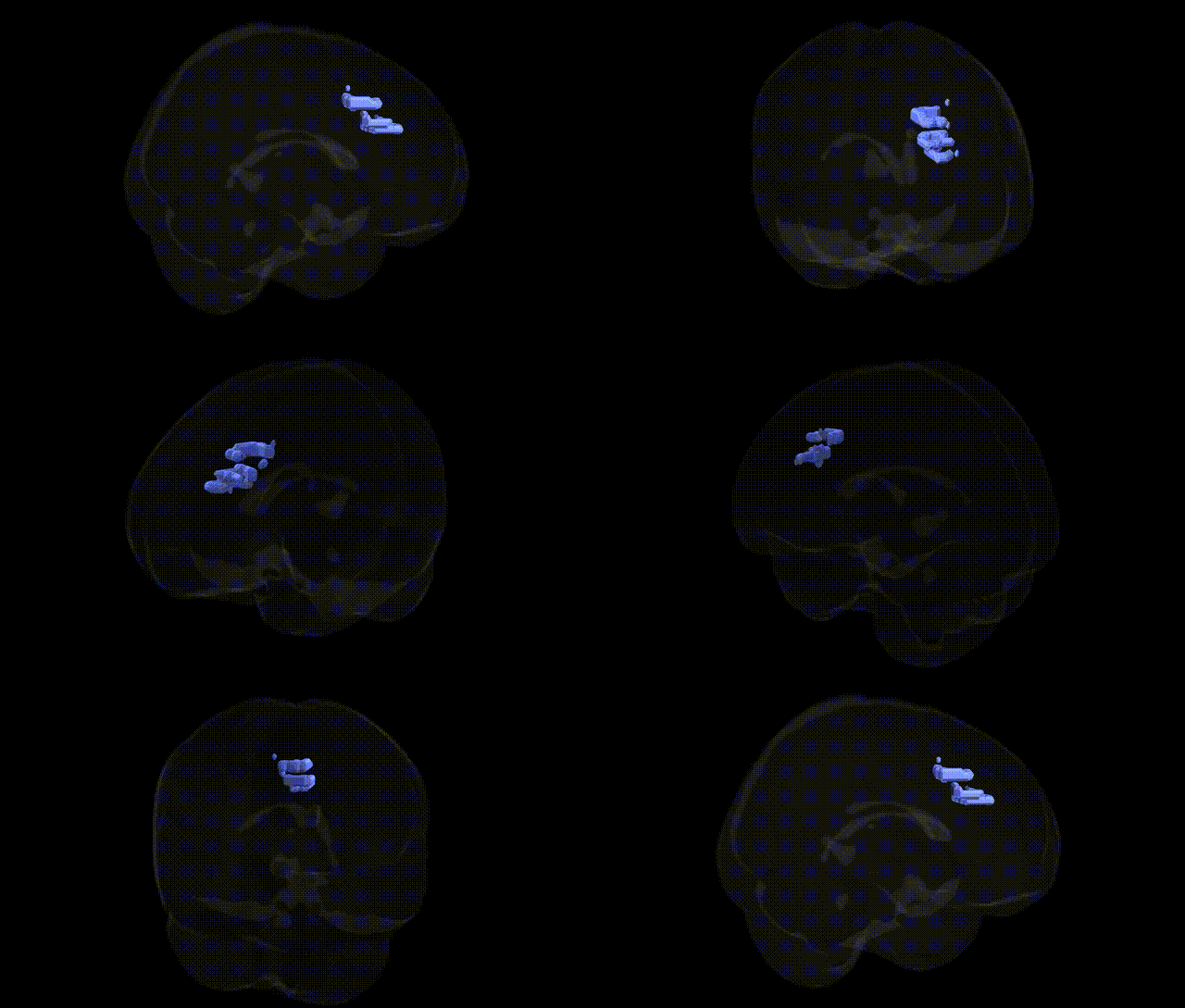
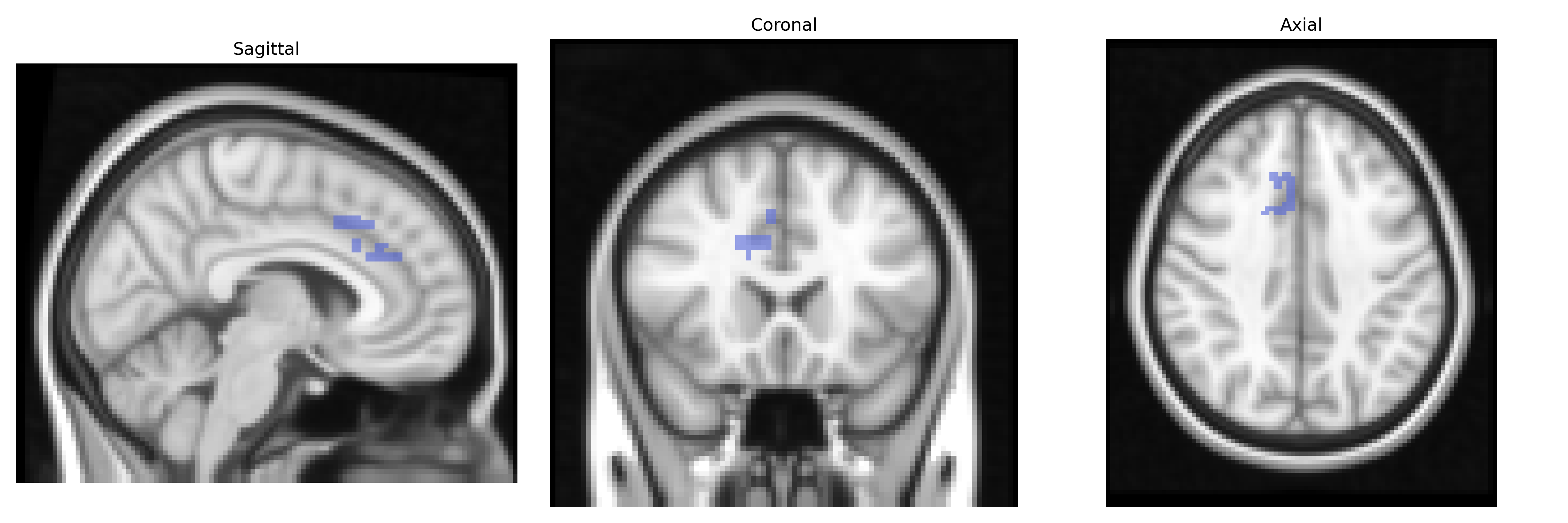
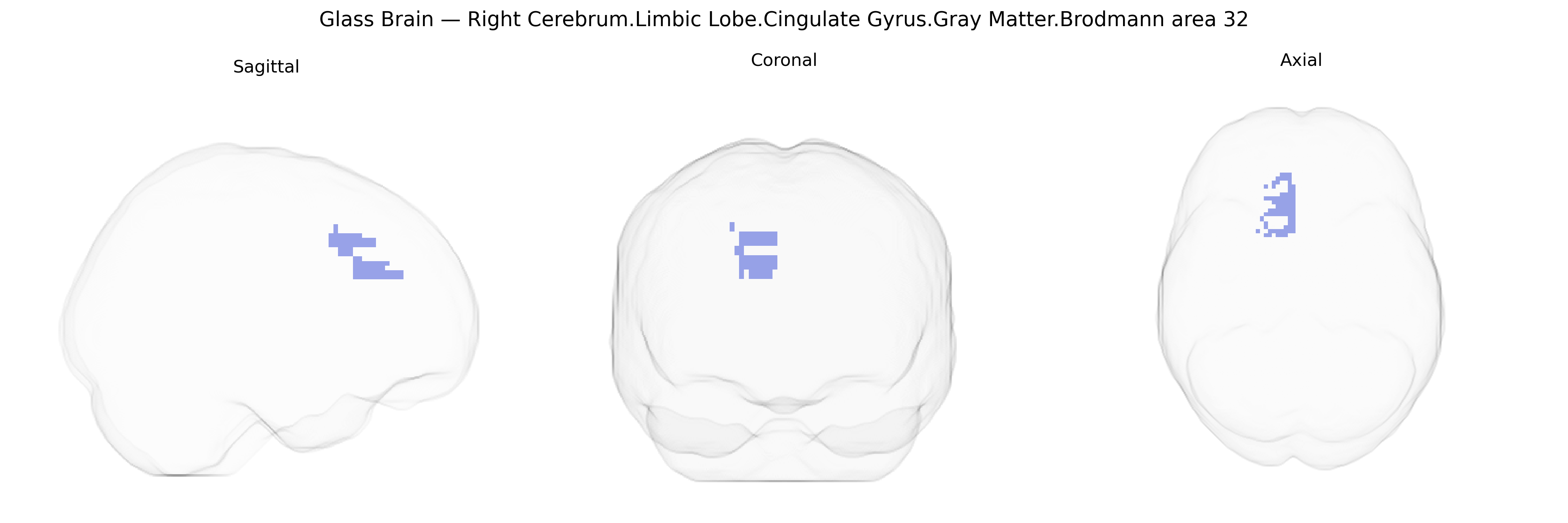
Bilateral Right Cerebrum.Limbic Lobe.Cingulate Gyrus.Gray Matter.Brodmann area 32 corresponds to the dorsal anterior cingulate cortex (dACC), a medial prefrontal cortical region situated in the cingulate gyrus above the corpus callosum. Cytoarchitectonically defined as area 32, it forms part of the limbic lobe and is heavily interconnected with prefrontal, premotor, limbic, and autonomic regulatory structures. Functionally, this region is implicated in cognitive control, performance monitoring, conflict detection, decision-making under uncertainty, and the integration of emotional and motivational signals with executive processes. It also contributes to regulation of autonomic responses and affective states through connections with the amygdala, hypothalamus, and brainstem nuclei. There is no direct Wikipedia article for Brodmann area 32; a closely related structure is the Anterior cingulate cortex.
Brodmann area 32 in the cingulate gyrus (dorsal/mid‑cingulate and pregenual ACC territory) has been repeatedly implicated in genetic studies of psychiatric, cognitive, and pain-related traits, although most findings involve broader anterior cingulate or medial prefrontal circuits rather than this parcel alone. GWAS and imaging genetics work link common variants in serotonin-related genes (e.g., SLC6A4), dopaminergic genes (e.g., DRD2, COMT), glutamatergic genes (e.g., GRM3), and calcium-channel genes (e.g., CACNA1C) to structural and functional variation in anterior cingulate regions that encompass BA32, with downstream associations to major depressive disorder, bipolar disorder, schizophrenia, and anxiety phenotypes. Large neuroimaging GWAS consortia (such as ENIGMA and UK Biobank-based studies) have identified SNPs in loci including 12q23, 17q21, and 22q11 that influence cortical thickness and surface area in anterior cingulate cortex, and these genetic influences overlap with risk variants for schizophrenia, depression, and neuroticism, suggesting partially shared genetic architecture between BA32 morphology and psychiatric liability. BA32 activity and connectivity have also been tied to pain sensitivity and chronic pain conditions, with variants in opioid system genes (OPRM1) and inflammatory pathway genes contributing to individual differences in cingulate activation during nociception. Additionally, polygenic risk scores for depression, schizophrenia, and ADHD correlate with altered BA32/anterior cingulate activation during cognitive control and emotion regulation tasks, indicating that distributed genetic liability shapes function in this region. Direct GWAS specifically targeting bilateral BA32 gray matter from the Talairach 2 mm atlas are limited, but convergent evidence from brain-wide imaging genetics and disorder-focused GWAS consistently implicates BA32 within the genetically influenced medial frontal–cingulate network central to mood regulation, cognitive control, and pain processing.
Overview generated by GPT-4o (2026).
Region ID: 946
Hemisphere: bilateral
Atlas: Talairach labels 2mm
Full Quality Version: Download MP4
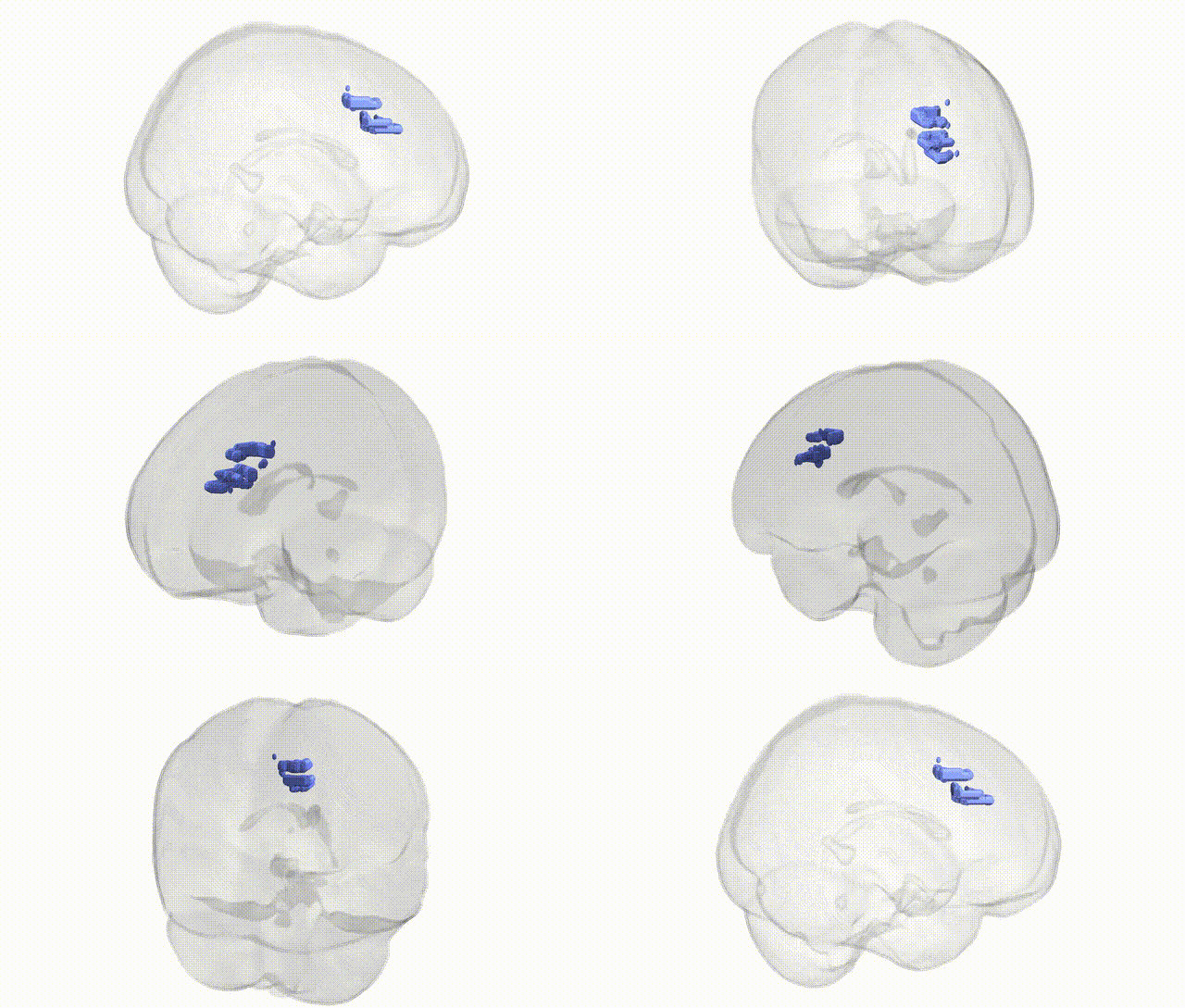
Full Quality Version: Download MP4
Wali Sidiqyar*, Gaurav Rudravaram*, Elyssa M. McMaster, Trent M. Schwartz, Adam M. Saunders, Kurt G. Schilling, Bennett A. Landman "Introducing SPINS: A Shared Public Visualization Library of Neuroanatomical Structures." Medical Imaging with Deep Learning- short paper
This resource is licensed under CC0 1.0 Universal (Public Domain).