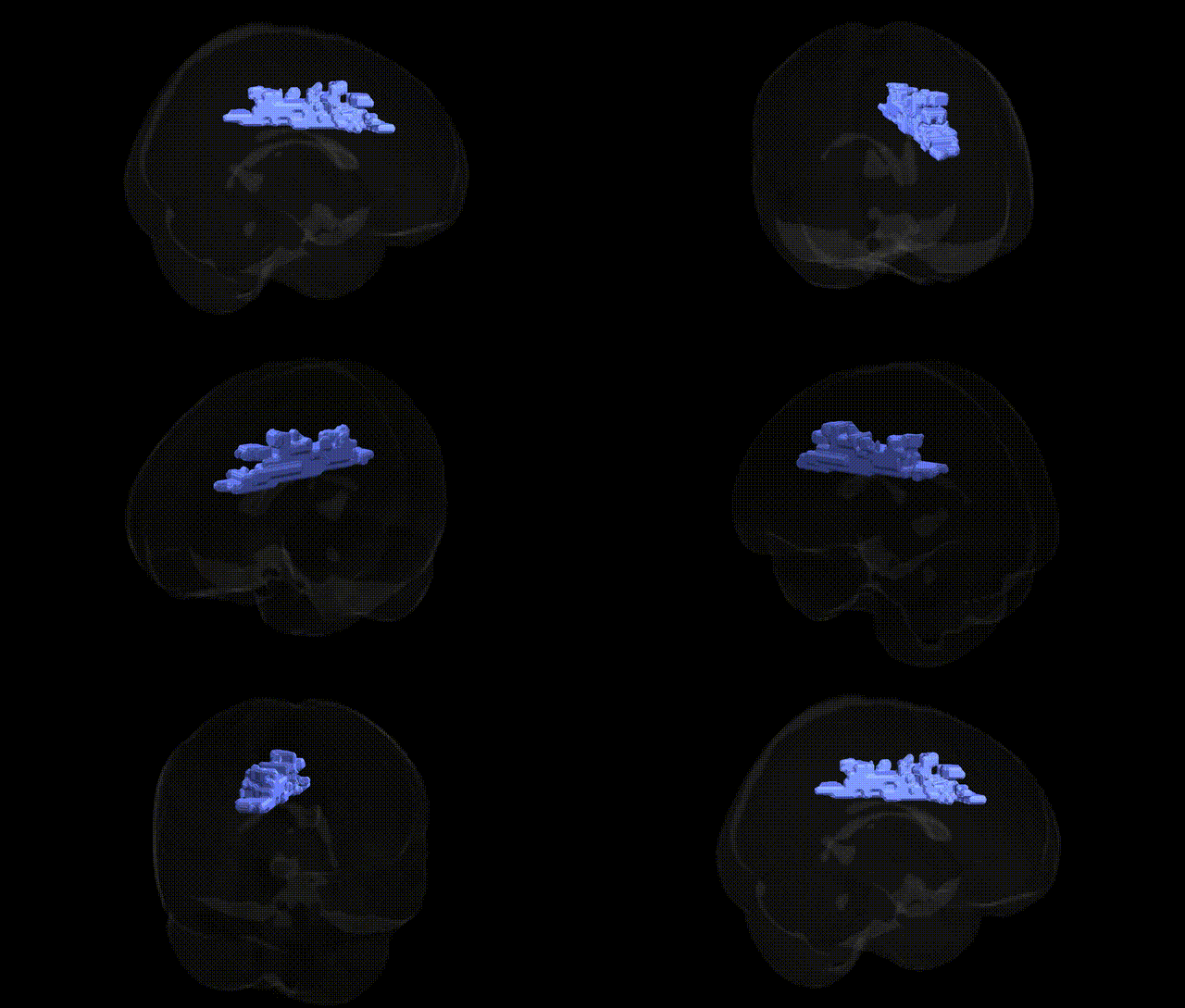
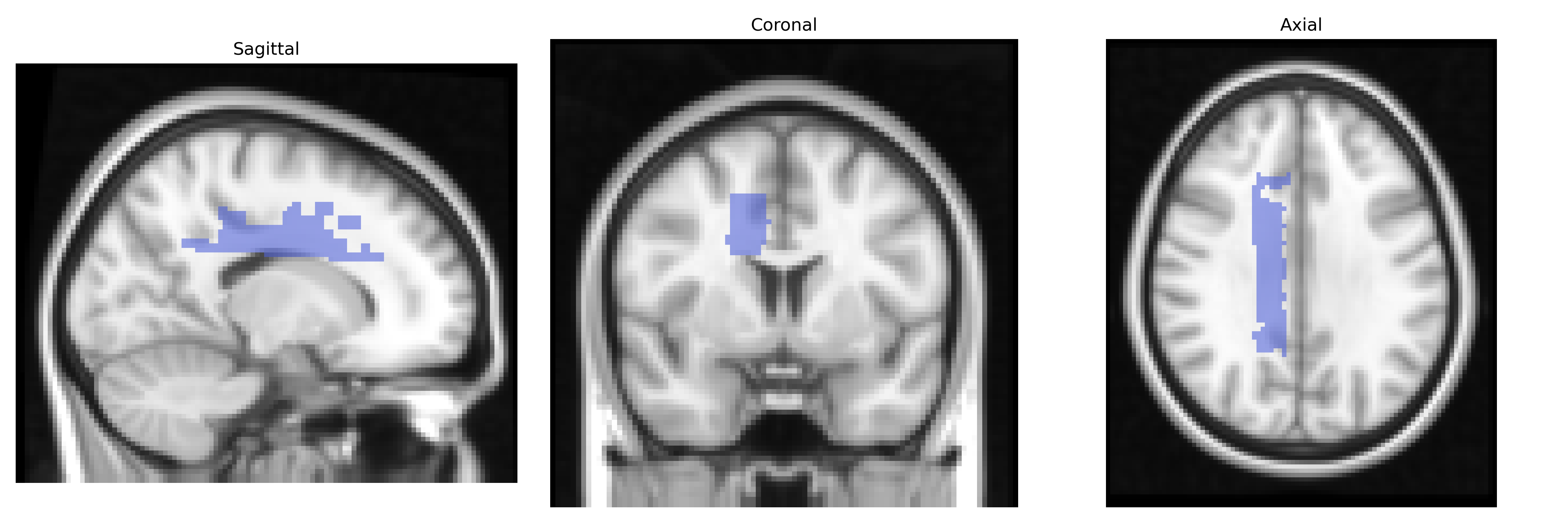
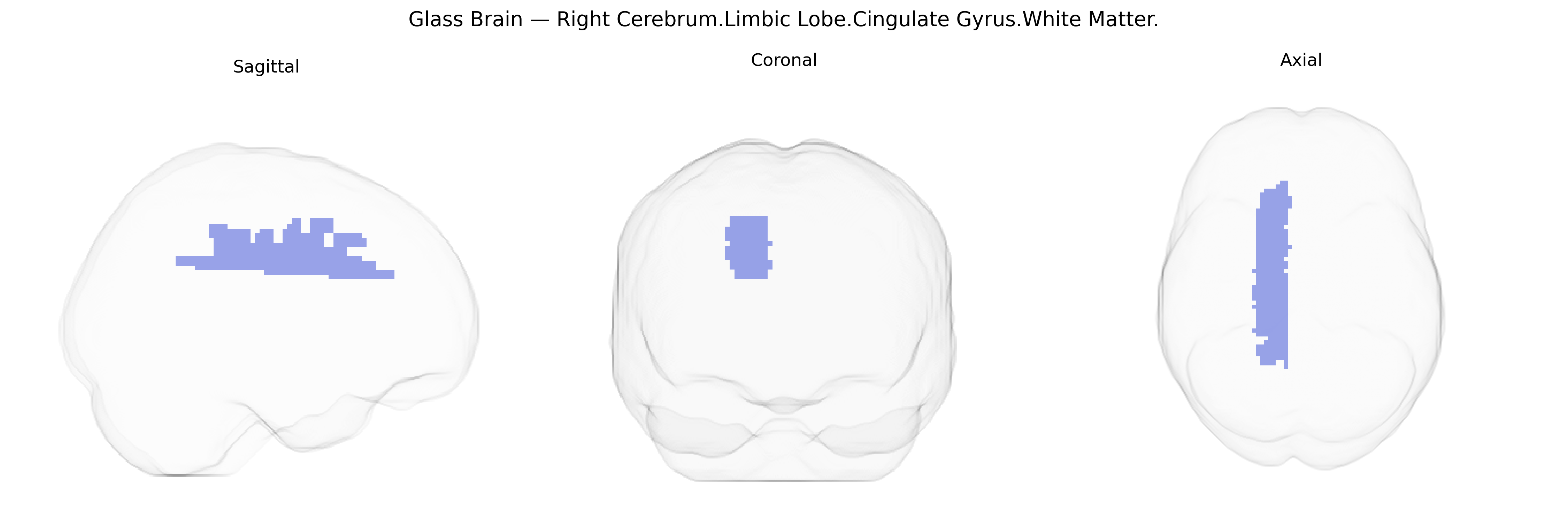
The bilateral Right Cerebrum.Limbic Lobe.Cingulate Gyrus.White Matter corresponds to the intrahemispheric myelinated fiber tracts coursing beneath the cortical mantle of the cingulate gyrus within the limbic lobe of the right cerebral hemisphere. These fibers include short association fibers linking adjacent portions of the cingulate cortex, as well as components of longer pathways such as parts of the cingulum bundle, which interconnect medial frontal, parietal, and temporal limbic regions. Functionally, this white matter supports integration of emotional, motivational, and cognitive processes mediated by the cingulate cortex, contributing to attention, error monitoring, pain processing, and aspects of autonomic and affective regulation. There is no direct Wikipedia article for this exact white matter label; a closely related structure is the Cingulum (brain).
The bilateral right cingulate white matter, as defined in the Talairach 2 mm atlas, is not typically isolated as a specific target in genetic studies, but numerous GWAS and imaging-genetics analyses implicate genes and variants influencing cingulate structure and connectivity within broader limbic and cortical networks. Common variants in genes related to synaptic function and neurodevelopment—such as BDNF, NRG1, CACNA1C, GRIN2B, and DISC1—have been associated with alterations in cingulate volume, thickness, or white matter integrity (e.g., fractional anisotropy in cingulum bundles), often in the context of psychiatric conditions including major depressive disorder, bipolar disorder, schizophrenia, anxiety disorders, and post-traumatic stress disorder. Large neuroimaging GWAS (for example, ENIGMA and UK Biobank-based studies) have shown that polygenic influences on cortical and limbic white matter microstructure overlap with genetic architectures for traits such as cognitive performance, neuroticism, risk-taking behavior, and general psychopathology, and the cingulate region commonly appears within these distributed networks. Variants in genes involved in myelination and axonal guidance, such as those affecting oligodendrocyte function (e.g., in or near genes like CNTN4, LINGO1, and others identified in diffusion MRI GWAS), have been linked to white matter metrics that include cingulate pathways; these associations are often pleiotropic, spanning attention, impulse control, and emotional regulation. Additionally, risk loci for neurodegenerative and neurodevelopmental disorders (e.g., APOE in Alzheimer’s disease, and various autism- and ADHD-related loci) show imaging correlates in cingulate cortical and subcortical connectivity, although effects tend to be modest and embedded within whole-brain patterns rather than specific to the right cingulate white matter alone. Overall, genetic influences on the right cingulate gyrus white matter are best understood as part of large-scale polygenic effects on limbic-cortical circuitry underlying mood, cognition, and self-regulation, rather than through single, region-specific variants.
Overview generated by GPT-4o (2026).
Region ID: 922
Hemisphere: bilateral
Atlas: Talairach labels 2mm
Full Quality Version: Download MP4
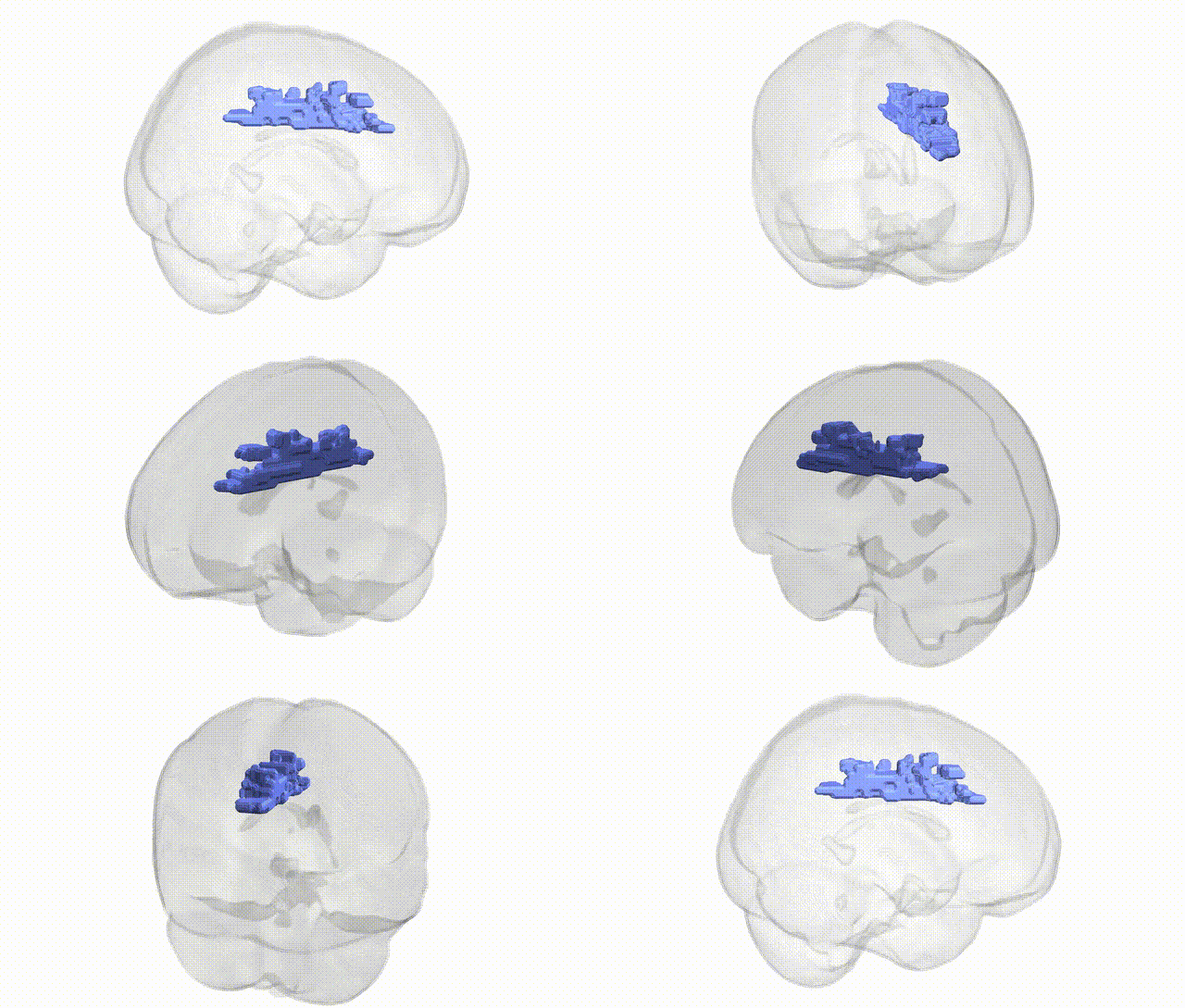
Full Quality Version: Download MP4
Wali Sidiqyar*, Gaurav Rudravaram*, Elyssa M. McMaster, Trent M. Schwartz, Adam M. Saunders, Kurt G. Schilling, Bennett A. Landman "Introducing SPINS: A Shared Public Visualization Library of Neuroanatomical Structures." Medical Imaging with Deep Learning- short paper
This resource is licensed under CC0 1.0 Universal (Public Domain).