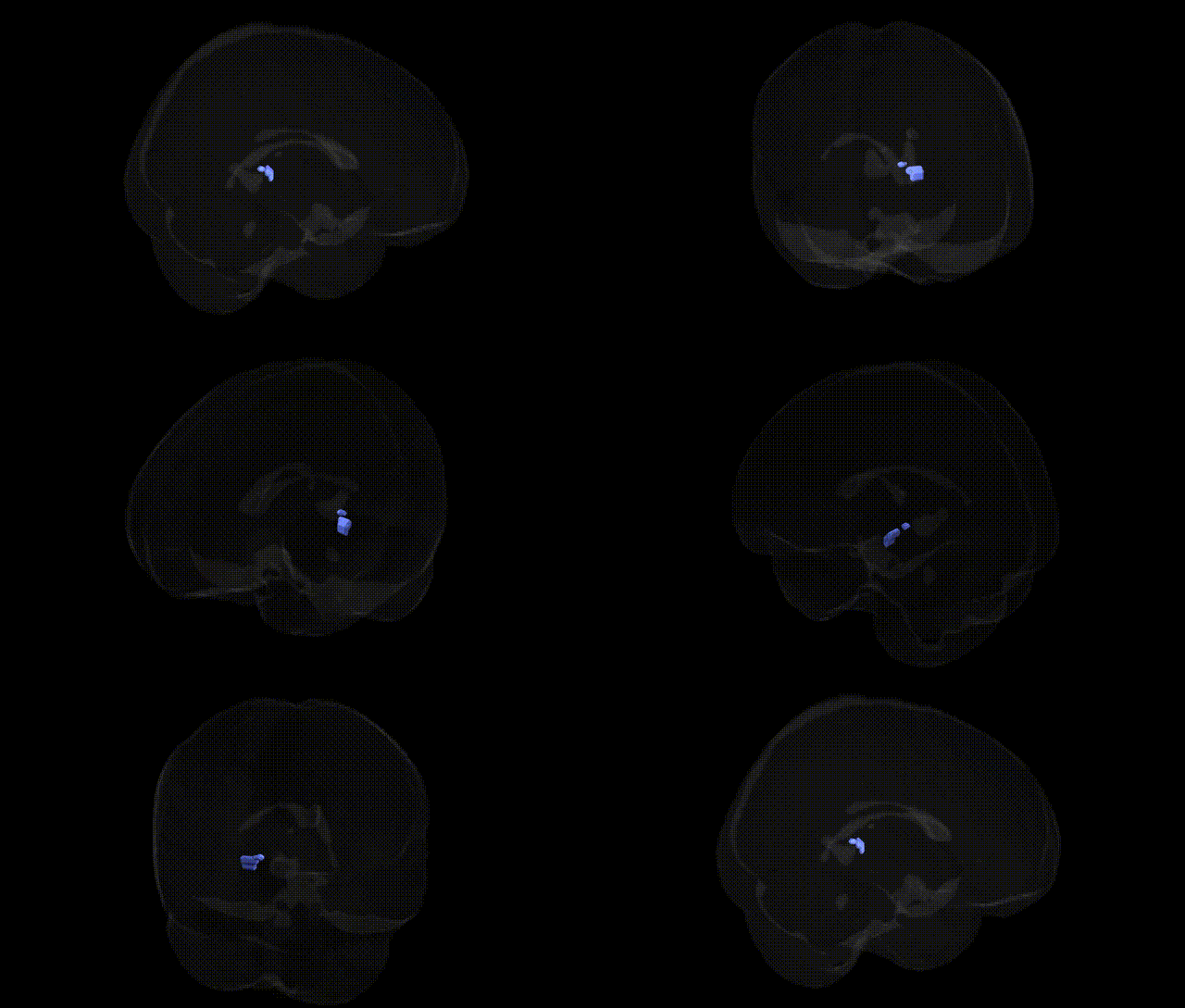
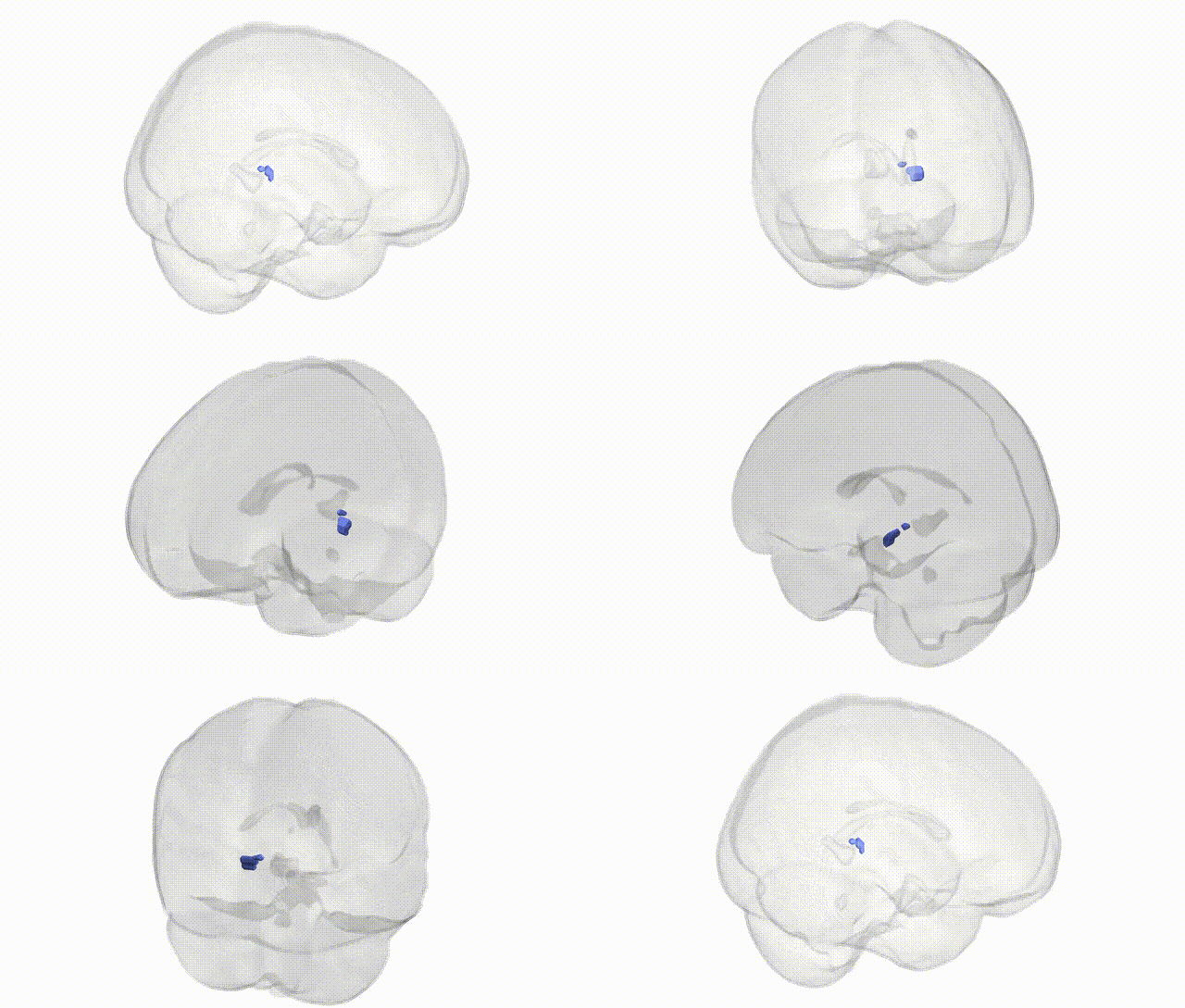
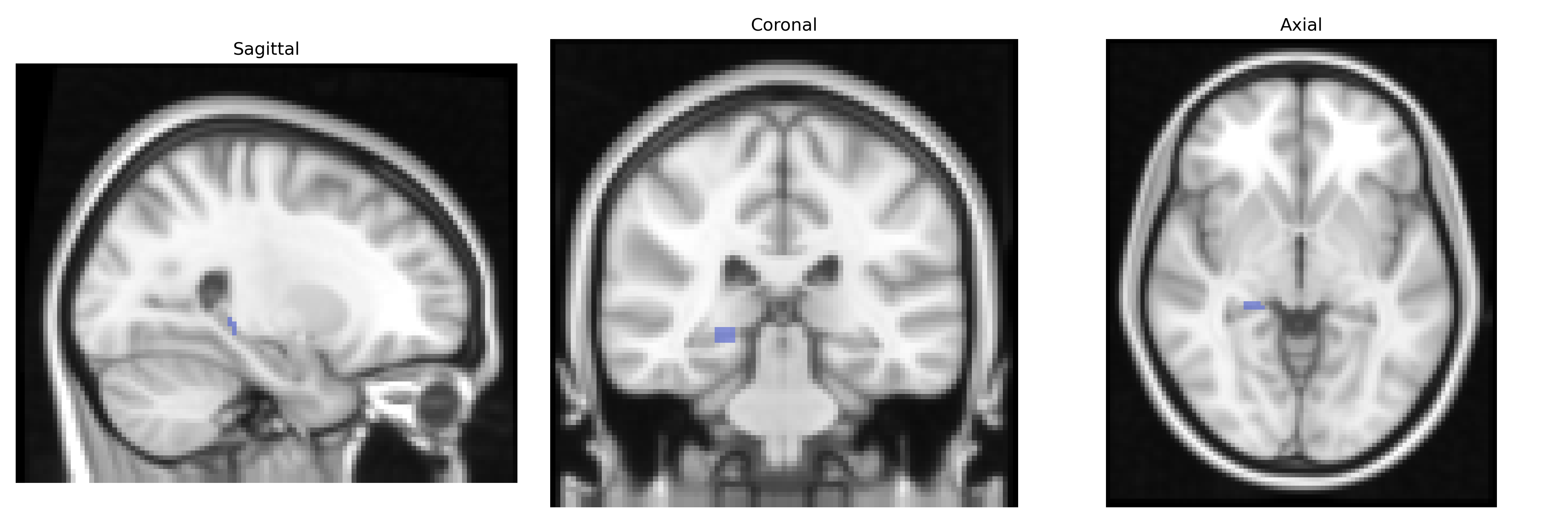
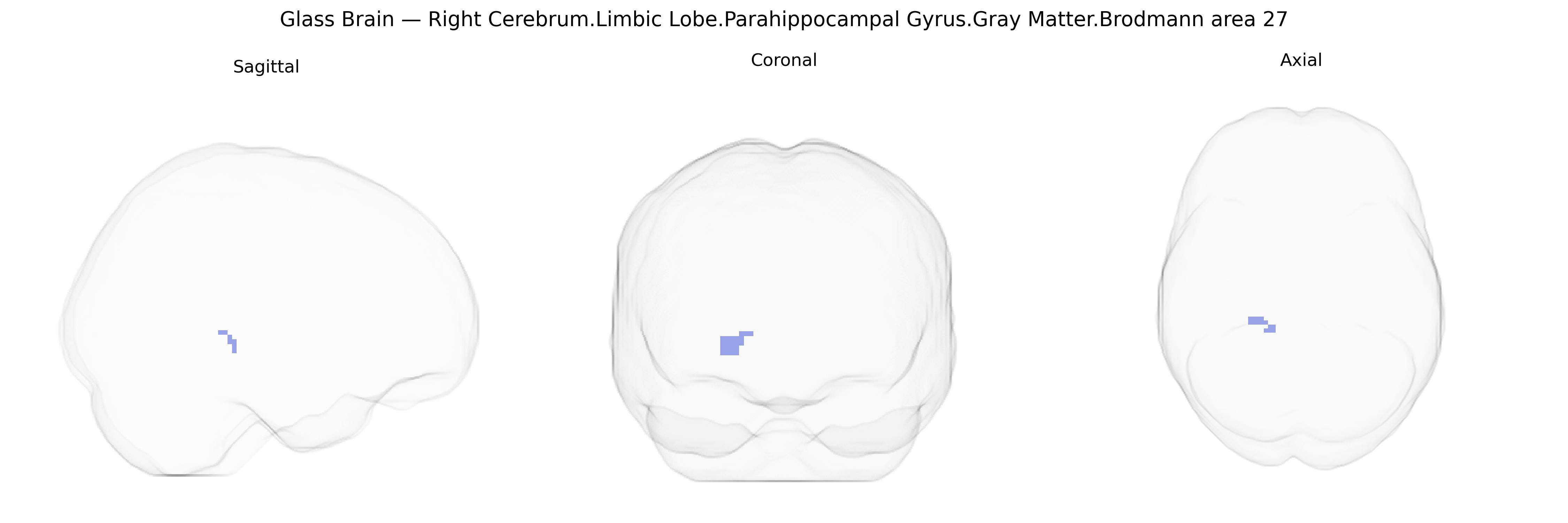
The bilateral Right Cerebrum Limbic Lobe Parahippocampal Gyrus Gray Matter Brodmann area 27 corresponds to the presubiculum, a cytoarchitectonic field of the parahippocampal region that forms part of the hippocampal formation. This area lies adjacent to the subiculum and is involved in spatial navigation, head-direction signaling, and contextual processing, integrating multimodal inputs relevant for memory and orientation within the environment. Neuronal populations in Brodmann area 27 show distinctive laminar organization, with strong connections to other hippocampal and entorhinal structures, supporting its role in the encoding of spatial and episodic information and in the generation of internal maps of the surroundings. There is no direct link; related structure: Parahippocampal gyrus.
The bilateral right parahippocampal gyrus gray matter in Brodmann area 27 (presubiculum/limbic medial temporal region) is genetically implicated in a network of traits related to memory, spatial navigation, and affective processing, primarily through large-scale imaging genetics and GWAS of structural and functional MRI phenotypes rather than region-specific single-gene studies. Variants in genes such as APOE (especially ε4), CLU, CR1, PICALM, BIN1, and TOMM40, which are robustly associated with Alzheimer’s disease and episodic memory decline, show convergent associations with parahippocampal/medial temporal cortical thickness and volume, as well as with hippocampal–parahippocampal connectivity. Polygenic risk scores for Alzheimer’s disease, schizophrenia, major depressive disorder, and bipolar disorder have all been associated with structural or functional alterations in parahippocampal and adjacent BA27/medial temporal regions, implicating shared genetic pathways involving synaptic plasticity, glutamatergic neurotransmission, and immune/complement signaling. GWAS of neuroimaging endophenotypes (including subicular and presubicular cortical thickness, limbic lobe volumes, and default-mode/medial temporal network connectivity) consistently identify loci near genes such as SORL1, GRIN2B, BDNF, and genes in calcium signaling and neurodevelopmental pathways that modulate this region’s integrity and function, thereby mediating risk for disorders characterized by memory impairment, disordered scene/context processing, and emotional dysregulation, including Alzheimer’s disease, temporal lobe epilepsy, PTSD, and depression, although precise Talairach 2 mm BA27-specific GWAS hits remain limited and findings typically refer to broader parahippocampal/medial temporal ROIs.
Overview generated by GPT-4o (2026).
Region ID: 433
Hemisphere: bilateral
Atlas: Talairach labels 2mm
Full Quality Version: Download MP4
Full Quality Version: Download MP4
Wali Sidiqyar*, Gaurav Rudravaram*, Elyssa M. McMaster, Trent M. Schwartz, Adam M. Saunders, Kurt G. Schilling, Bennett A. Landman "Introducing SPINS: A Shared Public Visualization Library of Neuroanatomical Structures." Medical Imaging with Deep Learning- short paper
This resource is licensed under CC0 1.0 Universal (Public Domain).