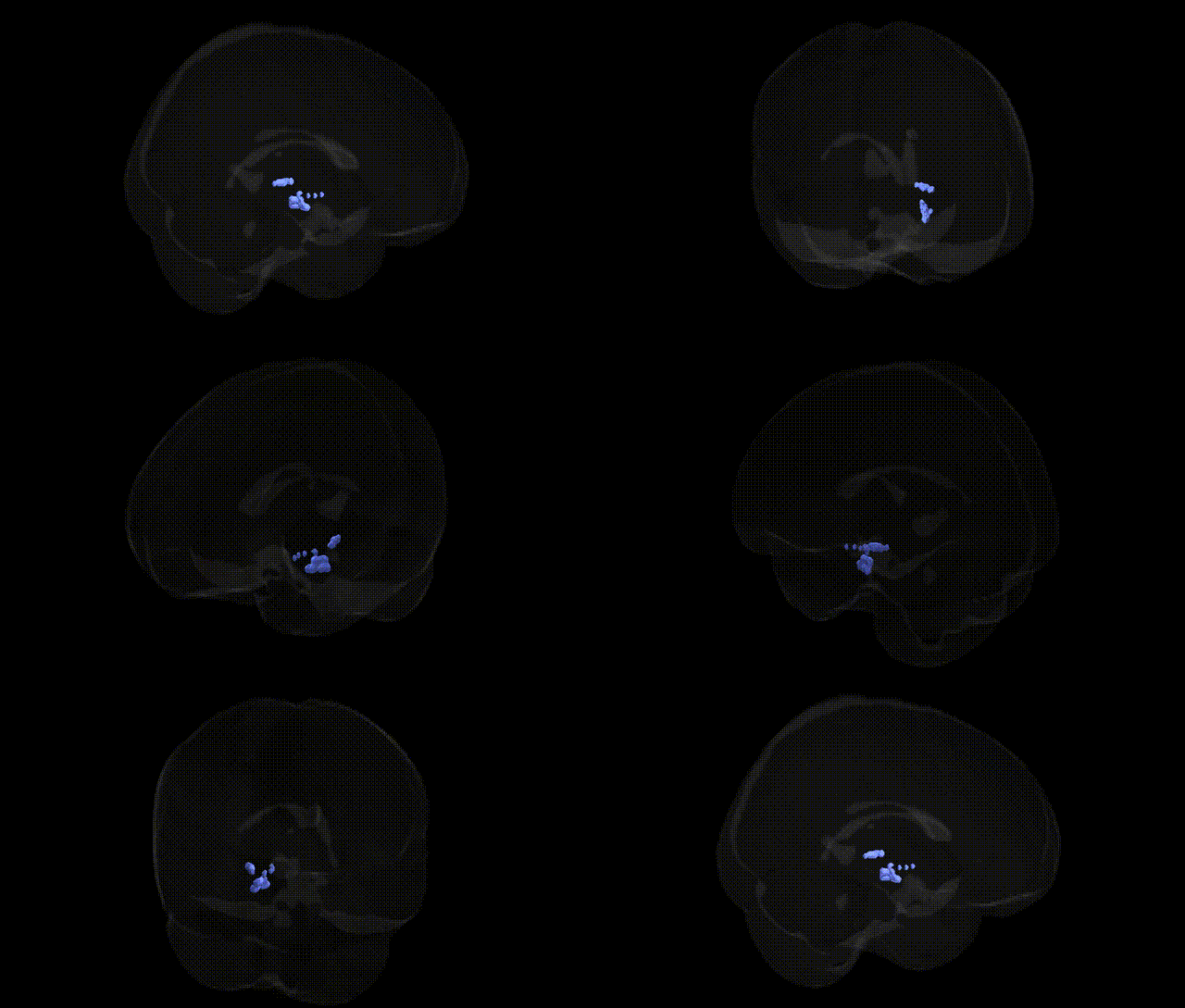
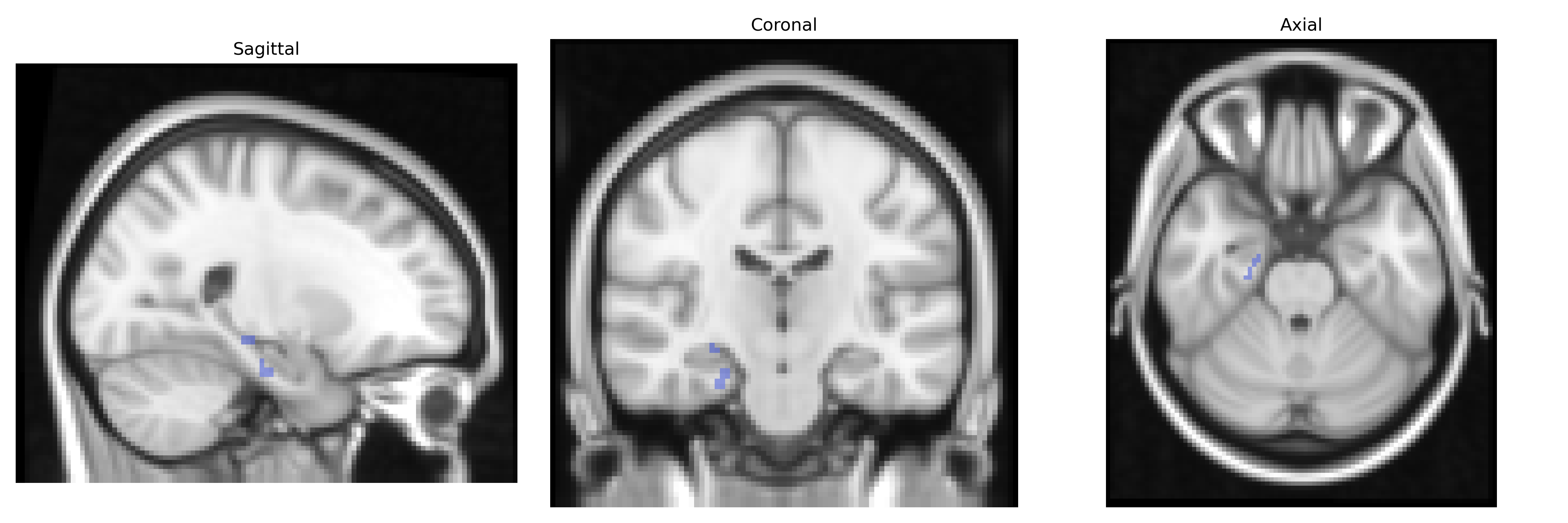
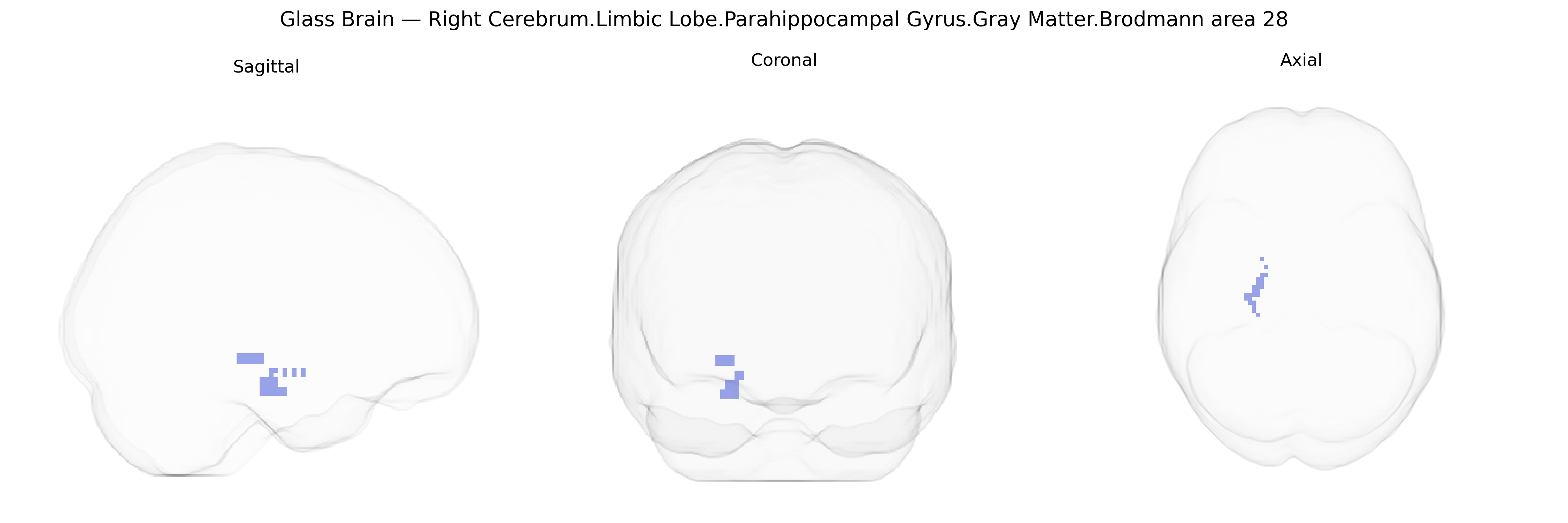
Bilateral Right Cerebrum Limbic Lobe Parahippocampal Gyrus Gray Matter Brodmann area 28 corresponds to the entorhinal cortex, a key gateway between neocortex and the hippocampal formation, located in the anterior medial temporal lobe along the parahippocampal gyrus. This cytoarchitectonically defined region is characterized by a distinctive layered structure and dense reciprocal connections with widespread association cortices, the hippocampus, and amygdala. Functionally, it plays a central role in episodic memory, spatial navigation, and consolidation processes, integrating multimodal sensory and contextual information before relaying it to hippocampal circuits. It is among the earliest affected regions in Alzheimer’s disease, showing prominent neurofibrillary pathology, and is implicated in temporal lobe epilepsy and other disorders of memory and cognition. Entorhinal cortex
The bilateral right parahippocampal gyrus gray matter in Brodmann area 28 (part of the entorhinal/medial limbic region) is strongly implicated in genetic studies of memory, spatial navigation, and neurodegenerative and psychiatric disorders, although most GWAS and imaging-genetics work target the parahippocampal region more broadly rather than BA28 specifically. Variants in APOE (especially ε4) and genes involved in amyloid and tau processing (e.g., CLU, PICALM, BIN1, CR1, MAPT) are associated with parahippocampal/entorhinal atrophy and hypometabolism in Alzheimer’s disease, where early neurofibrillary pathology prominently affects BA28. Imaging GWAS from large cohorts such as ENIGMA and UK Biobank have linked polygenic risk scores for Alzheimer’s disease, general cognitive ability, and schizophrenia to parahippocampal cortical thickness and volume, implicating synaptic and neurodevelopmental genes (e.g., CACNA1C, GRIN2A, DRD2, and other glutamatergic and calcium-channel loci). Genetic risk for temporal lobe epilepsy (including variants affecting hippocampal circuitry and axon guidance genes such as LGI1 and RELN) has been associated with structural and functional alterations in the parahippocampal/entorhinal region that encompass BA28. Additional GWAS and candidate-gene studies indicate that polymorphisms in BDNF, KIBRA (WWC1), and other memory-related genes modulate parahippocampal activation and morphology during episodic memory tasks, while neurodevelopmental and neuropsychiatric risk genes (including those involved in synaptic scaffolding and immune signaling, such as complement genes and MHC locus variants) show associations with parahippocampal structure and connectivity that may contribute to depression, anxiety, and psychosis phenotypes.
Overview generated by GPT-4o (2026).
Region ID: 170
Hemisphere: bilateral
Atlas: Talairach labels 2mm
Full Quality Version: Download MP4
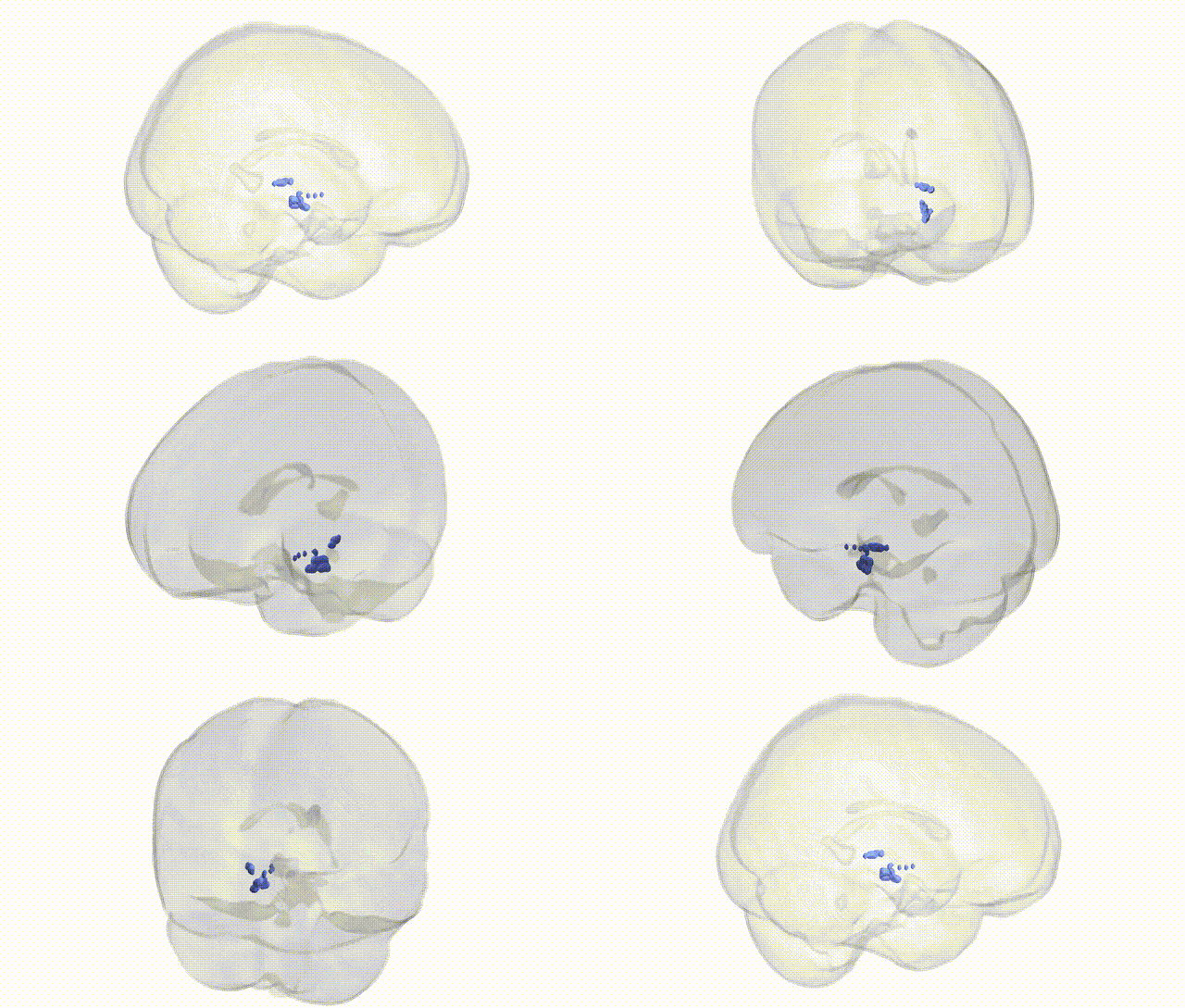
Full Quality Version: Download MP4
Wali Sidiqyar*, Gaurav Rudravaram*, Elyssa M. McMaster, Trent M. Schwartz, Adam M. Saunders, Kurt G. Schilling, Bennett A. Landman "Introducing SPINS: A Shared Public Visualization Library of Neuroanatomical Structures." Medical Imaging with Deep Learning- short paper
This resource is licensed under CC0 1.0 Universal (Public Domain).