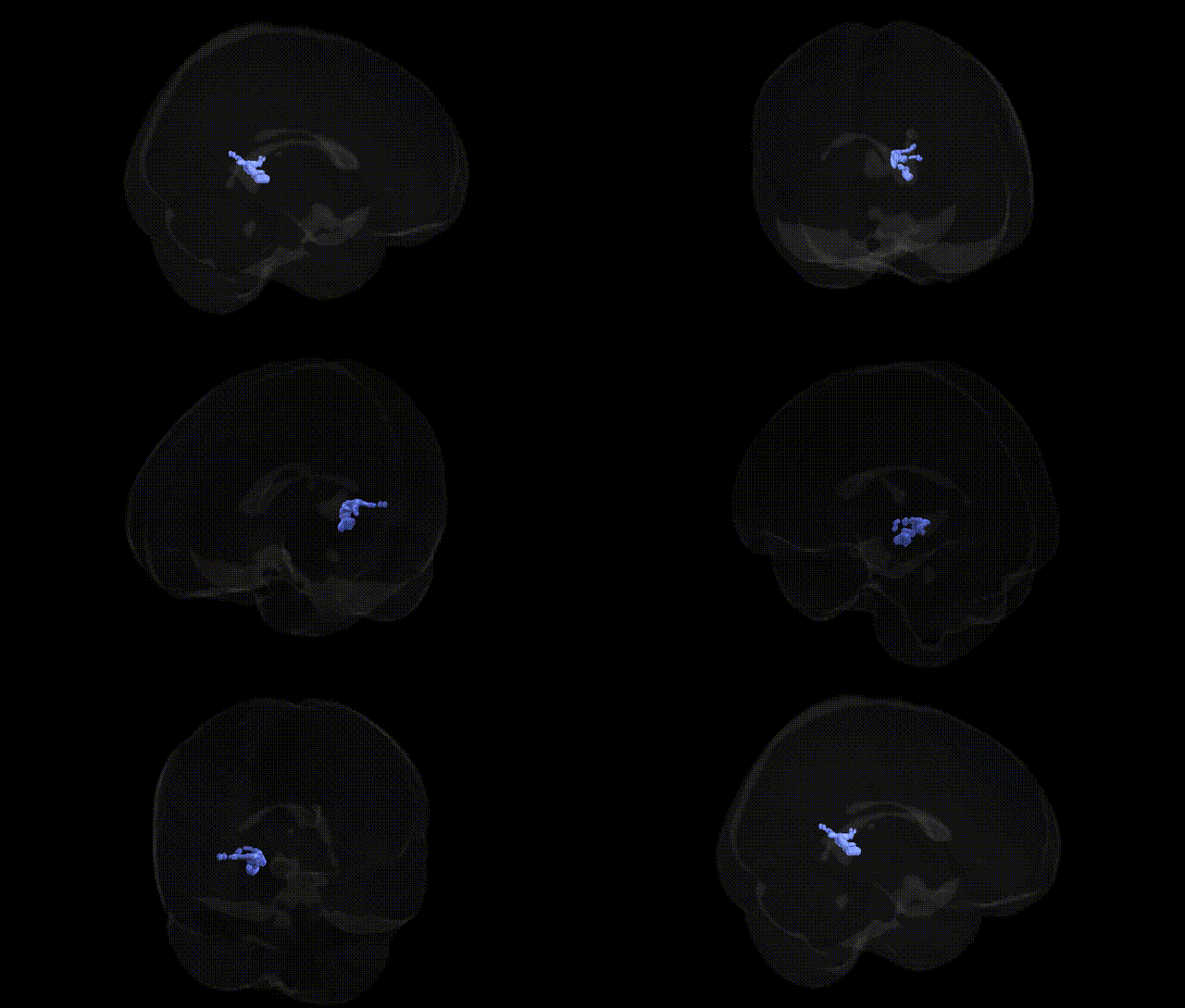
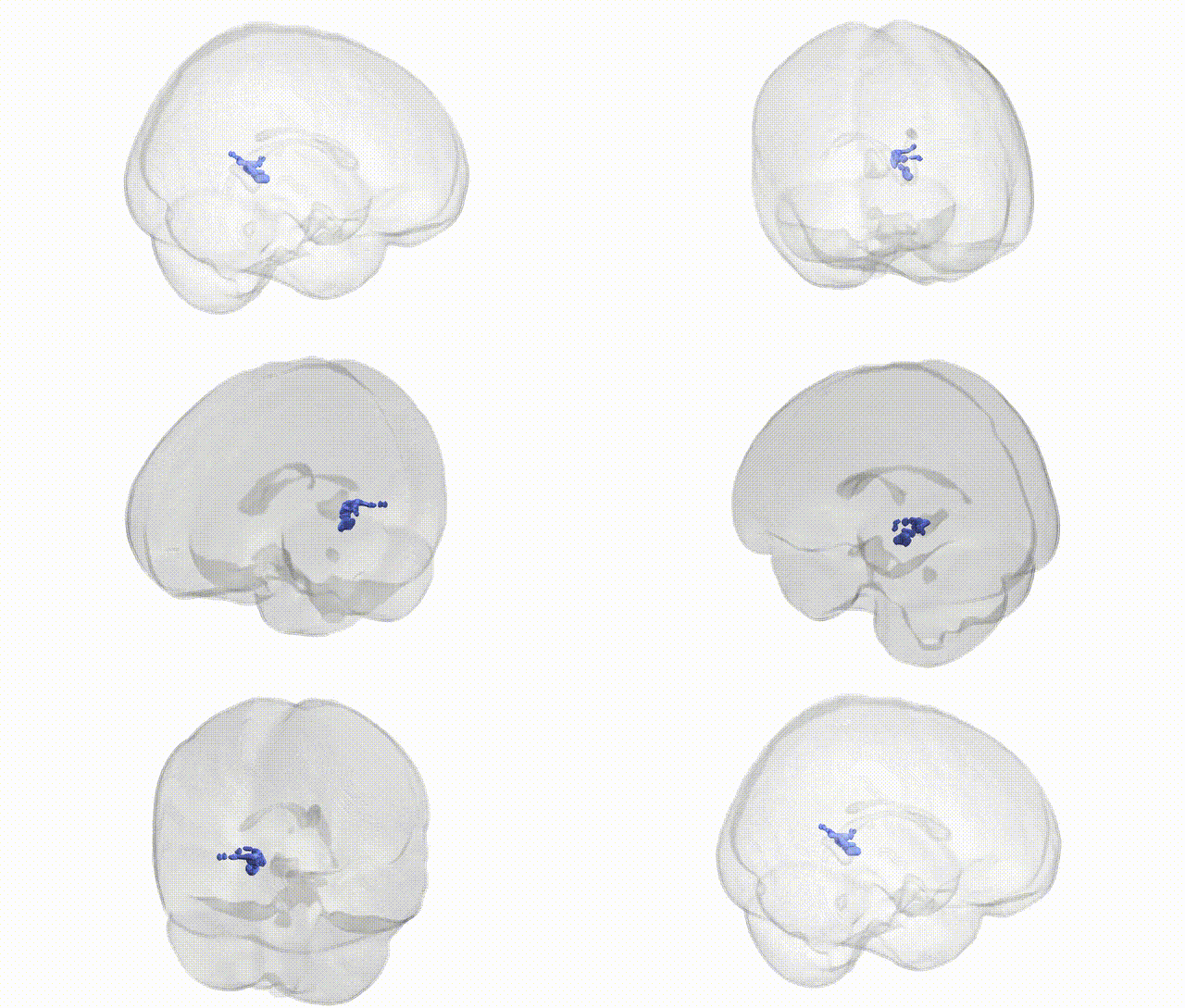
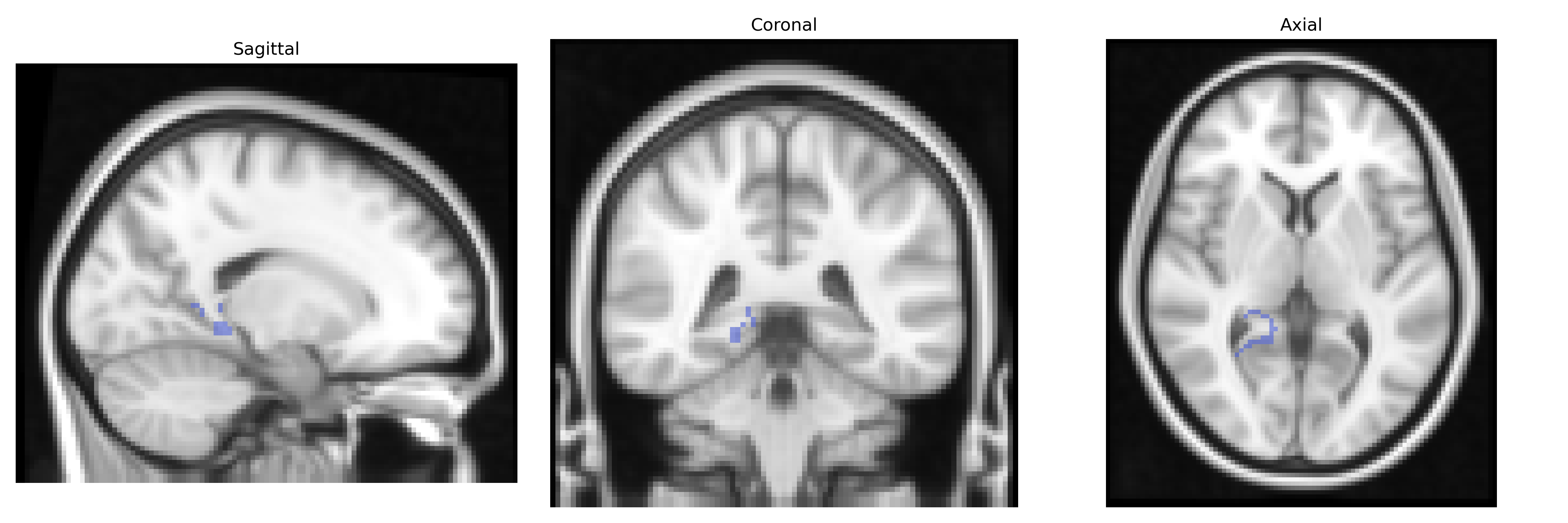
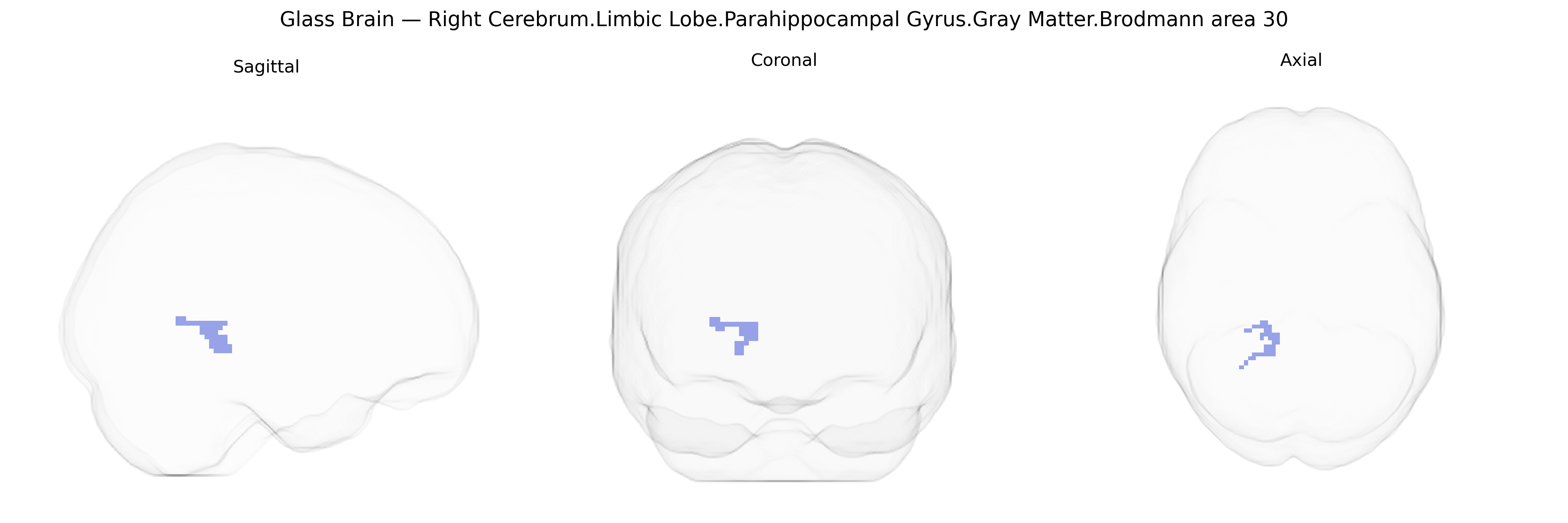
The bilateral Right Cerebrum.Limbic Lobe.Parahippocampal Gyrus.Gray Matter.Brodmann area 30 corresponds to a small cytoarchitectonic field located in the retrosplenial/parahippocampal region of the limbic lobe, bordering the posterior cingulate cortex and closely associated with the hippocampal formation. This area is involved in episodic memory, contextual and spatial processing, and contributes to the integration of visuospatial information with mnemonic functions, forming part of the broader retrosplenial–parahippocampal network that links medial temporal structures with medial parietal and prefrontal regions. Brodmann area 30 participates in navigation, scene processing, and the encoding and retrieval of autobiographical memories, and is supplied by branches of the posterior cerebral artery, with dense reciprocal connectivity to the hippocampus, parahippocampal cortex, and posterior cingulate cortex. There is no direct Wikipedia article for Brodmann area 30; a closely related structure is the Parahippocampal gyrus.
The bilateral right parahippocampal gyrus gray matter in Brodmann area 30 (retrosplenial/parahippocampal cortex region) is consistently implicated in genetic studies of memory, spatial navigation, and neuropsychiatric risk through both GWAS of brain structure and imaging–genetics analyses, although most work targets the broader parahippocampal/retrosplenial area rather than BA30 specifically. Large MRI-based GWAS have shown that cortical thickness and surface area in medial temporal and parahippocampal regions are heritable and associated with common variants in genes involved in synaptic plasticity and neurodevelopment (e.g., WNT, glutamatergic, and axon guidance pathways), with polygenic scores for cognitive ability and educational attainment predicting structural measures in this zone. Genetic risk for Alzheimer’s disease (including APOE, CLU, PICALM, BIN1 and broader AD polygenic scores) has been linked to altered volume, cortical thickness, and functional activity in parahippocampal and retrosplenial cortices, which are key nodes in the default mode and memory networks and show early amyloid and tau pathology. Schizophrenia and major depression polygenic risk scores have been associated with structural and functional changes in medial temporal and limbic regions that encompass BA30, and GWAS of PTSD, anxiety, and stress-related traits highlight overlapping genetic architectures influencing limbic and parahippocampal circuitry relevant to contextual fear and autobiographical memory. Variants in genes such as BDNF, COMT, and those modulating hippocampal–parahippocampal connectivity have been tied to episodic memory performance and scene/contexts processing tasks that recruit BA30 and adjacent retrosplenial cortex. Overall, genetic influences on this region converge on pathways of synaptic plasticity, neurodevelopment, and neurodegeneration that shape susceptibility to cognitive decline, Alzheimer’s disease, psychosis-spectrum disorders, and stress-related psychopathology, as reflected in both structural GWAS and imaging–genetics studies of medial limbic cortices.
Overview generated by GPT-4o (2026).
Region ID: 431
Hemisphere: bilateral
Atlas: Talairach labels 2mm
Full Quality Version: Download MP4
Full Quality Version: Download MP4
Wali Sidiqyar*, Gaurav Rudravaram*, Elyssa M. McMaster, Trent M. Schwartz, Adam M. Saunders, Kurt G. Schilling, Bennett A. Landman "Introducing SPINS: A Shared Public Visualization Library of Neuroanatomical Structures." Medical Imaging with Deep Learning- short paper
This resource is licensed under CC0 1.0 Universal (Public Domain).