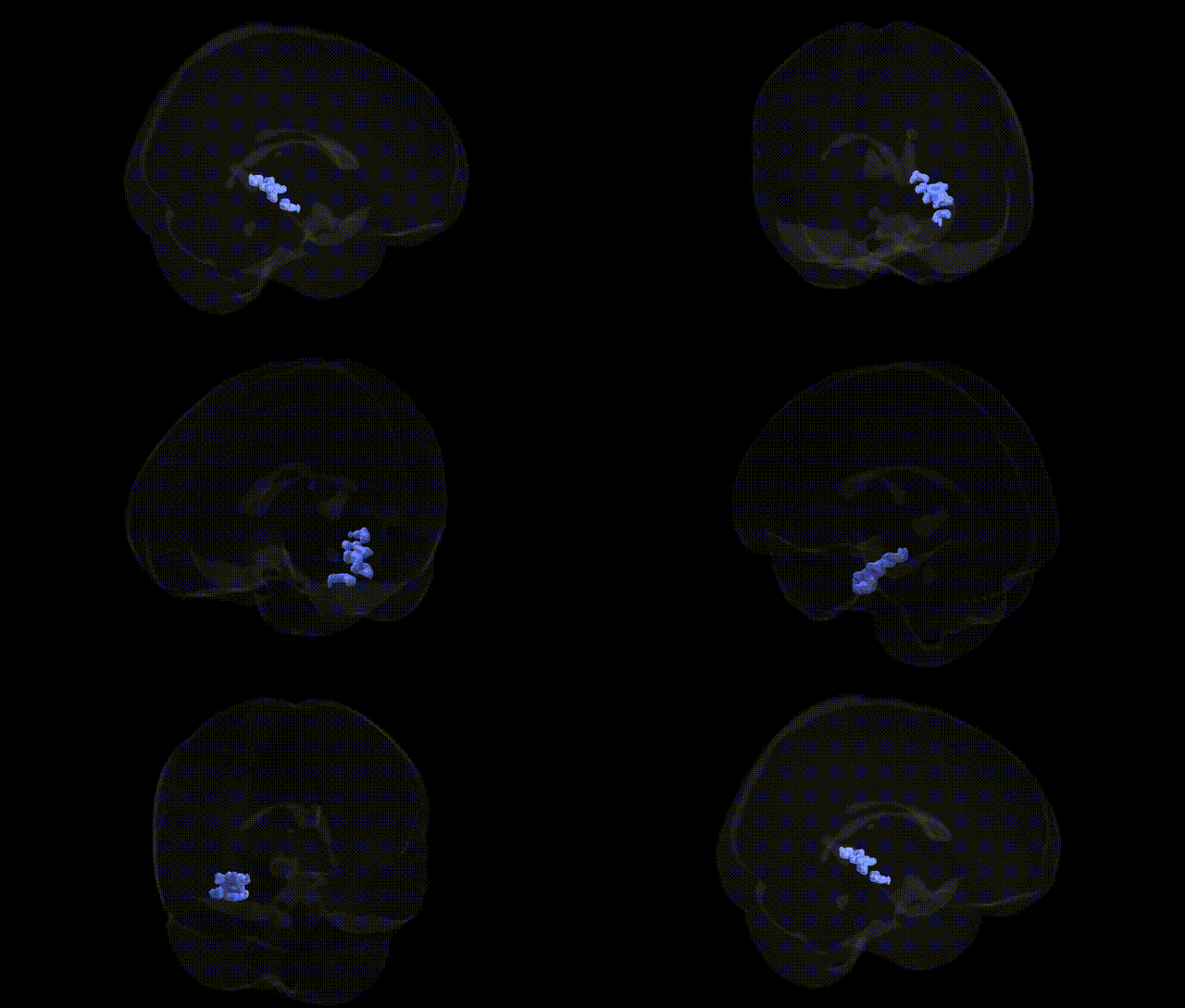
The bilateral Right Cerebrum.Limbic Lobe.Parahippocampal Gyrus.Gray Matter.Brodmann area 36 corresponds to the ectorhinal cortex, a portion of the parahippocampal gyrus situated in the medial temporal lobe and associated with higher-order visual association and mnemonic processing. BA36 lies adjacent to the perirhinal cortex (BA35) and forms part of the parahippocampal–perirhinal network that interfaces unimodal and polymodal sensory inputs with medial temporal memory systems, including the hippocampus and entorhinal cortex. Functionally, this region contributes to complex object recognition, familiarity-based memory, and contextual association, and is implicated in the encoding and retrieval of episodic information. There is no direct link for Brodmann area 36; a closely related structure is the Parahippocampal gyrus.
The bilateral right parahippocampal gyrus (Brodmann area 36), a key limbic and medial temporal lobe region involved in memory, contextual processing, and scene perception, has been repeatedly implicated in genetic studies of brain structure and neuropsychiatric traits. GWAS of regional gray matter volume, cortical thickness, and surface area have identified associations between parahippocampal metrics and variants in genes related to synaptic plasticity, axonal guidance, and neurodevelopment (for example, common variants near or within genes such as BDNF, KIBRA/WFS1 region, and several loci highlighted in large imaging-genetics consortia like ENIGMA and UK Biobank), though most specific effects are small and highly polygenic. Structural and functional abnormalities of this region have been linked to genetic risk for Alzheimer’s disease (e.g., APOE ε4 and other AD GWAS loci), with reduced parahippocampal volume and altered connectivity often observed in carriers of AD-risk alleles. Schizophrenia and major depression risk variants, including those in genes such as CACNA1C and other calcium-channel and synaptic genes, have been associated with parahippocampal and adjacent medial temporal lobe alterations, consistent with this region’s role in memory and emotional processing. Additionally, GWAS of cognitive traits (episodic memory, general cognitive ability, educational attainment) and anxiety-related or PTSD phenotypes have linked genetic variation influencing medial temporal structures, including BA36, to performance and symptom severity, although these associations are typically mediated through distributed networks rather than the parahippocampal gyrus alone. Overall, genetic influences on the bilateral right BA36 gray matter region appear highly polygenic and pleiotropic, contributing to vulnerability for neurodegenerative and psychiatric disorders and to inter-individual differences in memory and affective traits.
Overview generated by GPT-4o (2026).
Region ID: 130
Hemisphere: bilateral
Atlas: Talairach labels 2mm
Full Quality Version: Download MP4
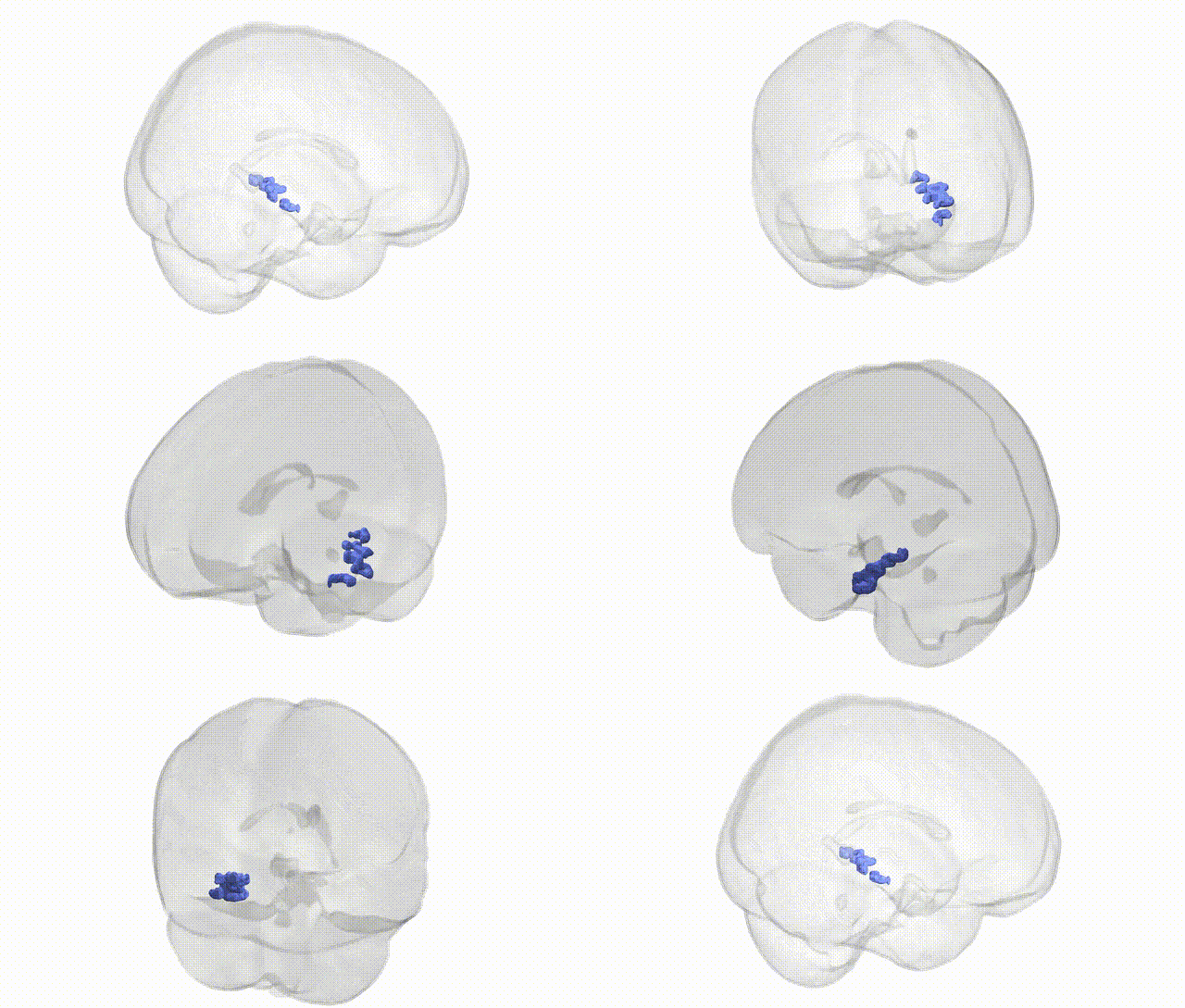
Full Quality Version: Download MP4
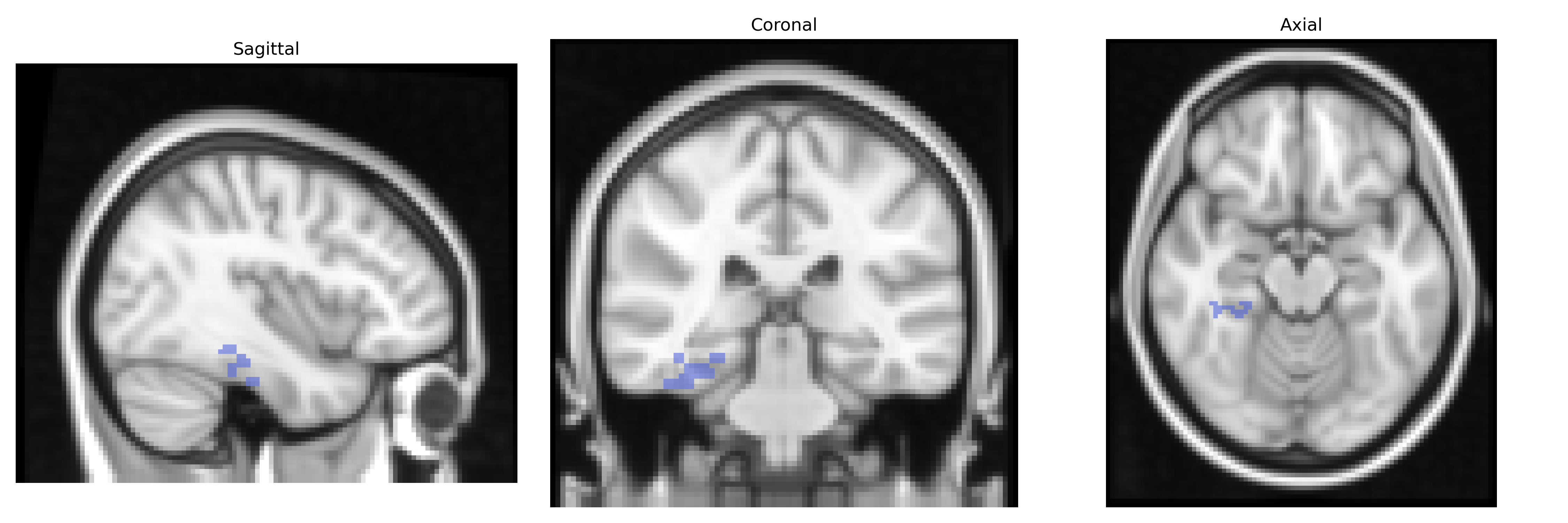
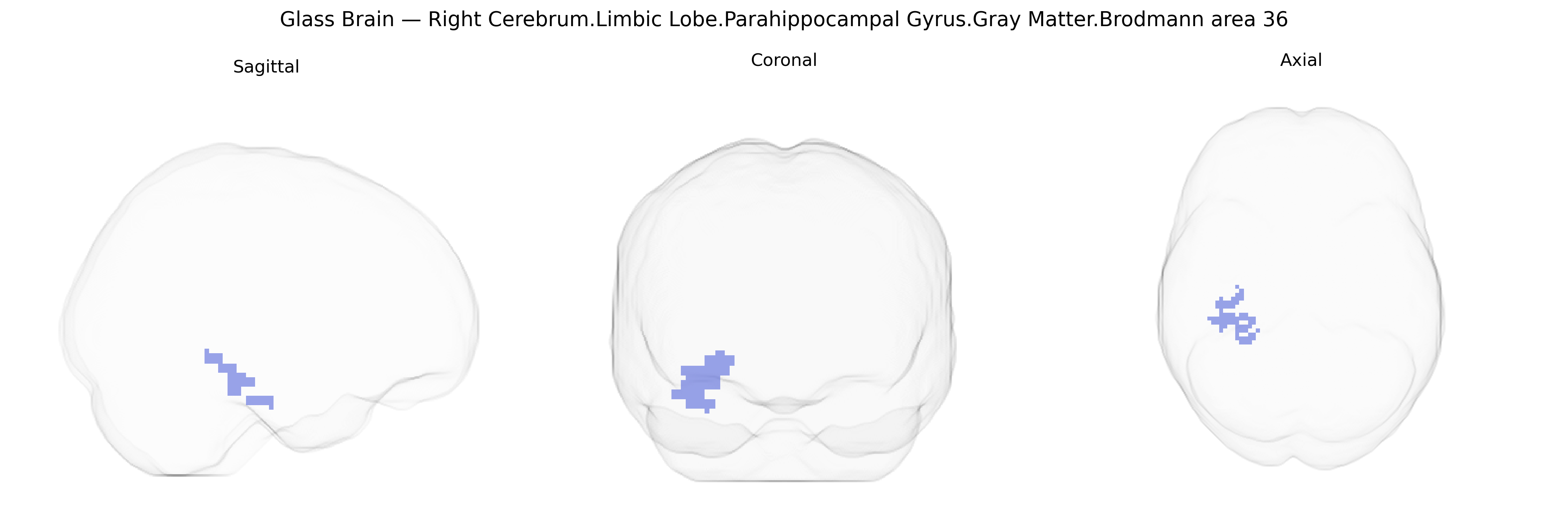
Wali Sidiqyar*, Gaurav Rudravaram*, Elyssa M. McMaster, Trent M. Schwartz, Adam M. Saunders, Kurt G. Schilling, Bennett A. Landman "Introducing SPINS: A Shared Public Visualization Library of Neuroanatomical Structures." Medical Imaging with Deep Learning- short paper
This resource is licensed under CC0 1.0 Universal (Public Domain).