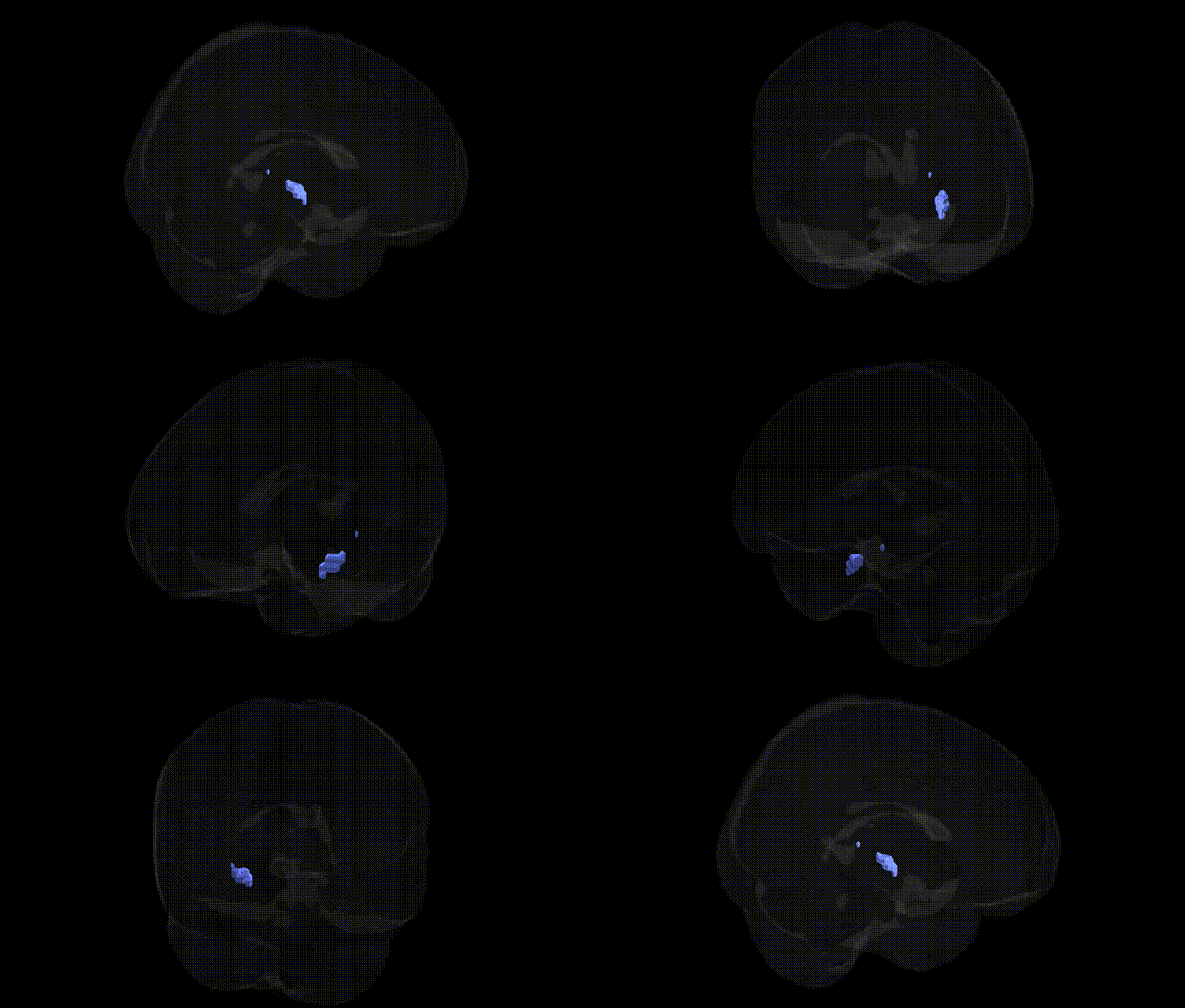
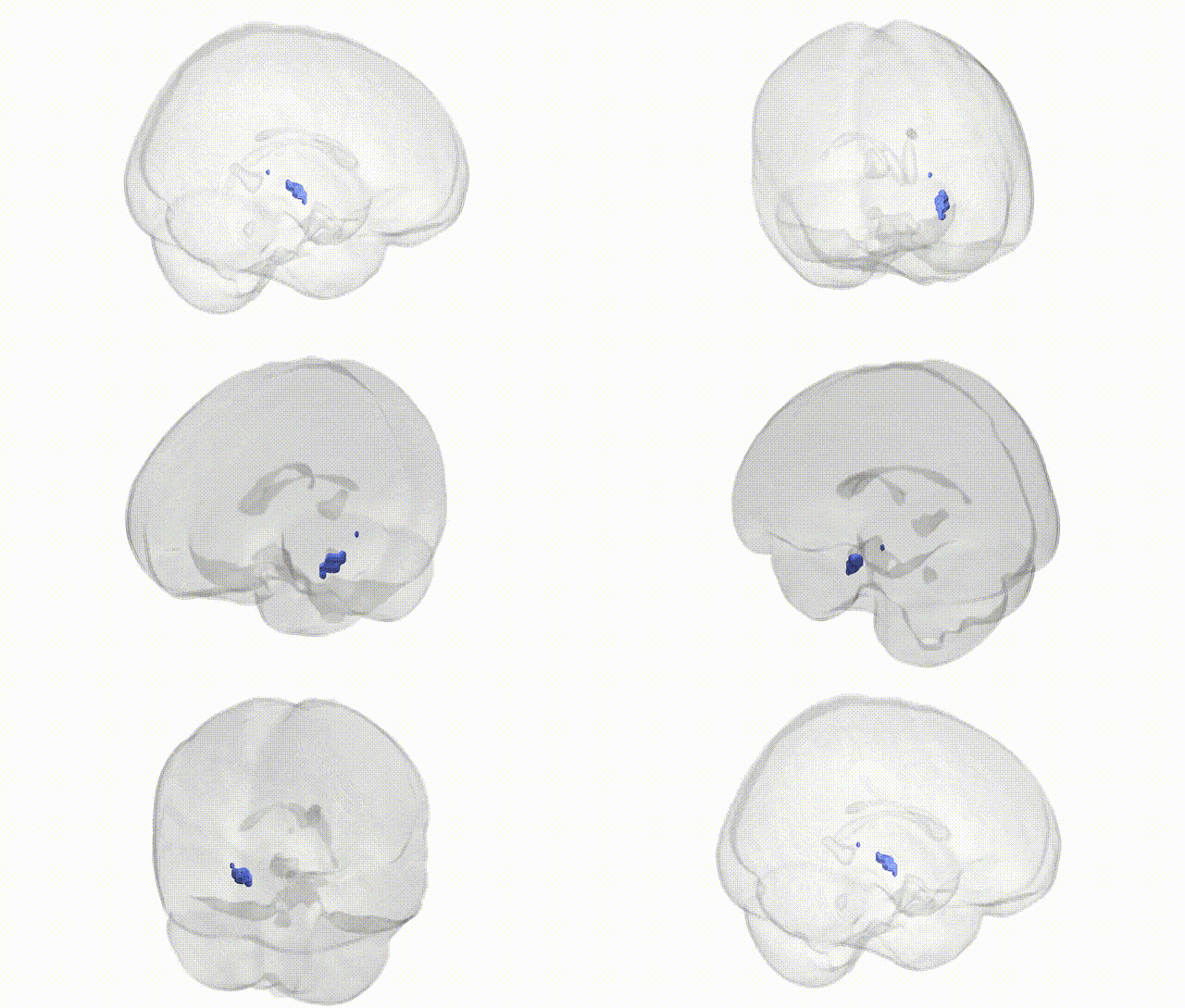
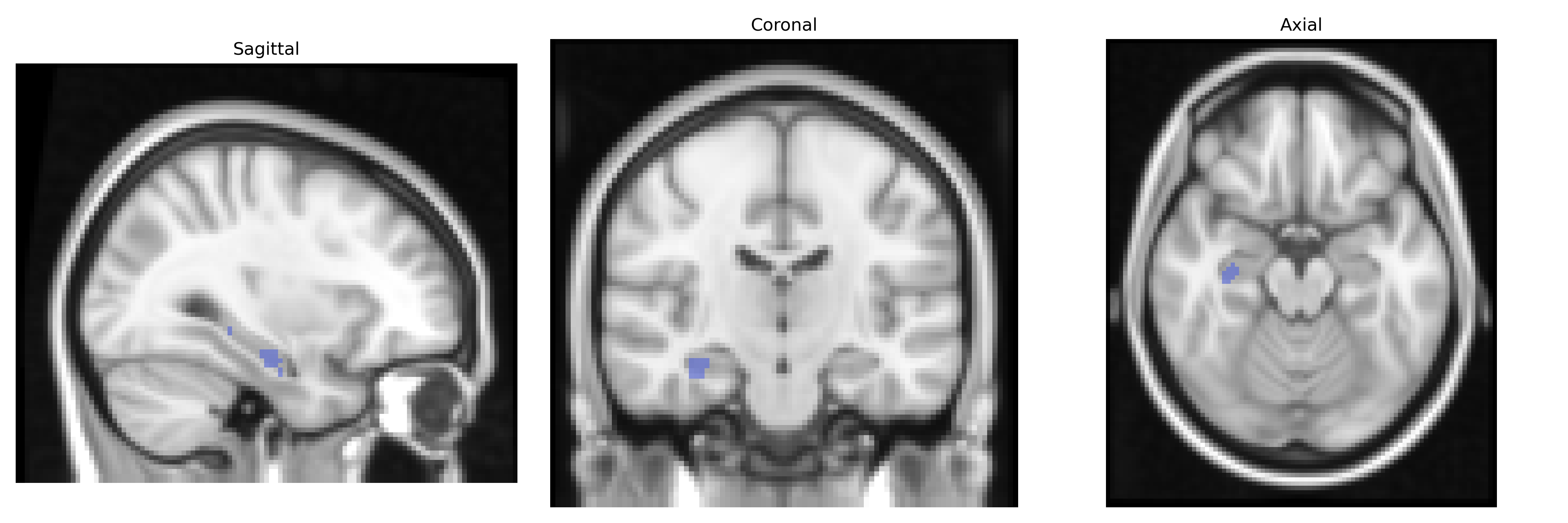
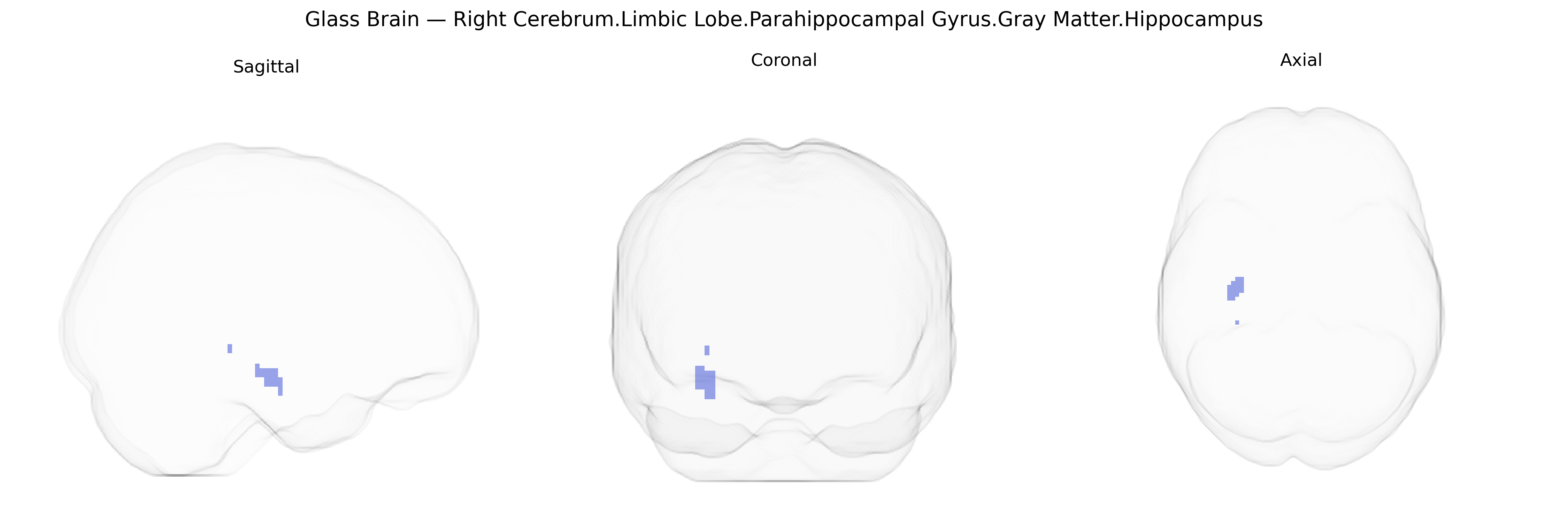
The bilateral Right Cerebrum.Limbic Lobe.Parahippocampal Gyrus.Gray Matter.Hippocampus corresponds to the hippocampal formation embedded within the medial temporal lobe, forming a core component of the limbic system. This gray matter structure is crucial for the consolidation of declarative (episodic and semantic) memories, spatial navigation, and contextual processing of experiences, and it interacts extensively with the parahippocampal gyrus and entorhinal cortex for input–output integration. The hippocampus exhibits a characteristic longitudinal organization and layered cytoarchitecture (including CA fields, dentate gyrus, and subiculum), is highly plastic and vulnerable to hypoxic injury and neurodegenerative processes, and contributes to emotional regulation via connections with the amygdala and prefrontal cortex. Hippocampus
The parahippocampal gyrus and hippocampal gray matter in the right limbic lobe, as defined in Talairach 2 mm atlases, are central to memory, spatial navigation, and emotional processing, and numerous genetic studies and GWAS have implicated variation in this region in neuropsychiatric and neurodegenerative phenotypes. Common variants in and near APOE (especially ε4) and genes such as CLU, BIN1, CR1, PICALM, and TREM2 are associated with reduced hippocampal and parahippocampal volume and increased risk for Alzheimer’s disease and mild cognitive impairment in large imaging–genetics consortia (e.g., ENIGMA, ADNI). Schizophrenia and major depression GWAS have identified polygenic risk scores that correlate with smaller hippocampal/parahippocampal volumes and altered connectivity, implicating loci in genes like CACNA1C, ZNF804A, GRM3, and others involved in synaptic plasticity and glutamatergic signaling. Variants in BDNF (especially Val66Met), COMT, and genes regulating HPA-axis and neurotrophic pathways have been repeatedly linked to hippocampal structure and memory performance, as well as anxiety-related traits and post-traumatic stress disorder, where GWAS and candidate-gene work show associations between risk alleles, reduced hippocampal gray matter, and heightened fear conditioning. Large-scale GWAS of hippocampal subfields and parahippocampal cortical thickness also implicate loci in genes involved in neurodevelopment and axon guidance (e.g., DPP4, ASTN2, WWOX), supporting a polygenic architecture in which many small-effect variants collectively shape volume and microstructure of this bilateral limbic region, with downstream impacts on cognition, mood, and risk for dementia and psychosis.
Overview generated by GPT-4o (2026).
Region ID: 176
Hemisphere: bilateral
Atlas: Talairach labels 2mm
Full Quality Version: Download MP4
Full Quality Version: Download MP4
Wali Sidiqyar*, Gaurav Rudravaram*, Elyssa M. McMaster, Trent M. Schwartz, Adam M. Saunders, Kurt G. Schilling, Bennett A. Landman "Introducing SPINS: A Shared Public Visualization Library of Neuroanatomical Structures." Medical Imaging with Deep Learning- short paper
This resource is licensed under CC0 1.0 Universal (Public Domain).