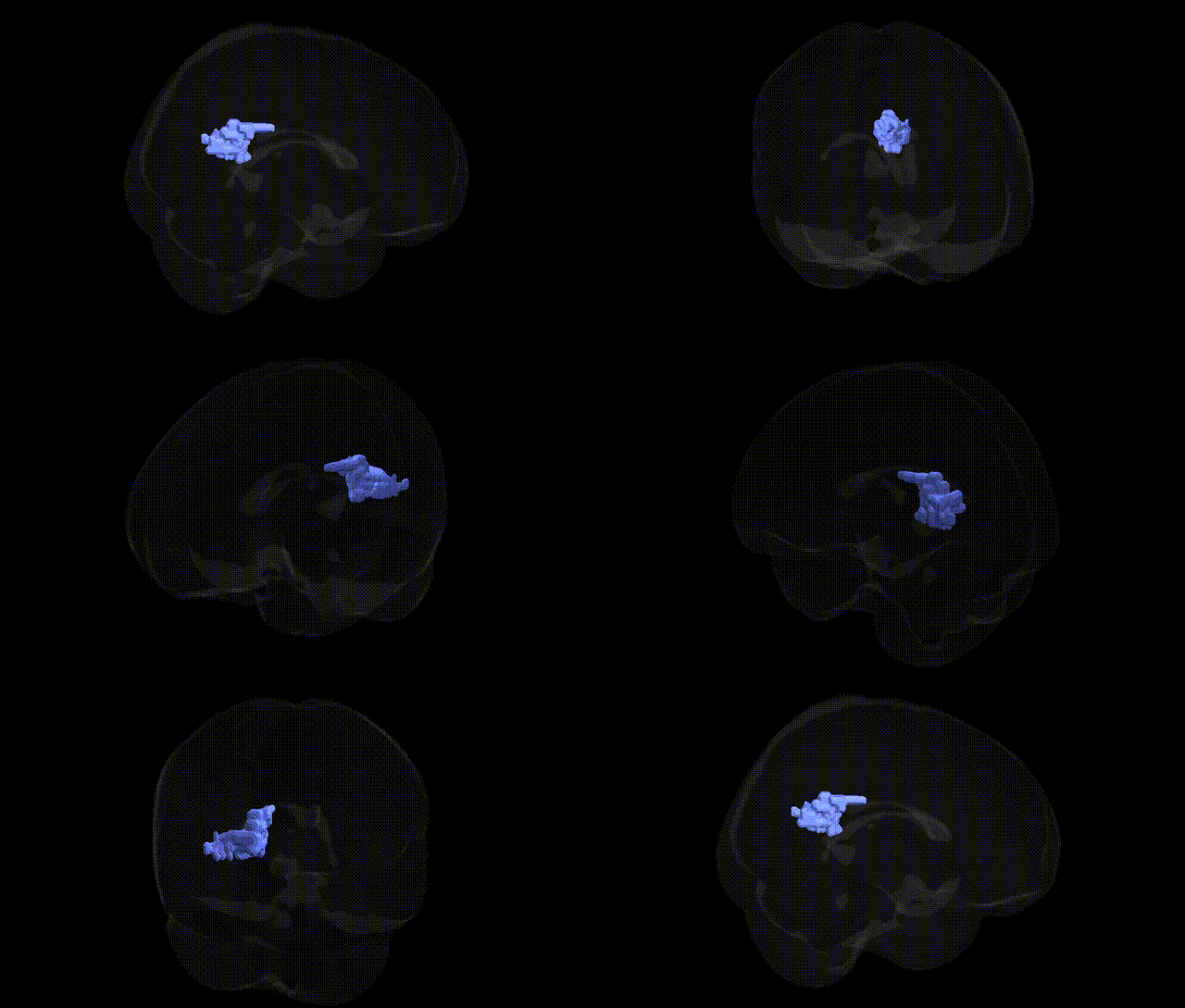
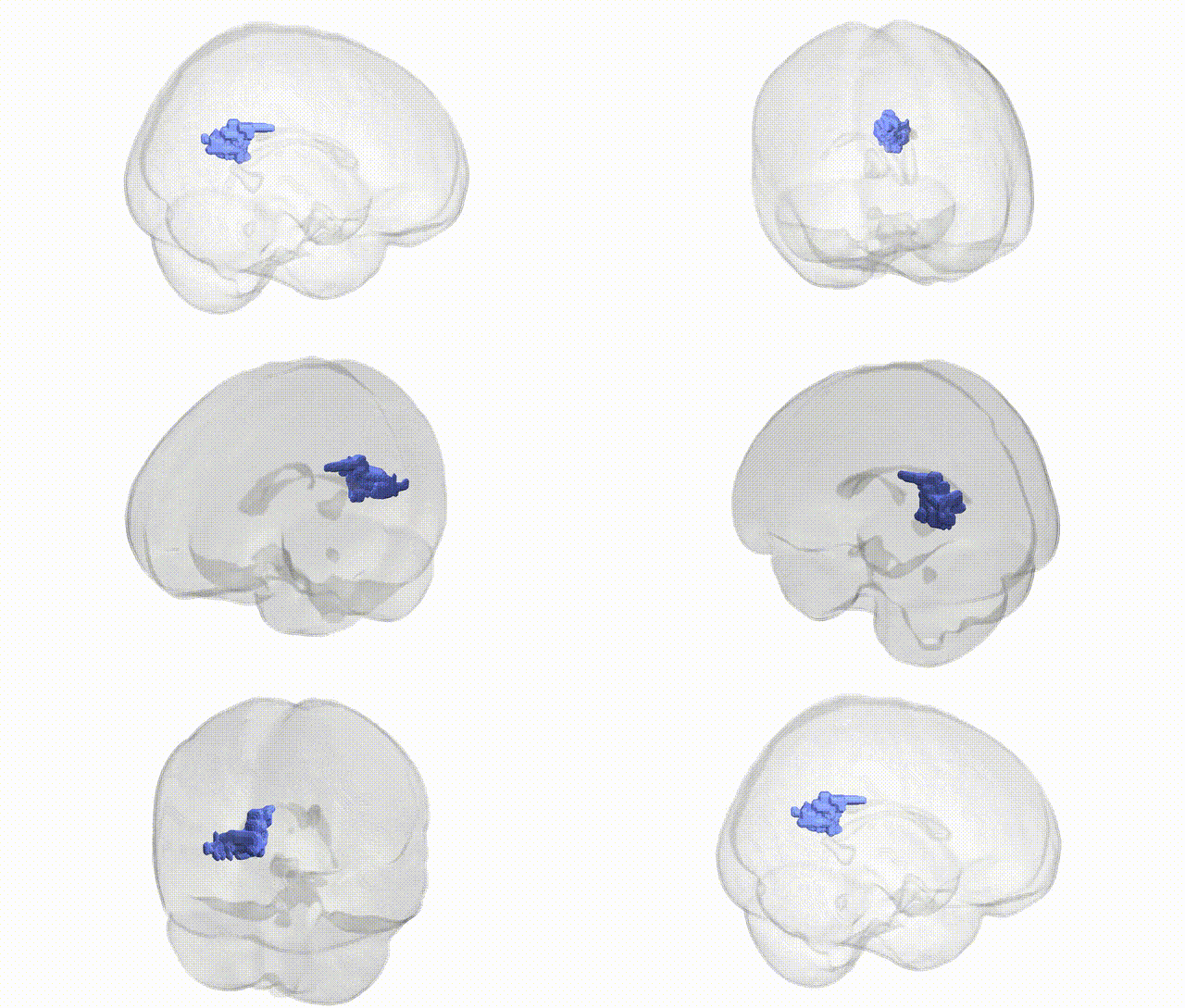
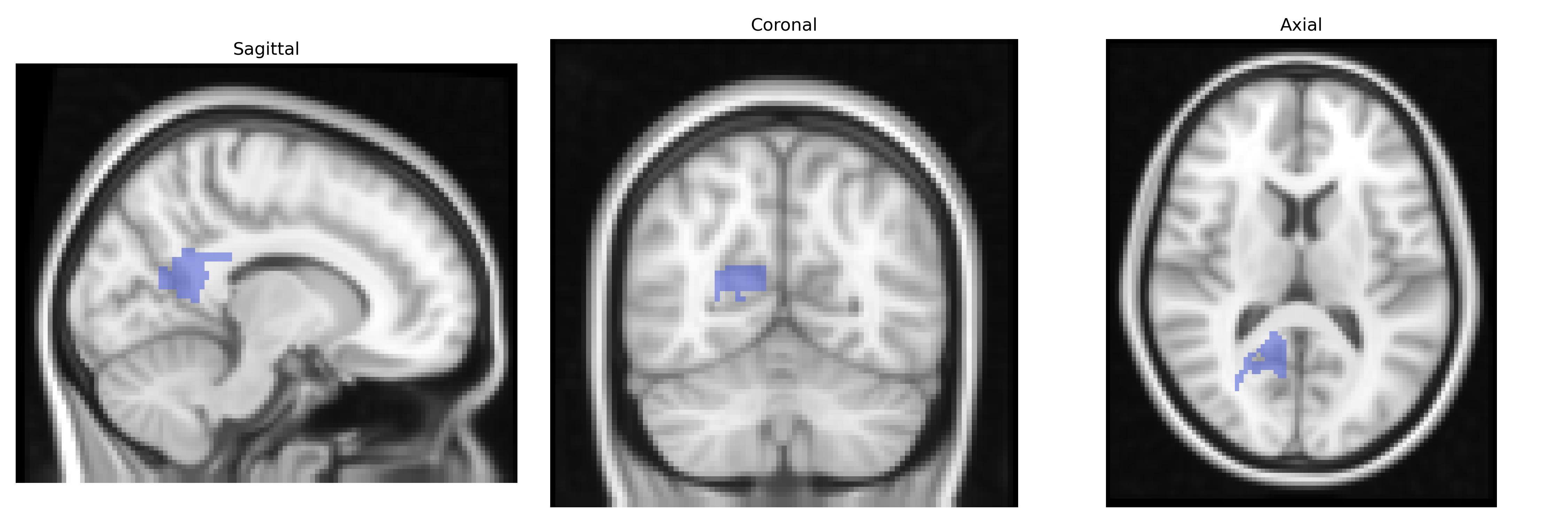
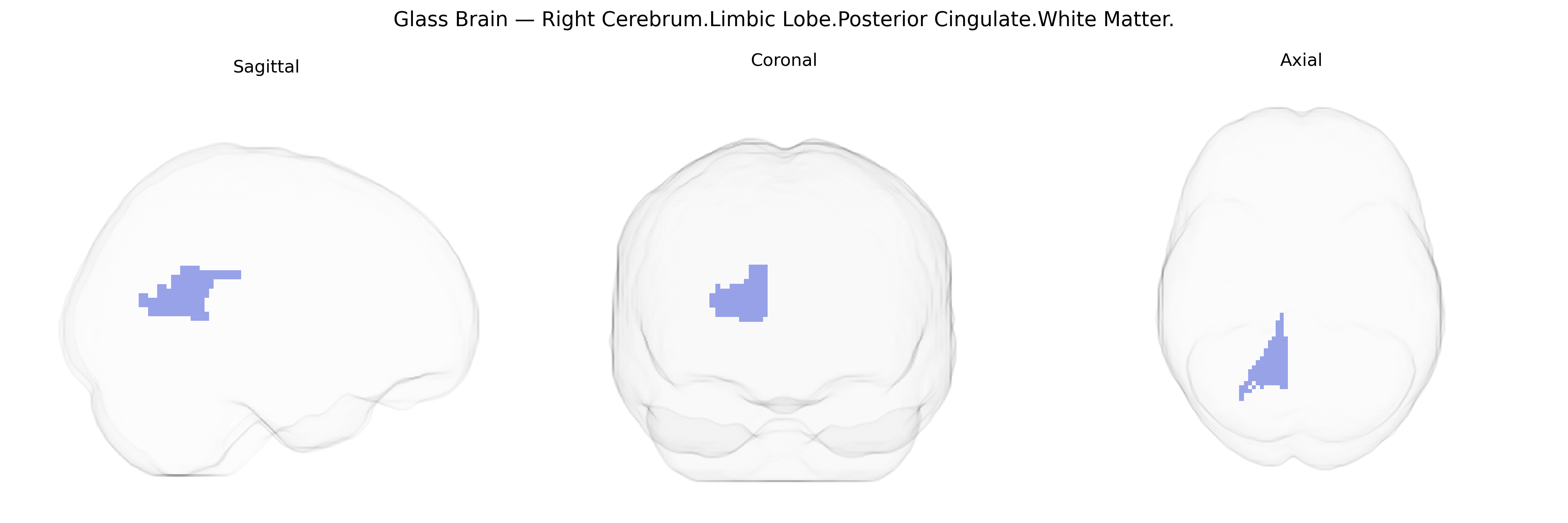
The bilateral Right Cerebrum.Limbic Lobe.Posterior Cingulate.White Matter corresponds to the deep myelinated fiber tracts underlying the posterior portion of the cingulate gyrus within the limbic lobe of the right cerebral hemisphere, typically situated around Brodmann area 23/31 in the Talairach 2 mm atlas. This white matter region integrates and transmits information between posterior cingulate cortex, other limbic structures (such as hippocampus and parahippocampal regions), and distributed association cortices, supporting large-scale networks involved in internally directed cognition, memory retrieval, and aspects of visuospatial and emotional processing. As a white matter compartment, its functional role is primarily in connectivity, forming part of pathways like the cingulum bundle rather than serving as a distinct cortical processing area. There is no direct Wikipedia article for this specific white matter label; a closely related structure is the cortical Posterior cingulate cortex.
The bilateral right posterior cingulate white matter, part of the limbic network and default mode network, has been implicated in multiple genetic and GWAS findings primarily through imaging-genetics studies rather than region-specific Talairach-based work. Twin and family studies indicate high heritability of posterior cingulate structure and connectivity, with common variants in genes related to synaptic function, neurodevelopment, and myelination (e.g., APOE, especially ε4, CLU, PICALM, CR1) influencing white-matter integrity and atrophy in this region in the context of Alzheimer’s disease risk. Large GWAS of MRI phenotypes (such as those from UK Biobank and ENIGMA) have identified loci associated with default mode network connectivity and cingulate cortical thickness/volume, implicating genes involved in axon guidance, oligodendrocyte biology, and glutamatergic signaling, although specific associations to “right posterior cingulate white matter” as defined by the Talairach 2 mm atlas are typically embedded in broader cingulate or limbic measures. Genetic risk for neuropsychiatric disorders—including major depressive disorder, schizophrenia, bipolar disorder, and autism spectrum disorder—has been linked to altered posterior cingulate structure and functional connectivity, with polygenic risk scores correlating with white-matter microstructural changes (e.g., fractional anisotropy) in cingulum bundle pathways. Additionally, GWAS of cognitive traits (general intelligence, memory, attention, self-referential processing) and personality dimensions (neuroticism, conscientiousness) have shown that polygenic influences on these traits partly act via posterior cingulate and adjacent limbic regions, supporting a role for common genetic variation in shaping the microstructure and connectivity of this white-matter territory and its involvement in dementia risk, affective dysregulation, psychosis vulnerability, and cognitive performance.
Overview generated by GPT-4o (2026).
Region ID: 664
Hemisphere: bilateral
Atlas: Talairach labels 2mm
Full Quality Version: Download MP4
Full Quality Version: Download MP4
Wali Sidiqyar*, Gaurav Rudravaram*, Elyssa M. McMaster, Trent M. Schwartz, Adam M. Saunders, Kurt G. Schilling, Bennett A. Landman "Introducing SPINS: A Shared Public Visualization Library of Neuroanatomical Structures." Medical Imaging with Deep Learning- short paper
This resource is licensed under CC0 1.0 Universal (Public Domain).