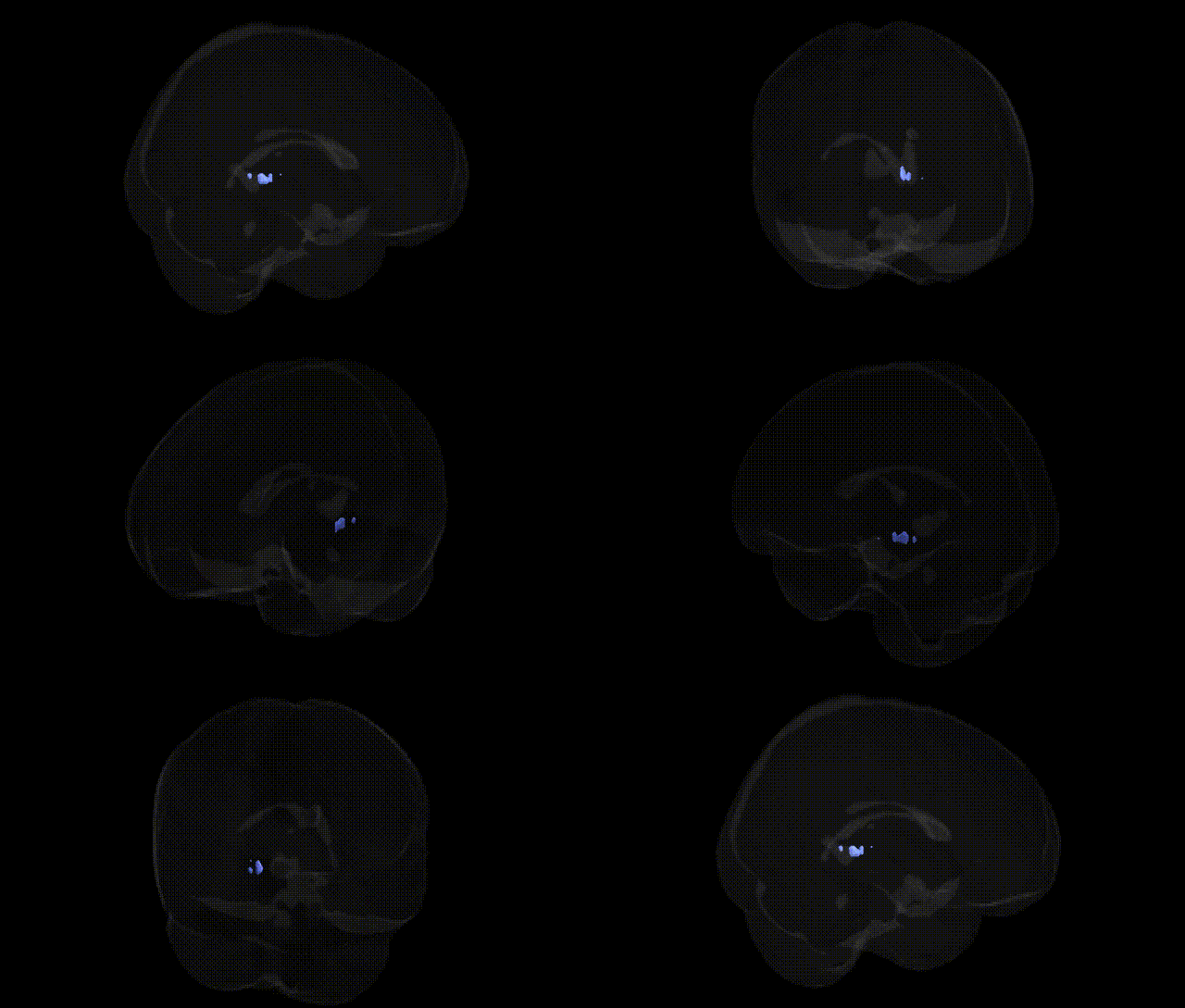
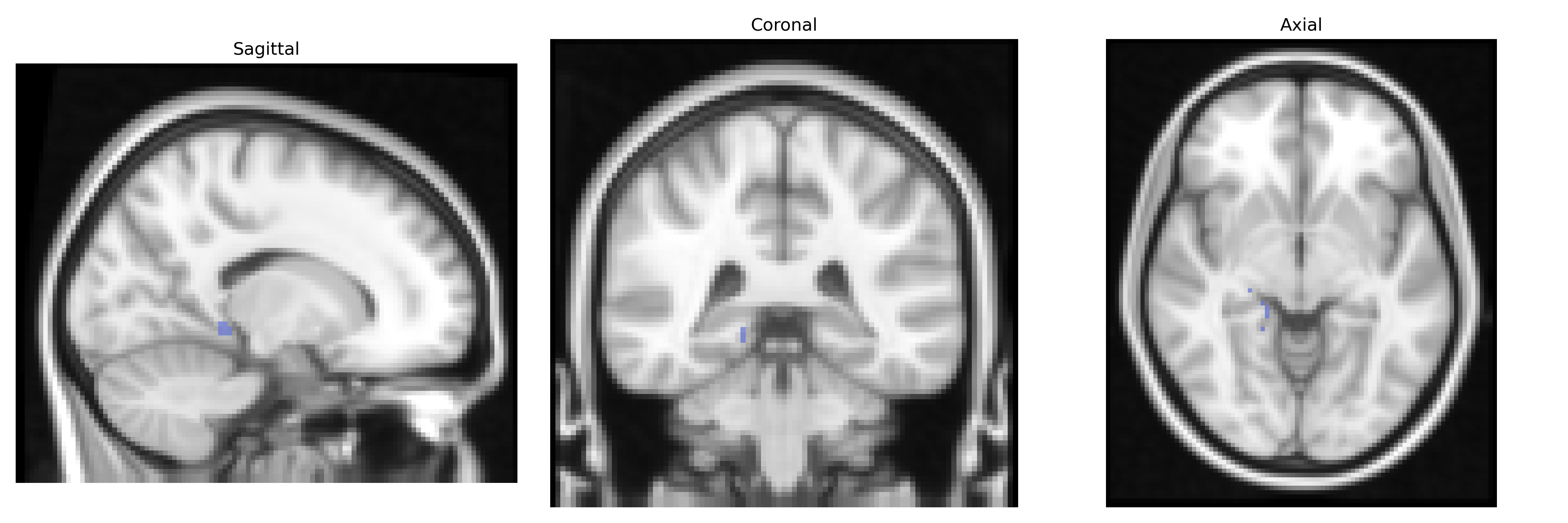
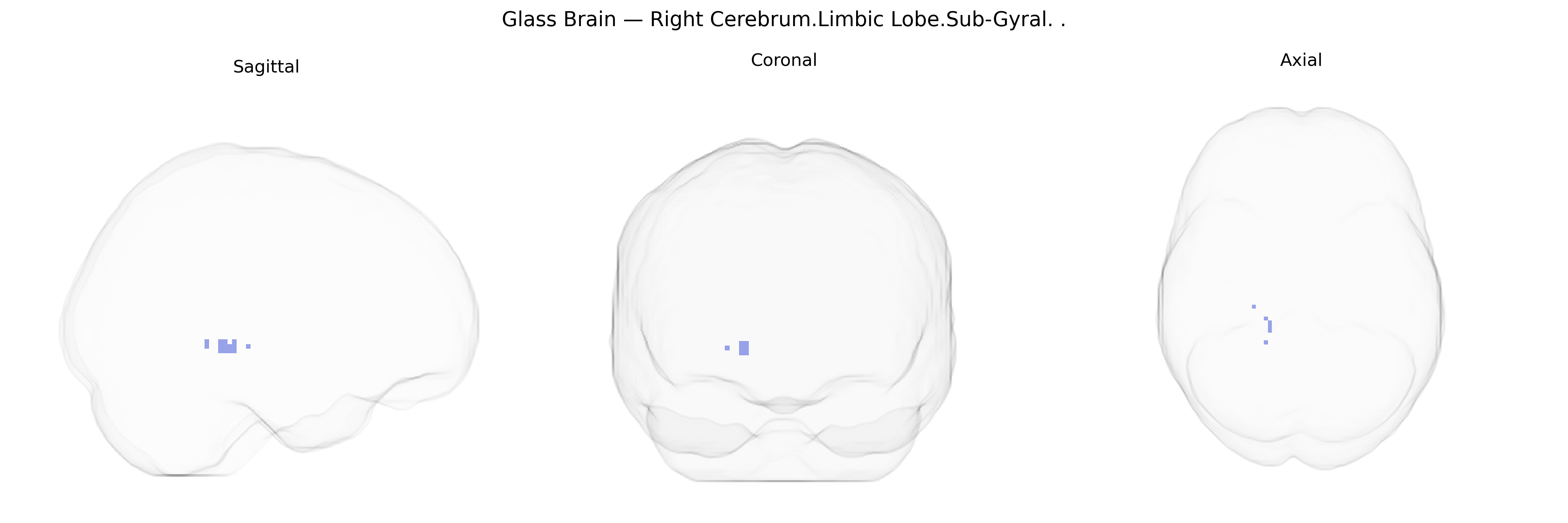
The bilateral Right Cerebrum.Limbic Lobe.Sub-Gyral region in the Talairach 2 mm Atlas refers to subcortical white matter and adjacent tissue lying beneath the cortical gyri of the limbic lobe in the right cerebral hemisphere, typically including fibers and transitional zones associated with limbic cortical areas such as the cingulate and parahippocampal regions. Functionally, this sub-gyral limbic territory participates in the integrative circuitry that underlies emotion, motivation, memory processing, and autonomic regulation, serving as a conduit for connections between limbic cortical areas and deeper structures such as the hippocampus, amygdala, and hypothalamus. Its integrity is important for coordinated affective responses, contextual memory, and the modulation of visceral and behavioral states. There is no direct link; a related structure is the Limbic system.
The bilateral right cerebrum limbic lobe sub-gyral region, as defined in the Talairach 2 mm atlas, roughly corresponds to deep limbic structures (including portions of parahippocampal cortex, cingulate, and adjacent white matter) that have been repeatedly implicated in genetic studies of emotion, memory, and psychopathology. Large-scale GWAS and imaging genetics consortia (e.g., ENIGMA) have identified common variants in genes such as BDNF (notably Val66Met), CACNA1C, ZNF804A, and several glutamatergic and GABAergic pathway genes that modulate limbic cortical thickness, volume, or activity, often in association with major depressive disorder, bipolar disorder, schizophrenia, and anxiety-related traits. Polygenic risk scores for depression, schizophrenia, and PTSD have been associated with structural and functional differences in limbic sub-gyral regions, including altered connectivity with the hippocampus and prefrontal cortex. Risk alleles in stress-regulation genes such as FKBP5 and CRHR1 have been linked to limbic microstructural and activation changes during emotional processing and fear learning, while APOE (especially ε4) and numerous Alzheimer’s disease GWAS loci (e.g., BIN1, CLU, PICALM) show associations with limbic cortical atrophy and white-matter integrity in medial temporal and cingulate territories overlapping the sub-gyral limbic lobe. Traits such as neuroticism, extraversion, and general cognitive ability show heritable variation in limbic structure and connectivity, with GWAS hits in synaptic, neurodevelopmental, and myelination pathways contributing to individual differences in this region’s morphology and function, though most associations are broad and not specific to the Talairach-defined sub-gyral parcel.
Overview generated by GPT-4o (2026).
Region ID: 335
Hemisphere: bilateral
Atlas: Talairach labels 2mm
Full Quality Version: Download MP4
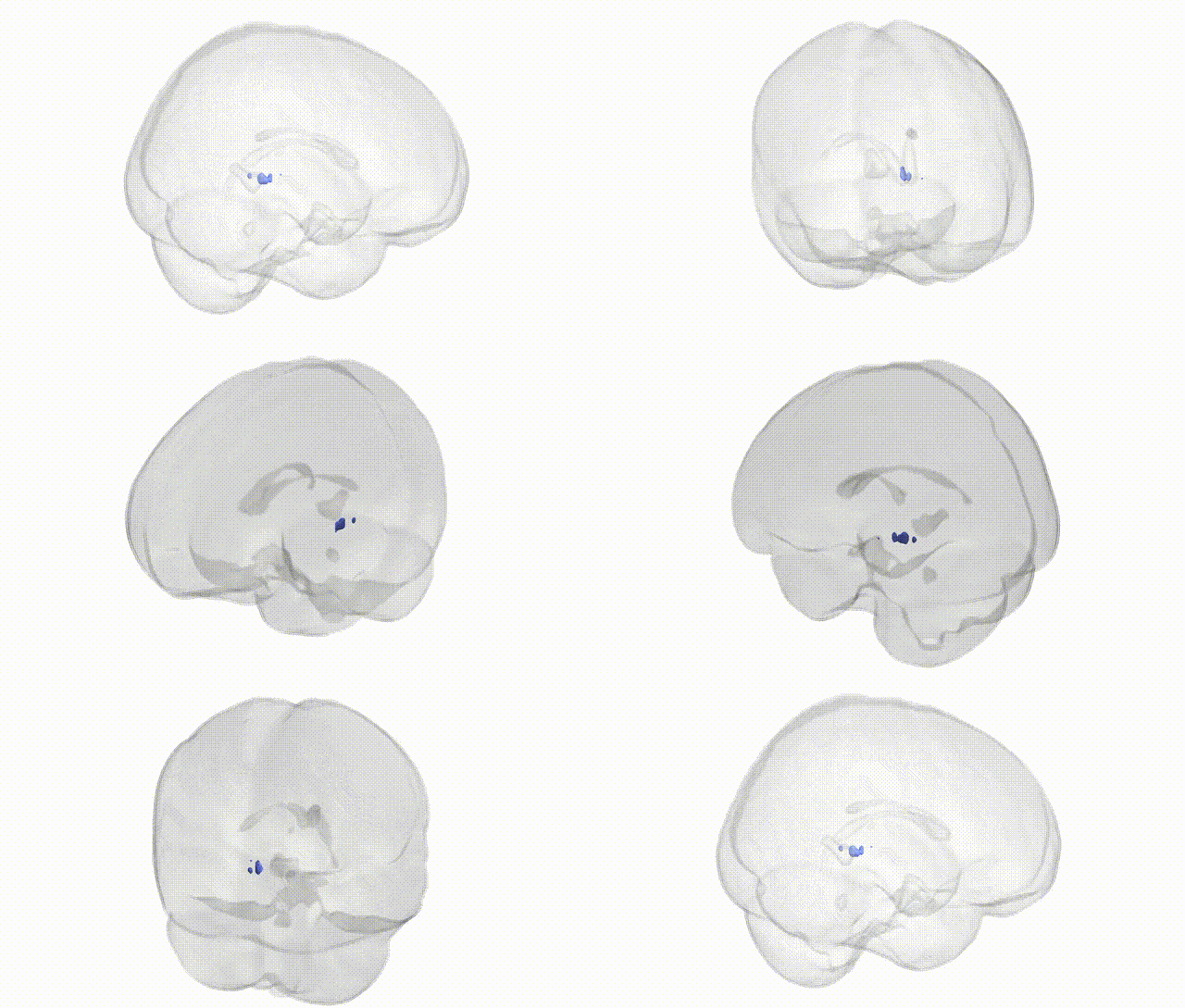
Full Quality Version: Download MP4
Wali Sidiqyar*, Gaurav Rudravaram*, Elyssa M. McMaster, Trent M. Schwartz, Adam M. Saunders, Kurt G. Schilling, Bennett A. Landman "Introducing SPINS: A Shared Public Visualization Library of Neuroanatomical Structures." Medical Imaging with Deep Learning- short paper
This resource is licensed under CC0 1.0 Universal (Public Domain).