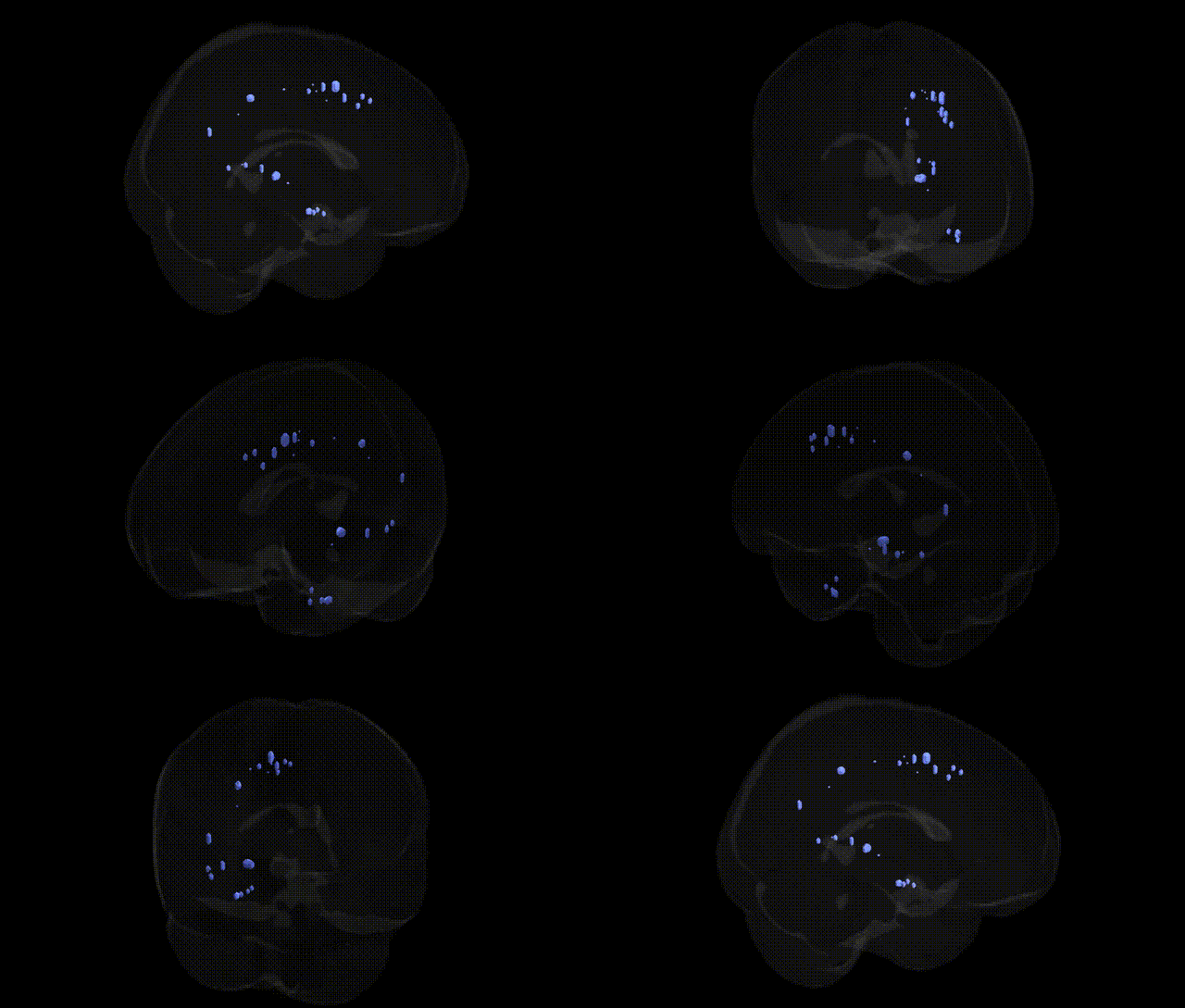
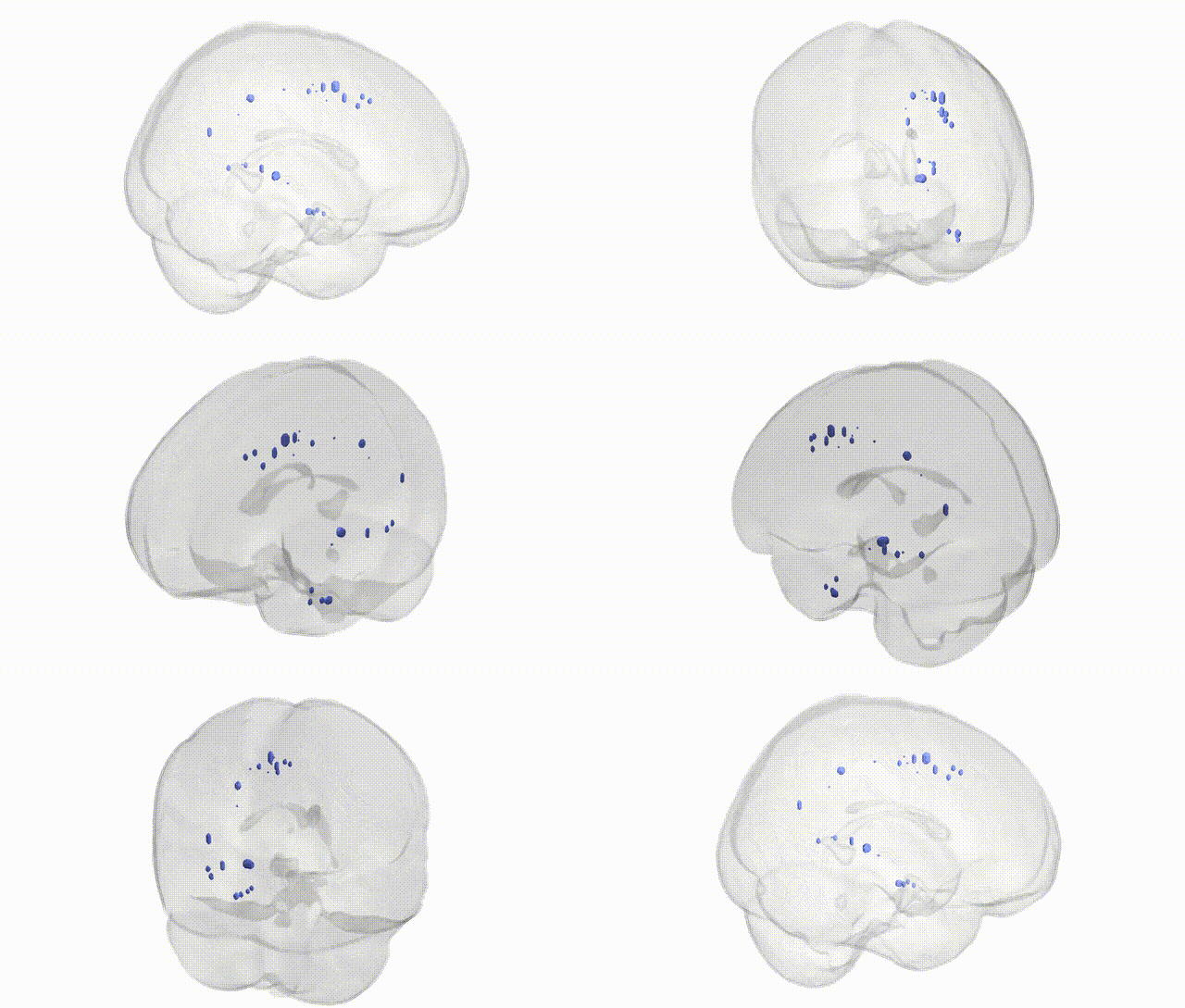
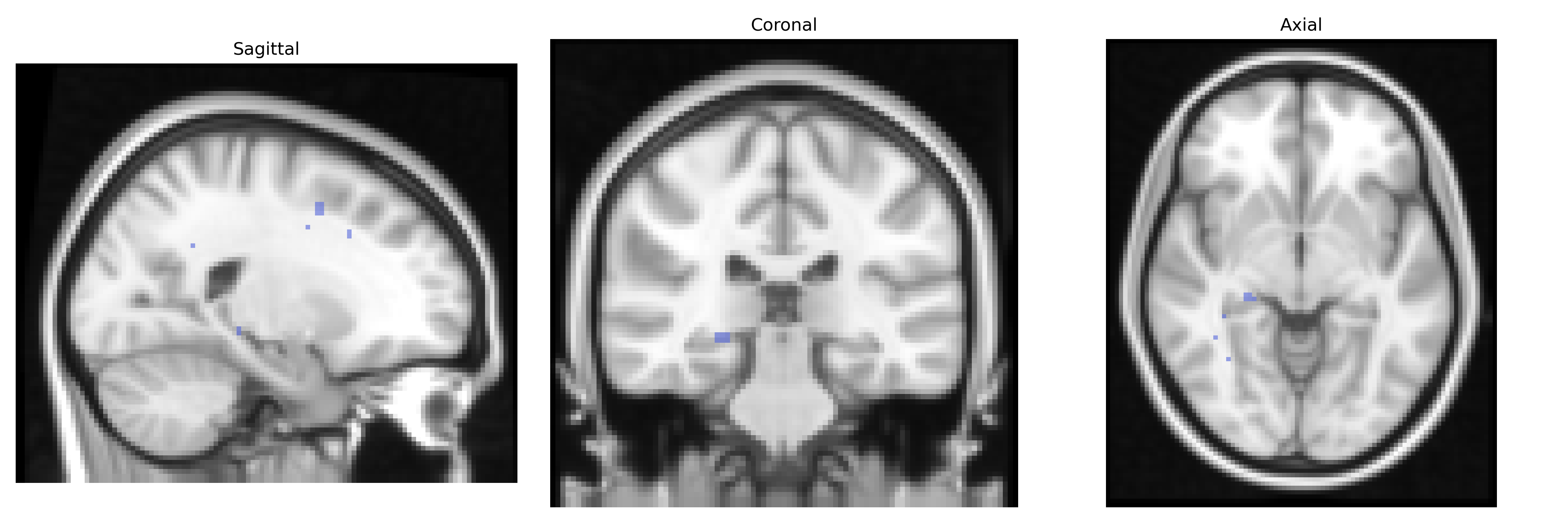
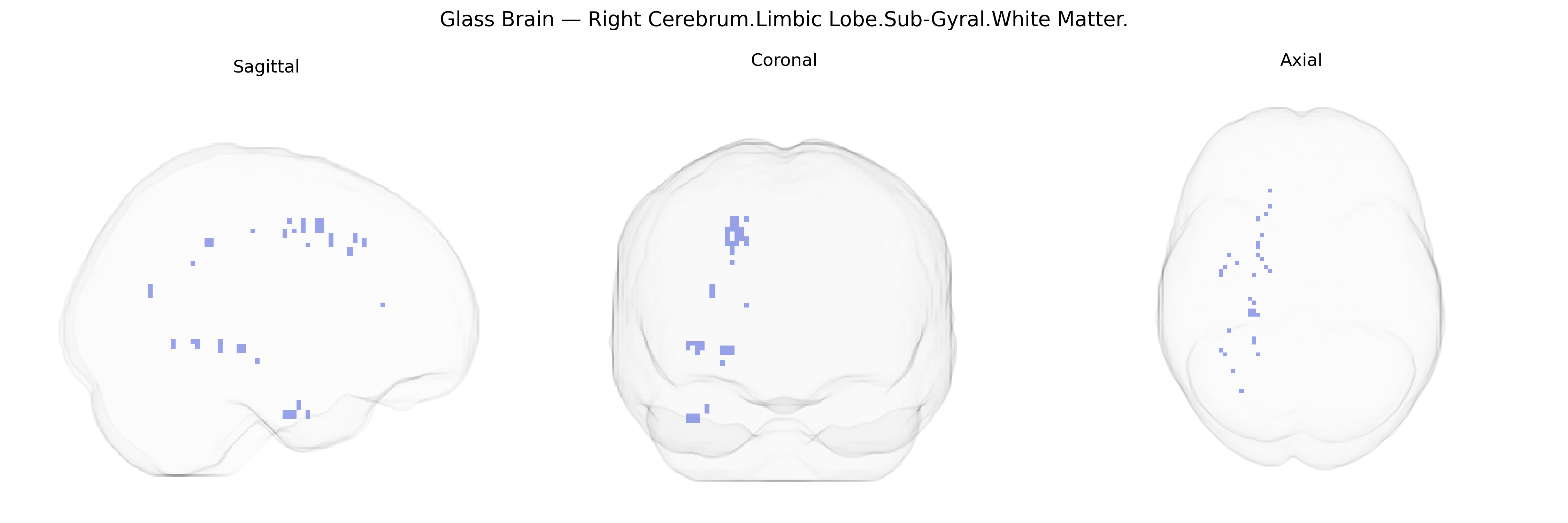
The bilateral Right Cerebrum.Limbic Lobe.Sub-Gyral.White Matter refers to deep white matter tracts located beneath the cortical gyri of the limbic lobe in the right cerebral hemisphere, including regions adjacent to structures such as the cingulate gyrus and parahippocampal areas. These sub-gyral white matter pathways consist primarily of myelinated axons that interconnect limbic cortical regions with subcortical nuclei (e.g., hippocampus, amygdala, and hypothalamus), supporting functions related to emotion, memory processing, and autonomic regulation. While there is no direct Wikipedia article for this specific composite label, it is closely related to the limbic system and its white matter connections: Limbic system.
The bilateral Right Cerebrum Limbic Lobe Sub-Gyral White Matter region, as defined in the Talairach 2 mm atlas, roughly corresponds to deep limbic white matter tracts underlying structures such as the cingulate and parahippocampal areas, and has been implicated in several genetic and GWAS-based findings, though typically at the level of broader limbic or cingulum-related white matter rather than this exact label. Large neuroimaging GWAS (e.g., ENIGMA, UK Biobank) have identified associations between common variants in genes involved in myelination, axonal guidance, and synaptic plasticity—such as NTRK1/2, CNTN4, MAG, and various oligodendrocyte-related loci—and microstructural integrity (FA, MD) of limbic white matter tracts including the cingulum bundle, which pass through or near the sub-gyral limbic white matter. These limbic white matter measures are genetically correlated with and sometimes mediate the effects of variants linked to major depressive disorder, schizophrenia, bipolar disorder, anxiety, and post-traumatic stress disorder, as well as traits such as neuroticism and cognitive performance; for example, GWAS of depression and schizophrenia have shown overlapping polygenic influences on cingulum and parahippocampal white matter integrity. Additionally, rare variant and CNV studies (e.g., 22q11.2 deletions) have reported pronounced alterations in limbic white matter pathways, supporting a role for genes affecting neurodevelopment and connectivity in this region. Overall, genetic associations related to this Talairach-defined region are best understood as part of a distributed limbic white matter network whose structure and microstructure are influenced by polygenic variation, contributing to risk for mood and psychotic disorders, stress-related conditions, and individual differences in memory and emotional regulation.
Overview generated by GPT-4o (2026).
Region ID: 55
Hemisphere: bilateral
Atlas: Talairach labels 2mm
Full Quality Version: Download MP4
Full Quality Version: Download MP4
Wali Sidiqyar*, Gaurav Rudravaram*, Elyssa M. McMaster, Trent M. Schwartz, Adam M. Saunders, Kurt G. Schilling, Bennett A. Landman "Introducing SPINS: A Shared Public Visualization Library of Neuroanatomical Structures." Medical Imaging with Deep Learning- short paper
This resource is licensed under CC0 1.0 Universal (Public Domain).