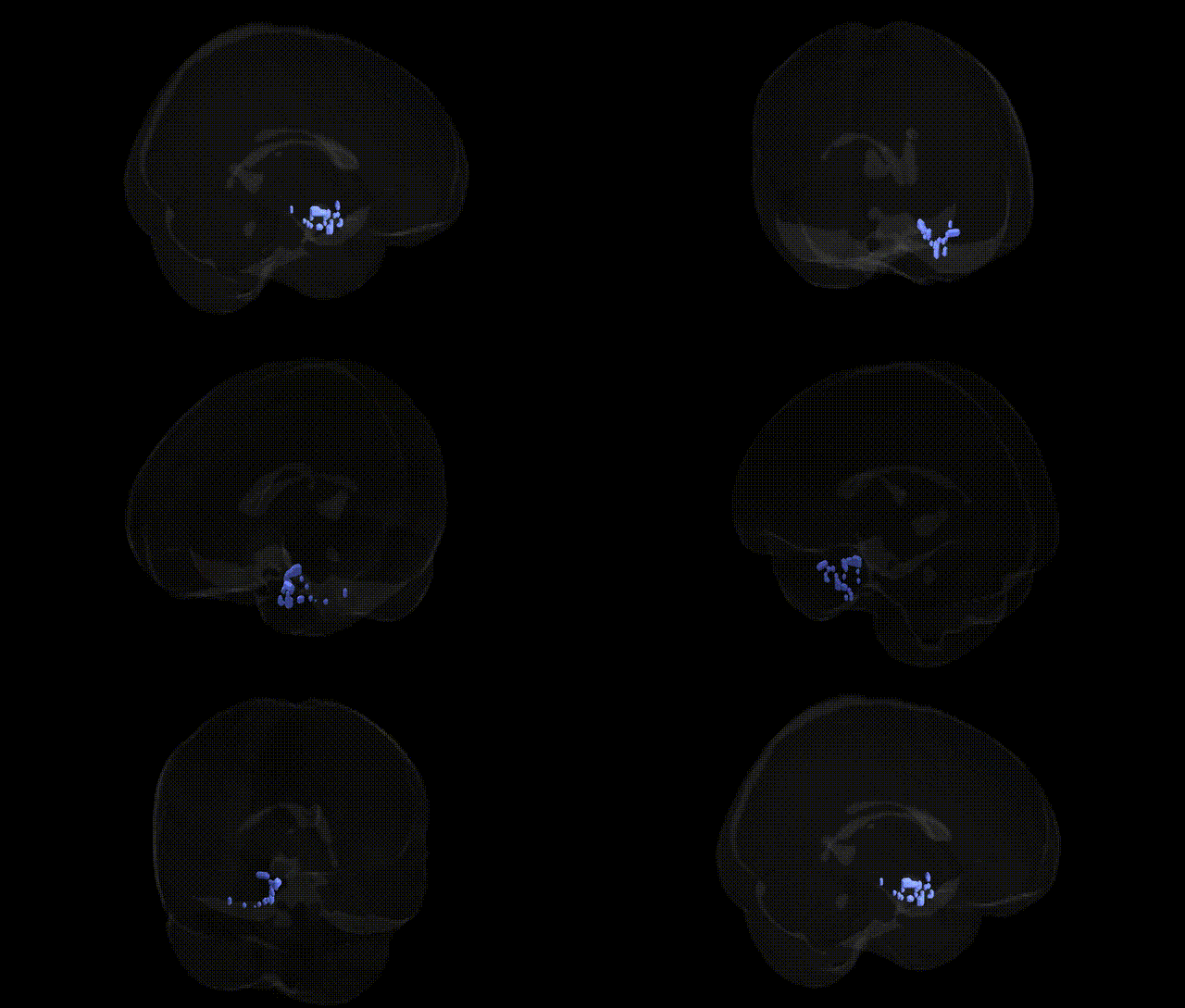
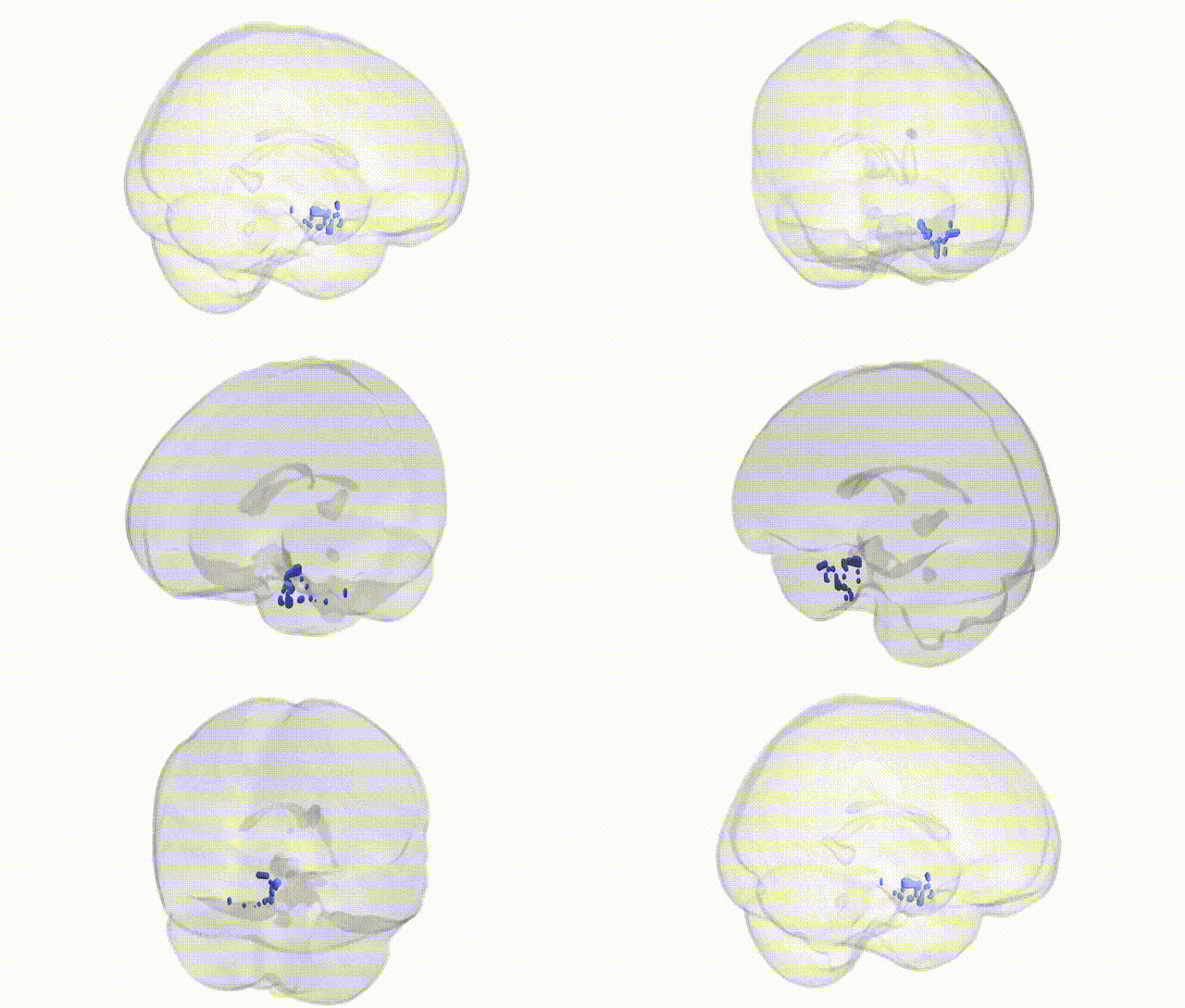
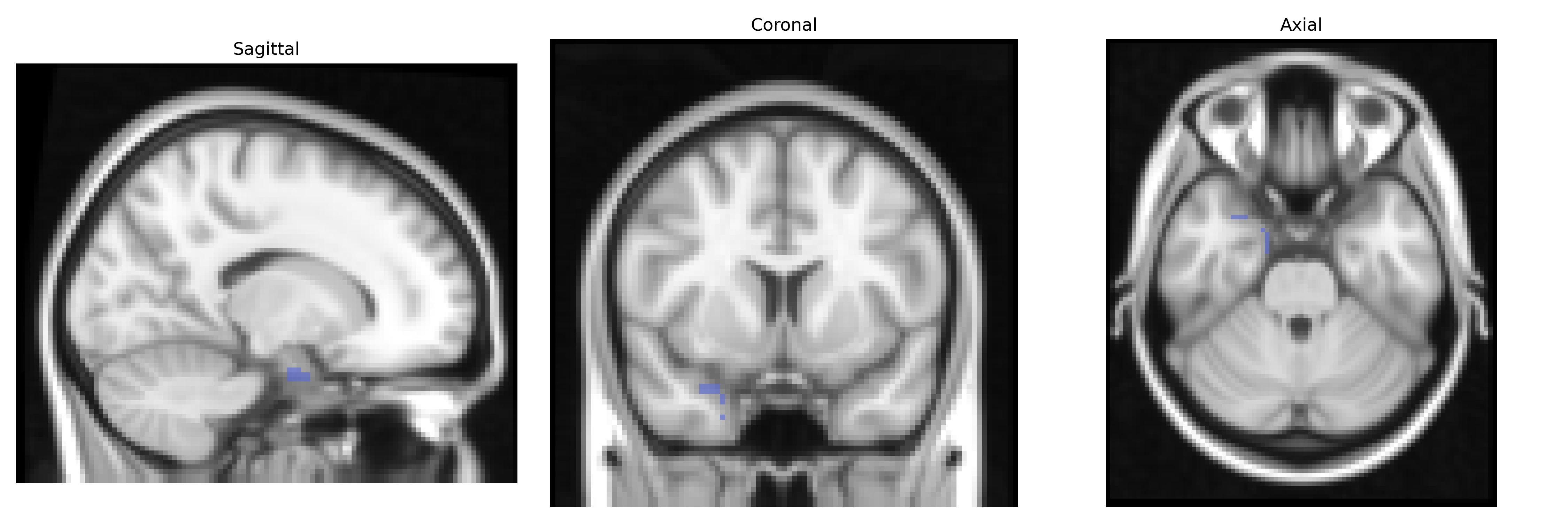
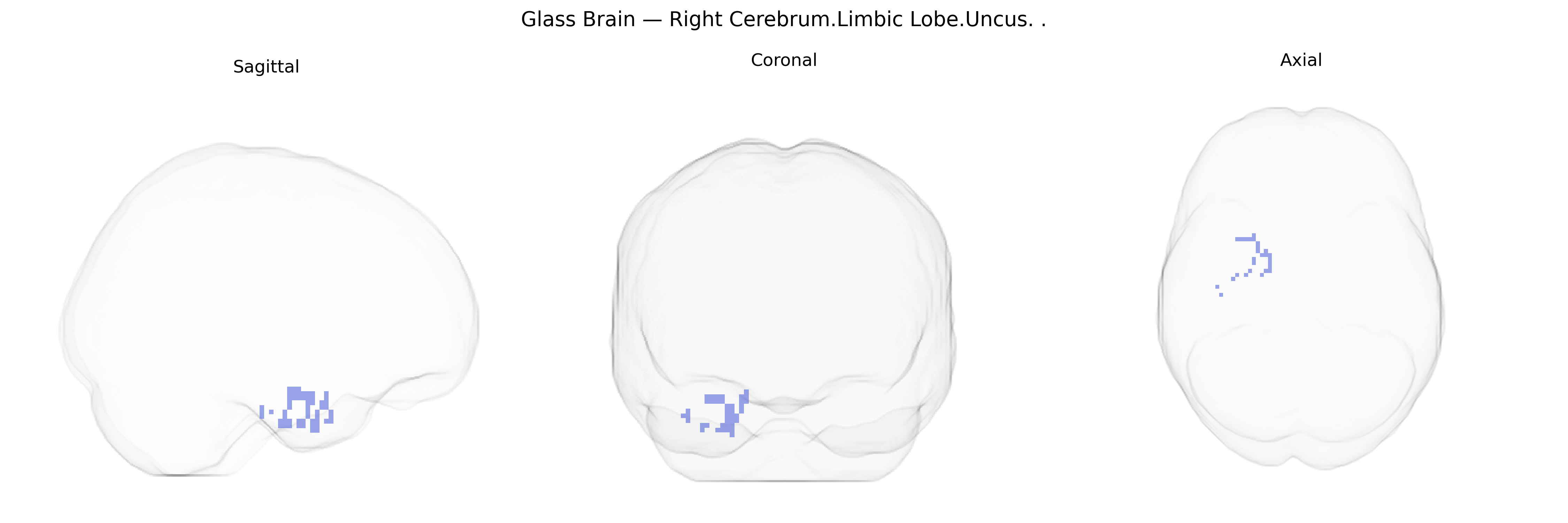
The bilateral Right Cerebrum.Limbic Lobe.Uncus corresponds to the uncus of the parahippocampal gyrus on the medial surface of the temporal lobe, forming part of the limbic lobe. It is structurally continuous with the hippocampal formation and the amygdaloid complex, and is closely involved in olfactory processing, memory, and emotion-related functions. The uncus overlies the amygdala and is a critical landmark in neurosurgery because of its proximity to the hippocampus, parahippocampal gyrus, and anterior portion of the temporal horn of the lateral ventricle; pathological processes such as uncal herniation can compress the brainstem and cranial nerves. Functionally, this region participates in integrating sensory (especially olfactory) inputs with emotional and mnemonic processing within the limbic system.
The bilateral right cerebrum limbic lobe uncus (uncinate region of the parahippocampal gyrus/amygdalar complex) is genetically implicated primarily through studies of medial temporal and limbic circuitry, rather than GWAS targeting the Talairach-2mm parcel specifically. GWAS and imaging-genetics work on hippocampal and amygdala volume, cortical thickness, and functional connectivity repeatedly implicate variants in genes involved in synaptic plasticity, neurodevelopment, and immune signaling (e.g., BDNF, APOE, SORL1, CLU, CR1, and multiple loci in the major histocompatibility complex), with structural and functional measures in the uncus frequently included in composite limbic or medial temporal phenotypes. APOE ε4 and other Alzheimer’s disease risk loci show associations with atrophy and altered activation in the uncinate/parahippocampal region, while schizophrenia and bipolar disorder GWAS-identified risk variants (including CACNA1C, ZNF804A, and complement pathway genes like C4) have been linked via imaging genetics to abnormal limbic morphology and connectivity patterns encompassing the uncus. Variants associated with anxiety, major depressive disorder, and post-traumatic stress disorder—particularly in serotonin (e.g., SLC6A4), glutamatergic (GRM, GRIN families), and stress-response pathways (FKBP5, CRHR1)—correspond to altered medial temporal limbic responses to emotional stimuli, with peak clusters often localizing to uncus/parahippocampal and amygdalar territories. GWAS of epilepsy highlight genes such as SCN1A, SCN2A, and other ion-channel and synaptic genes in temporal lobe epilepsy, where the uncus forms part of the epileptogenic zone in mesial temporal sclerosis. Overall, genetic associations for this Talairach-2mm-defined region derive from broader limbic, medial temporal, and temporal lobe phenotypes, with convergent evidence linking polygenic risk for neurodegenerative disease, psychosis, mood and anxiety disorders, and temporal lobe epilepsy to structural and functional alterations that prominently involve the uncus.
Overview generated by GPT-4o (2026).
Region ID: 31
Hemisphere: bilateral
Atlas: Talairach labels 2mm
Full Quality Version: Download MP4
Full Quality Version: Download MP4
Wali Sidiqyar*, Gaurav Rudravaram*, Elyssa M. McMaster, Trent M. Schwartz, Adam M. Saunders, Kurt G. Schilling, Bennett A. Landman "Introducing SPINS: A Shared Public Visualization Library of Neuroanatomical Structures." Medical Imaging with Deep Learning- short paper
This resource is licensed under CC0 1.0 Universal (Public Domain).