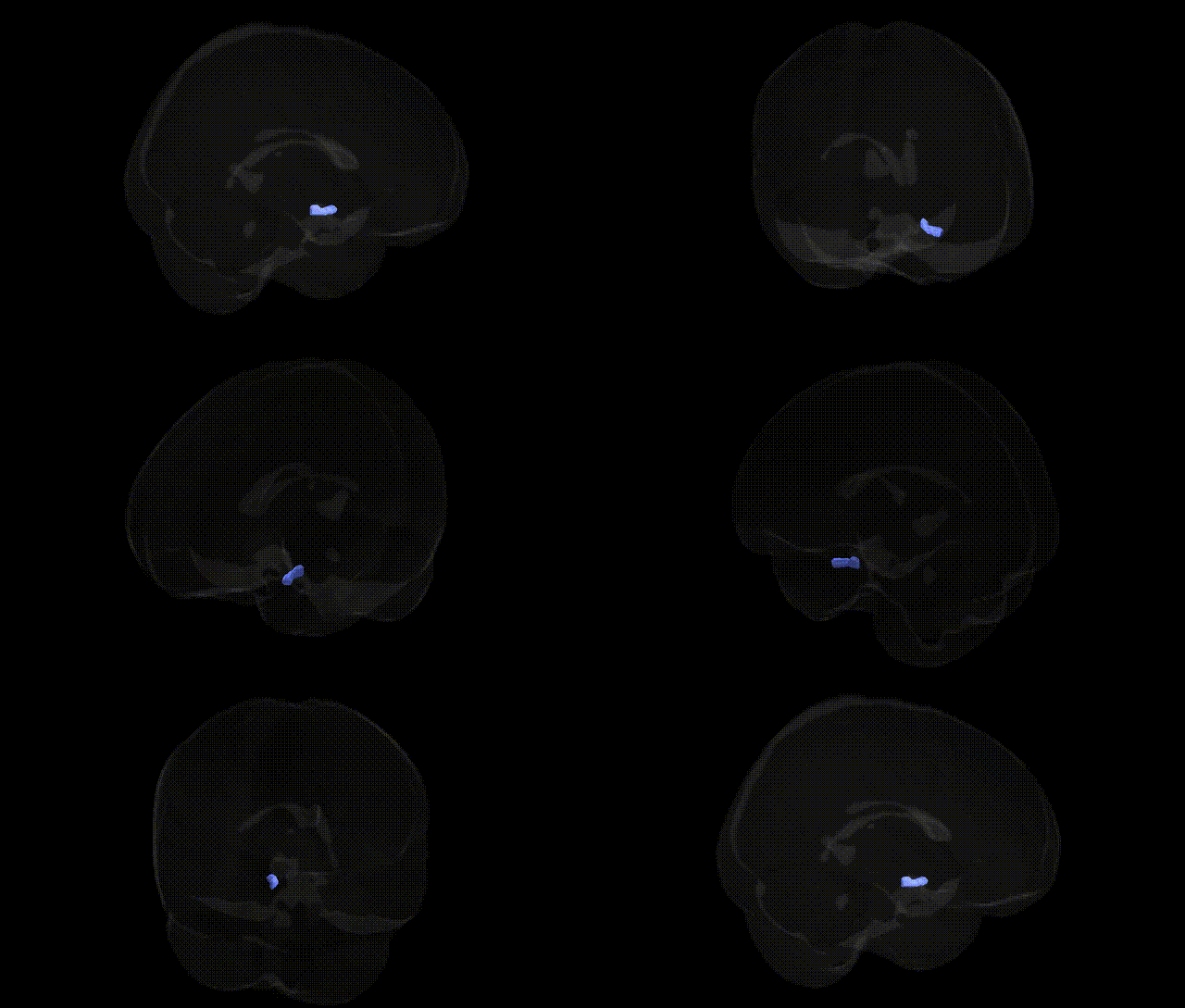
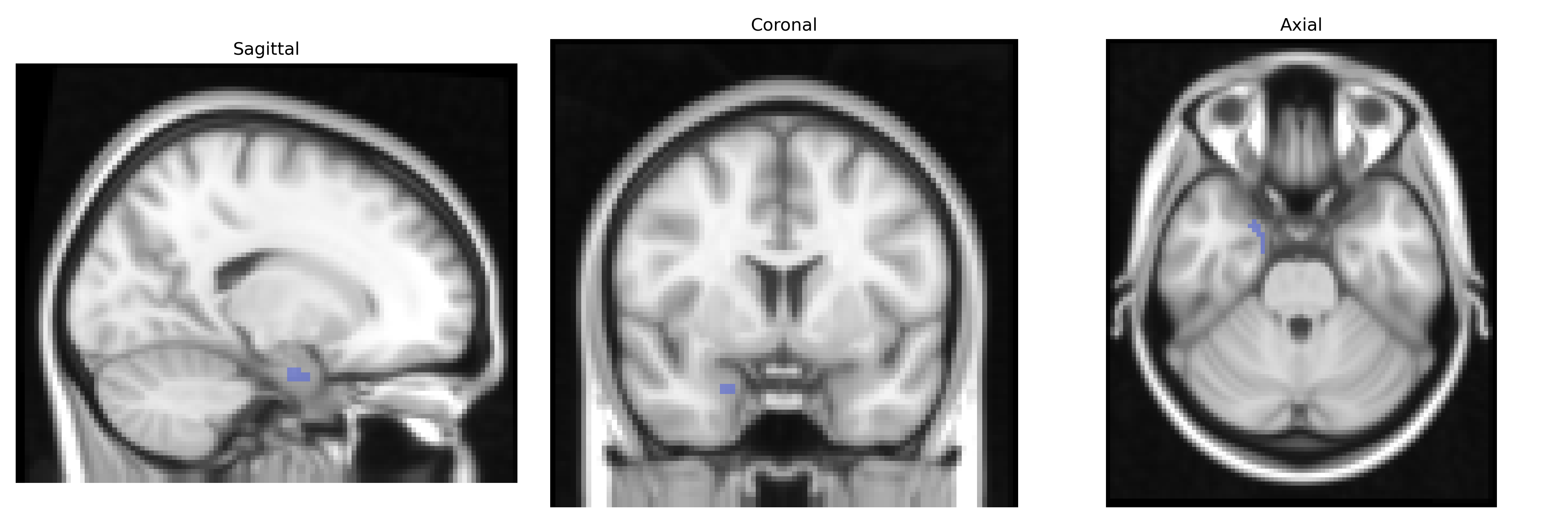
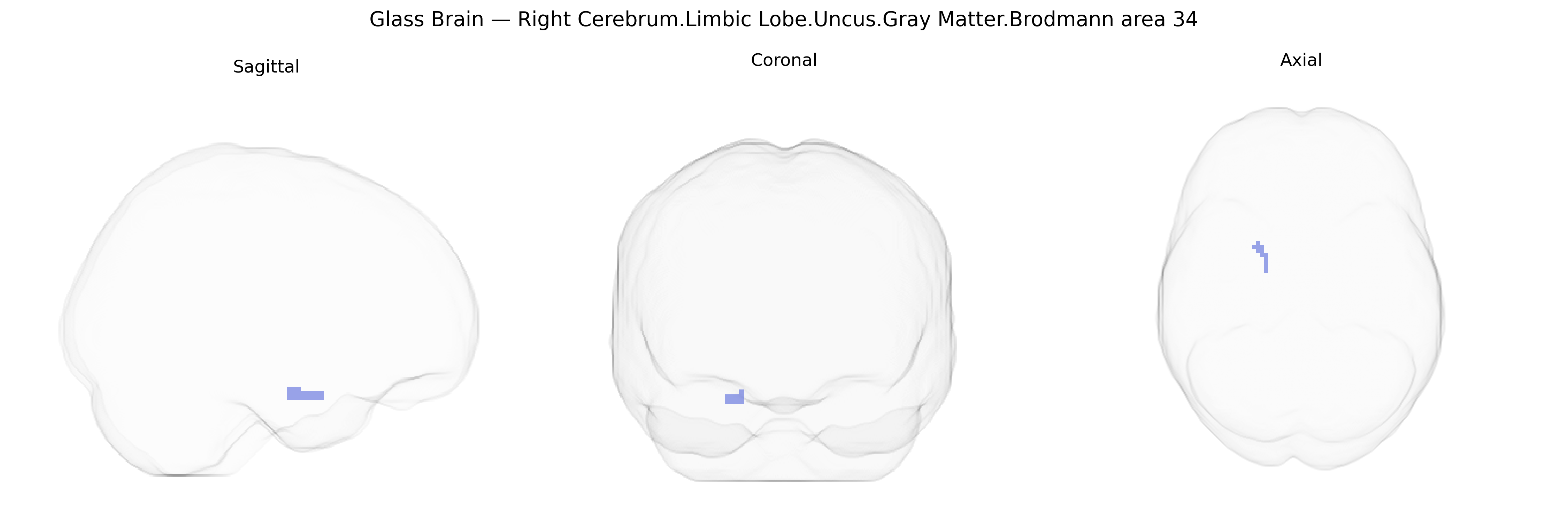
Bilateral Right Cerebrum.Limbic Lobe.Uncus.Gray Matter.Brodmann area 34 corresponds to a segment of the anterior parahippocampal gyrus and uncus within the limbic lobe, forming part of the primary olfactory cortex and closely associated medial temporal structures. Cytoarchitectonically defined as Brodmann area 34, this cortical field participates in early olfactory processing, integrating odor information with limbic circuits involved in emotion, memory, and associative learning. Its gray matter contains pyramidal neurons that project to other limbic and paralimbic regions, including the amygdala and hippocampal formation, thereby contributing to odor-triggered affective and mnemonic responses. There is no direct link for this exact region; a related structure is the Parahippocampal gyrus.
The bilateral right Brodmann area 34 in the uncus of the limbic lobe, encompassing anterior parahippocampal and entorhinal cortices, is a hub for olfactory processing, memory encoding, and emotional salience, and genetic associations involving this region generally emerge from imaging–genetics and GWAS studies of limbic and medial temporal structures rather than BA34-specific analyses. Large-scale neuroimaging GWAS (e.g., ENIGMA and UK Biobank) have identified common variants in genes related to neurodevelopment (such as MAPT on 17q21, BDNF, and various synaptic and cell-adhesion genes) that influence cortical thickness, surface area, or volume in parahippocampal/entorhinal territories overlapping BA34, and these structural metrics in turn show genetic correlations with cognitive performance, educational attainment, and risk for major depressive disorder and schizophrenia. In Alzheimer’s disease, where entorhinal and uncus atrophy is an early hallmark, risk alleles including APOE ε4, variants in TREM2, CLU, and BIN1 have been linked to accelerated degeneration and amyloid/tau burden in medial temporal and limbic cortices that include BA34, although the associations are usually characterized at the regional (entorhinal/parahippocampal) rather than Brodmann level. Variants influencing epilepsy (e.g., in SCN1A and other ion-channel genes) and temporal lobe epilepsy in particular have been indirectly associated with structural and functional alterations in mesial temporal limbic structures encompassing the uncus, and olfactory/gustatory hallucinations localizing to BA34 often co-occur with such genetic forms of epilepsy. Overall, genetic influences on BA34 are currently inferred from broader limbic and medial temporal lobe–focused GWAS, indicating that polygenic variation in neurodevelopmental, synaptic, and neurodegenerative pathways contributes to individual differences in the morphology and function of this region and to vulnerability to memory, mood, psychotic, and neurodegenerative disorders.
Overview generated by GPT-4o (2026).
Region ID: 180
Hemisphere: bilateral
Atlas: Talairach labels 2mm
Full Quality Version: Download MP4
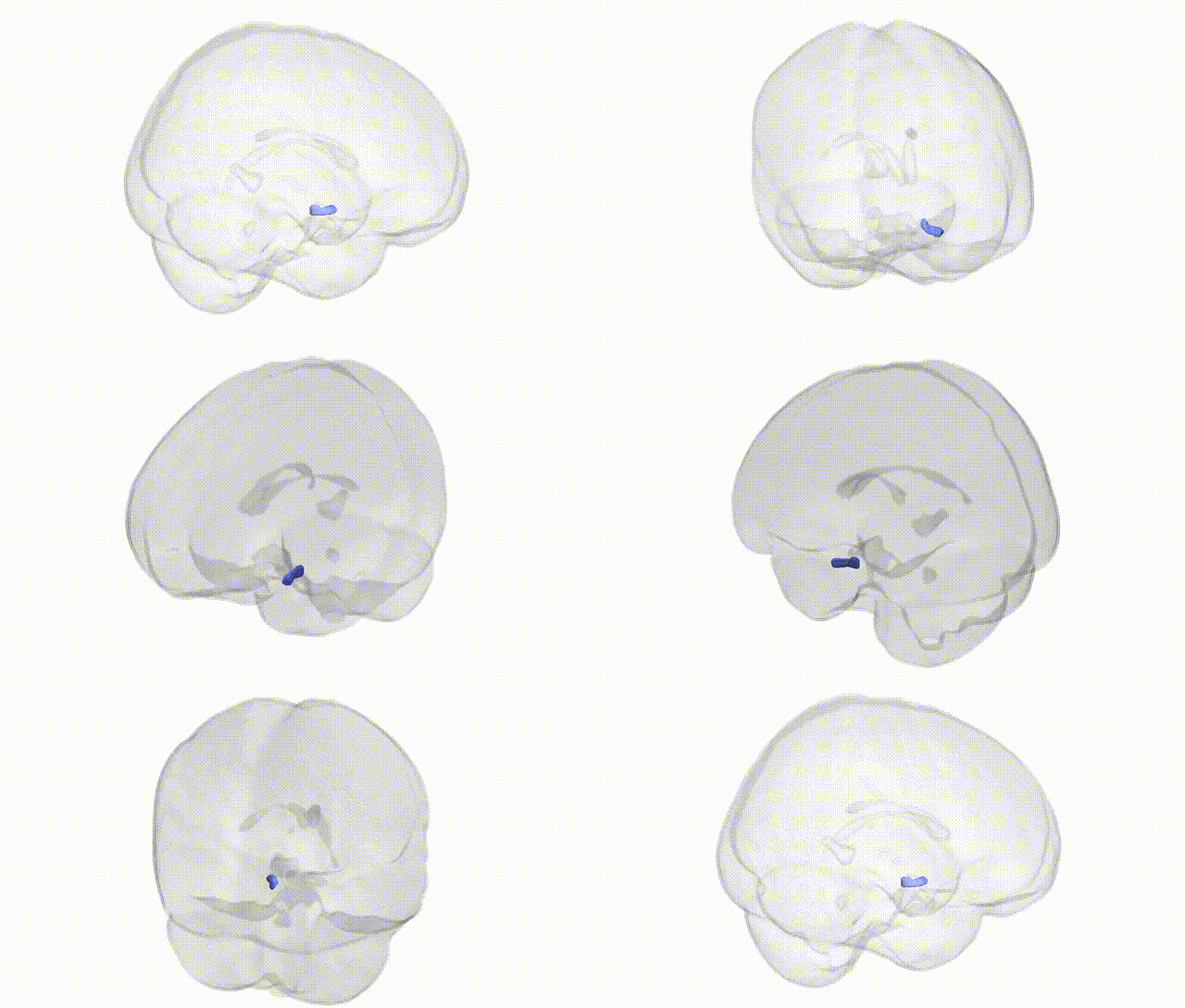
Full Quality Version: Download MP4
Wali Sidiqyar*, Gaurav Rudravaram*, Elyssa M. McMaster, Trent M. Schwartz, Adam M. Saunders, Kurt G. Schilling, Bennett A. Landman "Introducing SPINS: A Shared Public Visualization Library of Neuroanatomical Structures." Medical Imaging with Deep Learning- short paper
This resource is licensed under CC0 1.0 Universal (Public Domain).