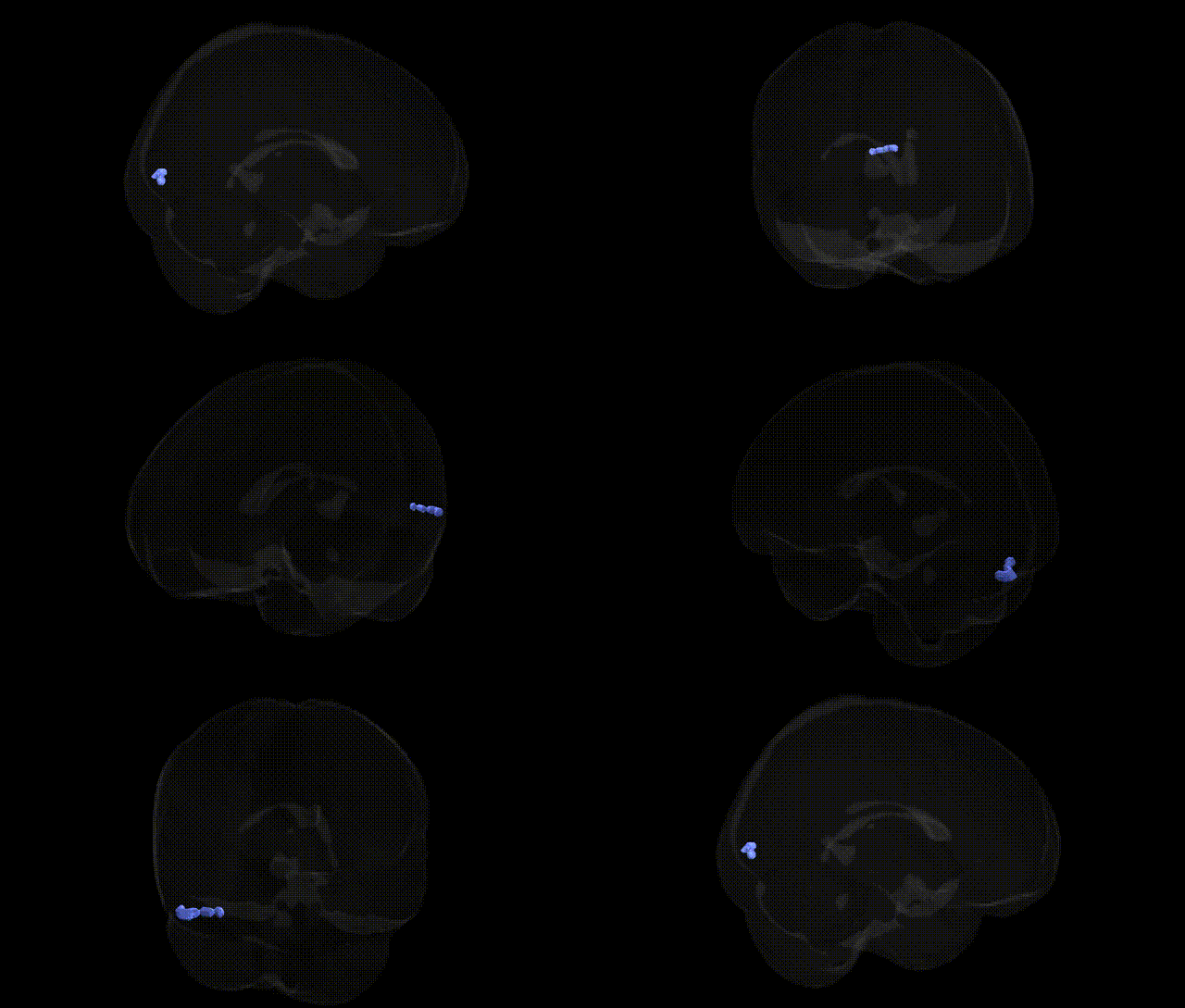
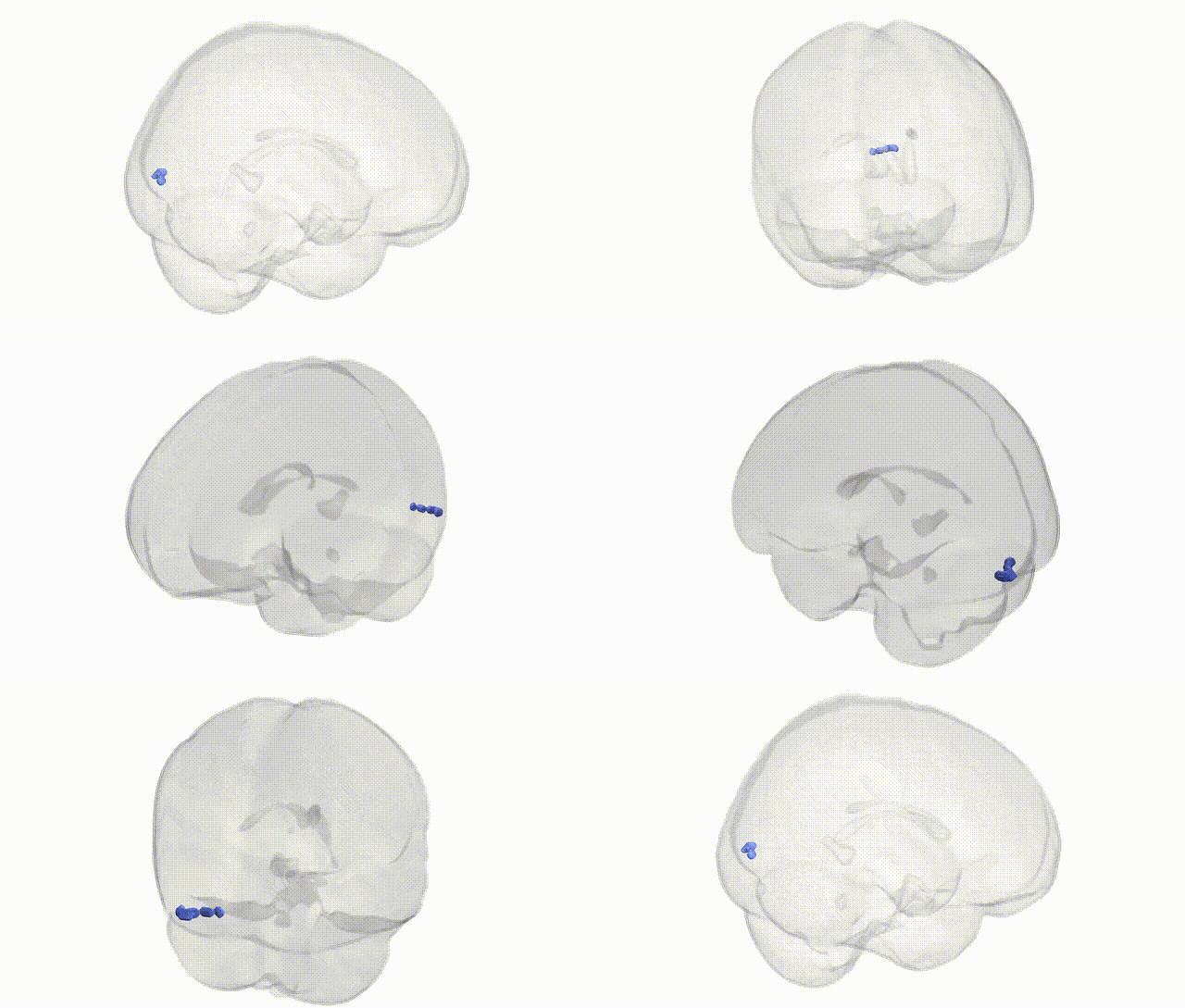
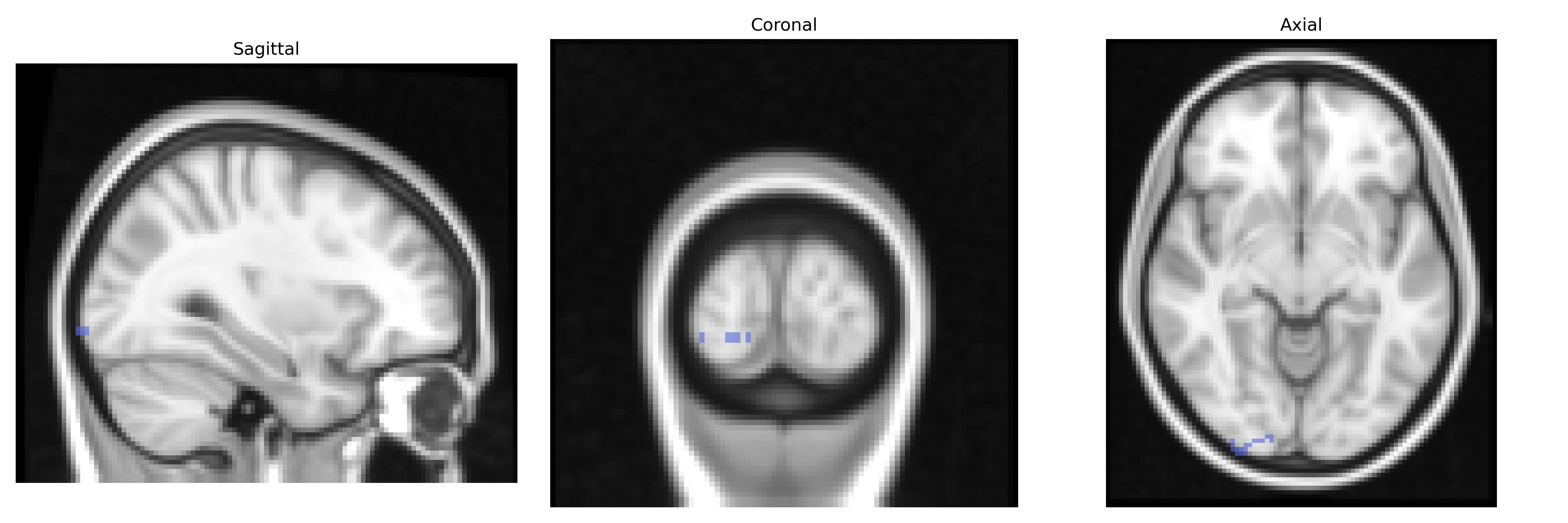
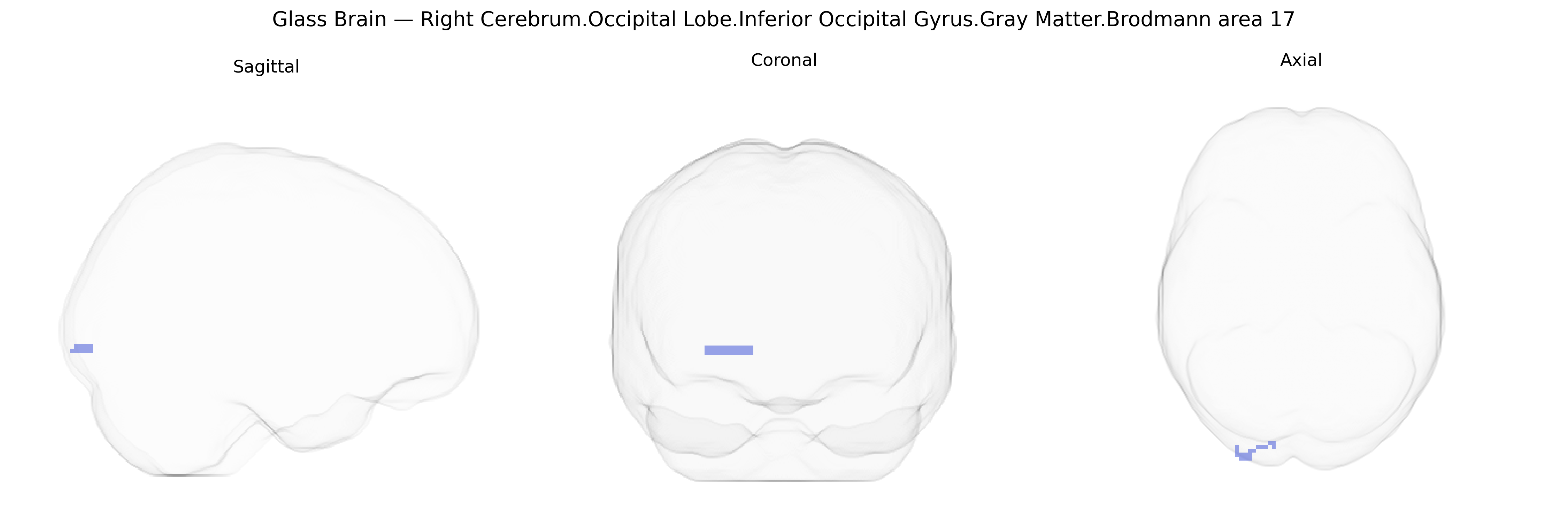
The bilateral Right Cerebrum.Occipital Lobe.Inferior Occipital Gyrus.Gray Matter.Brodmann area 17 corresponds to the primary visual cortex (V1) located in the occipital lobe, forming part of the striate cortex that receives direct afferent input from the lateral geniculate nucleus of the thalamus. This region is specialized for the initial cortical processing of visual information, including retinotopic mapping of the visual field and extraction of basic features such as orientation, spatial frequency, and contrast. Its gray matter contains highly organized columnar circuitry, including ocular dominance and orientation columns, supporting fine-grained analysis of visual stimuli and serving as the foundational stage for subsequent processing in extrastriate visual areas. There is no direct Wikipedia article specifically for the “Inferior Occipital Gyrus Brodmann area 17,” but it is part of the Primary visual cortex.
The bilateral right occipital lobe inferior occipital gyrus gray matter within Brodmann area 17 (primary visual cortex, V1) is a core hub of early visual processing, and genetic associations involving this region largely arise from neuroimaging GWAS that link common variants to cortical thickness, surface area, or volume in occipital/visual cortices, as well as from disorders with primary visual or visuocognitive components. Large-scale ENIGMA and UK Biobank studies have identified heritable variation in occipital cortical metrics and implicated loci near genes involved in neuronal development, synaptic function, and axon guidance (e.g., variants near PAX6, FOXP2, and general neurodevelopmental loci) though they typically report regional measures (occipital or visual cortex) rather than this specific Talairach-defined gyrus. BA17 structure and function show genetic correlations with general cognitive performance, educational attainment, and processing speed, reflecting the contribution of genetically influenced visual circuitry to higher cognition. In clinical genetics, BA17/occipital cortex involvement is reported in neurodevelopmental disorders (e.g., autism spectrum disorder and dyslexia) and neuropsychiatric conditions (e.g., schizophrenia and bipolar disorder), where GWAS-identified risk variants in synaptic and neurodevelopmental genes are associated with altered occipital activation or morphology, although the associations are generally broad and not confined to the inferior occipital gyrus. Monogenic and rare variant disorders that affect visual pathways, such as certain forms of congenital blindness or cortical visual impairment, can lead to secondary structural changes in BA17, but these reflect downstream effects rather than primary genetic targeting of this microscopic Talairach subregion. Overall, current genetic evidence supports strong heritability and polygenic influences on primary visual cortex structure and function, with numerous loci implicated through GWAS of occipital/visual cortex volumes and vision-related traits, yet precise, gene-level associations specific to “Right Cerebrum.Occipital Lobe.Inferior Occipital Gyrus.Gray Matter.Brodmann area 17” as defined by the Talairach labels 2mm Atlas remain undifferentiated within broader occipital and visual cortex genetic findings.
Overview generated by GPT-4o (2026).
Region ID: 305
Hemisphere: bilateral
Atlas: Talairach labels 2mm
Full Quality Version: Download MP4
Full Quality Version: Download MP4
Wali Sidiqyar*, Gaurav Rudravaram*, Elyssa M. McMaster, Trent M. Schwartz, Adam M. Saunders, Kurt G. Schilling, Bennett A. Landman "Introducing SPINS: A Shared Public Visualization Library of Neuroanatomical Structures." Medical Imaging with Deep Learning- short paper
This resource is licensed under CC0 1.0 Universal (Public Domain).