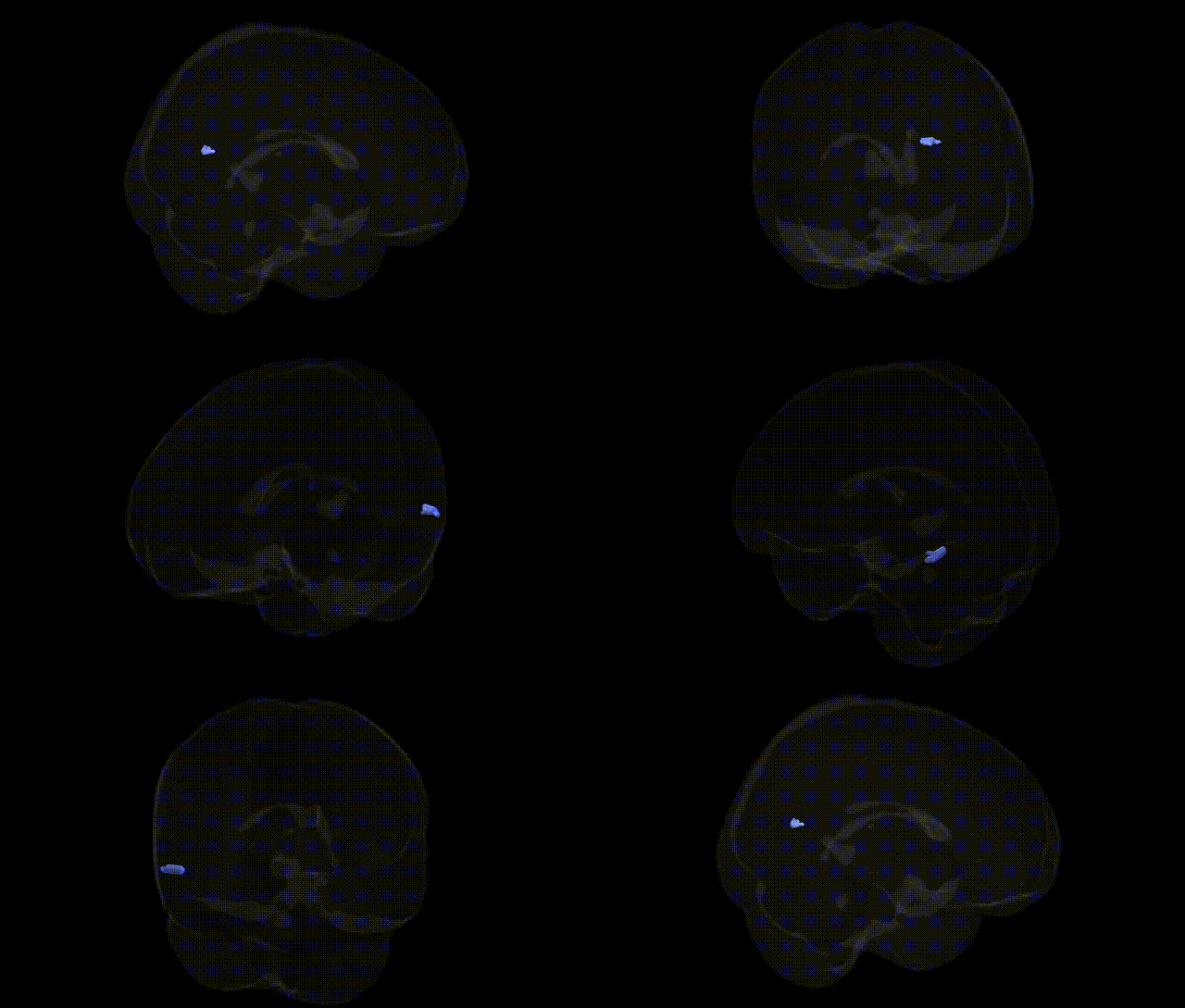
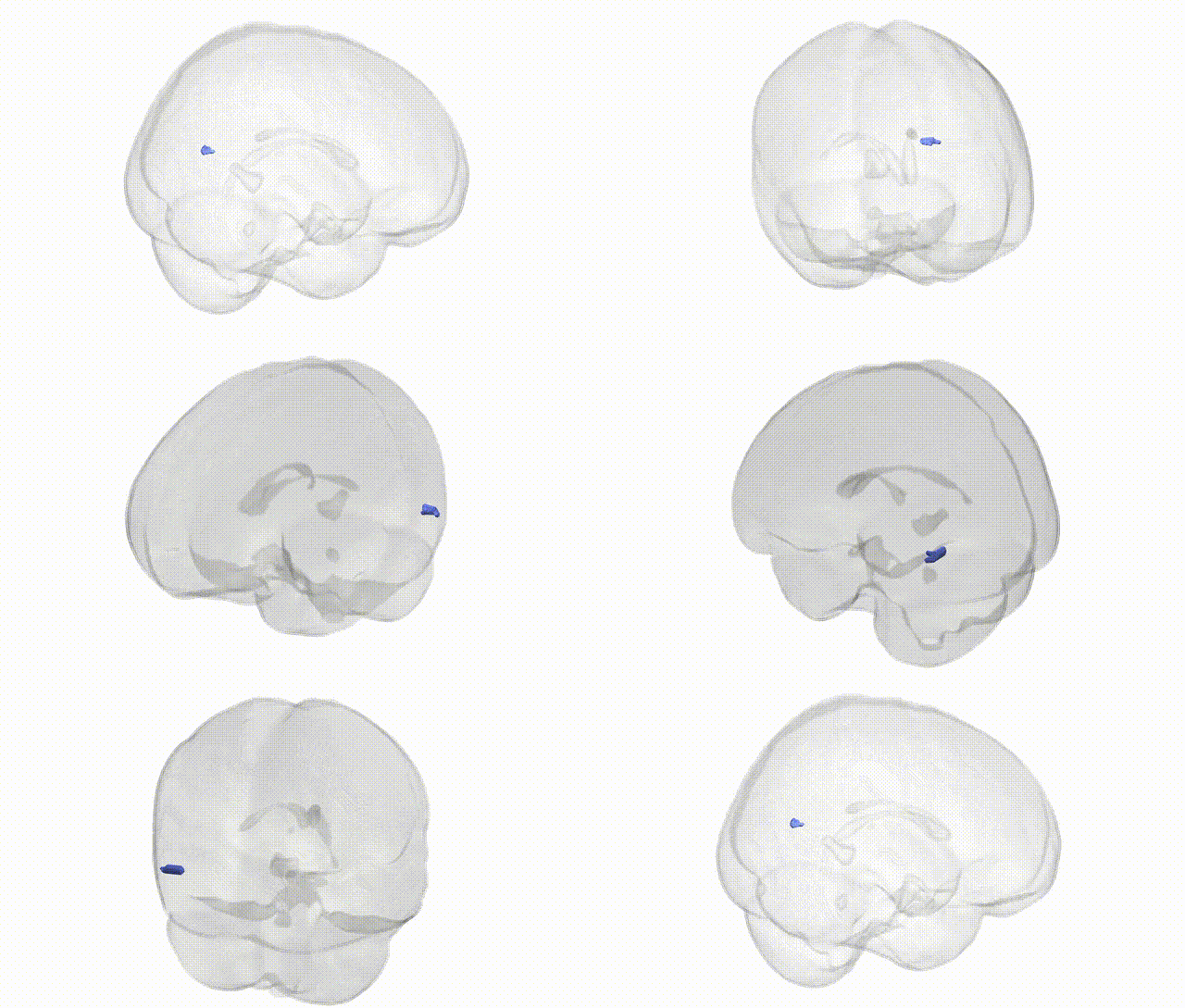
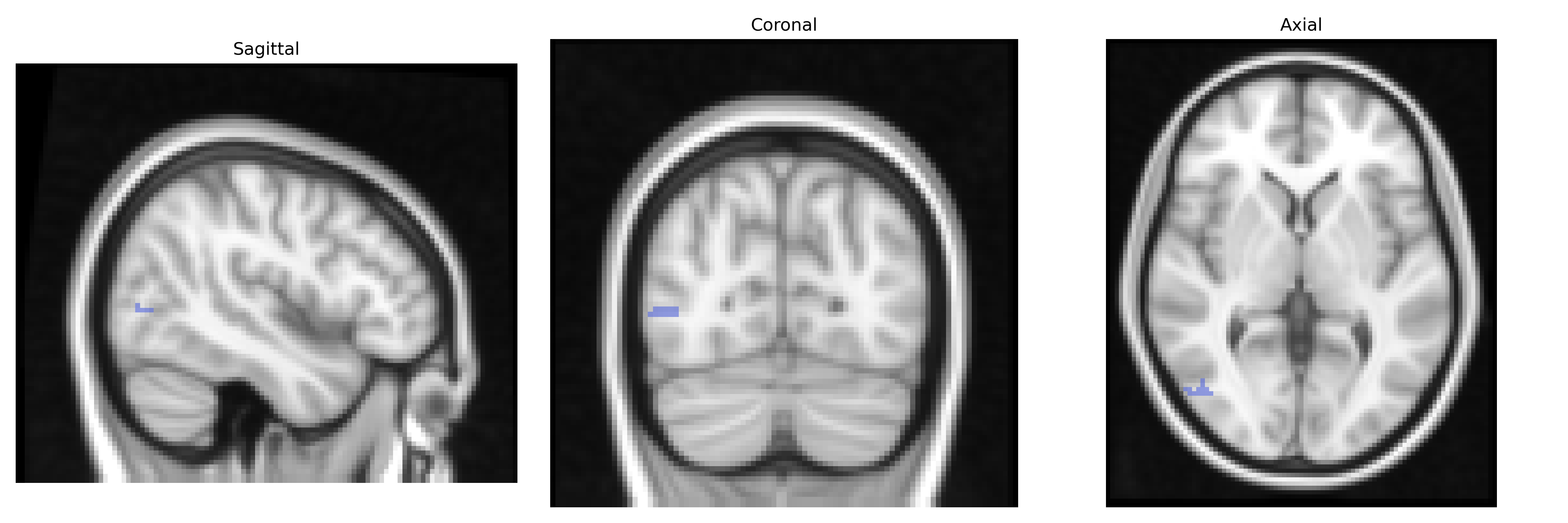
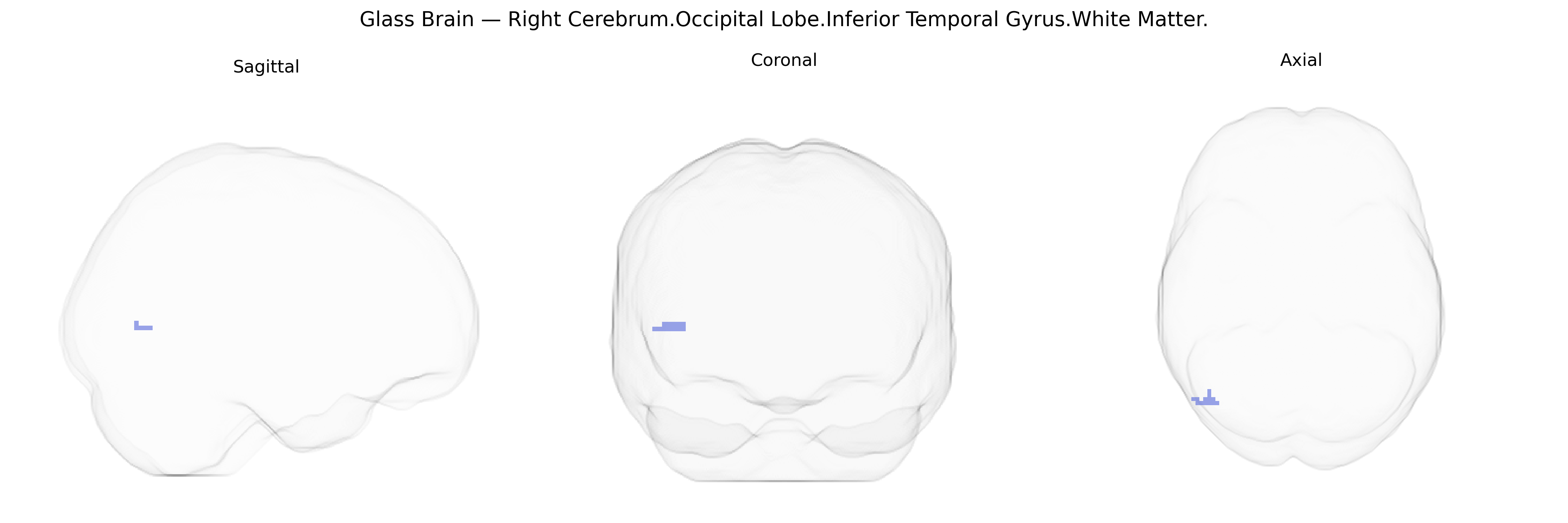
The bilateral Right Cerebrum.Occipital Lobe.Inferior Temporal Gyrus.White Matter corresponds to subcortical association fibers coursing within the white matter deep to the inferior temporal gyrus at the junction of the occipital and temporal lobes in the right hemisphere. This region contains long-range and short-range axonal pathways interconnecting visual association cortices of the occipital lobe with higher-order object recognition and multimodal integration areas of the temporal lobe, including portions of the ventral visual stream. Functionally, these fibers contribute to processing and integration of complex visual information such as form, color, and object identity, and they participate in networks underlying visual memory and semantic representation. There is no direct Wikipedia article for this specific white matter subdivision; a closely related cortical structure is the Inferior temporal gyrus.
The bilateral Right Cerebrum Occipital Lobe Inferior Temporal Gyrus white matter, as defined in the Talairach 2 mm atlas, falls within ventral occipito-temporal pathways that support high-level visual processing (including object and face recognition) and connect fusiform, inferior temporal, and occipital cortices; genetic associations for this specific labeled white-matter parcel are not individually resolved in current GWAS, but multiple large neuroimaging-genetics consortia (e.g., ENIGMA, UK Biobank) have identified heritable variation in adjacent ventral visual stream volumes and white matter microstructure (e.g., inferior longitudinal fasciculus, inferior fronto-occipital fasciculus) linked to variants in genes involved in axon guidance, myelination, and synaptic plasticity (such as CNTNAP2, NRG1/NRG3, MAG, and multiple loci in oligodendrocyte-related pathways). Polygenic influences on visual association cortex structure and connectivity in this region have been associated with neurodevelopmental and psychiatric conditions that feature face and object-processing deficits, including autism spectrum disorder, schizophrenia, and prosopagnosia, as well as with educational attainment and general cognitive ability through GWAS of cortical thickness and surface area in ventral temporal/occipital cortices. Additionally, GWAS of diffusion MRI measures (fractional anisotropy and mean diffusivity) in occipito-temporal tracts overlapping this white matter have identified loci in genes related to neurodevelopment and extracellular matrix organization, supporting a broader view that genetic variation influencing white matter integrity in the ventral visual pathway contributes to risk and resilience across multiple cognitive and clinical phenotypes, even though no major study has yet isolated this Talairach-defined Inferior Temporal Gyrus white-matter region as a uniquely reported GWAS target.
Overview generated by GPT-4o (2026).
Region ID: 327
Hemisphere: bilateral
Atlas: Talairach labels 2mm
Full Quality Version: Download MP4
Full Quality Version: Download MP4
Wali Sidiqyar*, Gaurav Rudravaram*, Elyssa M. McMaster, Trent M. Schwartz, Adam M. Saunders, Kurt G. Schilling, Bennett A. Landman "Introducing SPINS: A Shared Public Visualization Library of Neuroanatomical Structures." Medical Imaging with Deep Learning- short paper
This resource is licensed under CC0 1.0 Universal (Public Domain).