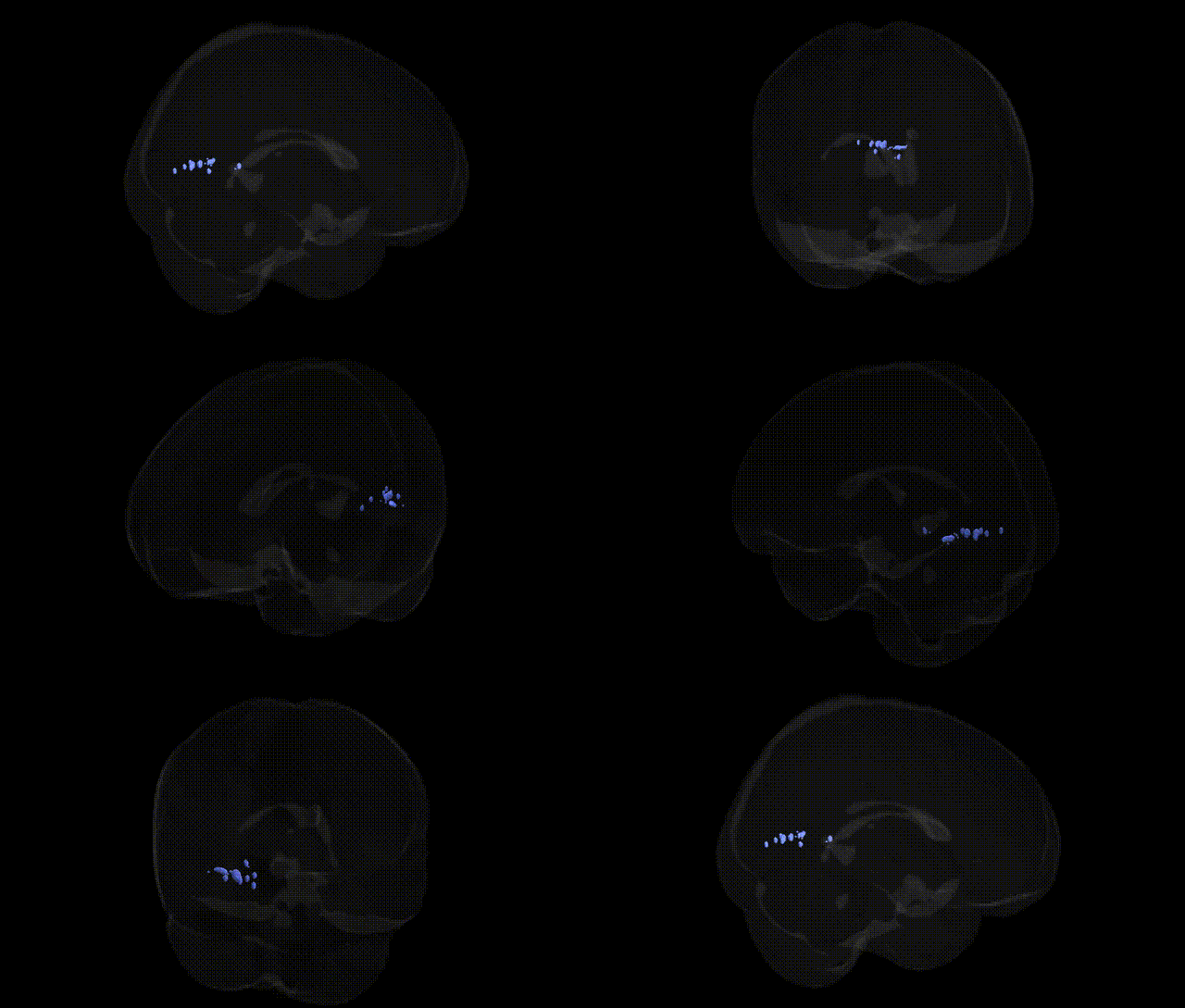
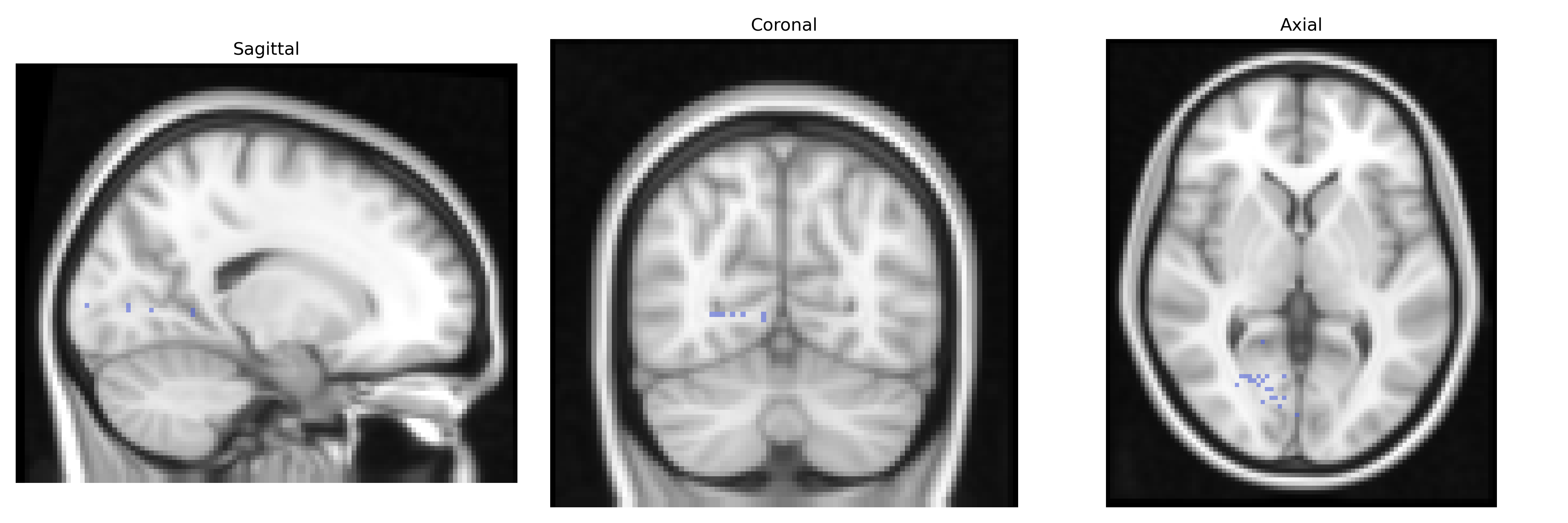
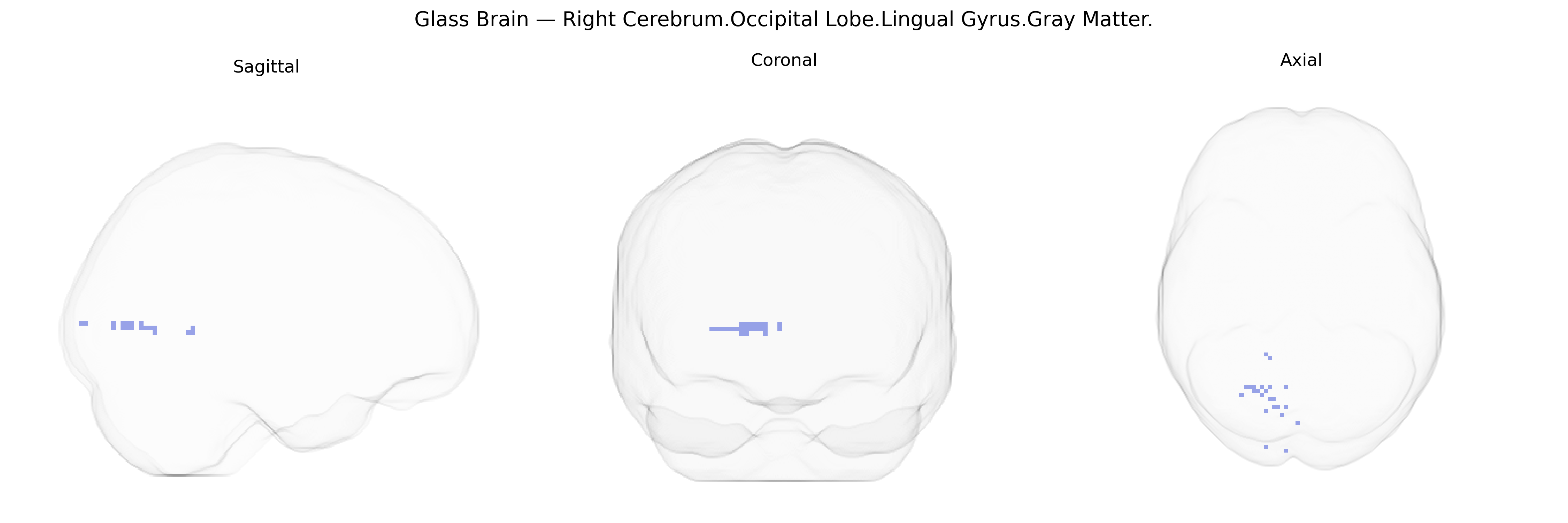
The bilateral Right Cerebrum.Occipital Lobe.Lingual Gyrus.Gray Matter corresponds to cortical gray matter in the lingual gyrus of the occipital lobe, involved primarily in visual processing. This region lies on the medial aspect of the occipital lobe, extending from the calcarine sulcus toward the posterior parahippocampal gyrus, and participates in early and intermediate stages of visual analysis, including processing of complex shapes, visual patterns, and aspects of letter and word form recognition. Functionally, it is associated with components of the ventral visual stream, contributing to object and scene perception, visual memory encoding, and, in the left hemisphere, aspects of reading and visual word processing. As gray matter, it contains neuronal cell bodies, dendrites, and local circuitry that integrate inputs from primary visual cortex and higher-order visual association areas.
The lingual gyrus gray matter in the occipital lobe, while not typically a primary GWAS target, is implicated in genetic studies of visual processing, reading and language-related traits, and neuropsychiatric disorders that affect occipital and ventral visual stream regions. Variants in genes involved in synaptic development and cortical patterning (such as BDNF, NRG1, and DISC1) have shown associations with structural differences in occipital and medial ventral temporal cortices that encompass the lingual gyrus, particularly in schizophrenia and major depressive disorder imaging genetics studies. GWAS of brain morphology have identified common variants (e.g., near genes involved in axon guidance and neurodevelopment such as WNT and semaphorin pathway genes) that are associated with occipital cortical thickness and surface area, which include the lingual region in Talairach-based parcellations. Reading disability and dyslexia-related GWAS and candidate-gene studies (including variants in DCDC2, KIAA0319, and ROBO1) have reported altered activation and gray matter in occipito-temporal regions including the lingual gyrus during visual word recognition and phonological processing tasks, linking genetic risk to structural and functional variation in this area. Additionally, GWAS of migraine, visual aura, and photophobia have suggested occipital cortex involvement, with imaging-genetic work showing that polygenic risk for migraine and related sensory sensitivity traits can correlate with differences in gray matter volume and responsiveness in lingual and neighboring occipital regions, although specific locus-to-region mappings remain coarse. Overall, genetic associations for this bilateral lingual gyrus gray matter region are largely indirect, arising from large-scale imaging-genetics and disorder GWAS that implicate occipital and ventral visual cortices in neurodevelopmental, psychiatric, and sensory phenotypes rather than pinpointing this Talairach-defined parcel with high specificity.
Overview generated by GPT-4o (2026).
Region ID: 525
Hemisphere: bilateral
Atlas: Talairach labels 2mm
Full Quality Version: Download MP4
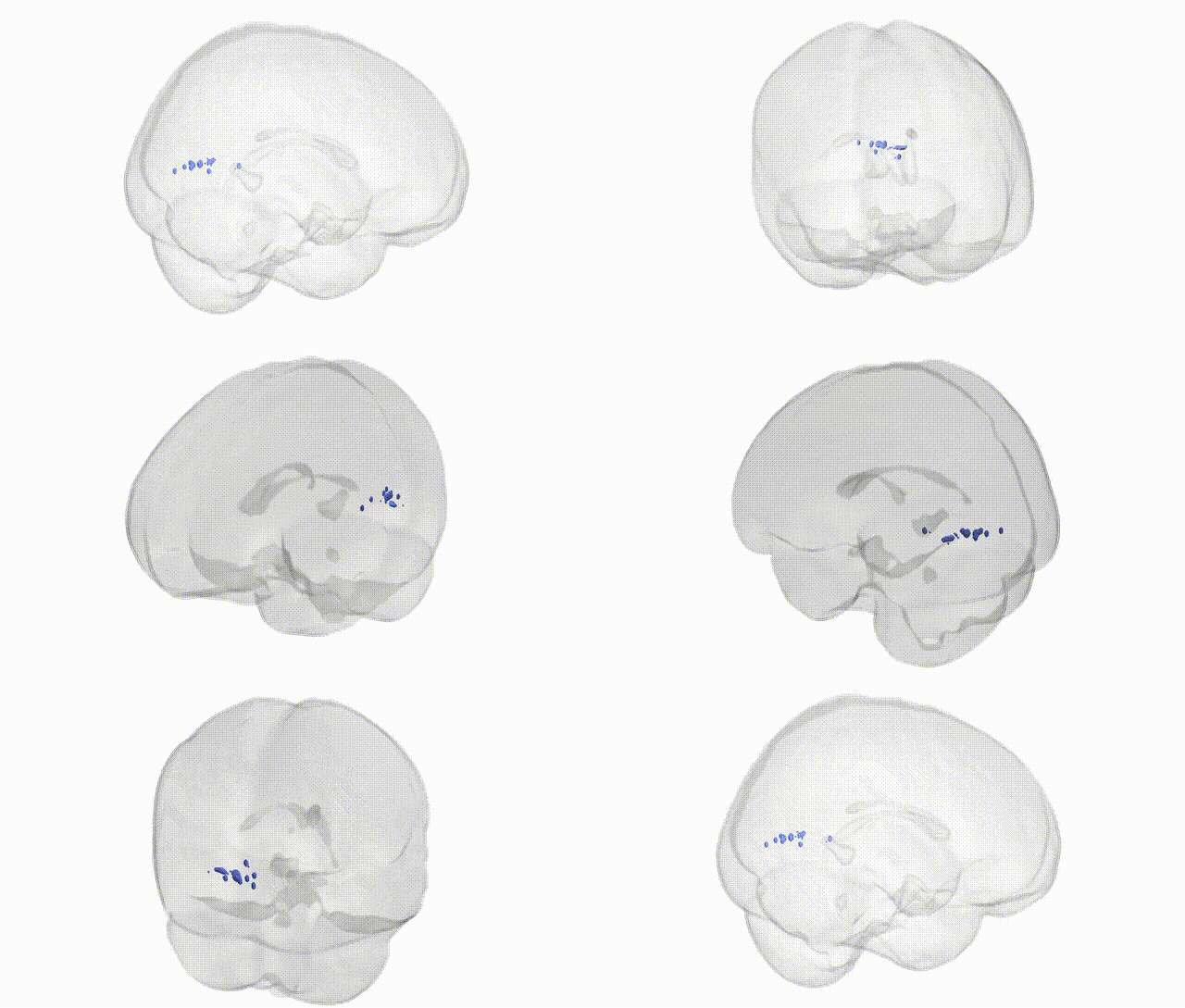
Full Quality Version: Download MP4
Wali Sidiqyar*, Gaurav Rudravaram*, Elyssa M. McMaster, Trent M. Schwartz, Adam M. Saunders, Kurt G. Schilling, Bennett A. Landman "Introducing SPINS: A Shared Public Visualization Library of Neuroanatomical Structures." Medical Imaging with Deep Learning- short paper
This resource is licensed under CC0 1.0 Universal (Public Domain).