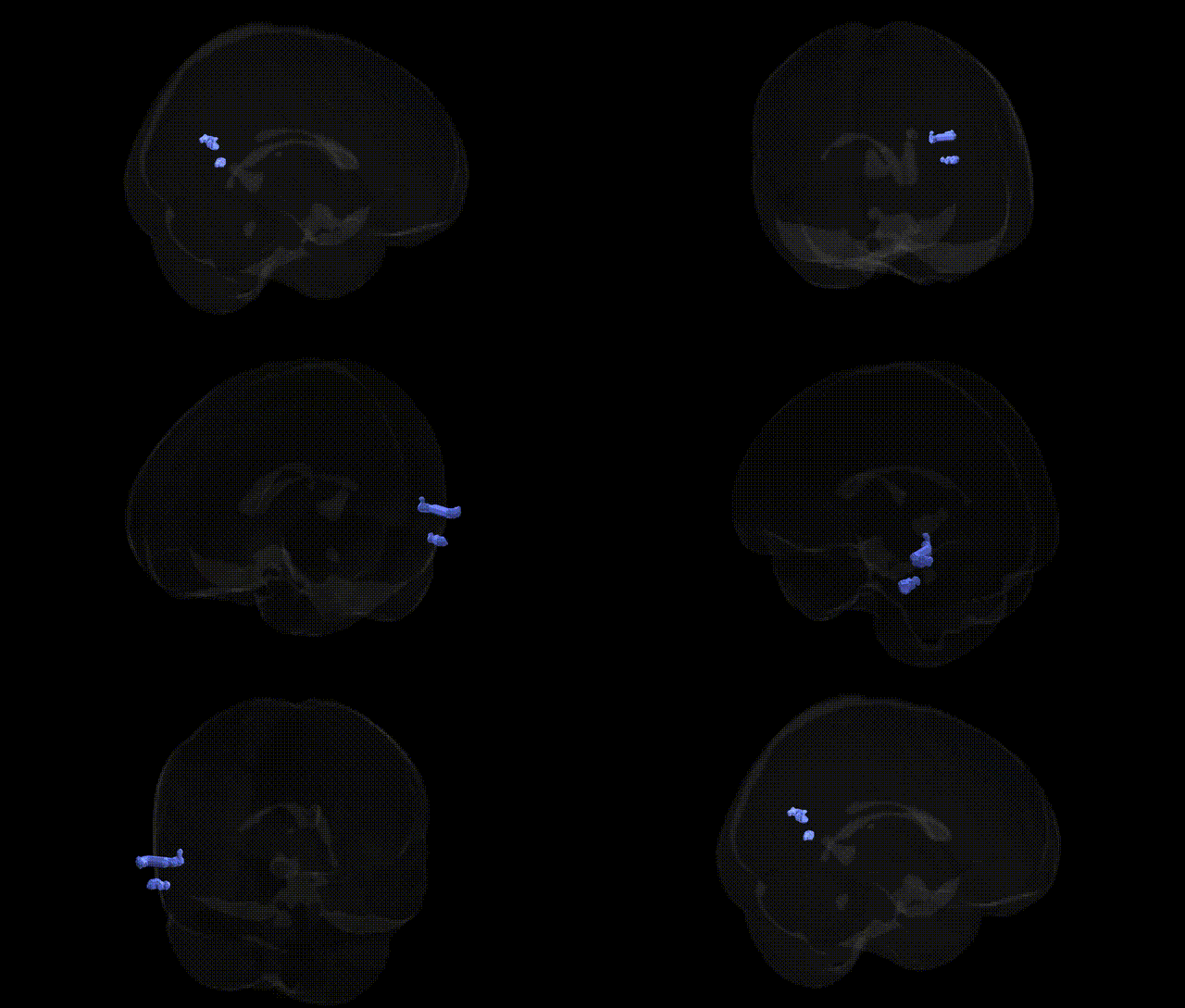
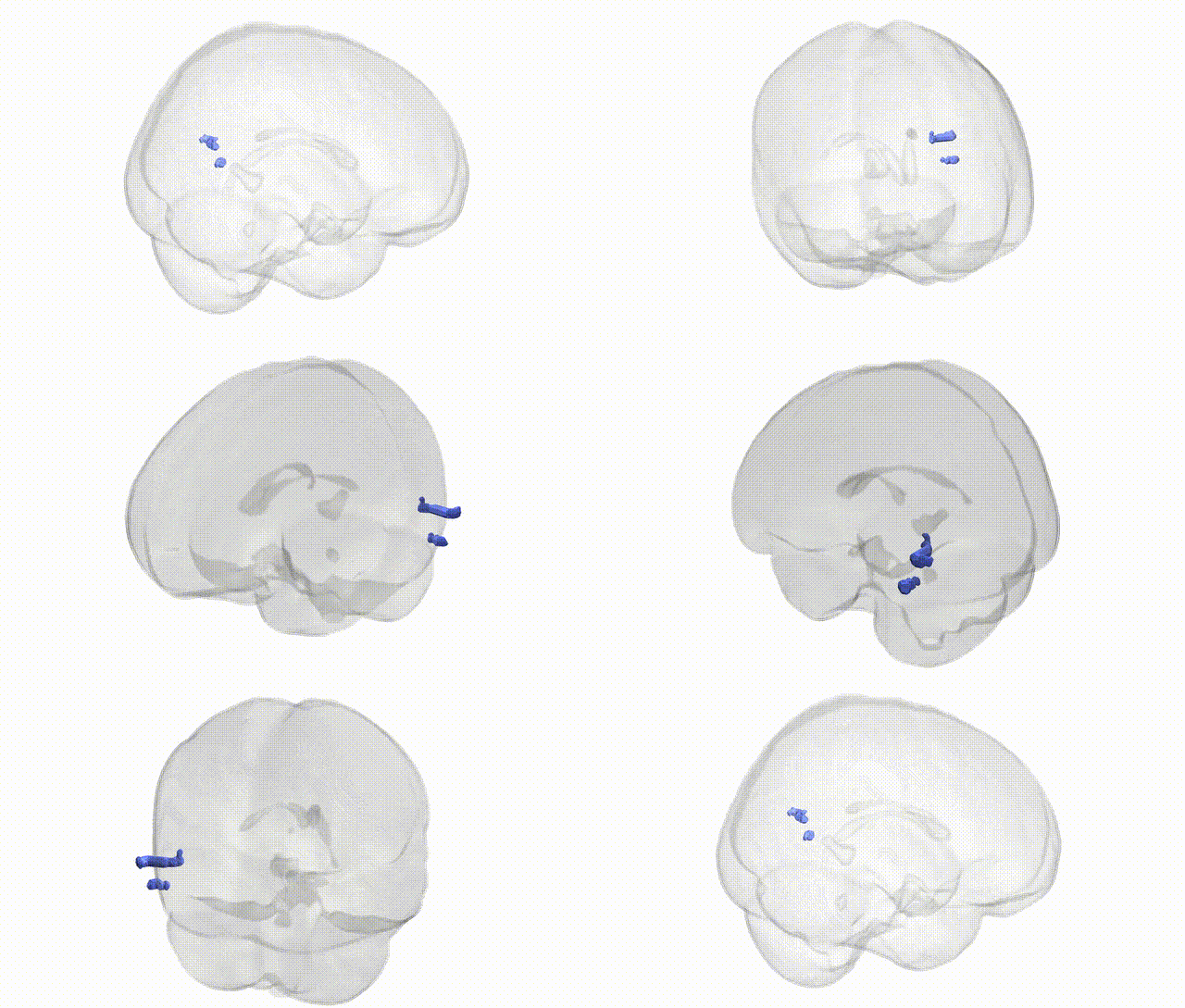
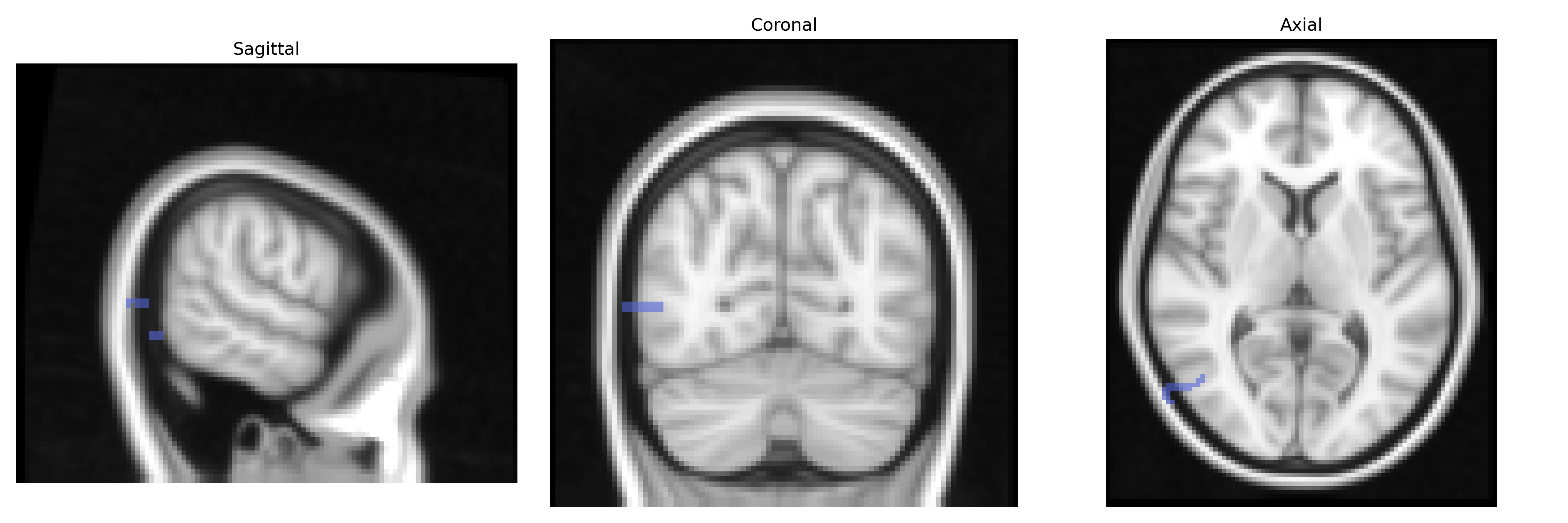
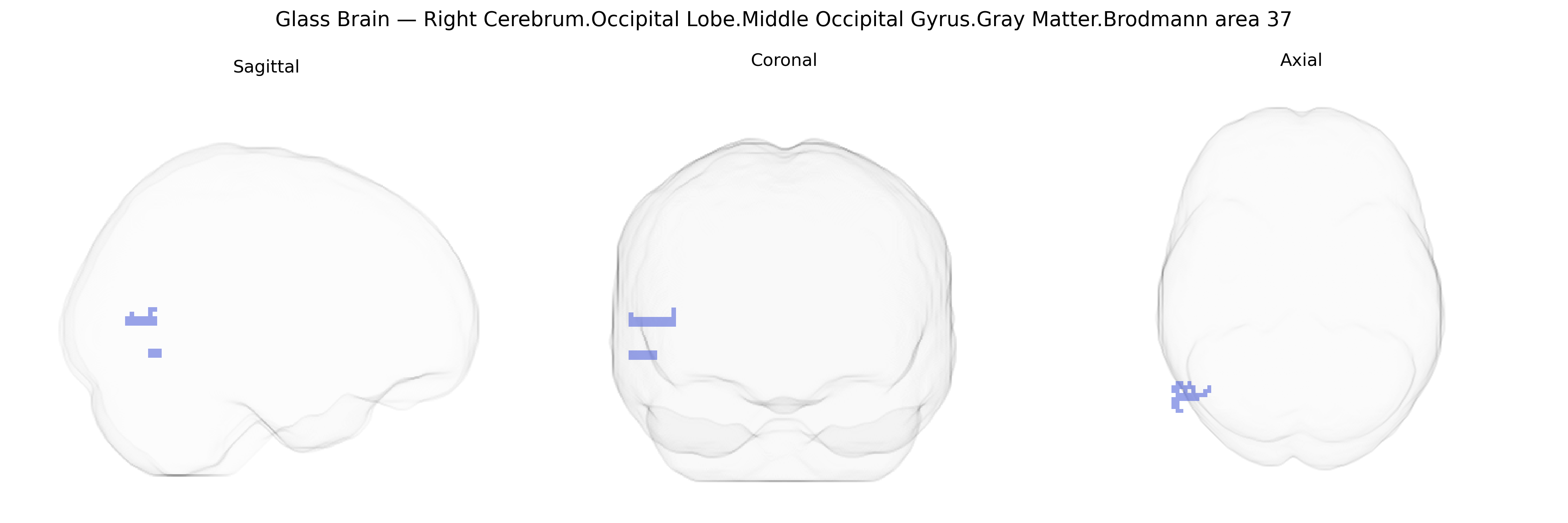
The bilateral Right Cerebrum.Occipital Lobe.Middle Occipital Gyrus.Gray Matter.Brodmann area 37, as defined in the Talairach 2 mm Atlas, corresponds primarily to a portion of the fusiform and adjacent inferior–middle occipitotemporal cortex implicated in high-level visual processing and visual object recognition, including complex features such as faces, words, and category-specific stimuli. Brodmann area 37 lies at the intersection of occipital and temporal regions, integrating input from earlier visual areas (e.g., V1–V4) to support multimodal representation of visual objects and their semantic associations, and contributes to functions such as reading, visual memory, and recognition of visually presented language and symbols. There is no direct Wikipedia article for this precise Talairach-defined label; a closely related and encompassing structure is Brodmann area 37.
The bilateral right middle occipital gyrus gray matter in Brodmann area 37 (BA37), a key component of the ventral visual stream implicated in object and face recognition, has been indirectly linked to genetic variation through neuroimaging and GWAS studies of brain structure, function, and related cognitive traits. Large-scale imaging genetics consortia (e.g., ENIGMA, UK Biobank) have identified common variants influencing occipital and fusiform/BA37 cortical thickness and surface area, including loci near genes involved in neurodevelopment and synaptic function (such as HMGA2 and variants in Wnt and axon-guidance pathways), though these findings are typically reported at the level of broader occipital or temporal-occipital regions rather than Talairach-defined BA37 specifically. BA37 overlaps with the fusiform gyrus and lateral occipital cortex, regions repeatedly implicated in genetic studies of face processing, reading and dyslexia (e.g., KIAA0319, DCDC2, ROBO1 in language/reading networks), and high-level visual recognition. Structural and functional alterations in this area have been associated, via imaging genetics, with polygenic risk for neurodevelopmental and psychiatric disorders including autism spectrum disorder, schizophrenia, and major depression, where risk variants in synaptic, glutamatergic and neurodevelopmental genes (such as CNTNAP2, NRXN1, GRM3 and others) show downstream effects on ventral visual networks. Additionally, GWAS of cognitive traits such as educational attainment and general intelligence have shown enrichment in genes whose expression is relatively high in temporal-occipital cortices including BA37, and multivariate brain–phenotype GWAS link polygenic scores for these traits to volumetric and activation differences in this region. Overall, genetic associations for this exact Talairach-defined bilateral right BA37 region are not typically reported at that precise spatial resolution, but converging imaging-genetic evidence indicates that common and rare variants affecting cortical development, synaptic signaling, and neuroplasticity contribute to individual differences and disease-related alterations in the structure and function of the middle occipital/fusiform complex encompassing BA37.
Overview generated by GPT-4o (2026).
Region ID: 324
Hemisphere: bilateral
Atlas: Talairach labels 2mm
Full Quality Version: Download MP4
Full Quality Version: Download MP4
Wali Sidiqyar*, Gaurav Rudravaram*, Elyssa M. McMaster, Trent M. Schwartz, Adam M. Saunders, Kurt G. Schilling, Bennett A. Landman "Introducing SPINS: A Shared Public Visualization Library of Neuroanatomical Structures." Medical Imaging with Deep Learning- short paper
This resource is licensed under CC0 1.0 Universal (Public Domain).