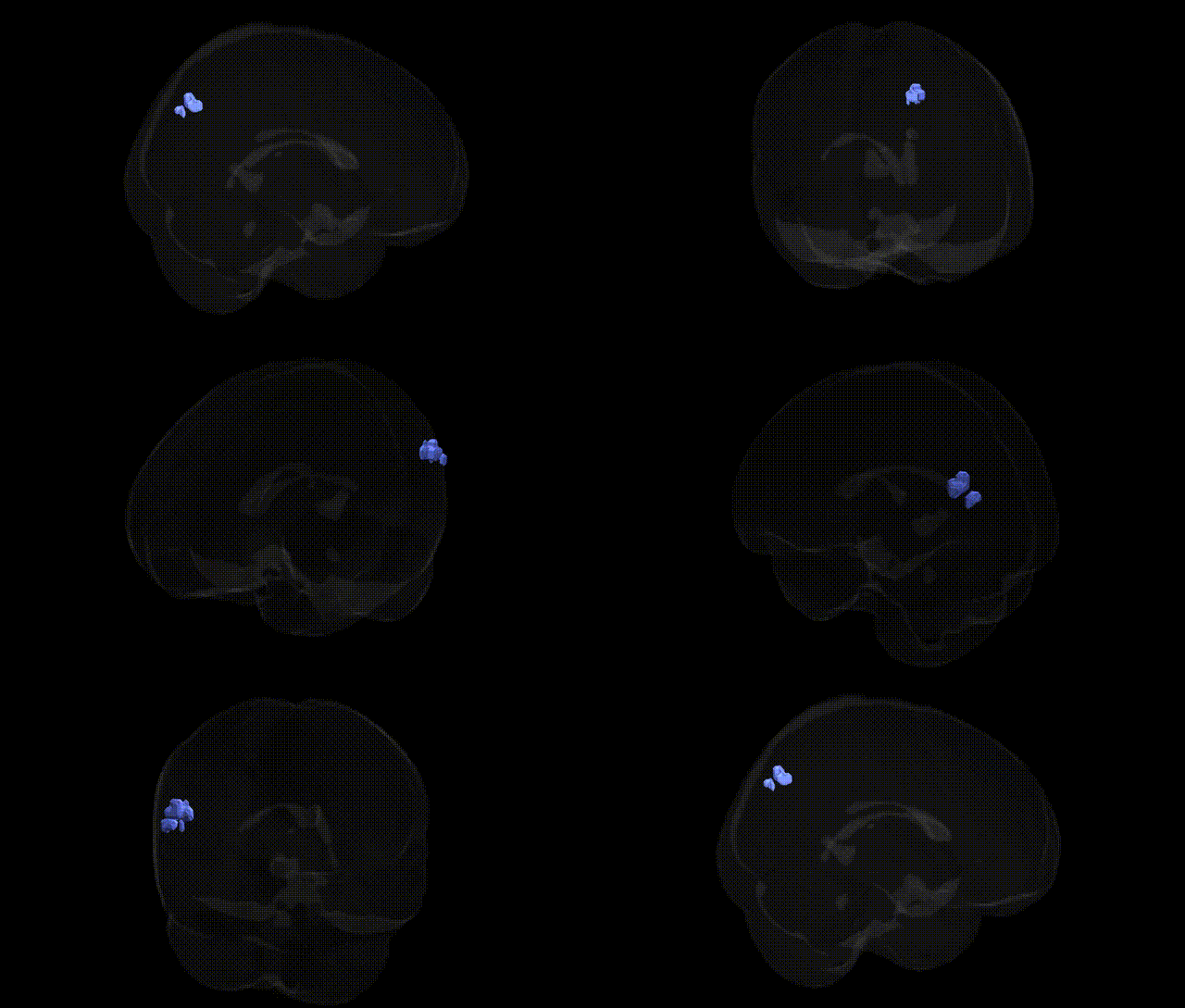
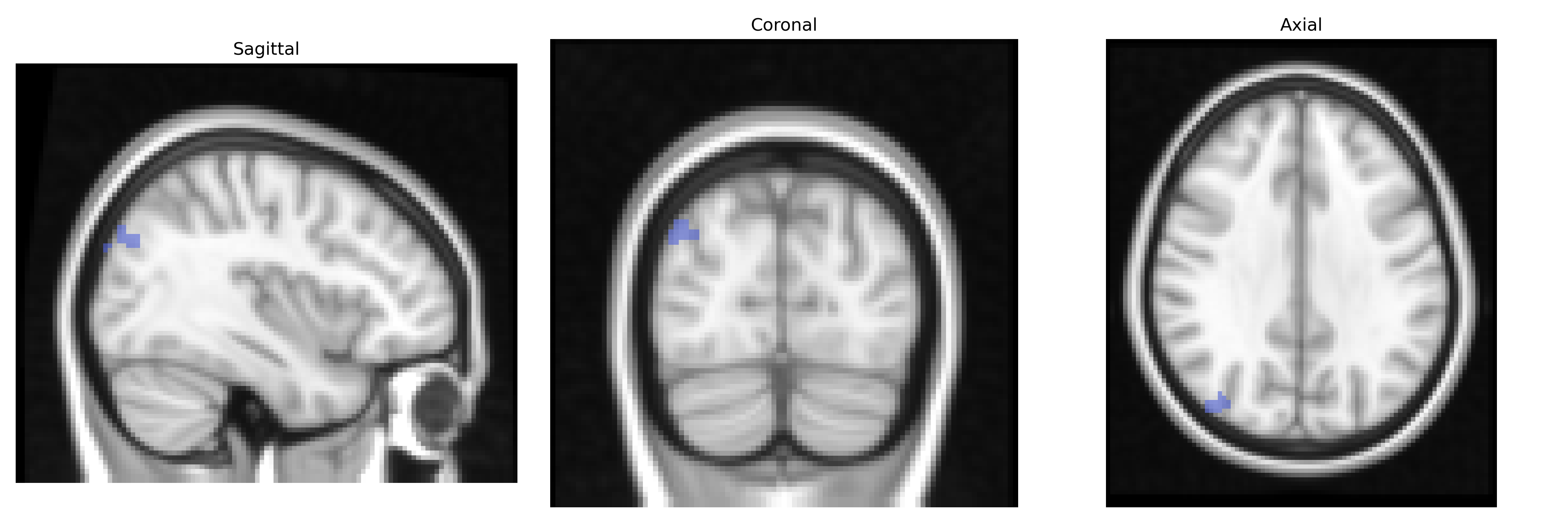
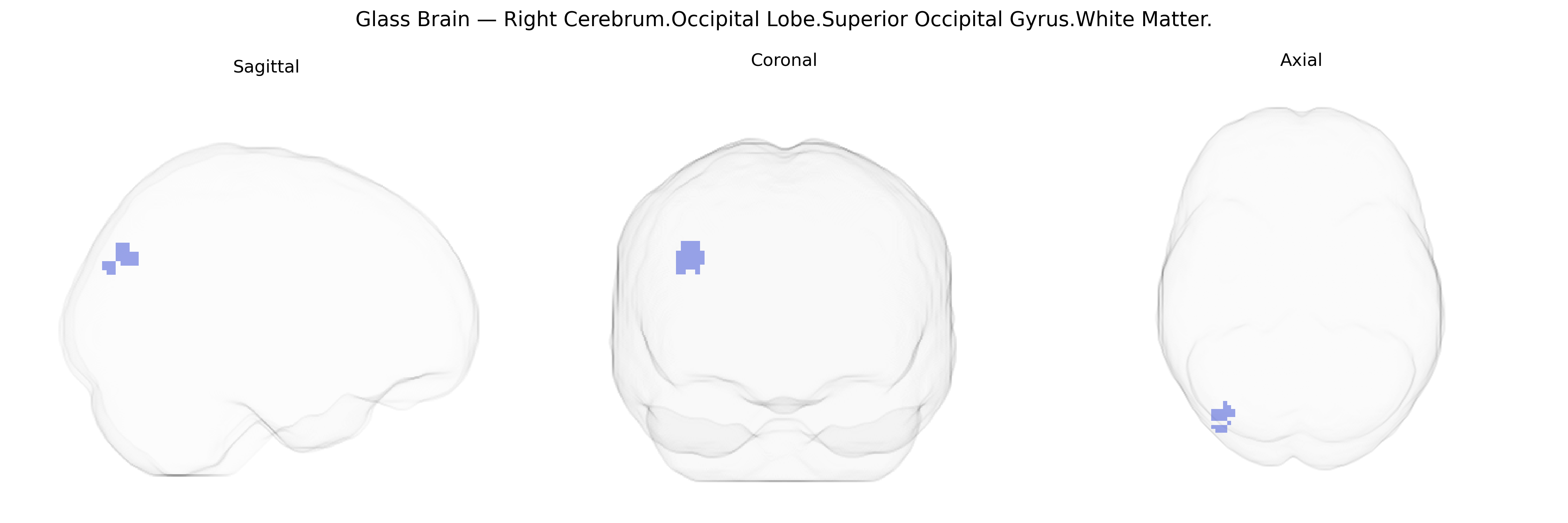
The bilateral Right Cerebrum.Occipital Lobe.Superior Occipital Gyrus.White Matter corresponds to the intrahemispheric association fibers and local projection pathways underlying the superior occipital gyrus in the right occipital lobe. These white matter tracts participate in the integration and transfer of visual information between dorsal occipital cortical regions and adjacent parietal and temporal areas, supporting higher-order visuospatial processing, motion perception, and visually guided attention. As part of the occipital white matter, they likely include components of long-range association bundles such as the superior longitudinal fasciculus and other occipital radiations, which convey processed visual signals forward to multimodal integration and action-planning systems. There is no direct Wikipedia article for the white matter of the superior occipital gyrus; a closely related structure is the Occipital lobe.
Genetic associations specifically targeting the bilateral Right Cerebrum.Occipital Lobe.Superior Occipital Gyrus.White Matter as defined in the Talairach 2 mm atlas are rarely reported at that exact anatomical resolution, but several imaging genetics and GWAS studies implicate white matter microstructure in the occipital lobe, including superior occipital regions, in visual processing, cognitive traits, and neuropsychiatric disorders. Common variants influencing global and regional white matter integrity—often measured as fractional anisotropy or mean diffusivity in occipital tracts—include loci near genes involved in axonal guidance, myelination, and synaptic development, such as CNTNAP2, NRG1, and genes in the neuregulin/ErbB and oligodendrocyte-related pathways, which have been linked to schizophrenia, autism spectrum disorder, and cognitive performance. Large neuroimaging GWAS consortia (e.g., ENIGMA, UK Biobank imaging studies) have identified polygenic influences on occipital white matter volumes and diffusion metrics, with overlapping genetic architecture for traits such as educational attainment, general cognitive ability, and risk for major psychiatric disorders, suggesting that variation in occipital white matter, including the superior occipital gyrus region, is partly driven by shared neurodevelopmental and myelination-related genes. Occipital white matter integrity has also been implicated in genetic studies of migraine and visual aura, where variants affecting vascular and neuroinflammatory pathways may indirectly impact occipital connectivity. Overall, while few studies isolate the superior occipital gyrus white matter as a standalone GWAS phenotype, convergent evidence indicates that genetic factors influencing white matter development, visual system connectivity, and broader neuropsychiatric risk contribute to interindividual variability in structure and function within this region.
Overview generated by GPT-4o (2026).
Region ID: 851
Hemisphere: bilateral
Atlas: Talairach labels 2mm
Full Quality Version: Download MP4
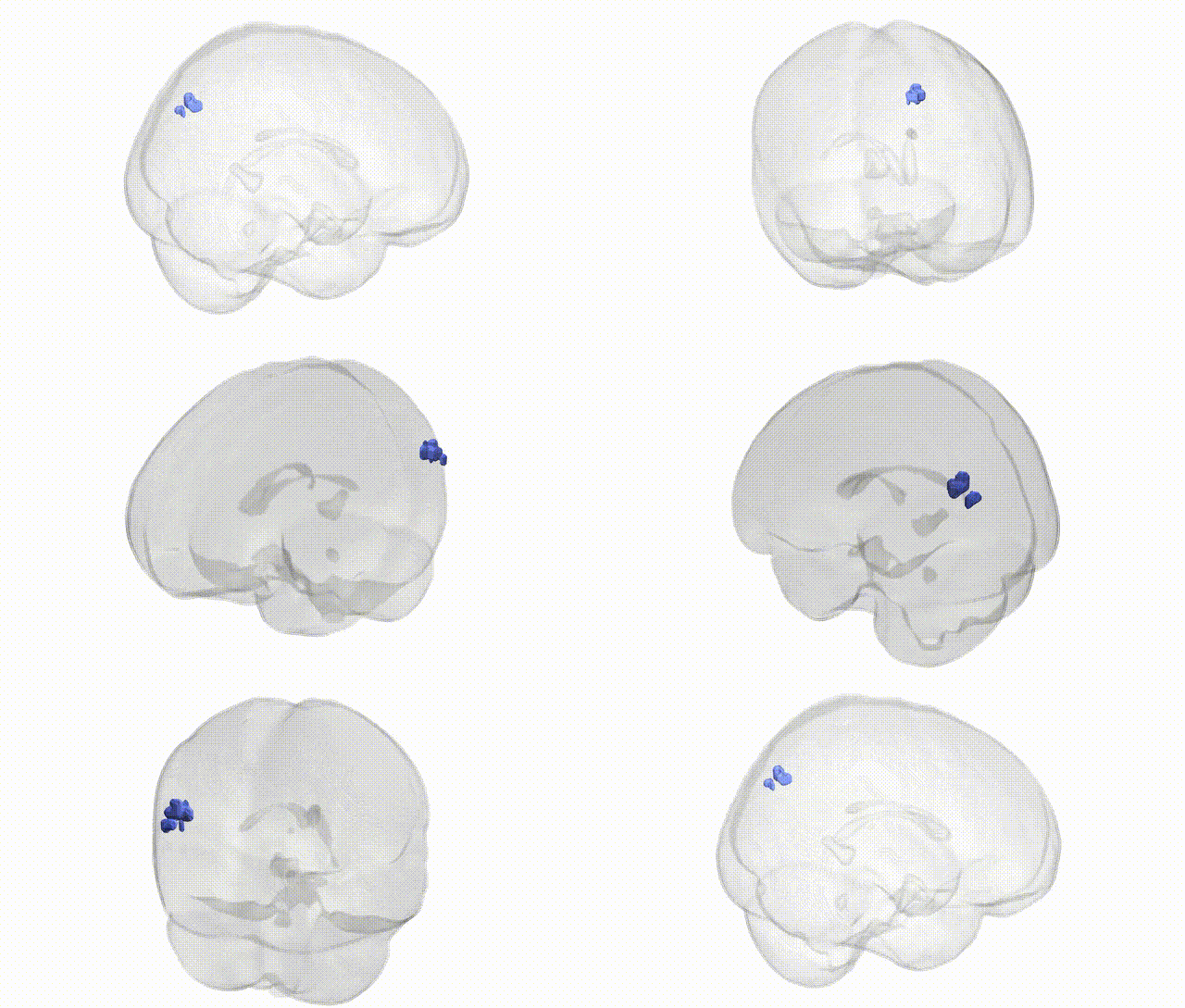
Full Quality Version: Download MP4
Wali Sidiqyar*, Gaurav Rudravaram*, Elyssa M. McMaster, Trent M. Schwartz, Adam M. Saunders, Kurt G. Schilling, Bennett A. Landman "Introducing SPINS: A Shared Public Visualization Library of Neuroanatomical Structures." Medical Imaging with Deep Learning- short paper
This resource is licensed under CC0 1.0 Universal (Public Domain).