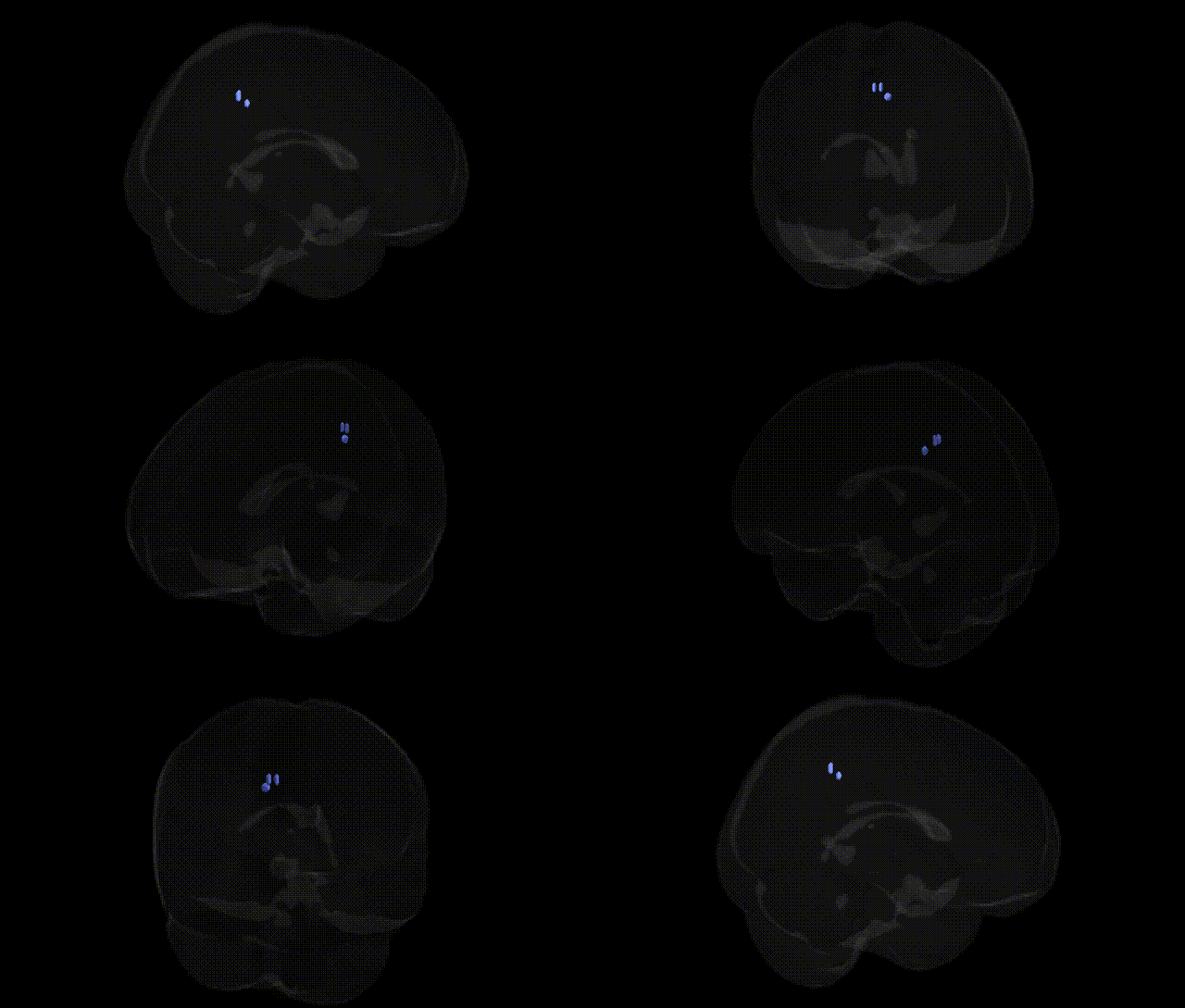
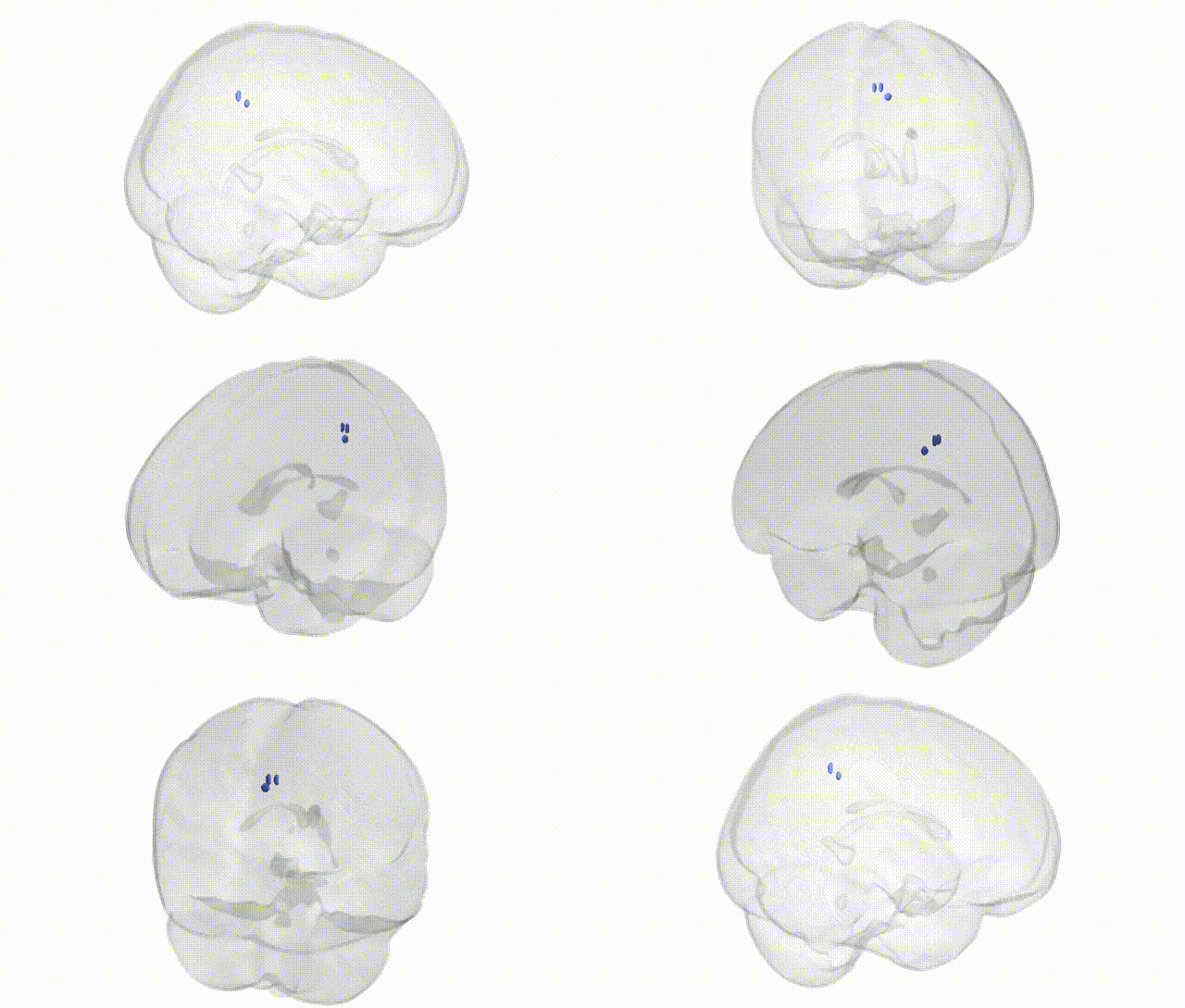
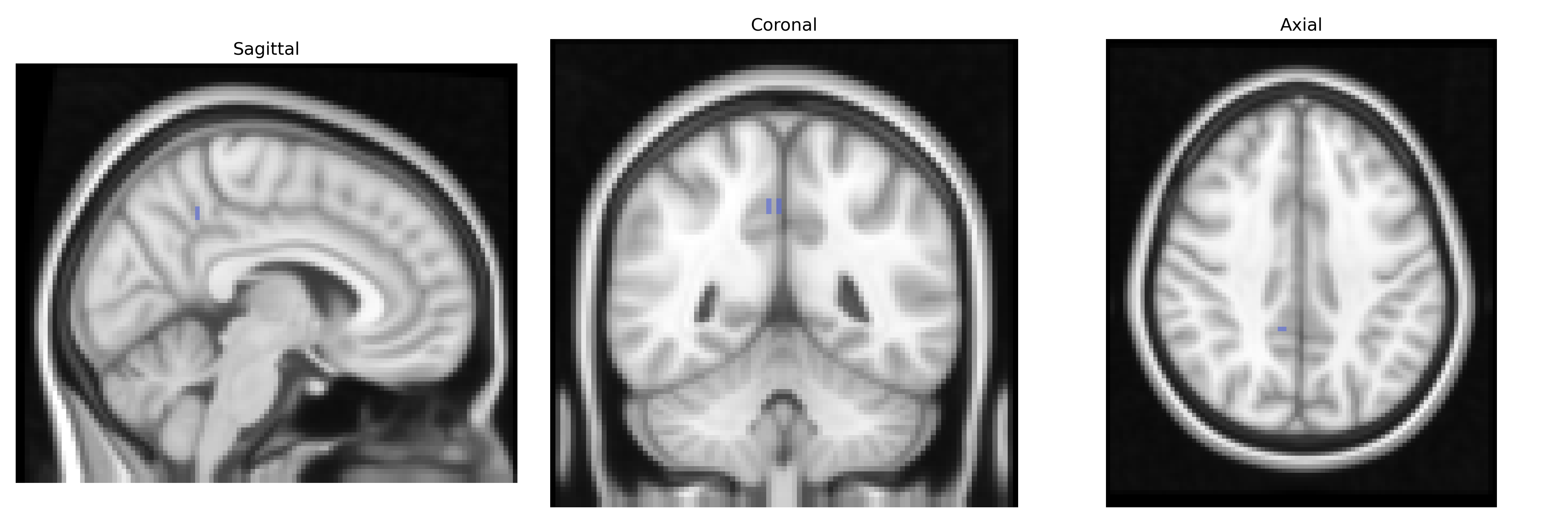
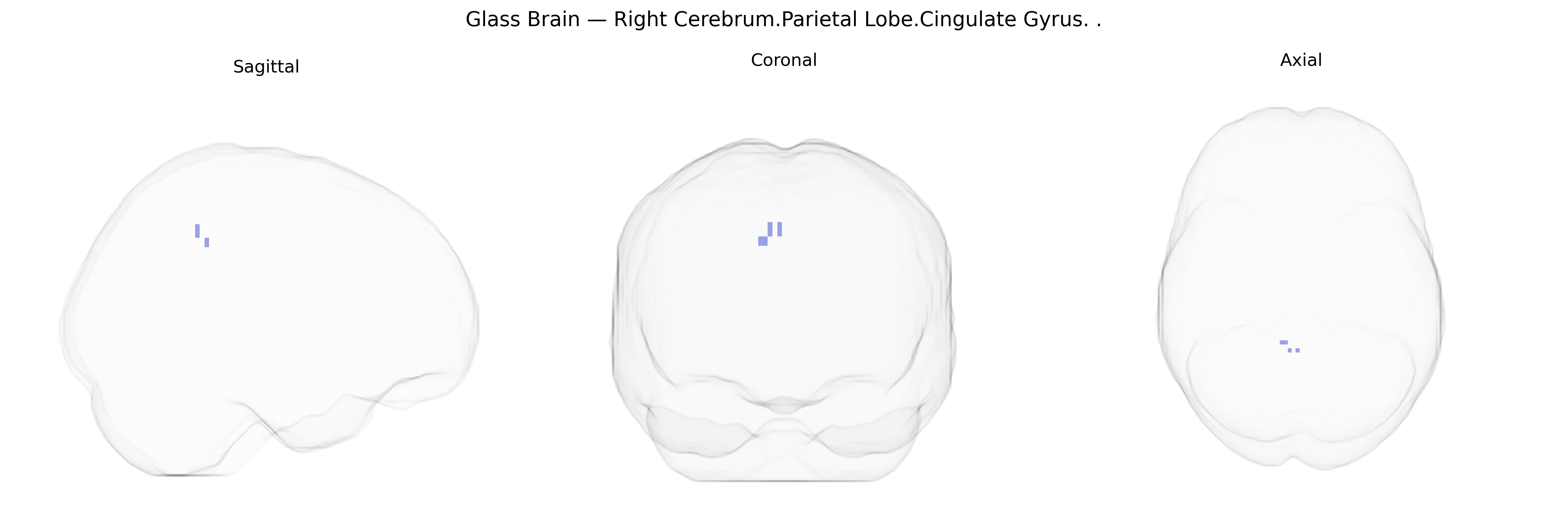
The bilateral Right Cerebrum.Parietal Lobe.Cingulate Gyrus, as labeled in the Talairach 2 mm Atlas, corresponds to portions of the cingulate gyrus situated on the medial aspect of the cerebral hemispheres, adjacent to the longitudinal fissure and extending into the parietal lobe territory. This region is part of the limbic cortex and is involved in diverse functions including attention, cognitive control, emotion processing, pain perception, and aspects of motor planning via its connections with frontal and parietal association areas. It forms an important node within the default mode and salience networks, integrating sensory and internal states to guide behavior and decision-making. While the atlas label specifies the right cerebrum and parietal lobe, the cingulate gyrus itself is a bilateral structure arching around the corpus callosum and showing functional specialization along its anterior–posterior axis. Cingulate gyrus
The bilateral right parietal lobe cingulate gyrus, as defined in the Talairach 2 mm atlas, overlaps primarily with the posterior and mid-cingulate sectors of the medial parietal cortex, and genetic associations involving this region typically emerge from imaging genetics and large-scale GWAS of brain structure and functional networks rather than single-region candidate studies. GWAS of cortical thickness and surface area have identified robust heritability and loci influencing cingulate and adjacent parietal morphology, including variants near genes involved in neurodevelopment and synaptic function (e.g., MAPT, AUTS2, and multiple loci in Wnt and axon-guidance pathways), though these are generally reported for broader cingulate or medial parietal regions rather than the specific Talairach-defined parcel. Functional imaging genetics has linked common variants in serotonin transporter (SLC6A4), COMT, and BDNF with altered cingulate activation and connectivity during cognitive control, pain, and emotional processing, and these effects often extend into parietal-cingulate transition zones. GWAS of psychiatric and cognitive traits—such as major depressive disorder, schizophrenia, ADHD, anxiety, and general cognitive ability—have implicated distributed networks that include the cingulate and medial parietal cortex, with polygenic risk scores for these disorders frequently correlating with structural or functional alterations in cingulate/parietal regions. Pain, empathy, and social cognition studies also highlight genetic influences on cingulate responses, including variants in OXTR and DRD2/DRD4, again affecting broader mid/posterior cingulate areas. Overall, current evidence supports substantial polygenic influence on structure and function of the parietal-cingulate region, but specific, well-replicated GWAS signals tied uniquely to the bilateral right “Right Cerebrum.Parietal Lobe.Cingulate Gyrus” Talairach label remain limited, with most findings mapped to larger cingulate or medial parietal ROIs.
Overview generated by GPT-4o (2026).
Region ID: 997
Hemisphere: bilateral
Atlas: Talairach labels 2mm
Full Quality Version: Download MP4
Full Quality Version: Download MP4
Wali Sidiqyar*, Gaurav Rudravaram*, Elyssa M. McMaster, Trent M. Schwartz, Adam M. Saunders, Kurt G. Schilling, Bennett A. Landman "Introducing SPINS: A Shared Public Visualization Library of Neuroanatomical Structures." Medical Imaging with Deep Learning- short paper
This resource is licensed under CC0 1.0 Universal (Public Domain).