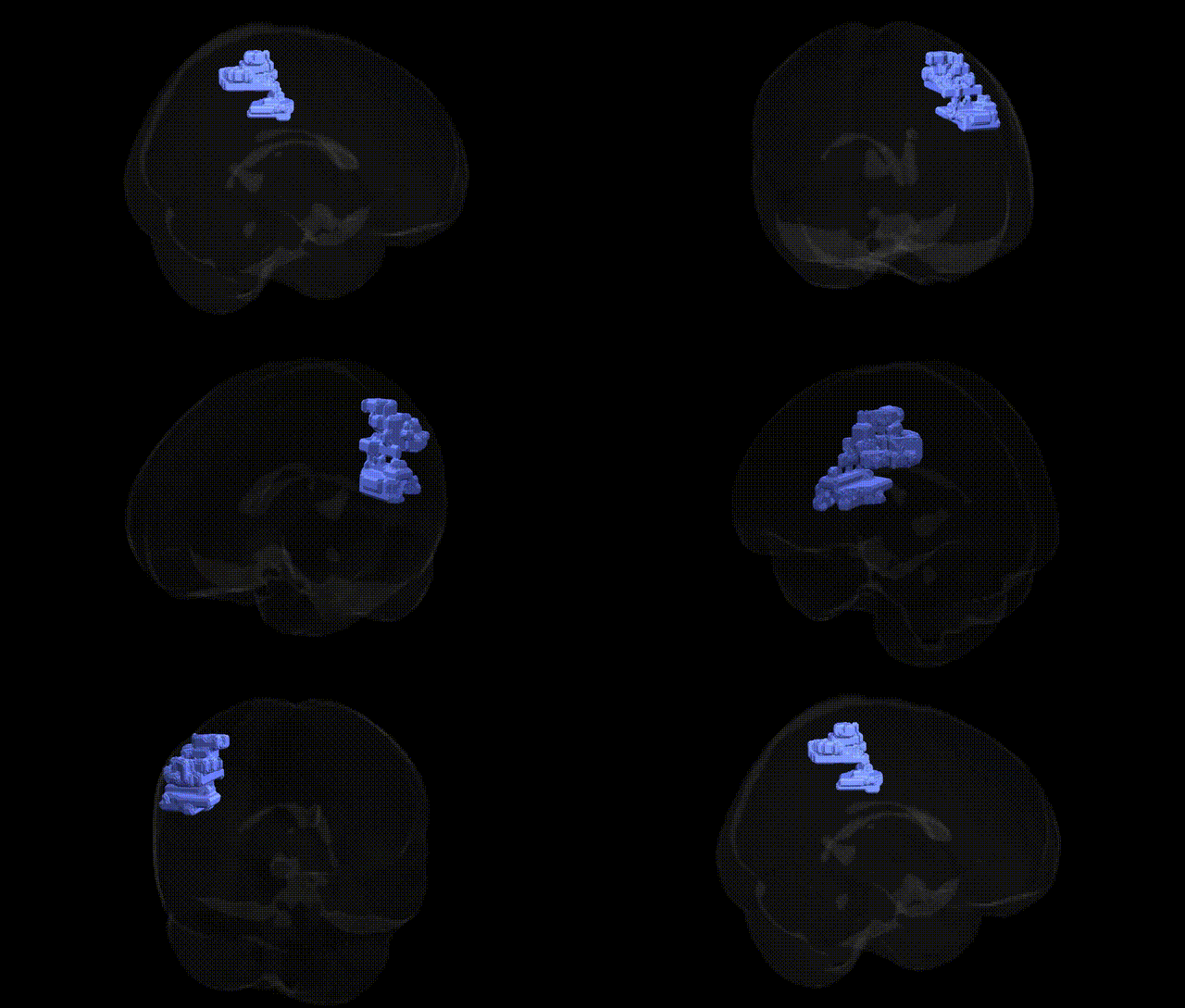
The bilateral Right Cerebrum Parietal Lobe Inferior Parietal Lobule White Matter comprises the subcortical fiber pathways underlying the inferior parietal lobule, a multimodal association region involved in the integration of visual, auditory, and somatosensory information, as well as higher cognitive processes such as attention, spatial perception, language, and aspects of social cognition. These white matter tracts connect the inferior parietal cortex with frontal, temporal, and occipital regions, supporting networks for visuospatial processing, phonological and semantic aspects of language, and sensorimotor coordination. Structurally, this region lies deep to the supramarginal and angular gyri, and includes portions of major association pathways such as segments of the superior longitudinal fasciculus, forming a critical hub for inter-regional communication in the right parietal cortex. There is no direct Wikipedia article for this specific white matter subdivision; a closely related cortical region is the Inferior parietal lobule.
The bilateral right inferior parietal lobule white matter, as defined in the Talairach labels 2 mm atlas, participates in large-scale fronto-parietal and temporo-parietal networks whose microstructure and volume show heritable variation and have been implicated in multiple GWAS and imaging–genetics studies. Polygenic influences on this region are most consistently captured through diffusion MRI measures (e.g., fractional anisotropy and mean diffusivity) and cortical thickness/area in adjacent inferior parietal cortex, with genome-wide significant associations reported for loci near genes related to axon guidance, myelination, and synaptic development (such as CNTNAP2, NRG1, and cell-adhesion or cytoskeletal genes), though specific right-lateralized inferior parietal white-matter hits are rarely isolated in large consortia analyses. Variants in these and related genes have been linked to neurodevelopmental and psychiatric conditions in which inferior parietal connectivity is altered, including autism spectrum disorder, schizophrenia, ADHD, and dyslexia, as well as traits like general cognitive ability, working memory, numerical processing, and language-related functions, all of which rely on parietal association pathways coursing through this white matter. Neurodegenerative and cerebrovascular GWAS (e.g., Alzheimer’s disease, small-vessel disease markers, and white-matter hyperintensities) have additionally highlighted polygenic risk profiles affecting parietal association tracts, with risk alleles (such as APOE variants and multiple loci from large consortia) associated with microstructural degeneration or reduced integrity in parietal white matter, supporting a genetically mediated vulnerability of this region within broader distributed networks rather than isolated gene–region specificity.
Overview generated by GPT-4o (2026).
Region ID: 880
Hemisphere: bilateral
Atlas: Talairach labels 2mm
Full Quality Version: Download MP4
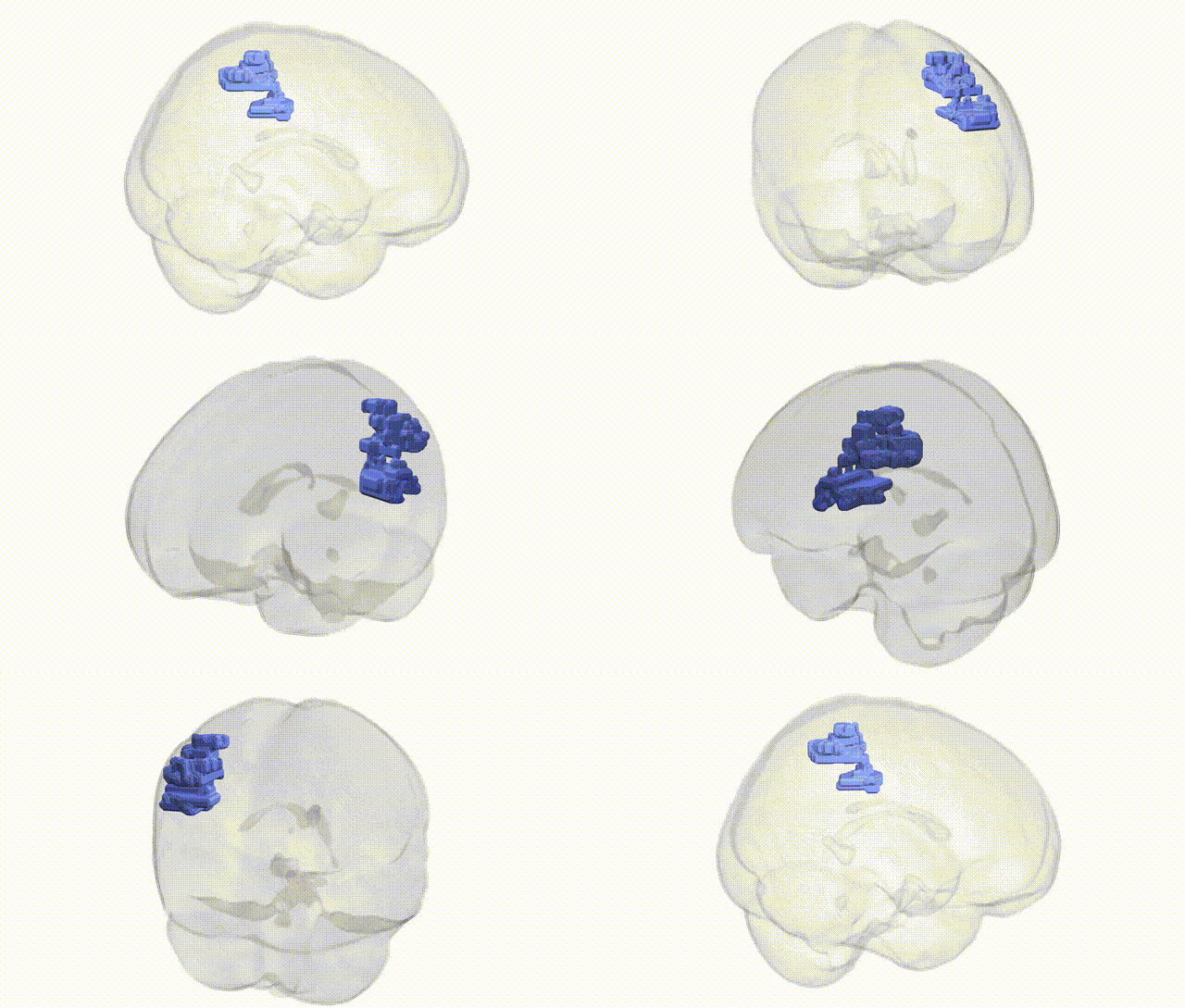
Full Quality Version: Download MP4
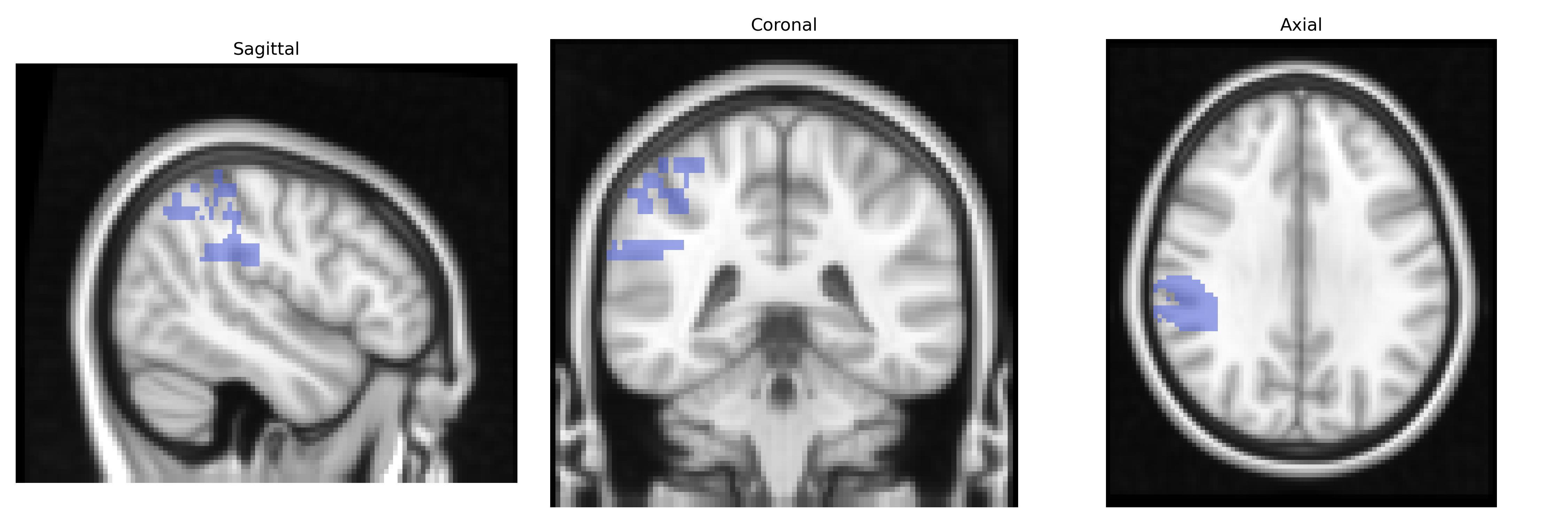
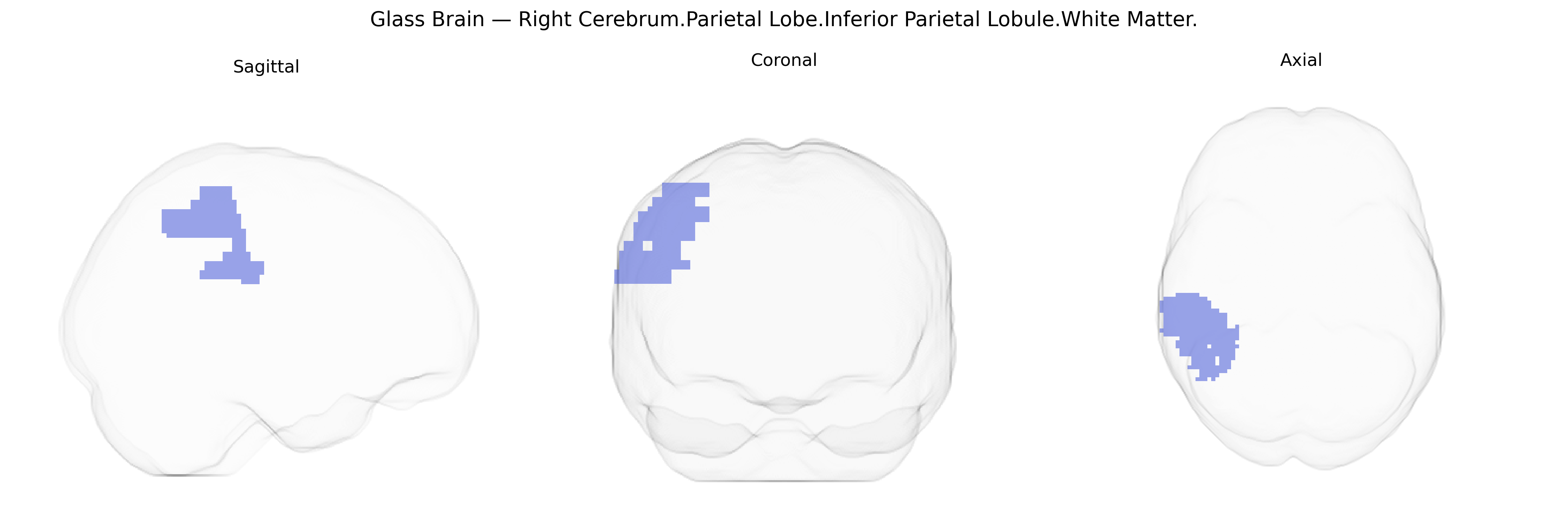
Wali Sidiqyar*, Gaurav Rudravaram*, Elyssa M. McMaster, Trent M. Schwartz, Adam M. Saunders, Kurt G. Schilling, Bennett A. Landman "Introducing SPINS: A Shared Public Visualization Library of Neuroanatomical Structures." Medical Imaging with Deep Learning- short paper
This resource is licensed under CC0 1.0 Universal (Public Domain).