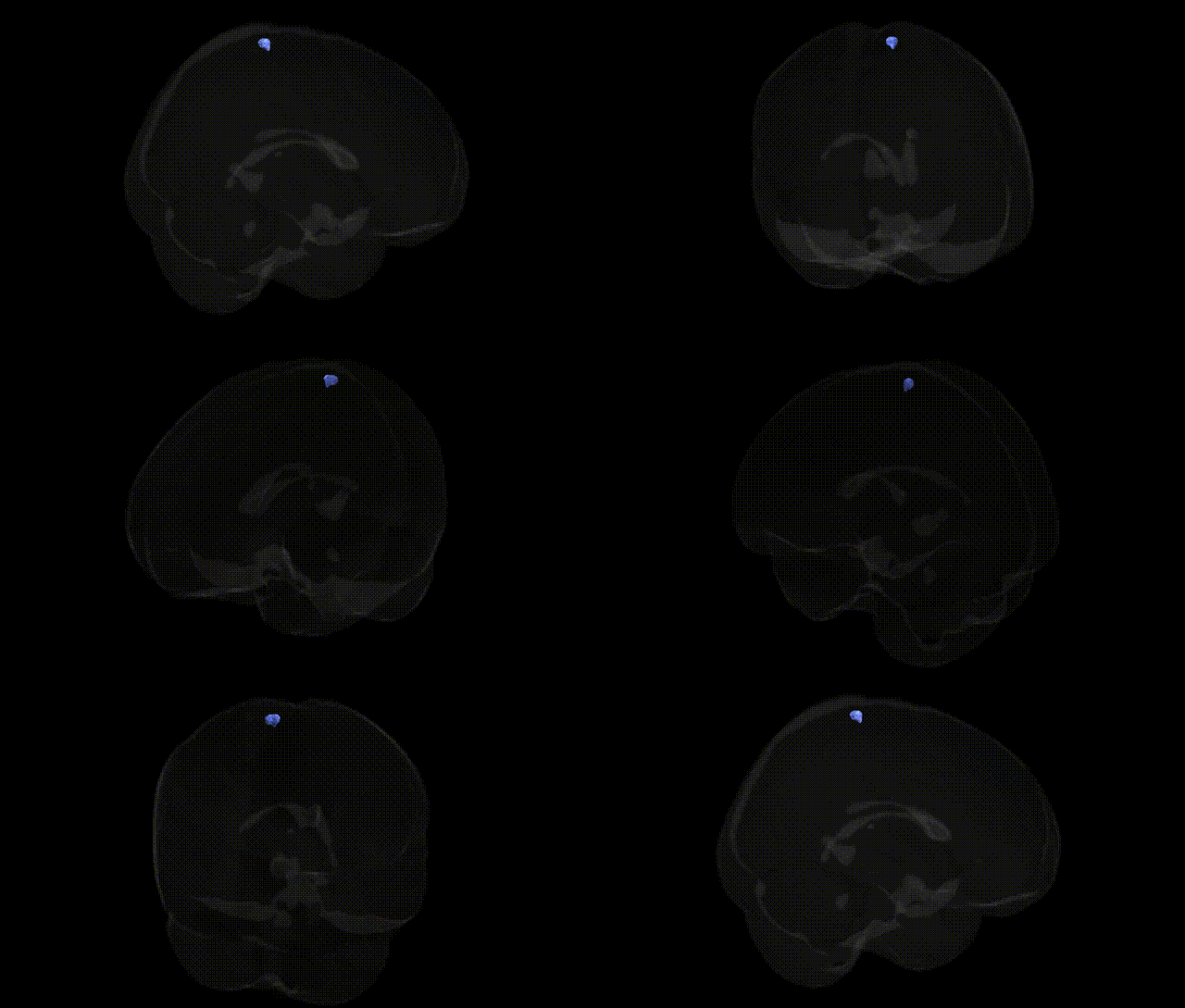
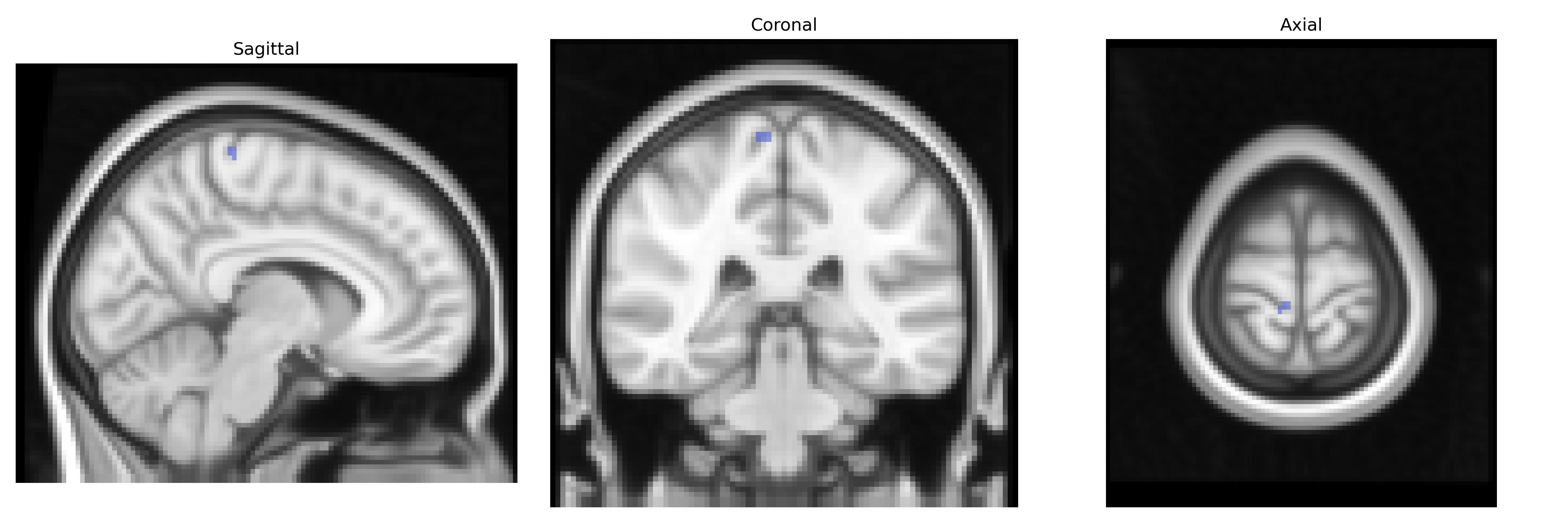
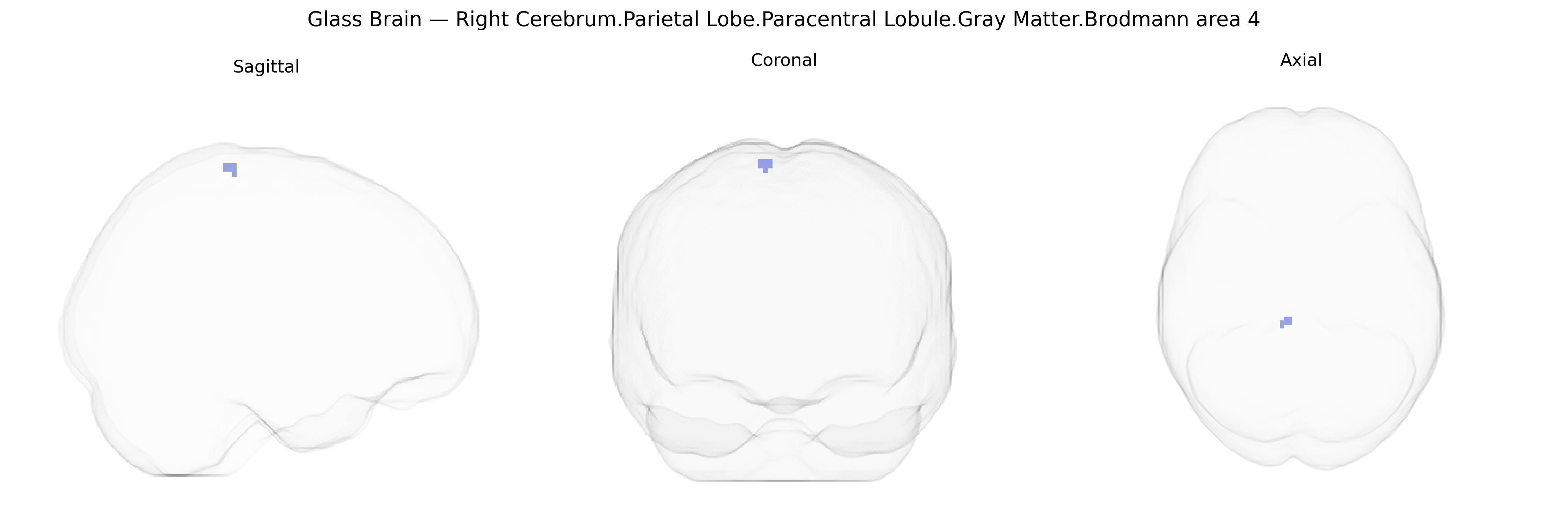
The bilateral Right Cerebrum.Parietal Lobe.Paracentral Lobule.Gray Matter.Brodmann area 4 corresponds to portions of the primary motor cortex located along the medial aspect of the hemisphere within the paracentral lobule, extending into the parietal lobe region as defined by the Talairach 2 mm Atlas. This region is critically involved in voluntary motor control, particularly for movements of the lower limb, trunk, and proximal musculature represented on the medial motor homunculus. Its gray matter contains large pyramidal neurons (Betz cells) in layer V that project via the corticospinal and corticobulbar tracts to spinal and brainstem motor nuclei, enabling fine control of posture and coordinated movement. There is no dedicated Wikipedia page for this exact composite label; a closely related structure is the primary motor cortex: Primary motor cortex.
The bilateral right paracentral lobule (BA4) is a primary motor cortex region whose genetic associations largely reflect its role in motor control, somatosensation, and cortical structure. GWAS of regional cortical thickness and surface area have implicated common variants in genes involved in neurodevelopment, synaptic function, and cytoskeletal organization (e.g., MAPT, KIAA0319, CUX1, microtubule- and axon-guidance–related genes) in motor cortex morphology, though findings are typically reported for precentral gyrus or global motor areas rather than BA4 subdivisions from Talairach labels specifically. Motor cortex structure and function encompassing the paracentral lobule show polygenic associations with disorders featuring motor symptoms, including amyotrophic lateral sclerosis, Parkinson’s disease, multiple sclerosis, and dystonia, where risk loci in genes such as C9orf72, LRRK2, SNCA, and HLA region variants are linked to disease but not uniquely to BA4. Imaging-genetics studies have related schizophrenia, bipolar disorder, and major depression risk variants (e.g., CACNA1C, ZNF804A, DRD2) to altered sensorimotor cortical activation and connectivity, sometimes involving the paracentral lobule in motor and somatosensory tasks, while autism spectrum conditions and ADHD polygenic risk show subtle associations with motor cortex development and microstructure. Large-scale brain-wide association studies (e.g., ENIGMA, UK Biobank) indicate that the paracentral lobule’s gray matter volume and thickness share heritability with general cognitive ability, educational attainment, and physical activity traits, mediated by neurodevelopmental and plasticity-related genes, but no major GWAS to date has identified variants with strong, region-specific effects confined to the right BA4 paracentral lobule in the Talairach 2 mm atlas; instead, genetic influences on this area are part of distributed, highly polygenic effects on motor and sensorimotor cortical networks.
Overview generated by GPT-4o (2026).
Region ID: 1105
Hemisphere: bilateral
Atlas: Talairach labels 2mm
Full Quality Version: Download MP4
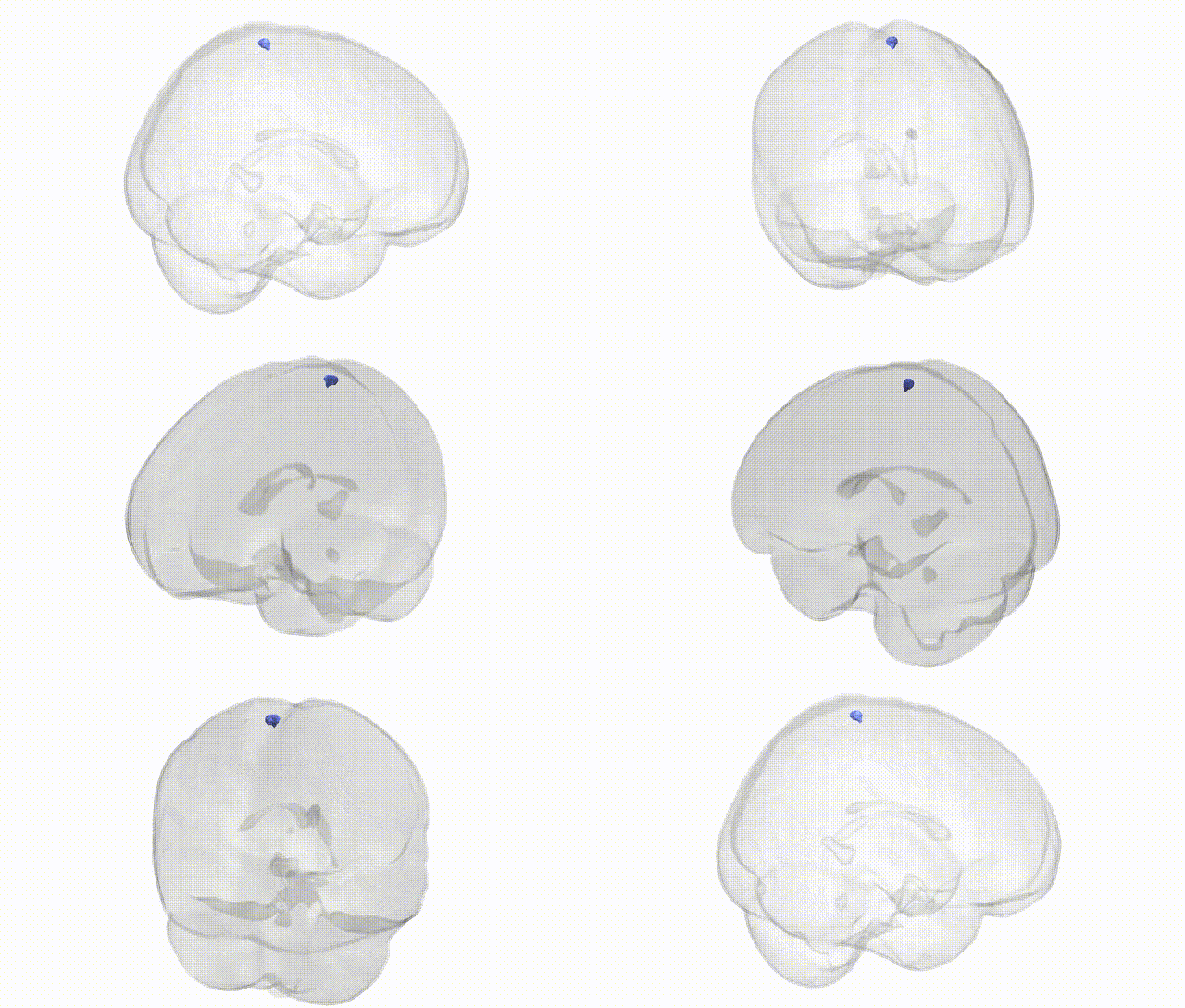
Full Quality Version: Download MP4
Wali Sidiqyar*, Gaurav Rudravaram*, Elyssa M. McMaster, Trent M. Schwartz, Adam M. Saunders, Kurt G. Schilling, Bennett A. Landman "Introducing SPINS: A Shared Public Visualization Library of Neuroanatomical Structures." Medical Imaging with Deep Learning- short paper
This resource is licensed under CC0 1.0 Universal (Public Domain).