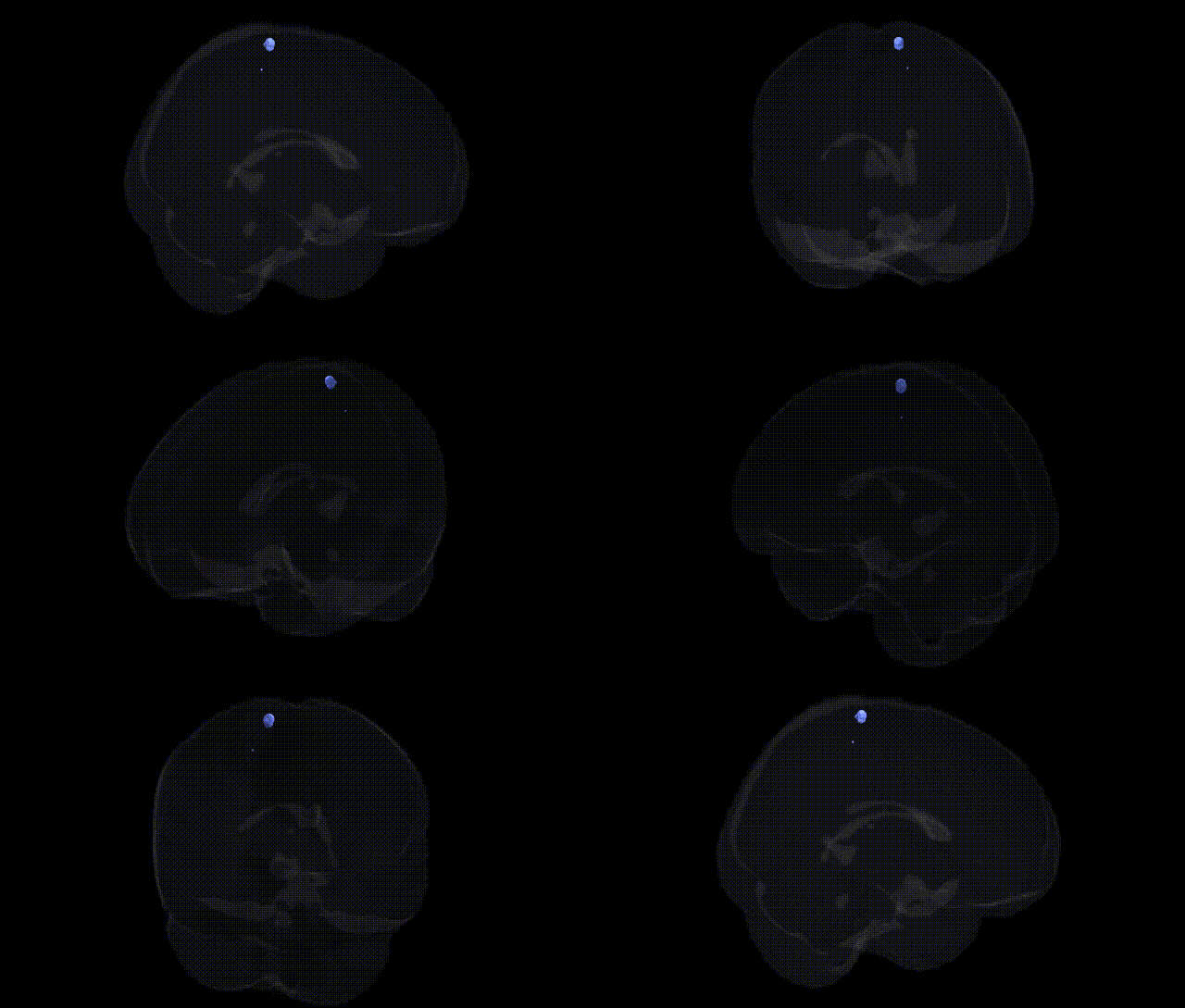
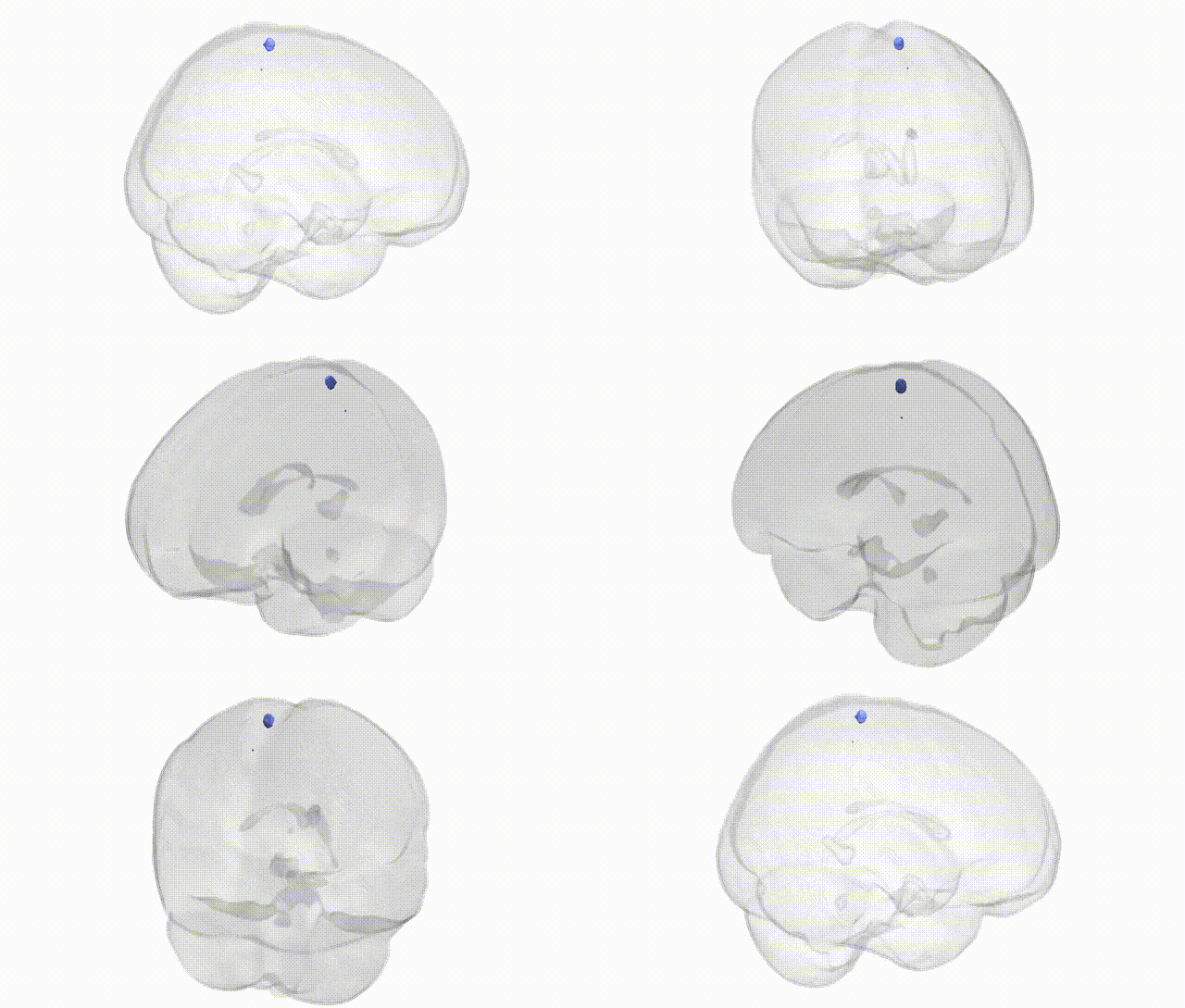
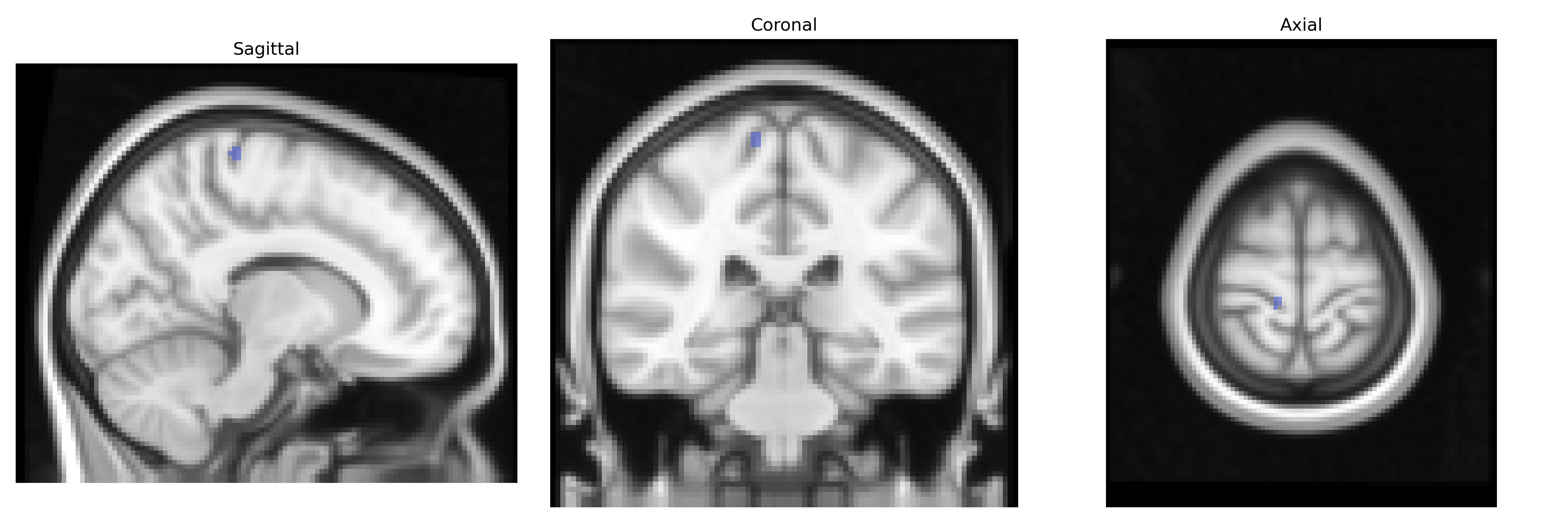
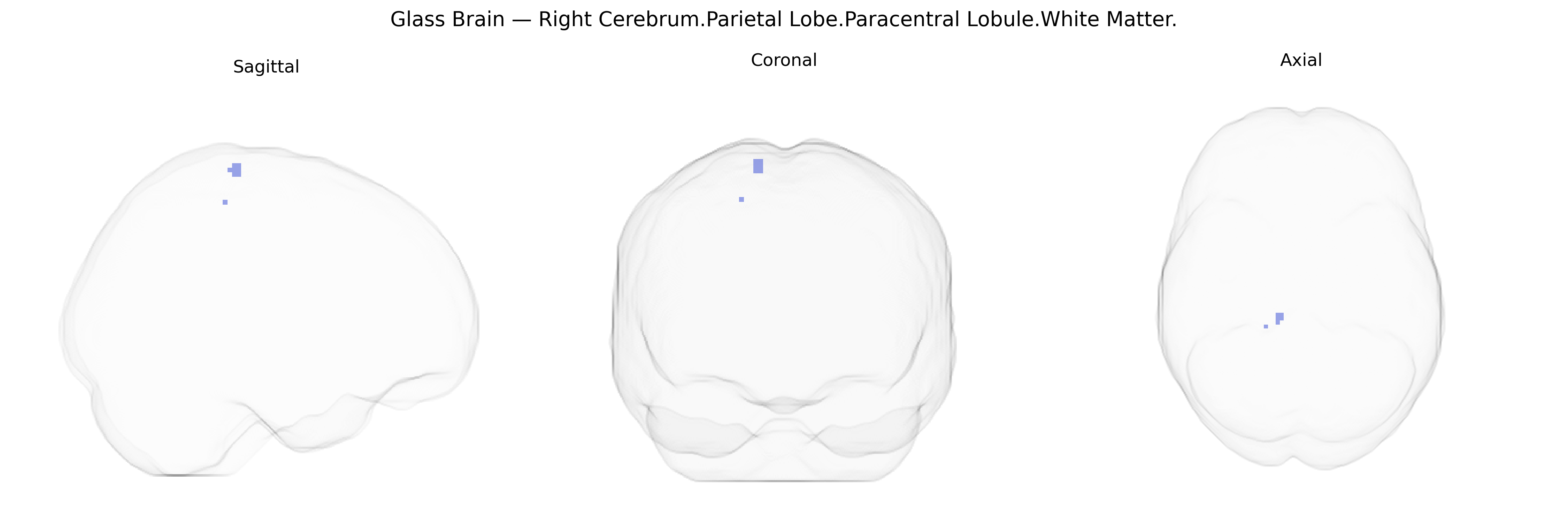
The bilateral Right Cerebrum.Parietal Lobe.Paracentral Lobule.White Matter corresponds to the subcortical fiber pathways underlying the paracentral lobule, a medial sensorimotor region situated along the midline that spans the posterior frontal and anterior parietal lobes. These white matter tracts connect the cortical representations of the lower limb and part of the trunk with thalamic, spinal, and other cortical regions, supporting integration of somatosensory input and motor output for contralateral leg and pelvic functions, as well as aspects of postural control. Functionally, this region is part of the extended primary sensorimotor network, with damage potentially leading to deficits in lower extremity movement, sensation, or sphincter control. There is no direct link for this specific white matter region; a closely related cortical structure is the Paracentral lobule.
The bilateral right paracentral lobule white matter (Talairach: Right Cerebrum.Parietal Lobe.Paracentral Lobule.White Matter) lies adjacent to primary motor and somatosensory cortices for lower limbs, and genetic associations involving this region typically emerge from voxel- or parcel-based imaging genetics rather than region-specific GWAS labels. Large neuroimaging GWAS (e.g., ENIGMA, UK Biobank) have identified common variants in genes related to neurodevelopment (such as CADM2, DCC, CNTNAP2, and MYO16) and myelination/axonal integrity (including MAG, PLP1-region loci, and other oligodendrocyte-related genes) that influence global or regional white matter microstructure measures (fractional anisotropy, mean diffusivity) in pericentral and parietal white matter, which encompass the paracentral lobule. Polygenic risk for multiple sclerosis and other demyelinating or inflammatory disorders, as well as loci in the MHC/HLA region, have been associated with lesion burden and integrity of fronto-parietal and pericentral white matter tracts that traverse or border the paracentral lobule. Similarly, variants conferring risk for motor neuron disease, hereditary spastic paraplegias, and cerebral palsy subtypes have been linked to structural changes in corticospinal and sensorimotor white matter pathways that pass through the vicinity of this region. In psychiatric and cognitive GWAS, polygenic scores for schizophrenia, bipolar disorder, and general cognitive ability show associations with microstructural properties of sensorimotor and parietal white matter, suggesting that distributed genetic influences on neurodevelopment and synaptic function indirectly affect the right paracentral lobule’s white matter, although no major study has reported a highly specific, unique locus tied solely to this exact Talairach-defined parcel.
Overview generated by GPT-4o (2026).
Region ID: 1073
Hemisphere: bilateral
Atlas: Talairach labels 2mm
Full Quality Version: Download MP4
Full Quality Version: Download MP4
Wali Sidiqyar*, Gaurav Rudravaram*, Elyssa M. McMaster, Trent M. Schwartz, Adam M. Saunders, Kurt G. Schilling, Bennett A. Landman "Introducing SPINS: A Shared Public Visualization Library of Neuroanatomical Structures." Medical Imaging with Deep Learning- short paper
This resource is licensed under CC0 1.0 Universal (Public Domain).