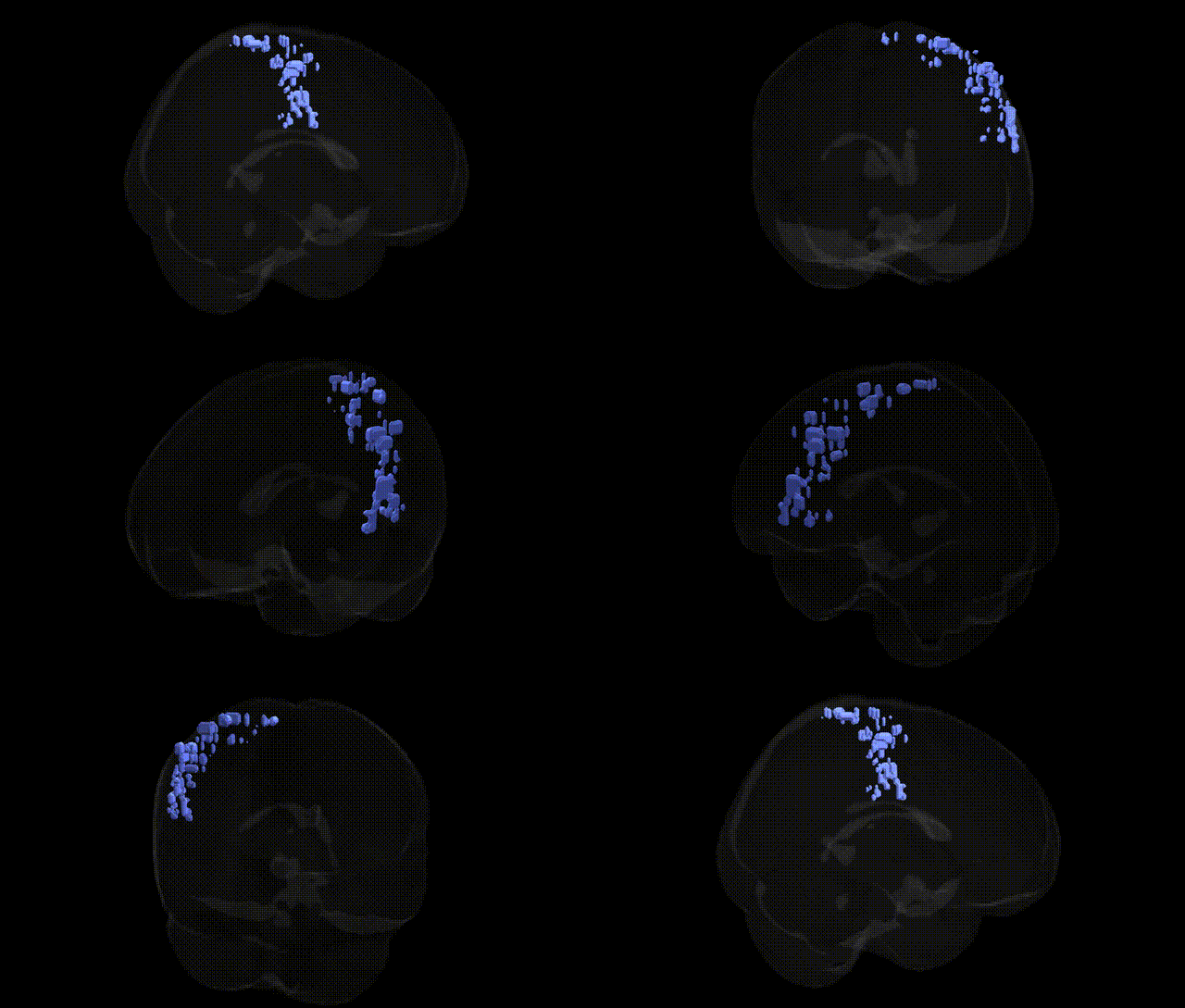
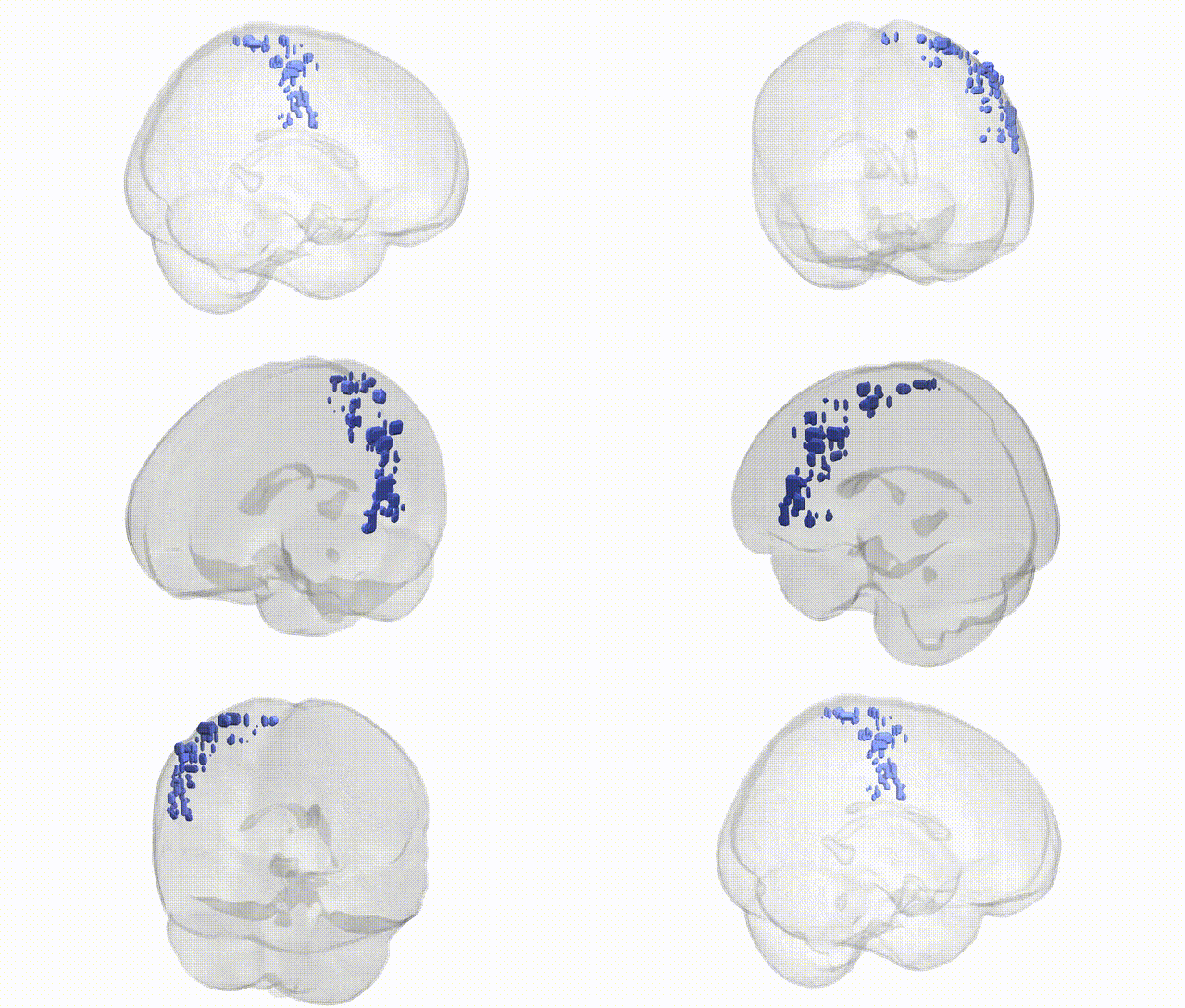
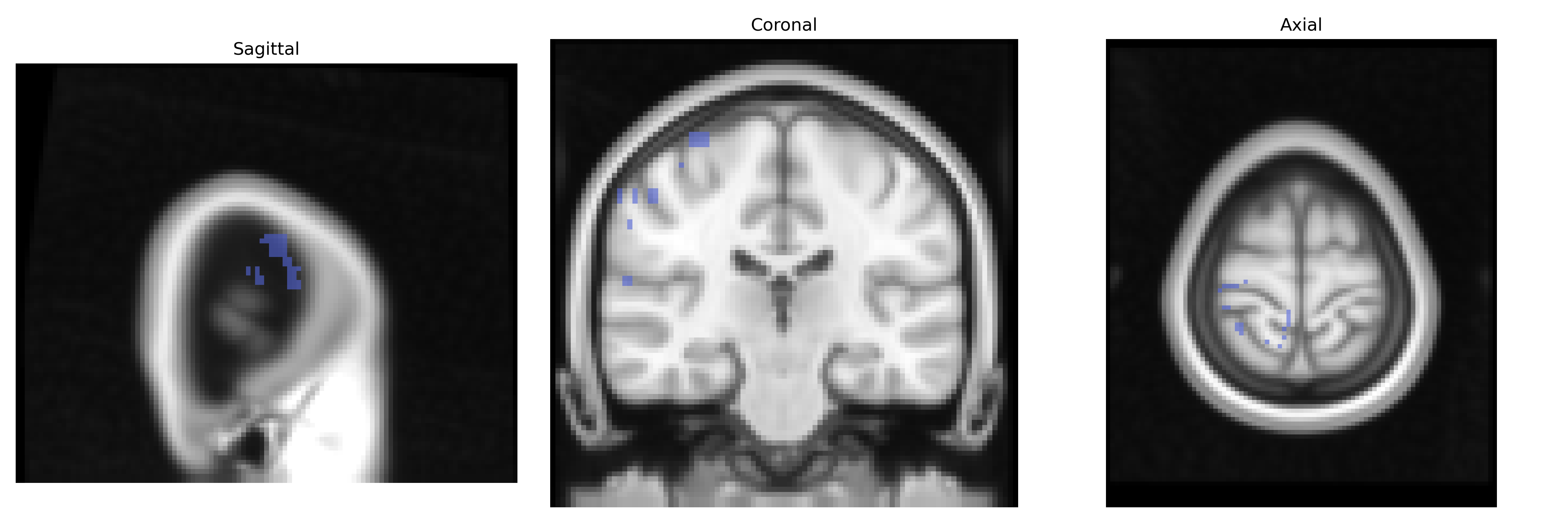
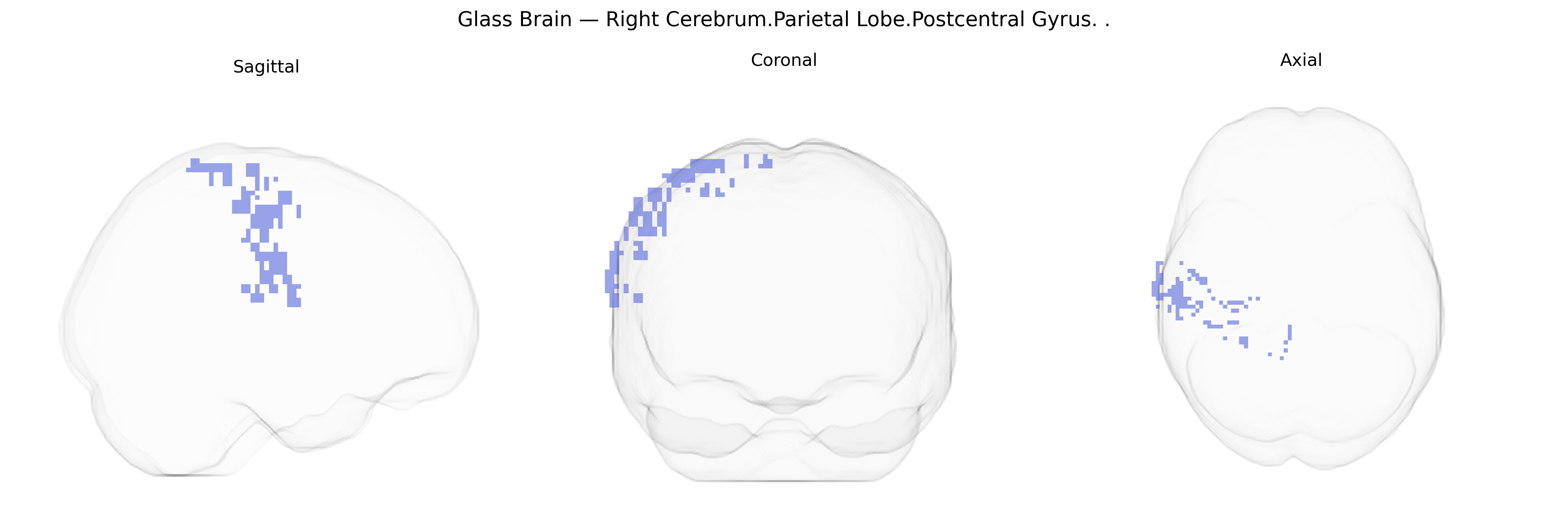
The bilateral Right Cerebrum.Parietal Lobe.Postcentral Gyrus corresponds to the primary somatosensory cortex (mainly Brodmann areas 3, 1, and 2) located on the postcentral gyrus of the parietal lobe in the right hemisphere, mirrored by its left-hemisphere counterpart. This region receives dense thalamocortical input from the ventral posterior nuclei of the thalamus and is organized somatotopically, forming part of the sensory homunculus that represents tactile, proprioceptive, nociceptive, and thermal information from the contralateral side of the body. Functionally, it is critical for conscious perception and discrimination of somatic stimuli, including localization, intensity, and texture, and for integrating basic sensory input that supports higher-order body representation and sensorimotor coordination. Lesions in this area can lead to deficits such as impaired tactile perception, astereognosis, and disturbances in somatosensory integration. There is no direct Wikipedia article for this full Talairach label; a closely related structure is the Postcentral gyrus.
The bilateral right postcentral gyrus, the primary somatosensory cortex region in the parietal lobe, has been implicated in genetic studies primarily through GWAS and imaging-genetics work linking common variants to cortical thickness, surface area, and functional activation patterns rather than to a single, region-specific gene. Large consortia such as ENIGMA and UK Biobank have identified polygenic influences on somatosensory cortical morphology, with loci in genes involved in neurodevelopment, synaptic function, and axon guidance (e.g., variants near HMGA2, RSPO3, and other developmental regulators) contributing to inter-individual variation in parietal/postcentral structure. Functionally, genetic studies of pain sensitivity and somatosensory processing (including variants in COMT, OPRM1, and ion channel genes) have linked genotype to altered activation of the postcentral gyrus, while imaging-genetics work in autism spectrum disorder, schizophrenia, ADHD, and dyslexia has found that polygenic risk scores and disorder-associated loci correlate with atypical somatosensory and parietal cortical thickness or connectivity, sometimes including the postcentral region. In motor and sensorimotor disorders such as focal dystonia, cerebral palsy, and chronic pain syndromes, GWAS or candidate gene studies occasionally show genetic effects on somatosensory network structure and function, with the postcentral gyrus as a key node, though these influences are typically distributed and not specific to the right hemisphere. Overall, the genetic architecture of the right postcentral gyrus appears highly polygenic and shared with broader parietal and sensorimotor networks, with trait- and disorder-associated variants exerting modest, distributed effects on its morphology and activation rather than defining a unique, region-specific genetic profile.
Overview generated by GPT-4o (2026).
Region ID: 782
Hemisphere: bilateral
Atlas: Talairach labels 2mm
Full Quality Version: Download MP4
Full Quality Version: Download MP4
Wali Sidiqyar*, Gaurav Rudravaram*, Elyssa M. McMaster, Trent M. Schwartz, Adam M. Saunders, Kurt G. Schilling, Bennett A. Landman "Introducing SPINS: A Shared Public Visualization Library of Neuroanatomical Structures." Medical Imaging with Deep Learning- short paper
This resource is licensed under CC0 1.0 Universal (Public Domain).