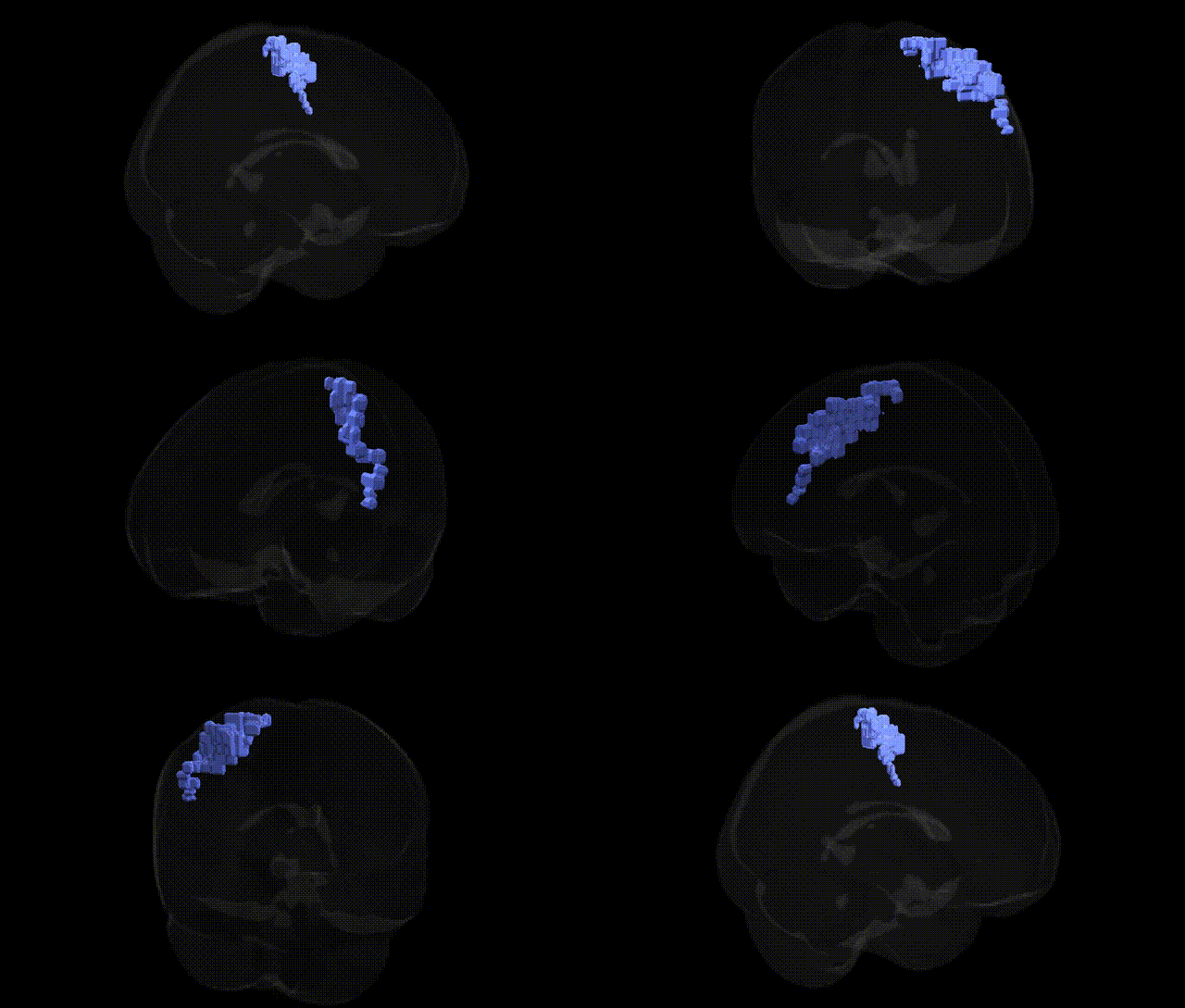
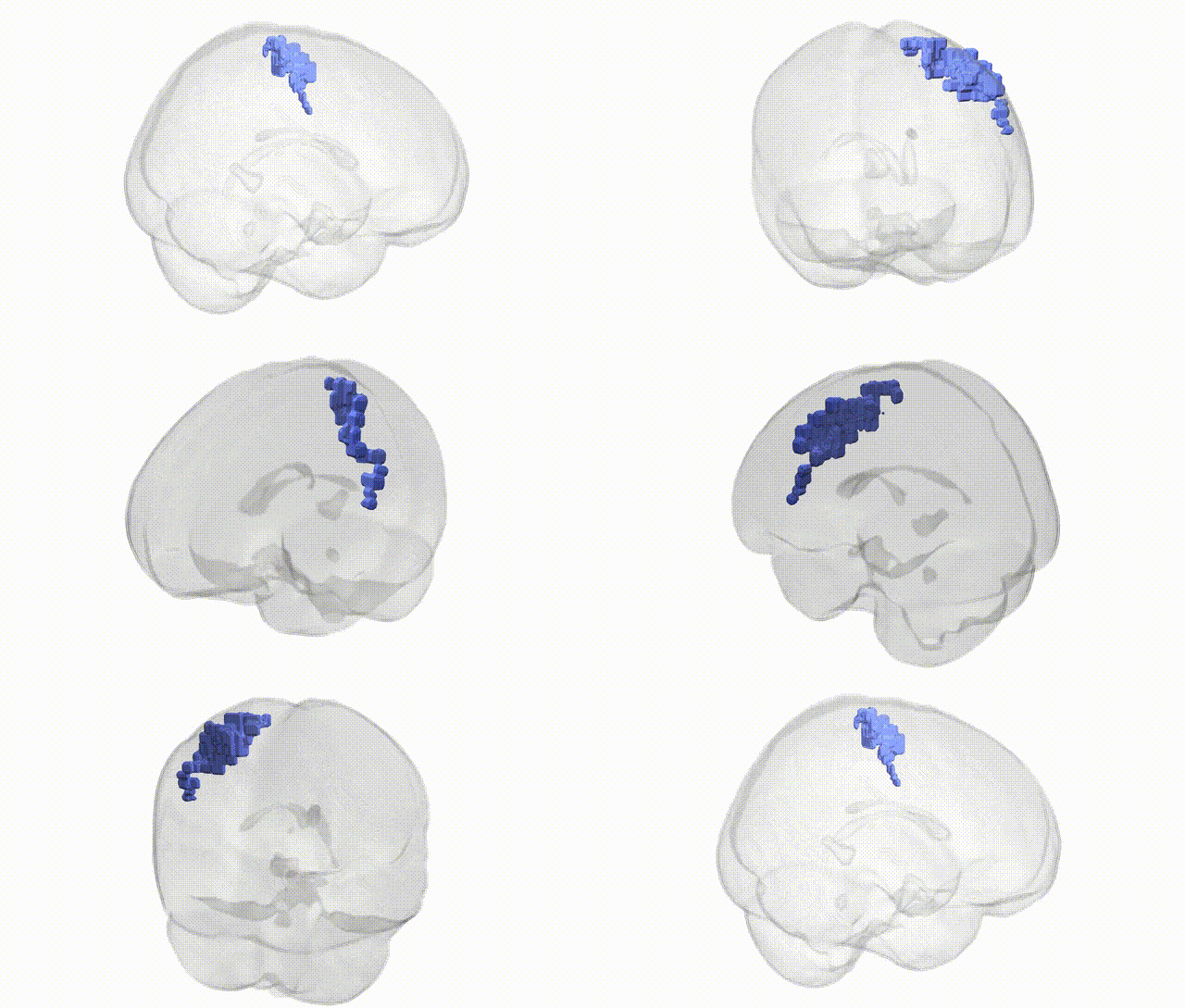
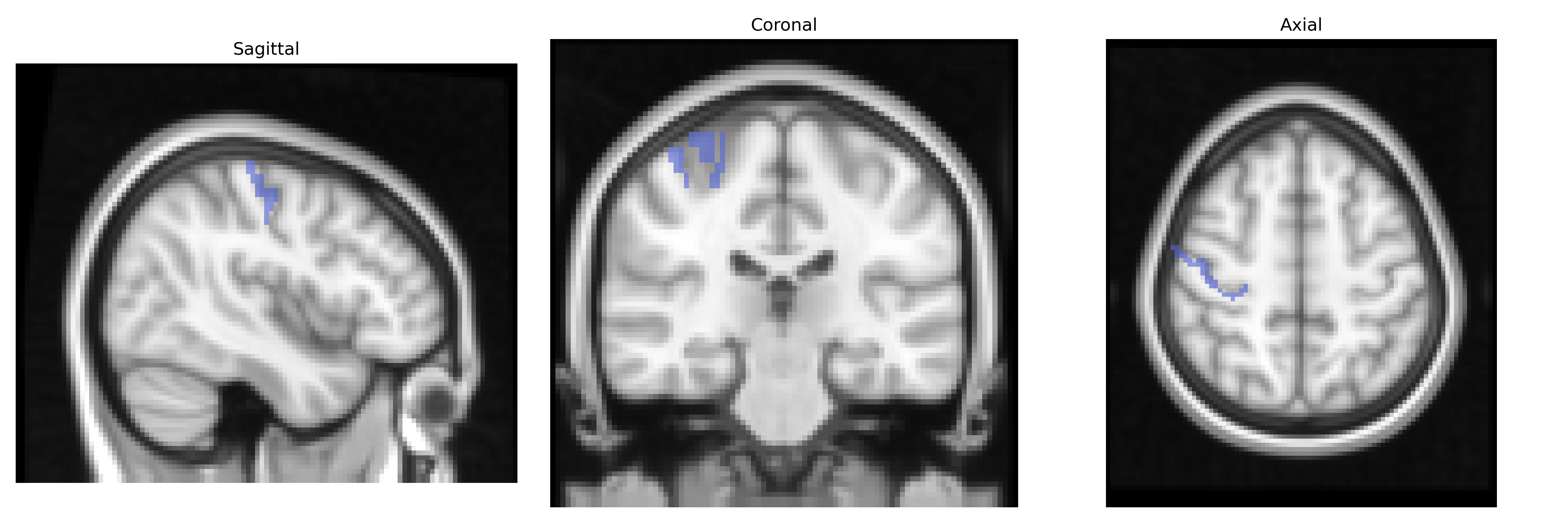
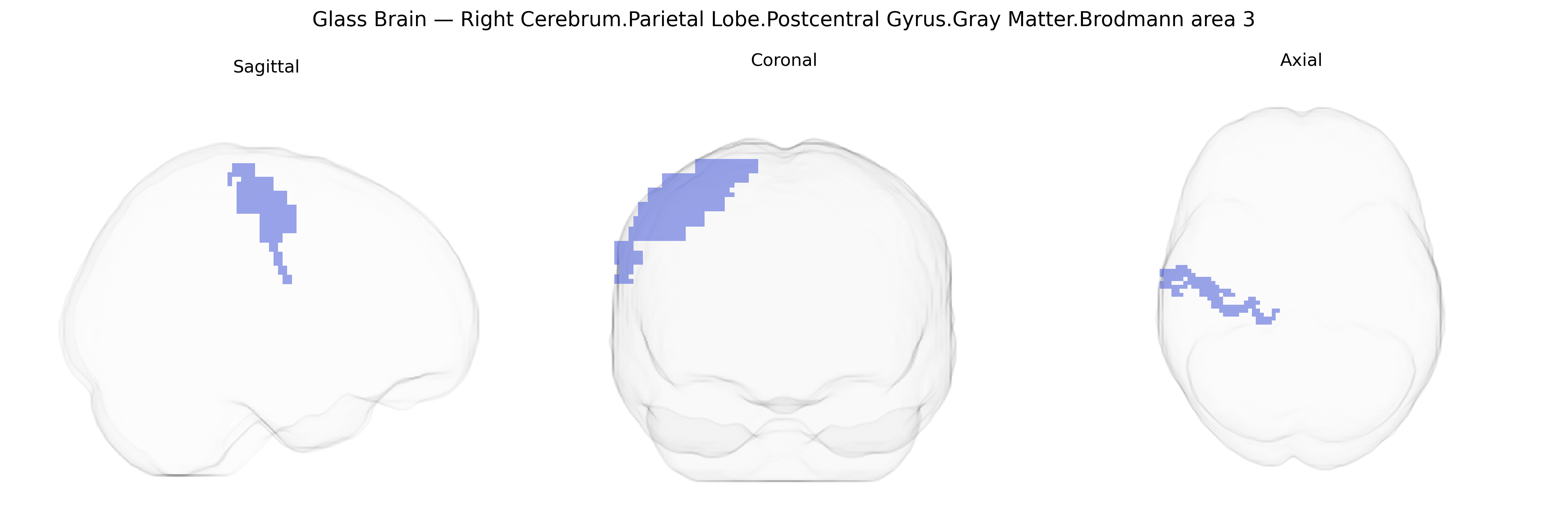
The bilateral Right Cerebrum.Parietal Lobe.Postcentral Gyrus.Gray Matter.Brodmann area 3 corresponds to a primary somatosensory cortical region located in the anterior portion of the postcentral gyrus of the parietal lobe, immediately posterior to the central sulcus. Brodmann area 3 receives dense thalamocortical input from the ventral posterior nucleus of the thalamus and is critically involved in processing fine tactile, proprioceptive, and nociceptive information from the contralateral body, with a somatotopic organization forming part of the sensory homunculus. Neurons in this area are specialized for high-resolution encoding of stimulus features such as texture, shape, and spatial localization, making it essential for conscious perception and discrimination of somatic sensations and for providing detailed sensory input to higher-order parietal and motor regions involved in sensorimotor integration. There is no direct link for Brodmann area 3; a closely related structure is the Primary somatosensory cortex.
The bilateral Right Cerebrum Parietal Lobe Postcentral Gyrus Gray Matter Brodmann area 3, a primary somatosensory region, has been implicated in genetic studies of sensory processing, pain perception, motor control, and neurodevelopmental and psychiatric traits. GWAS and imaging-genetics work (including ENIGMA and UK Biobank cohorts) have identified associations between cortical thickness or surface area in postcentral gyrus and variants in genes involved in neurodevelopment and synaptic function, such as MECP2, BDNF, and FOXP2-related networks, as well as polygenic risk for schizophrenia, autism spectrum disorder, and attention-deficit/hyperactivity disorder, which show structural and functional alterations in this region. Variants in ion channel and pain pathway genes (e.g., SCN9A, CACNA1H, and other nociception-related loci) have been linked to individual differences in somatosensory and pain-related activation of BA3 and to disorders like neuropathic pain and migraine, often showing altered postcentral gyrus activation or morphology. Motor-related GWAS for traits such as handedness, fine motor skills, and coordination have reported associations with parietal and postcentral regions, mediated by genes affecting axonal guidance and cortical patterning (e.g., common variants near LRRTM1 and other neurodevelopmental loci). Additionally, polygenic scores for cognitive performance and educational attainment correlate with structural measures in sensorimotor cortices, including BA3, suggesting that distributed genetic influences on cortical development extend to this primary somatosensory zone, although no single gene uniquely and specifically defines BA3 in the Talairach 2 mm atlas; instead, its genetic associations reflect broader neurodevelopmental and sensorimotor networks.
Overview generated by GPT-4o (2026).
Region ID: 896
Hemisphere: bilateral
Atlas: Talairach labels 2mm
Full Quality Version: Download MP4
Full Quality Version: Download MP4
Wali Sidiqyar*, Gaurav Rudravaram*, Elyssa M. McMaster, Trent M. Schwartz, Adam M. Saunders, Kurt G. Schilling, Bennett A. Landman "Introducing SPINS: A Shared Public Visualization Library of Neuroanatomical Structures." Medical Imaging with Deep Learning- short paper
This resource is licensed under CC0 1.0 Universal (Public Domain).