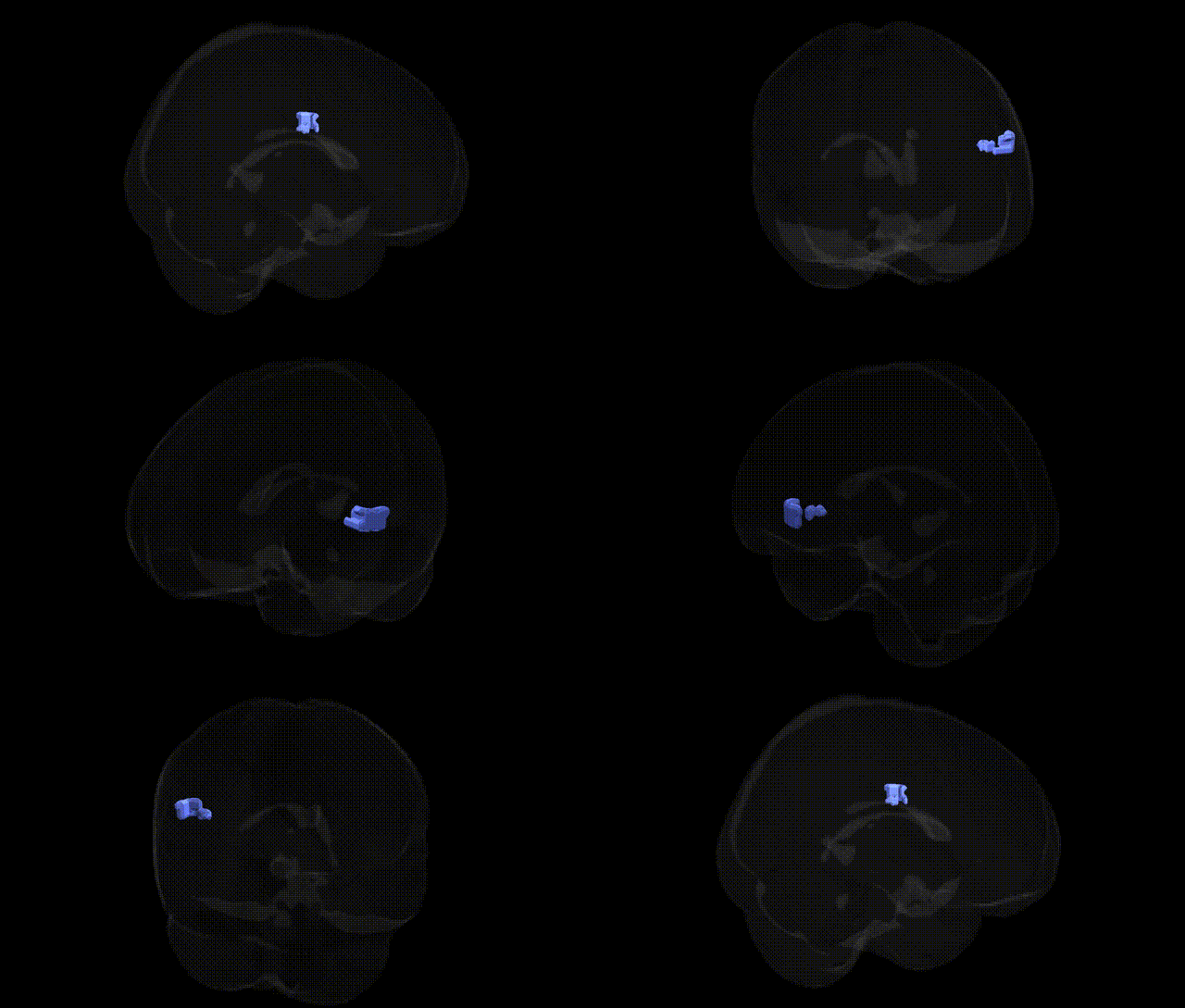
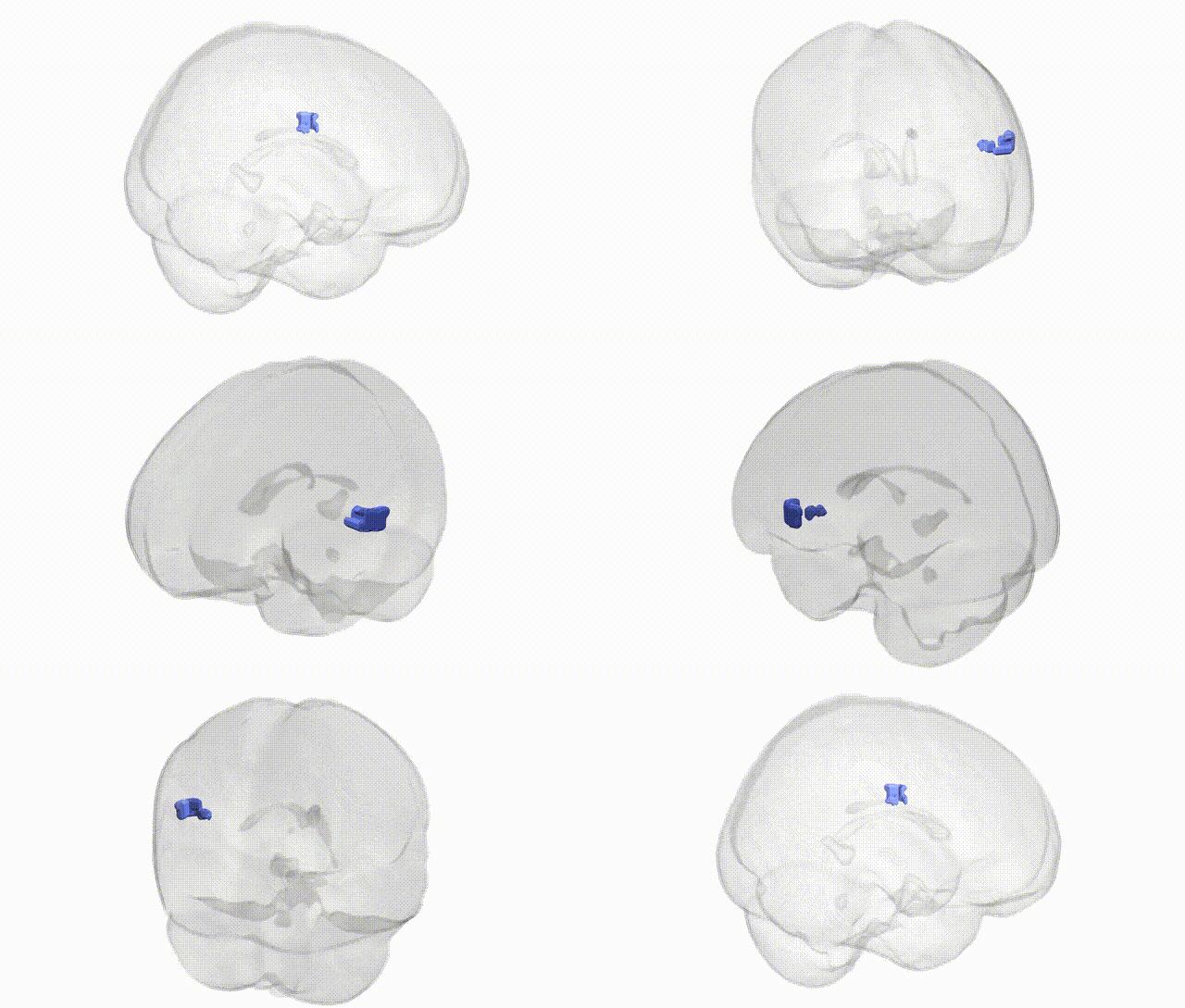
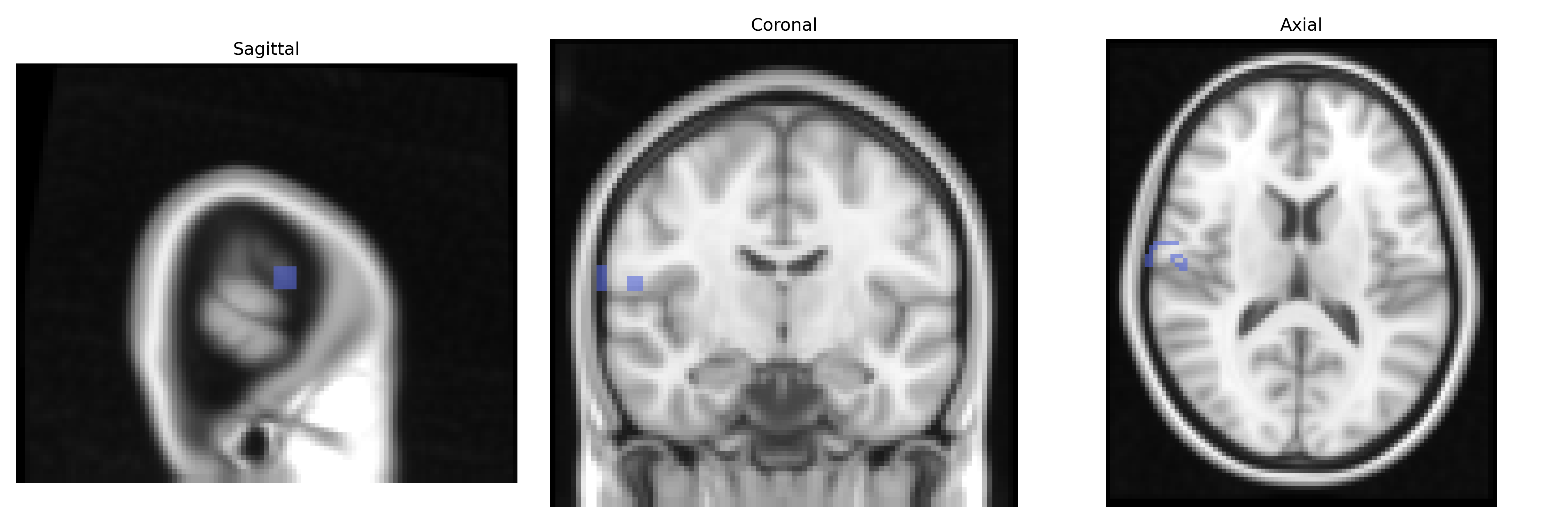
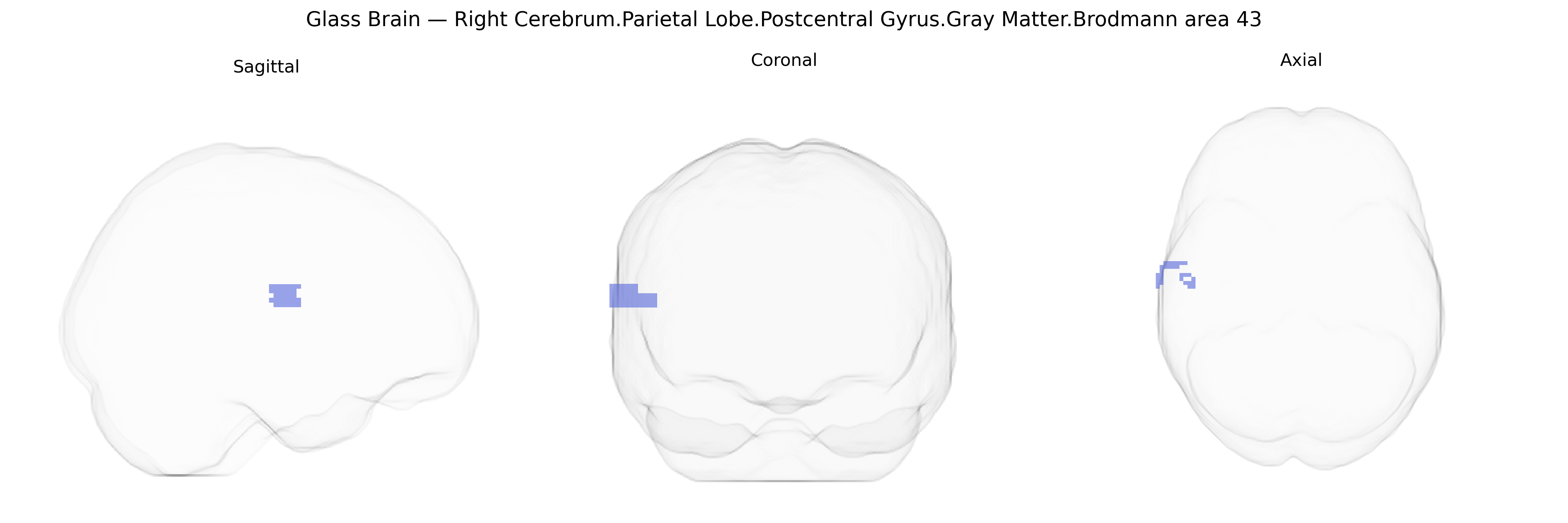
The bilateral Right Cerebrum.Parietal Lobe.Postcentral Gyrus.Gray Matter.Brodmann area 43 corresponds to a small cortical region in the parietal operculum, adjacent to the primary somatosensory cortex and often considered part of the secondary somatosensory area (S2). Brodmann area 43 is associated with somatosensory processing related to the oral and perioral region, including tactile and proprioceptive input from the mouth and tongue, and is implicated in sensorimotor aspects of chewing, swallowing, and possibly speech articulation. Functionally, this region integrates somatic sensory information with motor patterns for orofacial behaviors and contributes to multimodal processing in the perisylvian cortex. There is no direct Wikipedia article for Brodmann area 43; a closely related structure is the Postcentral gyrus.
The bilateral right postcentral gyrus gray matter in Brodmann area 43—part of the parietal lobe involved in somatosensory, sensorimotor, and orofacial processing—has been implicated indirectly in genetic studies through its structure, connectivity, and function rather than via atlas-specific GWAS. Large neuroimaging GWAS (e.g., ENIGMA, UK Biobank) have identified common variants in genes such as HMGA2, IGF1, MEF2C, and multiple loci near neurodevelopmental genes that influence regional cortical thickness and surface area in parietal and somatosensory regions, with some signals overlapping postcentral gyrus territories. Genetic risk for neurodevelopmental and psychiatric conditions—including autism spectrum disorder, schizophrenia, ADHD, and dyslexia—has been associated with altered structure or activation in postcentral and adjacent parietal areas, and polygenic risk scores for these disorders correlate with somatosensory and parietal morphology, though not specifically isolated to BA43. Motor and somatosensory cortex, including postcentral regions, show structural and functional alterations linked to genetic variants affecting synaptic plasticity and neuronal migration in disorders such as focal epilepsy, Tourette syndrome, and developmental coordination disorder, consistent with the region’s role in sensorimotor integration. Pain sensitivity and tactile perception traits, which have heritable components and GWAS hits in ion channel and synaptic genes (e.g., SCN9A, CACNA genes, GABA-related loci), also engage postcentral parietal networks, though imaging–genetics work generally identifies broader somatosensory circuits rather than BA43-specific effects. Overall, genetic associations involving this region emerge through distributed cortical phenotypes and polygenic influences on somatosensory and parietal development, with BA43 functioning as part of a larger genetically modulated sensorimotor network rather than as a major isolated GWAS target.
Overview generated by GPT-4o (2026).
Region ID: 793
Hemisphere: bilateral
Atlas: Talairach labels 2mm
Full Quality Version: Download MP4
Full Quality Version: Download MP4
Wali Sidiqyar*, Gaurav Rudravaram*, Elyssa M. McMaster, Trent M. Schwartz, Adam M. Saunders, Kurt G. Schilling, Bennett A. Landman "Introducing SPINS: A Shared Public Visualization Library of Neuroanatomical Structures." Medical Imaging with Deep Learning- short paper
This resource is licensed under CC0 1.0 Universal (Public Domain).