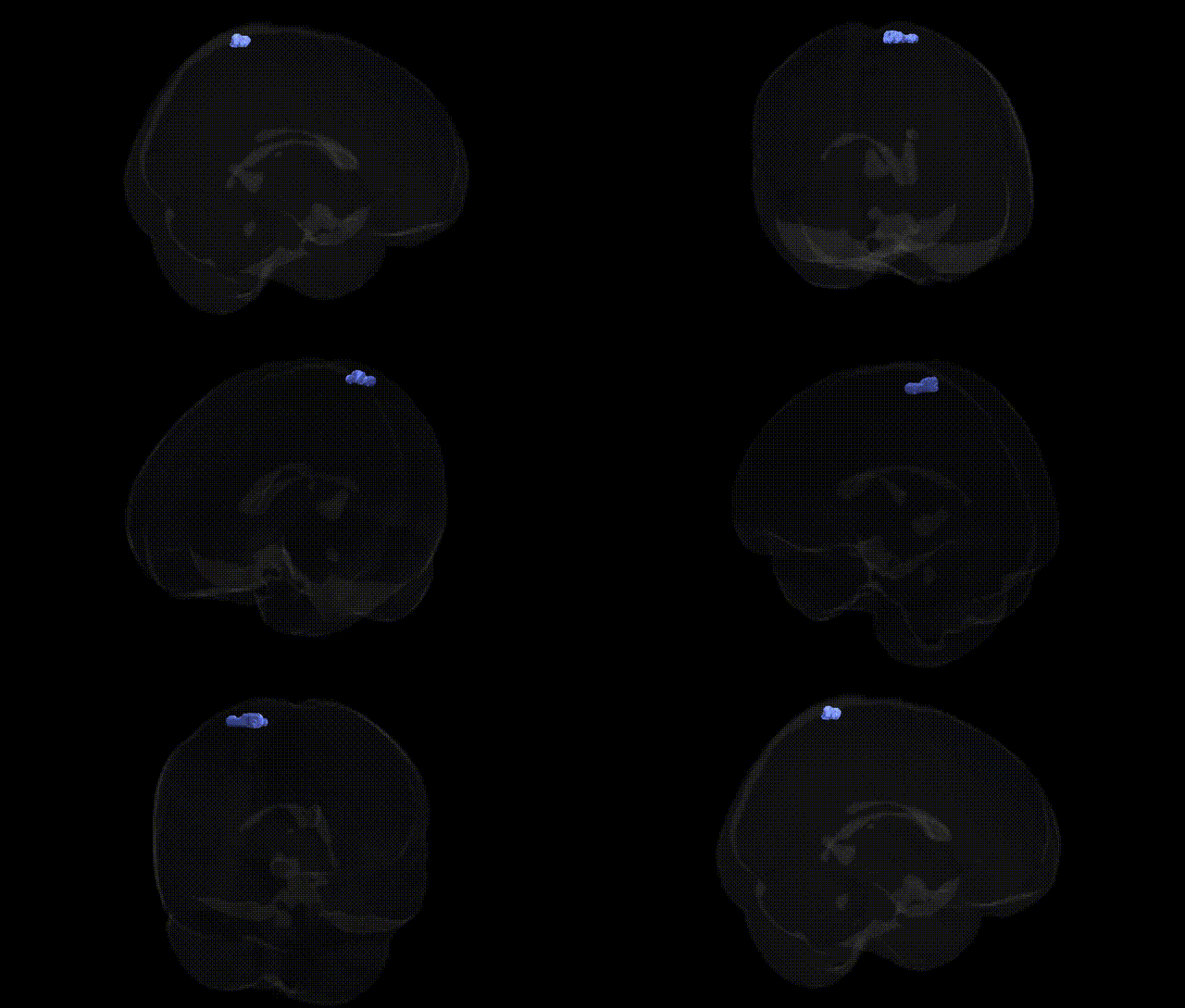
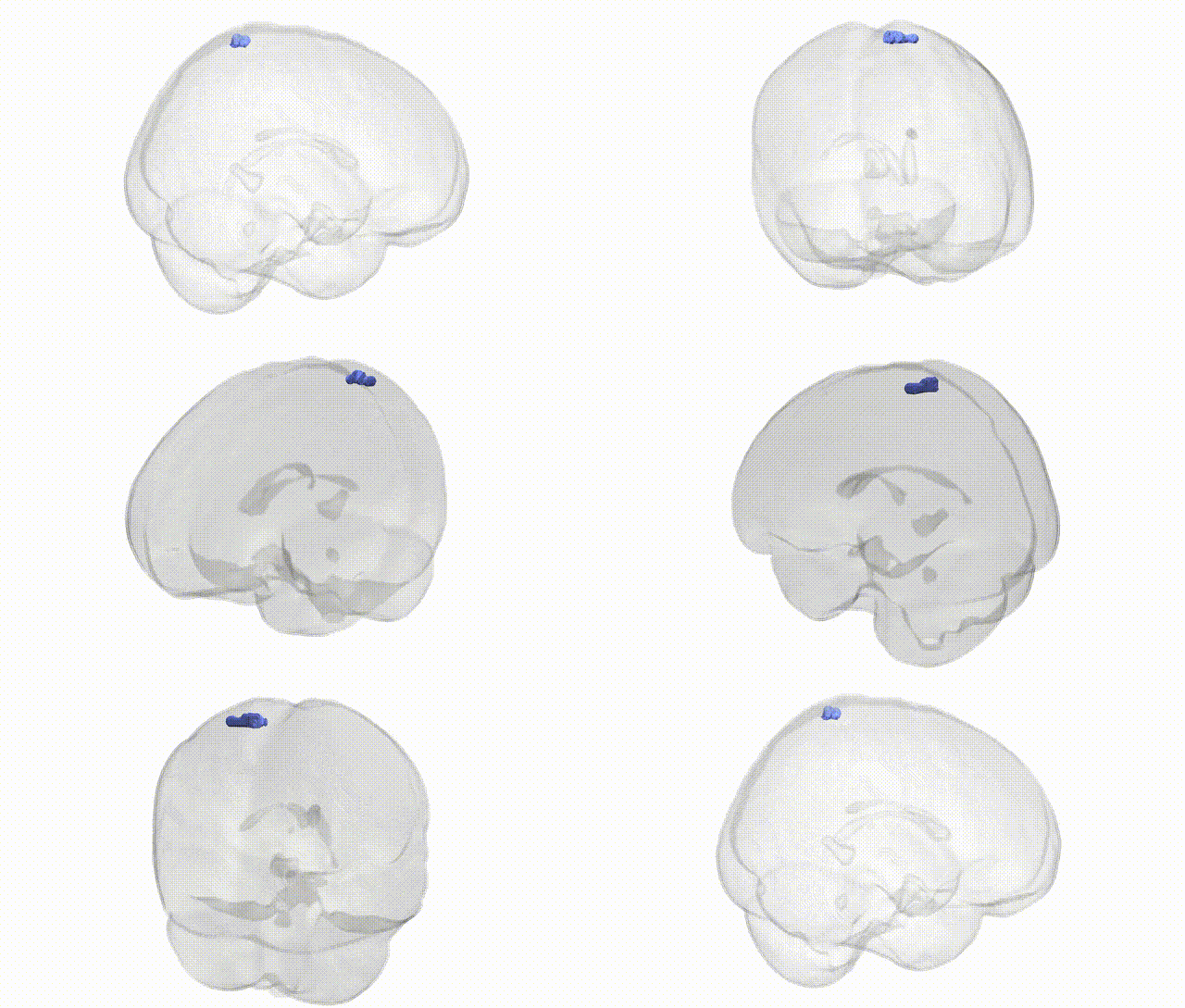
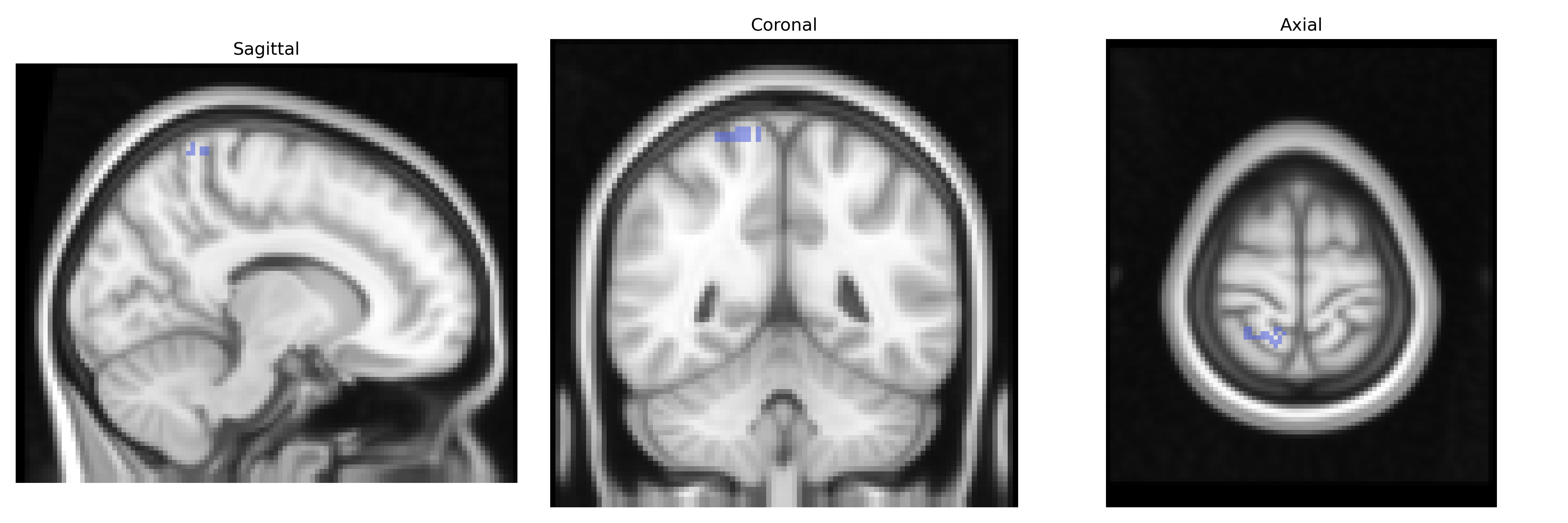
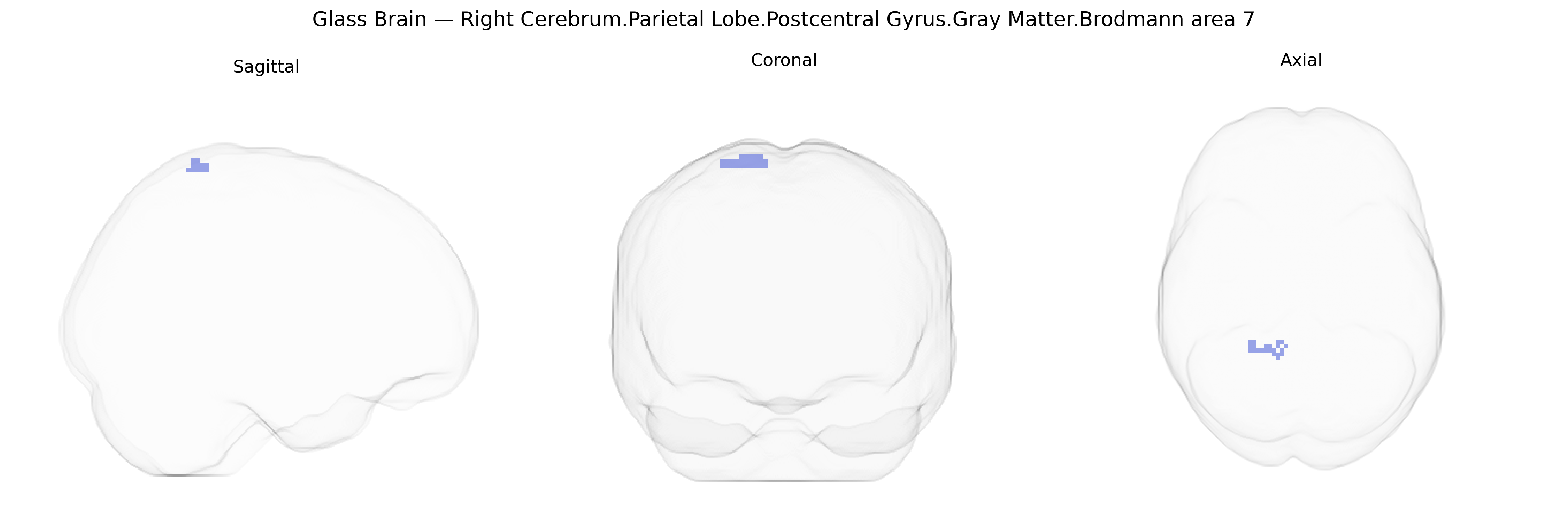
The bilateral Right Cerebrum.Parietal Lobe.Postcentral Gyrus.Gray Matter.Brodmann area 7 corresponds to association cortex in the superior parietal region, adjacent to primary somatosensory cortex, and is primarily involved in higher-order integration of multimodal sensory information, visuospatial processing, and the transformation of sensory input into coordinated motor behavior. Neurons in this area contribute to the representation of body and extrapersonal space, supporting functions such as spatial attention, hand–eye coordination, and the integration of visual and somatosensory signals for goal-directed actions. Lesions affecting this region can lead to deficits in spatial orientation, visuomotor coordination, and aspects of sensory integration, reflecting its role as a key node in parietal association networks. There is no direct Wikipedia article for this exact Talairach label; a related structure is Brodmann area 7.
Genetic associations with the bilateral Right Cerebrum Parietal Lobe Postcentral Gyrus gray matter (Brodmann area 7, as labeled in the Talairach 2 mm atlas) primarily emerge from neuroimaging genetics and GWAS of cortical morphology, cognition, and neuropsychiatric disorders, rather than from studies targeting this exact parcel. Cortical thickness and surface area in superior parietal/postcentral regions have been linked to common variants in genes involved in neurodevelopment and synaptic function, such as HMGA2 (brain size and morphology), KIAA0586 and DLG2 (cortical structure), and multiple loci identified in large ENIGMA and UK Biobank GWAS of regional cortical measures. Functionally, BA7 and adjacent postcentral/superior parietal cortices, which support somatosensory integration, visuospatial processing, and attention, show genetically influenced variation associated with traits like general cognitive ability, educational attainment, and motor skills, with polygenic scores for these traits predicting parietal cortical measures. GWAS of neurodevelopmental and psychiatric conditions—including ADHD, autism spectrum disorder, schizophrenia, and major depression—have repeatedly implicated parietal and postcentral regions in case–control and imaging–genetics designs, with risk variants (e.g., in CACNA1C, GRIN2A, and other synaptic and calcium-channel genes) associated with altered parietal activation or morphology, although these effects are typically distributed and not specific to BA7. In Alzheimer’s disease, genetic risk (APOE ε4 and polygenic burden) shows associations with atrophy and connectivity changes in parietal networks, including BA7, reflecting the region’s involvement in default-mode and visuospatial networks, while GWAS of pain sensitivity and somatosensory traits have also implicated somatosensory/postcentral cortices as downstream neural substrates of polygenic influences, without pinpointing single-gene effects limited to this Talairach-defined area. Overall, current evidence supports a polygenic, highly distributed architecture in which numerous common variants with small effects influence structure and function of BA7/postcentral parietal cortex as part of broader networks underlying cognition, sensorimotor integration, and vulnerability to neuropsychiatric and neurodegenerative disorders.
Overview generated by GPT-4o (2026).
Region ID: 1102
Hemisphere: bilateral
Atlas: Talairach labels 2mm
Full Quality Version: Download MP4
Full Quality Version: Download MP4
Wali Sidiqyar*, Gaurav Rudravaram*, Elyssa M. McMaster, Trent M. Schwartz, Adam M. Saunders, Kurt G. Schilling, Bennett A. Landman "Introducing SPINS: A Shared Public Visualization Library of Neuroanatomical Structures." Medical Imaging with Deep Learning- short paper
This resource is licensed under CC0 1.0 Universal (Public Domain).