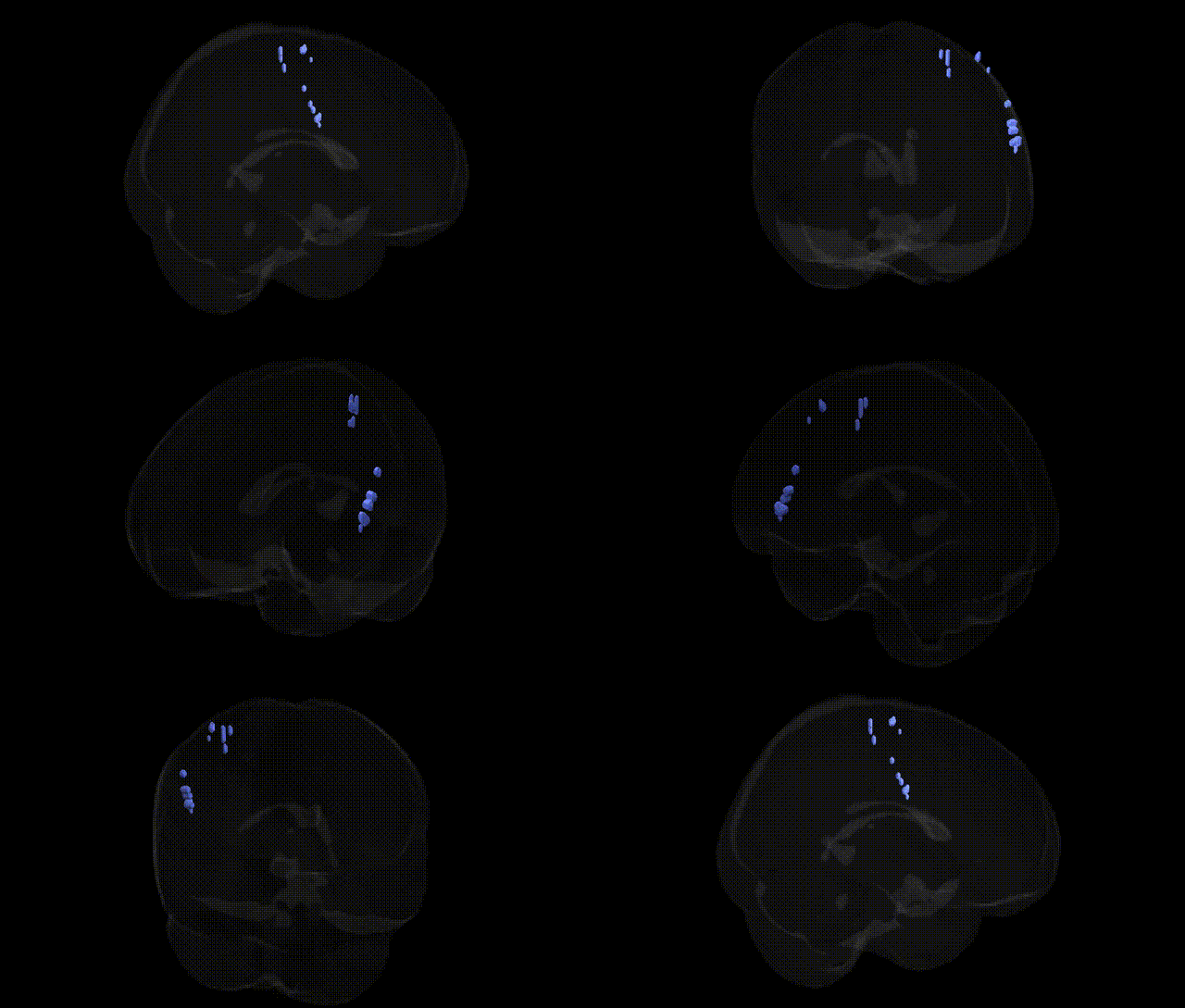
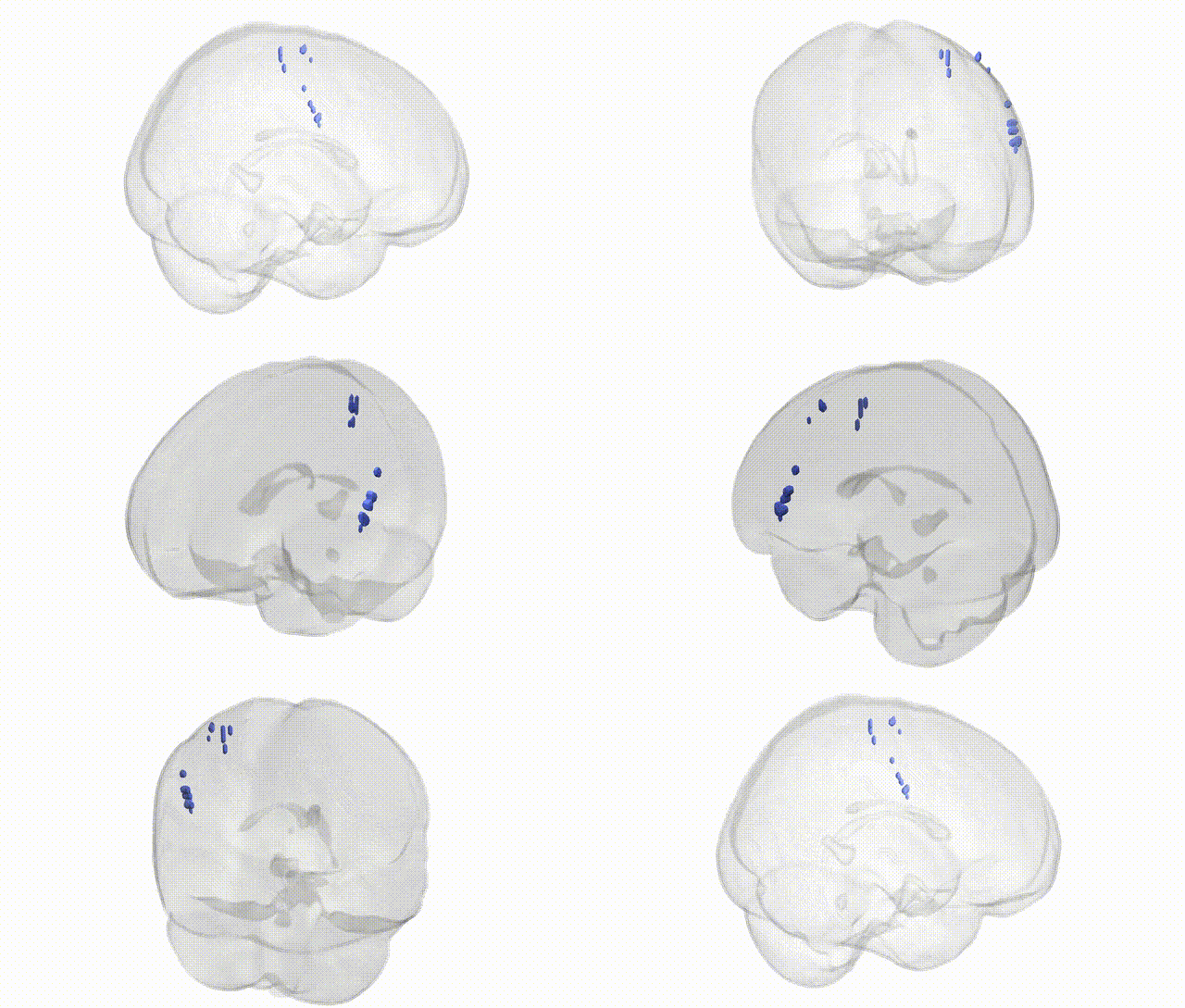
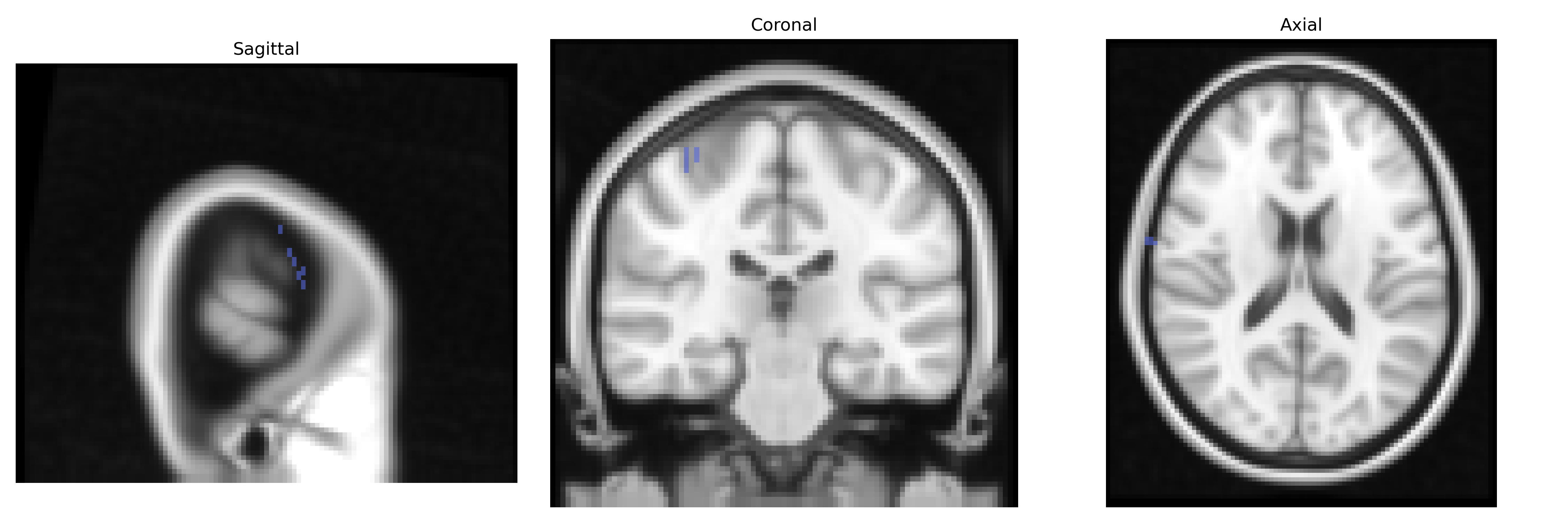
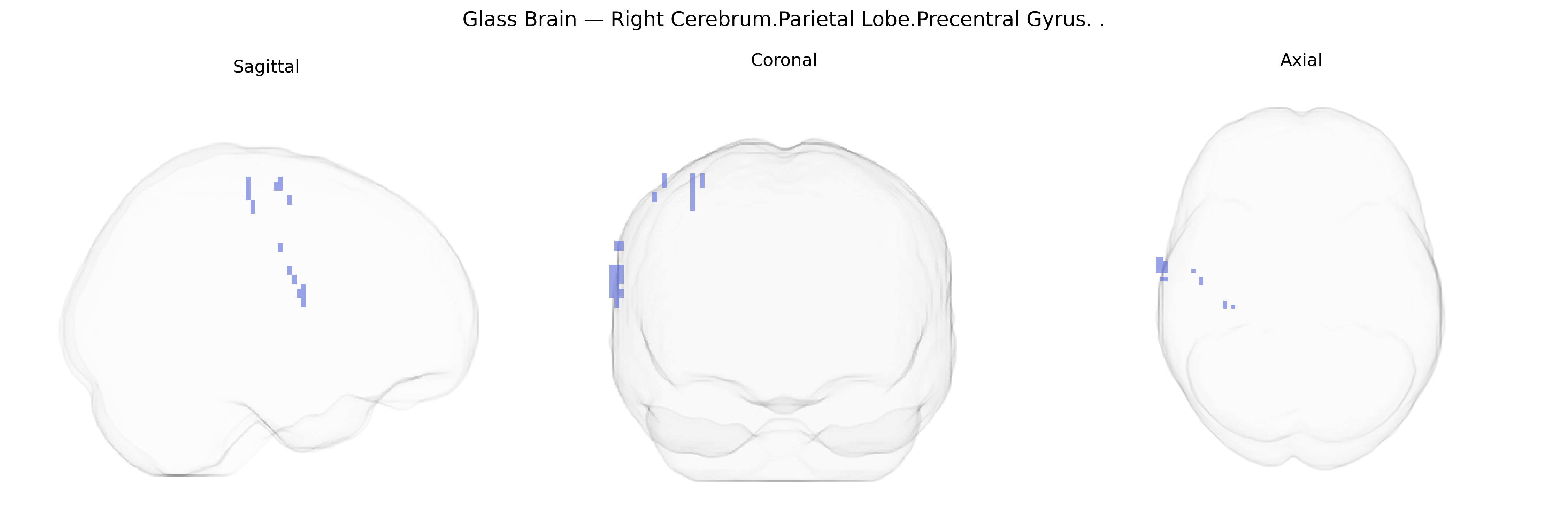
The bilateral Right Cerebrum.Parietal Lobe.Precentral Gyrus region, as labeled in the Talairach 2 mm Atlas, most likely reflects a parietal extension or mapping artifact adjacent to the classical precentral gyrus of the frontal lobe, which is the primary motor cortex responsible for the execution of voluntary movements, particularly fine motor control of the contralateral side of the body. Functionally, tissue in this border zone between frontal (precentral) and parietal cortices participates in sensorimotor integration, transforming somatosensory and proprioceptive information into coordinated motor output, and may contribute to motor planning, spatial aspects of movement, and body representation. Although “Right Cerebrum.Parietal Lobe.Precentral Gyrus” does not correspond to a standard anatomical name, it is best understood in relation to the Precentral gyrus, the conventional term for the primary motor cortex.
The bilateral right cerebrum precentral gyrus (primary motor cortex) has been implicated in multiple genetic and GWAS findings, largely through imaging genetics studies that relate common variants to cortical thickness, surface area, and activation patterns. Large-scale neuroimaging GWAS (e.g., ENIGMA, UK Biobank) have identified associations between variants in genes such as MAPT, KIAA0586, and others involved in neurodevelopment, cytoskeletal organization, and synaptic function with motor cortex morphology, although effects are generally small and regionally distributed rather than specific to the right precentral gyrus alone. Motor cortex structure and function in this area show heritability and genetic correlations with disorders including amyotrophic lateral sclerosis (ALS), where variants in C9orf72, SOD1, TARDBP, FUS and related genes are linked to degeneration of upper motor neurons that localize predominantly to the precentral gyrus. Parkinson’s disease and other movement disorders (e.g., dystonia, essential tremor) have genetic risk variants (such as in LRRK2, GBA, SNCA) that indirectly affect precentral gyrus activity and connectivity through cortico-basal ganglia–thalamocortical circuits, with imaging studies demonstrating genotype-related differences in motor cortex activation during movement tasks. Schizophrenia and bipolar disorder GWAS loci (e.g., CACNA1C, ZNF804A, GRIN2A) have been associated with altered motor cortical activation, connectivity, or cortical thickness in precentral regions, although these effects tend to be part of broader fronto-parietal changes. Additionally, polygenic scores for general intelligence, educational attainment, and motor skill learning show correlations with structural and functional measures in the precentral gyrus, reflecting shared neurodevelopmental genetic influences. Overall, genetic associations for this Talairach-defined region arise mainly from distributed polygenic effects on cortical development and motor circuitry rather than single-region–specific loci.
Overview generated by GPT-4o (2026).
Region ID: 807
Hemisphere: bilateral
Atlas: Talairach labels 2mm
Full Quality Version: Download MP4
Full Quality Version: Download MP4
Wali Sidiqyar*, Gaurav Rudravaram*, Elyssa M. McMaster, Trent M. Schwartz, Adam M. Saunders, Kurt G. Schilling, Bennett A. Landman "Introducing SPINS: A Shared Public Visualization Library of Neuroanatomical Structures." Medical Imaging with Deep Learning- short paper
This resource is licensed under CC0 1.0 Universal (Public Domain).