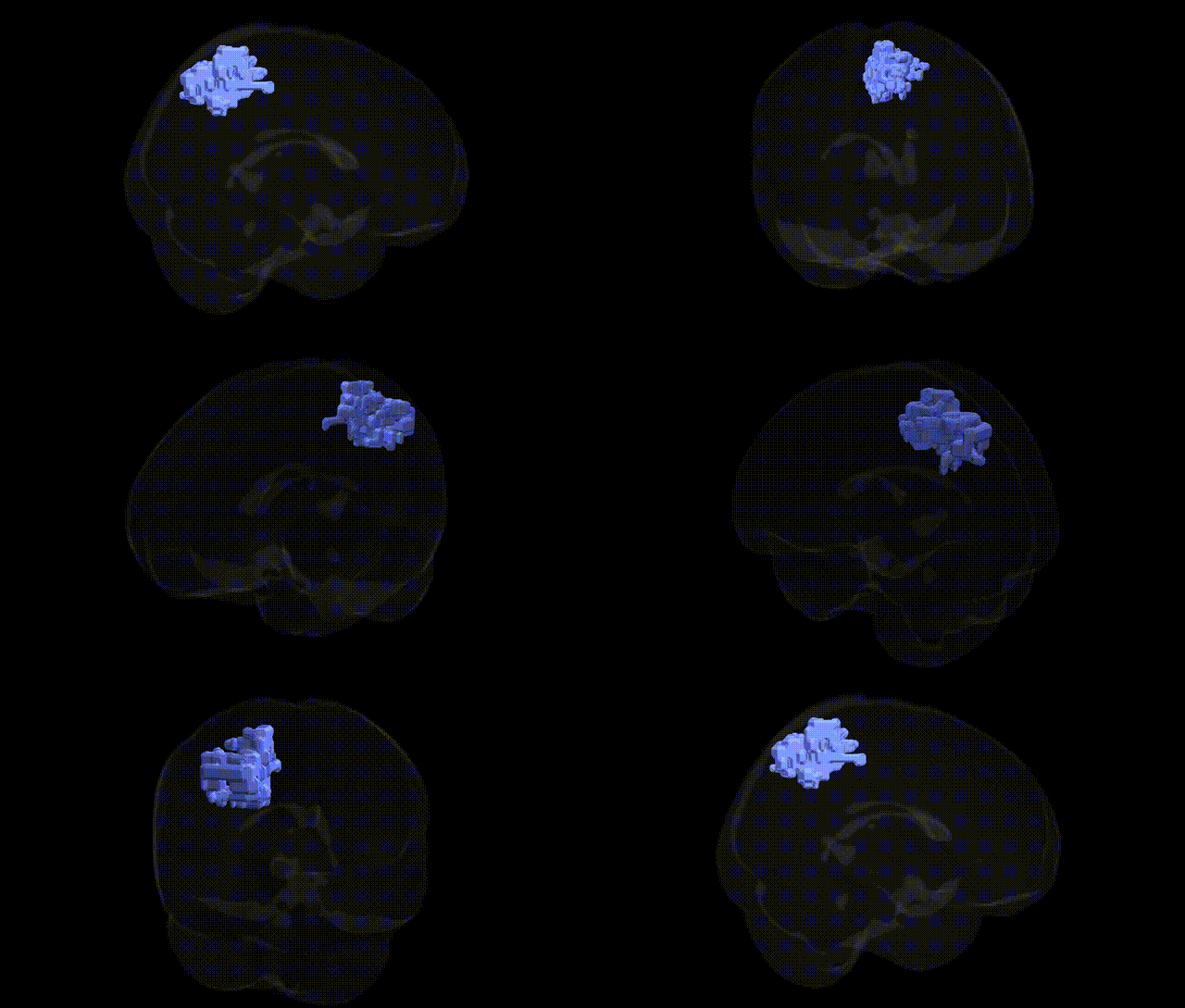
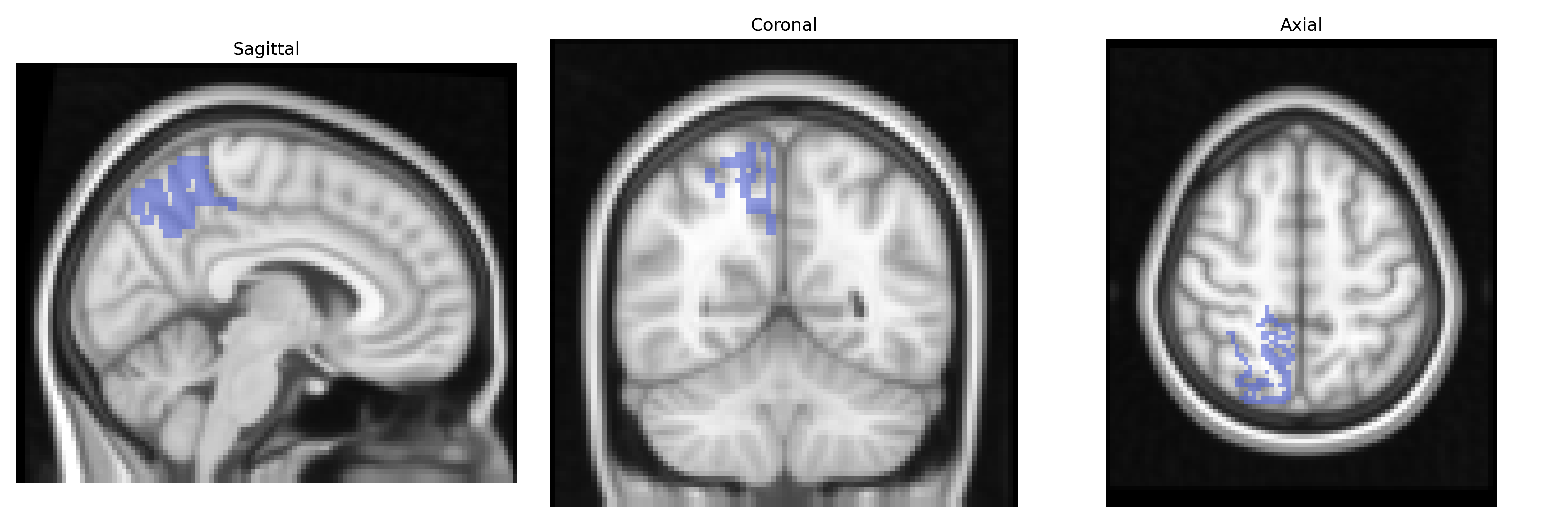
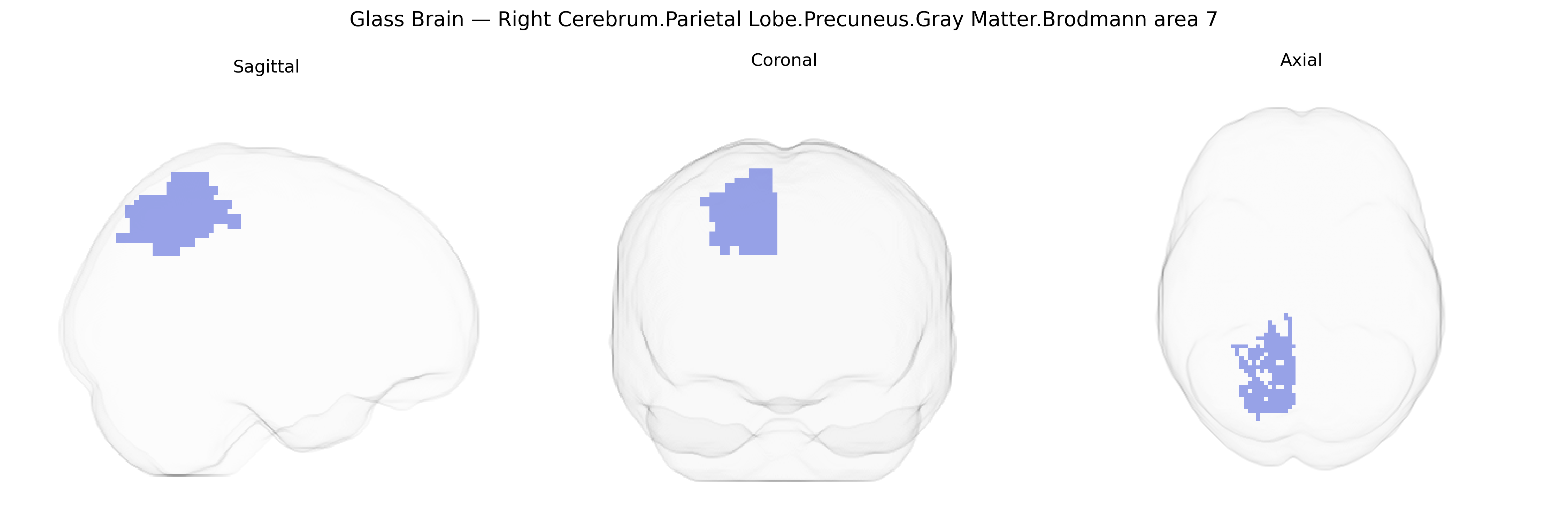
The bilateral Right Cerebrum.Parietal Lobe.Precuneus.Gray Matter.Brodmann area 7 corresponds to a dorsal portion of the medial parietal cortex involved in higher-order visuospatial processing, spatial attention, and integration of sensory information for goal-directed actions. Cytoarchitectonically defined as Brodmann area 7, this region receives multimodal input from visual, somatosensory, and premotor areas, supporting functions such as visuomotor coordination, mental imagery of spatial relationships, and aspects of attention and working memory. In the Talairach 2 mm atlas, this area lies within the precuneus of the superior parietal lobule, contributing to networks engaged in spatial cognition and the transformation of visual information into motor commands. There is no direct link for “Brodmann area 7” itself; a closely related structure is the Precuneus.
The bilateral right precuneus (parietal lobe, Brodmann area 7) has been repeatedly implicated in genetic and genome-wide association studies through its role in default-mode network function, visuospatial integration, self-referential processing, and higher-order cognition. Structural and functional measures of the precuneus show moderate heritability, with imaging–genetics work identifying common variants in synaptic, neurodevelopmental, and myelination-related genes (including those in glutamatergic and GABAergic pathways, and loci near genes such as BDNF, APOE, and CNTNAP2) as contributors to variability in gray matter volume and connectivity in this region. Large neuroimaging GWAS consortia (e.g., ENIGMA, UK Biobank) have reported associations between precuneus morphology or resting-state activity and polygenic scores for intelligence, educational attainment, and cognitive performance, as well as with risk loci for Alzheimer’s disease (APOE ε4 and nearby cholesterol/amyloid-related genes) and other neurodegenerative conditions, which often show early metabolic and connectivity changes in the precuneus. Psychiatric genetics studies link precuneus structure and connectivity to polygenic risk for major depressive disorder, schizophrenia, and autism spectrum disorder, where GWAS-implicated variants (such as those in synaptic scaffolding and calcium-channel genes) track alterations in default-mode network hubs that include the precuneus. Additional associations have been reported for traits like mindfulness, self-related processing, and dissociative symptoms, generally via polygenic influences on default-mode network architecture rather than single-gene effects, underscoring the precuneus as a genetically influenced hub integrating cognition, self-awareness, and vulnerability to neuropsychiatric disorders.
Overview generated by GPT-4o (2026).
Region ID: 972
Hemisphere: bilateral
Atlas: Talairach labels 2mm
Full Quality Version: Download MP4
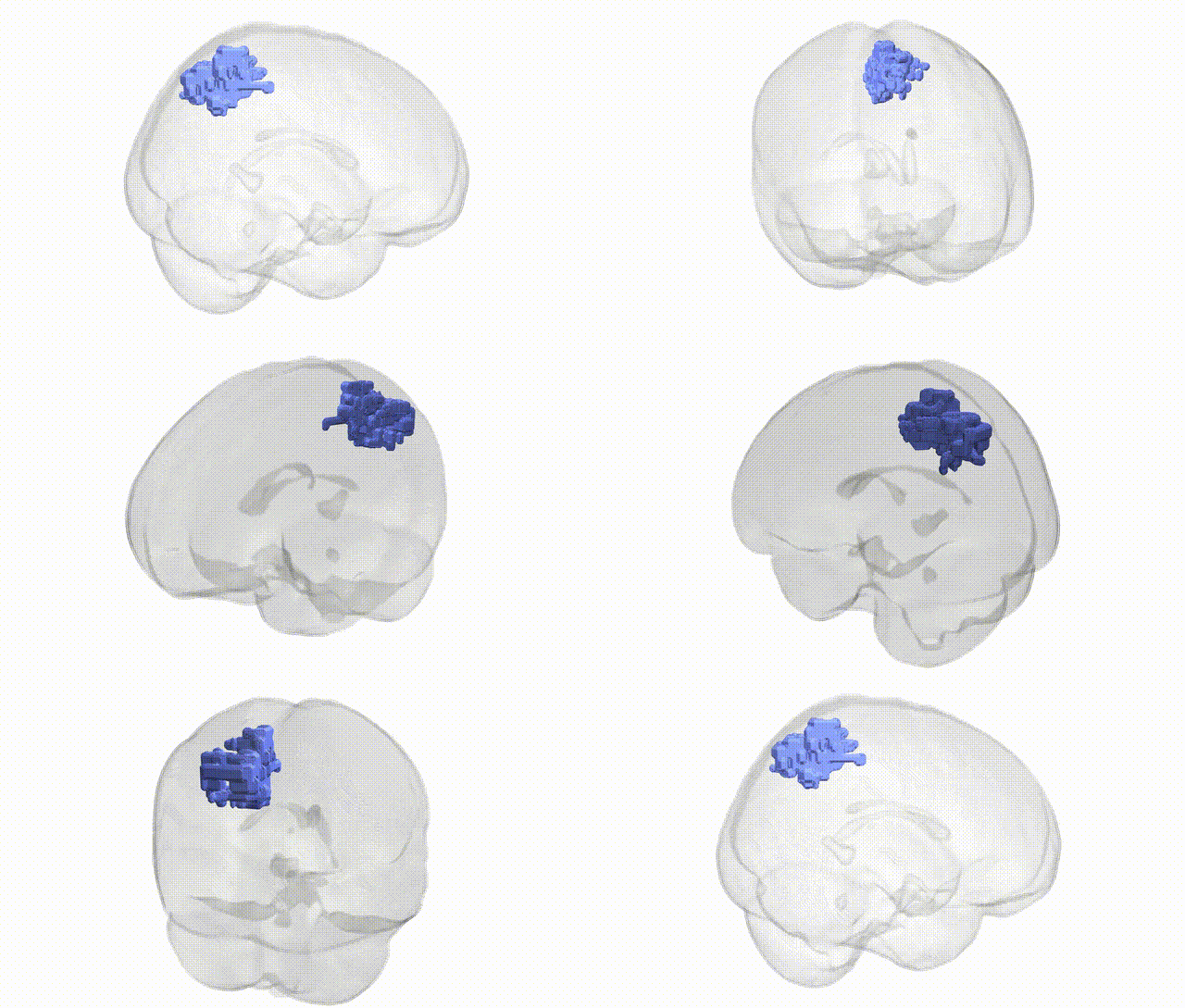
Full Quality Version: Download MP4
Wali Sidiqyar*, Gaurav Rudravaram*, Elyssa M. McMaster, Trent M. Schwartz, Adam M. Saunders, Kurt G. Schilling, Bennett A. Landman "Introducing SPINS: A Shared Public Visualization Library of Neuroanatomical Structures." Medical Imaging with Deep Learning- short paper
This resource is licensed under CC0 1.0 Universal (Public Domain).