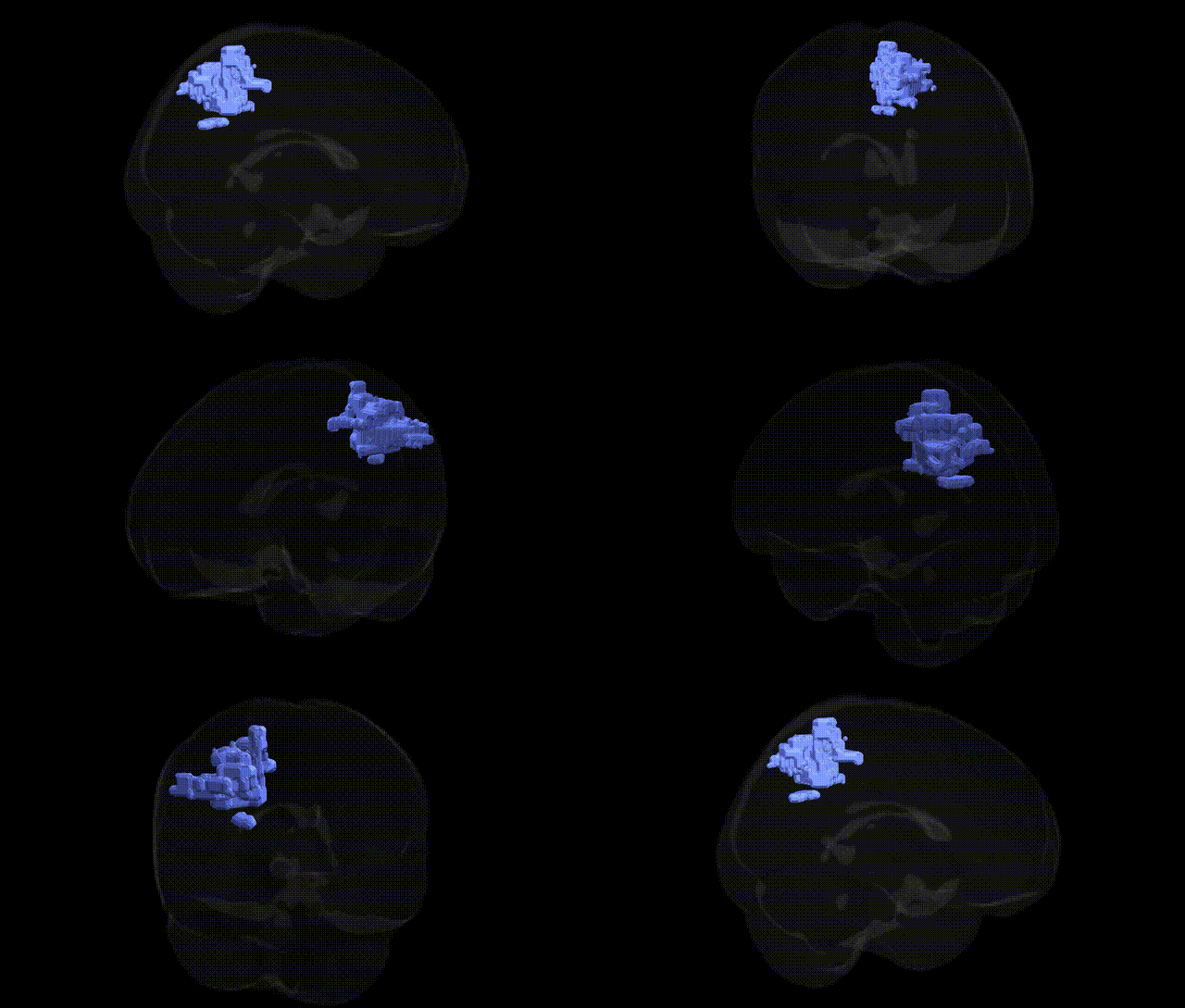
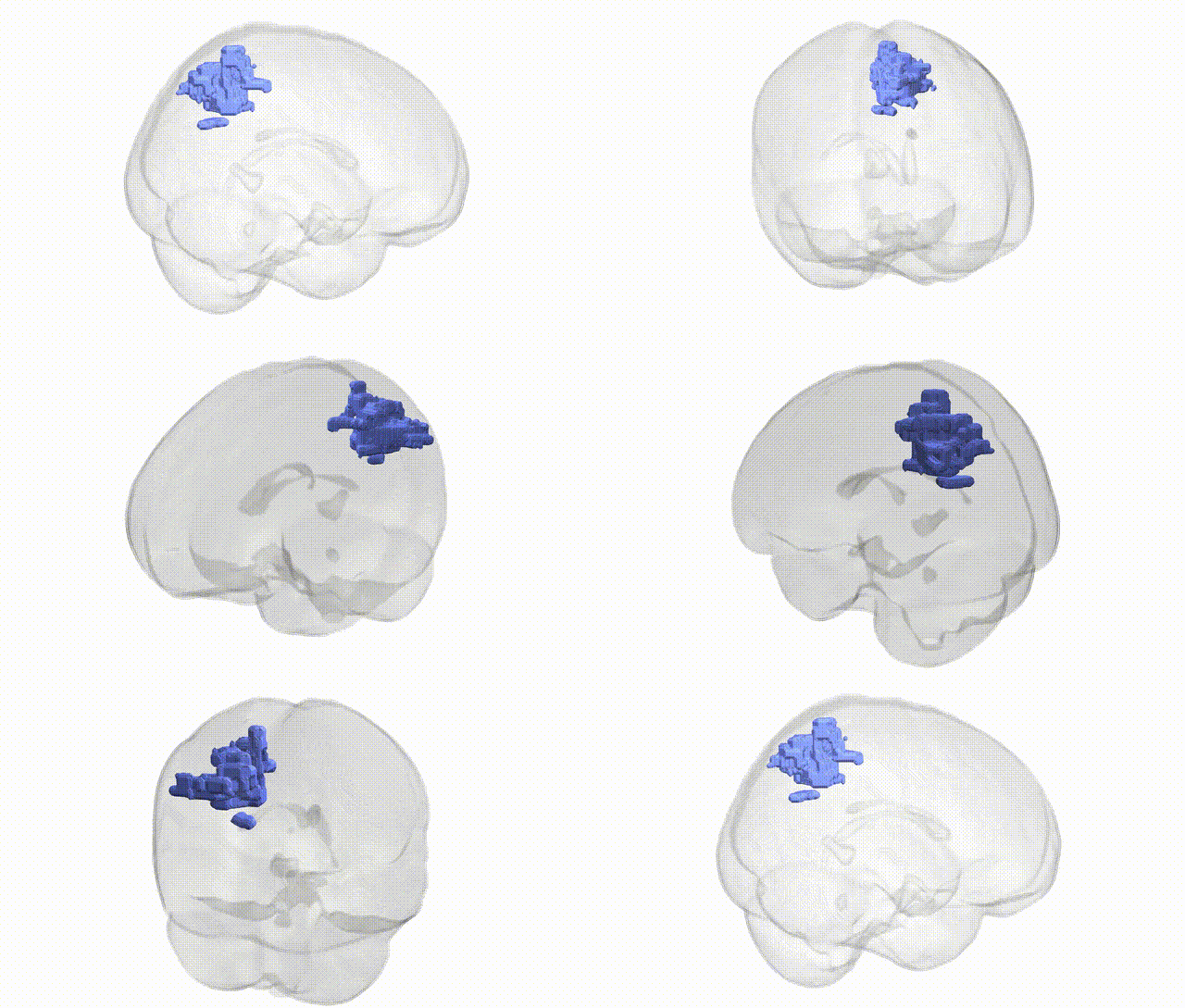
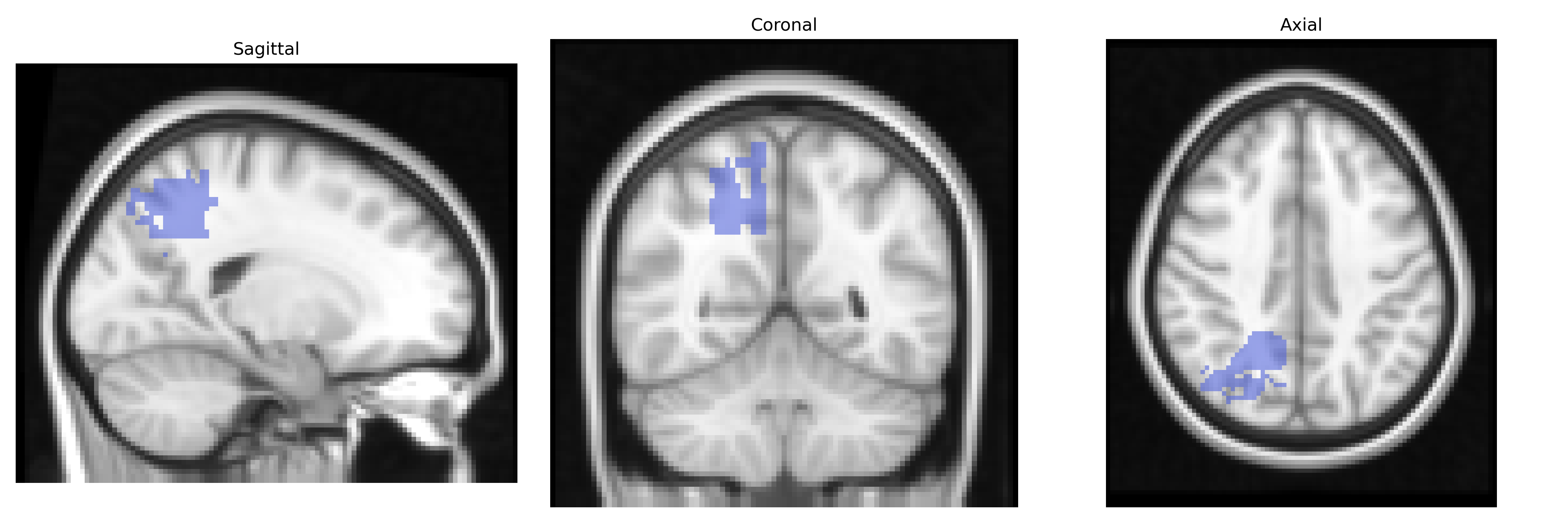
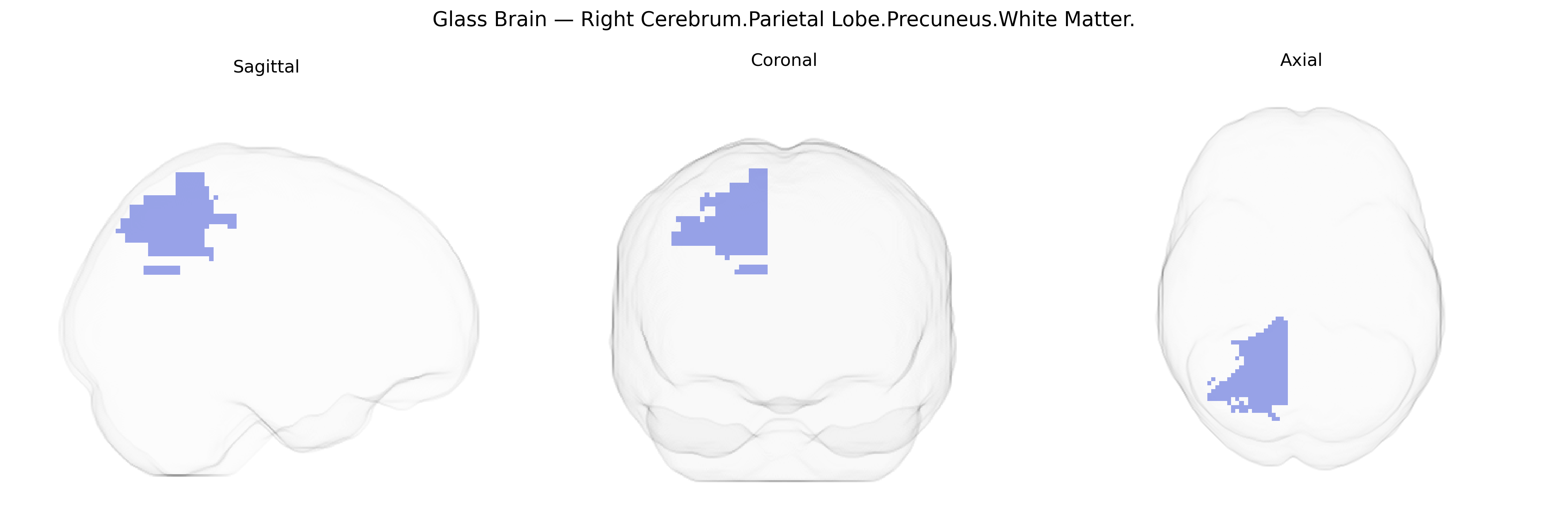
The bilateral Right Cerebrum.Parietal Lobe.Precuneus.White Matter corresponds to the subcortical fiber systems underlying the precuneus, a medial parietal cortex region situated on the medial surface of the hemisphere between the cingulate gyrus and the parieto‑occipital sulcus. These white matter tracts contain association fibers that interconnect the precuneus with adjacent parietal regions, posterior cingulate cortex, and broader frontoparietal and temporoparietal networks, supporting integration of visuospatial, somatosensory, and higher‑order cognitive information. Functionally, the precuneus and its underlying white matter are implicated in self‑referential processing, episodic memory retrieval, visuomotor imagery, and default mode network activity, with disruption of these fibers linked to deficits in consciousness, memory, and attentional control. There is no direct Wikipedia article for this exact white matter label; a closely related cortical structure is the Precuneus.
Genetic associations involving the bilateral Right Cerebrum.Parietal Lobe.Precuneus.White Matter (as defined in the Talairach 2 mm atlas) are typically inferred from imaging genetics and GWAS of brain structure, connectivity, and function rather than region-specific white matter studies. Numerous large-scale GWAS of MRI-derived brain measures (e.g., ENIGMA, UK Biobank) have identified variants affecting precuneus gray matter volume, cortical thickness, and white matter microstructure (often operationalized via adjacent tracts such as the superior longitudinal fasciculus and posterior cingulum), with common loci including genes involved in neurodevelopment and synaptic function such as BDNF, HMGA2, and multiple regulatory variants near neurodevelopmental and axon-guidance genes. Polygenic risk for Alzheimer’s disease (e.g., APOE ε4 and related loci) and other dementias has been linked to altered precuneus structure and connectivity, consistent with this region’s role in early amyloid deposition and default mode network disruption. Schizophrenia and major depression GWAS-derived polygenic risk scores have been associated with structural and functional abnormalities centered on the precuneus and its white matter connections, reflecting its involvement in self-referential processing and network integration. Variants influencing general cognitive ability and educational attainment show correlations with precuneus morphology and connectivity in imaging-genetics analyses, suggesting a genetic contribution to individual differences in higher-order cognition via this hub region. Although few studies isolate the “precuneus white matter” label specifically, convergent genetic evidence from GWAS of brain imaging phenotypes, neuropsychiatric disorders, and neurodegenerative disease consistently implicates the parietal precuneus region and its white matter pathways as a genetically modulated node in large-scale brain networks.
Overview generated by GPT-4o (2026).
Region ID: 864
Hemisphere: bilateral
Atlas: Talairach labels 2mm
Full Quality Version: Download MP4
Full Quality Version: Download MP4
Wali Sidiqyar*, Gaurav Rudravaram*, Elyssa M. McMaster, Trent M. Schwartz, Adam M. Saunders, Kurt G. Schilling, Bennett A. Landman "Introducing SPINS: A Shared Public Visualization Library of Neuroanatomical Structures." Medical Imaging with Deep Learning- short paper
This resource is licensed under CC0 1.0 Universal (Public Domain).